

Motmot

ウミウ 対 オオヨシゴイ

Phalacrocorax capillatus 対 Botaurus eurhythmus

ウミウとオオヨシゴイのクイズ
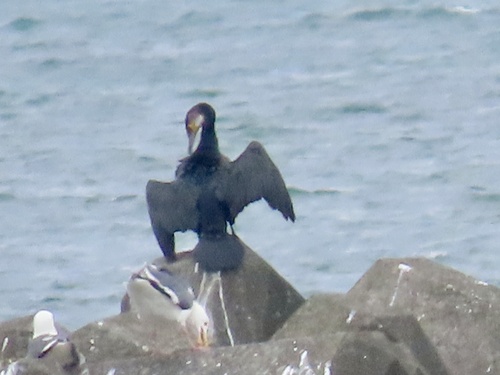
ウミウ (Phalacrocorax capillatus) ウミウ
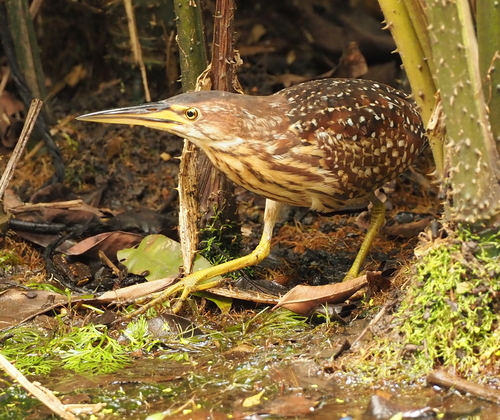
オオヨシゴイ (Botaurus eurhythmus) オオヨシゴイ

メディア

読み込み中…

要点

日本ウミウとオオヨシゴイを区別する最も信頼できるフィールドマークは、全体の構造とサイズです:日本ウミウは大きく、重い体を持つ海鳥で、長い首と白い喉を持っています。一方、オオヨシゴイはずっと小さく、短い首、コンパクトな体型、栗色/淡褐色の羽毛を持っています。飛行中、ウミウは長く狭い翼を持ち、安定した直線的な飛行を示しますが、オオヨシゴイは広く丸い翼を持ち、遅くひらひらとした飛行をします。幼鳥のウミウは茶色がかっていますが、依然として大きく、喉は淡い色をしています。一方、幼鳥のオオヨシゴイは縞模様があり、栗色で黒い飛行羽を持っています。くちばしの形と色もすべての年齢で特徴的です。

識別のコツ

  1. Size is the fastest check: 日本ウミウはオオヨシゴイの2倍以上の長さがあり、体重も何倍も重いです。もしその鳥がガチョウサイズまたはそれ以上に見えるなら、それはウミウです;もしカラスサイズまたはそれ以下なら、それはオオヨシゴイです。これはすべての年齢と性別に当てはまります。
  2. Neck and body shape: ウミウは長くて太い首と細長い体を持ち、特に泳いでいる時や飛んでいる時に明らかです。オオヨシゴイは短くて太い首とコンパクトでずんぐりした体を持ち、止まっている時は背を丸めた姿勢をしています。
  3. Bill shape and color: ウミウのくちばしは長く、フック状で部分的に黄色く、魚を捕まえるのに適しています。オオヨシゴイのくちばしは真っ直ぐで、ダガーのようで黄色く、フックはありません。これはすべての年齢で見られます。
  4. Plumage – throat and cheeks: ウミウ(すべての年齢)は白い喉と頬を示し、暗い頭と体と対照的です。オオヨシゴイはこのパターンを示さず、顔は淡褐色または栗色で白い斑点はありません。
  5. Plumage – upperparts and underparts: 成鳥のウミウは光沢のある黒で白い喉を持ち、オオヨシゴイは上面が栗色で下面が淡褐色または縞模様です。幼鳥のウミウは茶色がかっていますが、平坦で、幼鳥/雌のオオヨシゴイの縞模様や斑点はありません。
  6. Flight pattern and wing shape: ウミウは長く狭い翼で飛び、安定した直線的な飛行をし、首を伸ばします。オオヨシゴイは広く丸い翼を持ち、遅くひらひらとした飛行をし、首を引っ込めて飛びます。飛行中、オオヨシゴイは栗色のカバーと対照的な黒い飛行羽を示します;ウミウはより均一です。
  7. Tail: オオヨシゴイは飛行中に黒い尾を示し、体の他の部分と対照的です。ウミウの尾は短くて暗いですが、対照的ではありません。
  8. Perched posture: ウミウはしばしば岩や柱の上に直立して止まり、時には翼を広げます。オオヨシゴイは秘密主義で、通常は背を丸めて葦の中に隠れ、オープンに止まることはほとんどありません。
  9. Habitat context: ウミウはほぼ常に開けた水域、岩の多い海岸、または港にいます。オオヨシゴイは葦原、湿地、または密な淡水植生にいます。もしその鳥が葦の中にいるなら、ほぼ確実にオオヨシゴイです。
  10. Juvenile confusion: 幼いウミウは茶色がかっていますが、依然として大きく、喉は淡い色をしており、決して縞模様はありません。幼鳥のオオヨシゴイは小さく、栗色で白い斑点/縞模様があり、翼と尾に黒を示します。
  11. Leg color: オオヨシゴイは黄色い足を持ち、しばしば水中を歩いたり飛んだりしている時に見えます。ウミウの足は暗く、見える可能性は低いです。
  12. Swimming behavior: ウミウは水中で低く泳ぎ、しばしば潜ります。オオヨシゴイは泳ぐことはほとんどなく、浅い水の中を歩いたり立っているのが見られることが多いです。
  13. Wing drying: ウミウは頻繁に翼を広げて乾かすために止まりますが、オオヨシゴイは決してそうしません。
  14. Seasonal/sex differences: オオヨシゴイのオスは上面がより均一に栗色で、メスと幼鳥はより縞模様があります。ウミウの性差は微妙で、通常はフィールドでは見えません。
  15. Vocalization: 現在のメモでは診断的ではありませんが、一般的にウミウは静かであったり、喉の奥からの鳴き声を出しますが、オオヨシゴイも静かで秘密主義です。

大きさ

日本ウミウは劇的に大きいです:成鳥は81–92 cmの長さで、翼幅は約152 cm、体重は2.3–3.55 kgです [wikipedia]。オオヨシゴイはずっと小さく、長さはわずか33–39 cmで、相対的に短い首と小さな体を持っています [wikipedia]。幼鳥のウミウでさえ成鳥のオオヨシゴイを圧倒します。このサイズの差はフィールドで明らかで、特に両者が水の近くでスケールのために見られるときに顕著です。

羽色

行動

日本ウミウは通常、水中で低く泳ぎ、魚を捕まえるために潜ったり、翼を広げて直立して止まっているのが見られます。その飛行は強く、直線的で、しばしば水の上を低く飛び、首を伸ばしています。オオヨシゴイは秘密主義で、葦や密な植生の中に隠れており、泳いでいるのが見られることはほとんどありません。追い立てられると、遅くひらひらとした翼の動きで飛び、首を引っ込めて、しばしばすぐにカバーに戻ります。オオヨシゴイはオープンに止まったり泳いだりしているのが見られる可能性は非常に低いです。

生息環境

日本ウミウは沿岸種で、通常は岩の多い海岸、港、開けた海に見られ、内陸に遠く入ることはほとんどありません。オオヨシゴイは淡水の湿地、葦原、密な湿地植生を好みますが、湖や池の近くにも出現することがあります。沿岸の湿地では重複が可能ですが、ウミウは密な葦の中にはほとんどおらず、オオヨシゴイは開けた海や岩の多い海岸を避けます。

より良い説明を送る

比較と同じ項目を使ってください。文章はすぐに公開されます。

The most reliable field mark to separate Japanese Cormorant from Schrenck's Bittern is overall structure and size: Japanese Cormorant is a large, heavy-bodied seabird with a long neck and white throat, while Schrenck's Bittern is much smaller, with a short neck, compact build, and chestnut/buff plumage. In flight, cormorants show long, narrow wings and a steady, direct flight, whereas bitterns have broad, rounded wings and a slower, fluttering flight. Juvenile cormorants are brownish but still large and pale-throated, while juvenile bitterns are streaked and chestnut with black flight feathers. Bill shape and color are also distinctive at all ages.

  1. Size is the fastest check: Japanese Cormorant is more than twice the length of Schrenck's Bittern and many times heavier. If the bird looks goose-sized or larger, it's a cormorant; if it's crow-sized or smaller, it's a bittern. This holds for all ages and sexes.
  2. Neck and body shape: Cormorant has a long, thick neck and elongated body, especially obvious when swimming or flying. Bitterns have a short, thick neck and compact, chunky body, with a hunched posture when perched.
  3. Bill shape and color: Cormorant's bill is long, hooked, and partially yellow, suited for catching fish. Bittern's bill is straight, dagger-like, and yellow, with no hook. This is visible at all ages.
  4. Plumage – throat and cheeks: Cormorant (all ages) shows a white throat and cheeks, contrasting with a dark head and body. Bitterns never show this pattern; their face is buff or chestnut with no white patch.
  5. Plumage – upperparts and underparts: Adult cormorants are glossy black with a white throat, while bitterns are chestnut above and buff or streaked below. Juvenile cormorants are brownish but plain, lacking the streaks and speckles of juvenile/female bitterns.
  6. Flight pattern and wing shape: Cormorants fly with long, narrow wings and a steady, direct flight, neck outstretched. Bitterns have broad, rounded wings, a slower, fluttery flight, and fly with neck retracted. In flight, bitterns show black flight feathers contrasting with chestnut coverts; cormorants are more uniform.
  7. Tail: Bitterns show a black tail in flight, contrasting with the rest of the body. Cormorant's tail is short and dark but not contrasting.
  8. Perched posture: Cormorants often perch upright on rocks or posts, sometimes with wings spread. Bitterns are secretive, usually hunched and hidden in reeds, rarely perched openly.
  9. Habitat context: Cormorants are almost always on open water, rocky coasts, or harbors. Bitterns are in reedbeds, marshes, or dense freshwater vegetation. If the bird is in reeds, it's almost certainly a bittern.
  10. Juvenile confusion: Young cormorants are browner but still large and pale-throated, never streaked. Juvenile bitterns are smaller, chestnut with white speckles/streaks, and show black in the wings and tail.
  11. Leg color: Bitterns have yellow legs, often visible when wading or in flight. Cormorants' legs are dark and less likely to be seen.
  12. Swimming behavior: Cormorants swim low in the water, often diving. Bitterns rarely swim and are more likely to be seen walking or standing in shallow water.
  13. Wing drying: Cormorants frequently perch with wings spread to dry; bitterns never do this.
  14. Seasonal/sex differences: Male bitterns are more uniformly chestnut above, females and juveniles more streaked. Cormorant sex differences are subtle and not usually visible in the field.
  15. Vocalization: Not diagnostic with current notes, but generally, cormorants are silent or give guttural croaks, while bitterns are also quiet and secretive.

Japanese Cormorant is dramatically larger: adults measure 81–92 cm in length with a wingspan around 152 cm, and weigh 2.3–3.55 kg [wikipedia]. Schrenck's Bittern is much smaller, only 33–39 cm long, with a proportionally shorter neck and smaller body [wikipedia]. Even a juvenile cormorant dwarfs an adult bittern. This size gap is obvious in the field, especially when both are seen near water for scale.

  • Juvenile/immature birds: Juvenile Japanese Cormorants are plainer and browner than adults but retain a pale (white) throat and cheeks, and lack strong streaking or speckling. Juvenile Schrenck's Bitterns are chestnut with white speckles above and white streaks below, and show black flight feathers and tail in flight. The bittern's upperwing in flight is strongly contrasting (black primaries, chestnut coverts), while cormorants are more uniformly dark above with no such pattern.
  • Adults: Adult Japanese Cormorants are glossy black with a white throat and cheeks, and a partially yellow bill. Adult male Schrenck's Bitterns are chestnut above and buff below, with buff wing coverts and black flight feathers. Females resemble juveniles but are less streaked. In all ages, the bittern's black flight feathers and tail contrast with the rest of the wing, which is not seen in cormorant.

Japanese Cormorant is typically seen swimming low in the water, diving for fish, or perched upright with wings spread to dry. Its flight is strong, direct, and often low over water, with neck outstretched. Schrenck's Bittern is secretive, skulking in reeds or dense vegetation, and is rarely seen swimming. When flushed, it flies with slow, fluttery wingbeats and a retracted neck, often dropping quickly back into cover. Bitterns are much less likely to be seen perched openly or swimming.

Japanese Cormorant is a coastal species, usually found along rocky shores, harbors, and open sea, rarely venturing far inland. Schrenck's Bittern prefers freshwater marshes, reedbeds, and dense wetland vegetation, though it may occur near lakes and ponds. Overlap is possible in coastal wetlands, but cormorants are rarely in dense reeds, and bitterns avoid open sea or rocky coastlines.

変更を破棄しますか?

保存していない編集があります。今離れると失われます。

ウミウ · オオヨシゴイ · 苦手な鳥