

Herring Gull 対 ワシカモメ
Larus argentatus 対 Larus glaucescens
Herring Gullとワシカモメのクイズ
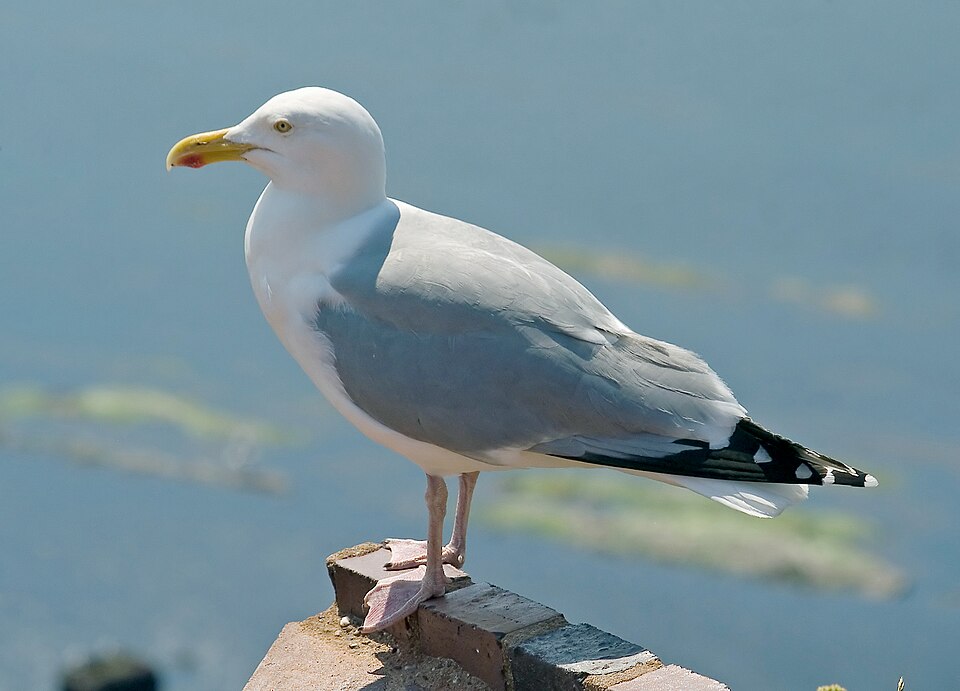 Herring Gull
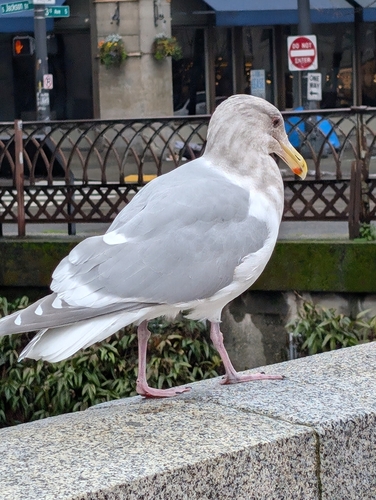 ワシカモメ
要点
The most reliable field mark between Herring Gull and Glaucous-winged Gull is the color of the wingtips in adults: Herring Gull has black wingtips with white 'mirrors,' while Glaucous-winged Gull's wingtips are pale grey, matching the mantle. This difference is especially clear in flight or when the wings are spread. Juvenile and immature plumages are more challenging, but Herring Gulls tend to show more contrast and darker markings overall. Both are large, pink-legged gulls with similar structure, so careful attention to wingtip color and overall tone is critical. Hybrids can complicate the picture, especially on the Pacific coast, but pure birds are usually separable with good views.
識別のコツ
- Adult wingtip color (all seasons): Herring Gull has black wingtips with white mirrors; Glaucous-winged Gull has pale grey wingtips, matching the mantle. This is the single most reliable field mark, especially in flight or with wings open.
- Juvenile/immature overall tone: Juvenile Herring Gulls are darker and more contrasting, with strong brown streaking and dark bills/eyes. Glaucous-winged Gulls are generally paler and more uniform, lacking the crisp contrast of Herring Gull. This is subtle and best used with experience.
- Bill and leg color (adults): Both have yellow bills with a red spot and pink legs, but Herring Gull can show yellowish legs in some Baltic birds. This is not a strong separator except in rare cases.
- Head streaking (non-breeding adults): Herring Gull develops brown streaks on the head and neck in winter; Glaucous-winged Gull typically has less head streaking, but this is variable and not always reliable.
- Eye color: Herring Gull adults have pale eyes with a yellow orbital ring; Glaucous-winged Gull's eye color is not specified but is usually pale as well. This is not a strong separator between these two.
- Mantle shade: Herring Gull's mantle is light grey; Glaucous-winged Gull's mantle is slightly darker than Glaucous Gull but paler than Herring and Western Gulls. In practice, this is subtle and easily affected by lighting.
- Primary projection: Not detailed in the notes, but Herring Gull often shows a longer primary projection beyond the tail, which can make the wings look longer and more pointed. Glaucous-winged Gull's wings may appear slightly broader and blunter. Use with caution.
- Hybrid confusion: In the Pacific Northwest, Glaucous-winged Gull frequently hybridizes with Western Gull and occasionally with American Herring Gull. Hybrids can show intermediate wingtip colors and confusing patterns. If the wingtips are not clearly black or clearly pale grey, consider hybrid possibility.
- Geographic context: In Europe, a large pale-mantled gull with black wingtips is almost certainly Herring Gull. On the Pacific coast, a large gull with pale grey wingtips is likely Glaucous-winged, but check for hybrids.
- Behavior and habitat: Both species are opportunistic and found in similar habitats; do not rely on behavior or feeding style for separation.
- Sex and age: Males are larger in both species, but size overlap is substantial. Plumage differences by age are more useful, especially wingtip color in adults and overall tone in juveniles.
- In flight: Focus on the color of the outermost primaries—black in Herring, pale grey in Glaucous-winged. This is visible from above and below in good light.
- Perched birds: Look for the contrast between the mantle and wingtips. Herring Gulls show a sharp black-and-grey contrast; Glaucous-winged Gulls have a more uniform look.
- Pitfalls: Lighting can make grey look darker or paler; always try to compare multiple birds side by side if possible. Hybrids can show confusing intermediate features.
- When in doubt: If you cannot see the wingtips clearly, or the bird is an obvious hybrid, do not overcommit—note the uncertainty and move on.
大きさ
Both species are large gulls and overlap substantially in size. Herring Gull males are 60–67 cm long, females 55–62 cm, with a wingspan of 125–155 cm. Glaucous-winged Gull measures 50–68 cm in length and 120–150 cm in wingspan. Average body mass is similar (Herring Gull: up to ~1,525 g, Glaucous-winged Gull: ~1,063 g average, range 730–1,690 g). In the field, size alone is not a reliable separator, as both can appear equally robust and size differences are subtle.
羽色
- Juvenile/First-winter: Herring Gull juveniles and first-winter birds are mainly brown with darker streaks, a dark bill, and dark eyes. Glaucous-winged Gull juveniles are not described in detail in the notes, but generally have a paler, more uniform brownish-grey appearance, lacking the strong contrast and dark markings of Herring Gull.
- Second/Third-winter: Herring Gulls in second winter have a whiter head and underparts, less streaking, and a grey back, while third-winter birds are similar to adults but with some brown in the wings and dark bill markings. Glaucous-winged Gull immatures are not detailed, but typically show a gradual transition to adult plumage with less contrast overall.
- Adult breeding: Herring Gull adults have a light grey back and upper wings, white head and underparts, and black wingtips with white 'mirrors.' Glaucous-winged Gull adults have a slightly darker grey mantle than Glaucous Gull but paler than Herring, and crucially, the wingtips are pale grey (not black), matching the mantle. Both have yellow bills with a red spot and pink legs, but Herring Gull can show yellowish legs in some populations.
- Non-breeding: Herring Gull adults show brown streaks on the head and neck in winter, while Glaucous-winged Gull adults are not described in detail but typically have less head streaking.
行動
Both species are omnivorous and opportunistic, frequenting garbage dumps, coasts, and urban areas. Herring Gulls are noted for dropping shelled prey to break them and may rinse food in water. Glaucous-winged Gulls are similar in feeding habits. Behavior is not a reliable separator in the field.
生息環境
Herring Gull is widespread across northern and western Europe, often resident but sometimes migratory. Glaucous-winged Gull is a Pacific species, found from Alaska to the Pacific Northwest. In areas of overlap (notably in Alaska), hybrids can occur. Habitat alone is not diagnostic, but context can help: Herring Gull is rare on the Pacific coast of North America, while Glaucous-winged Gull is rare in Europe.
Herring Gull · ワシカモメ · 苦手な鳥