

Motmot

ハワイマガモ 対 アメリカガモ

Anas wyvilliana 対 Anas rubripes

ハワイマガモとアメリカガモのクイズ
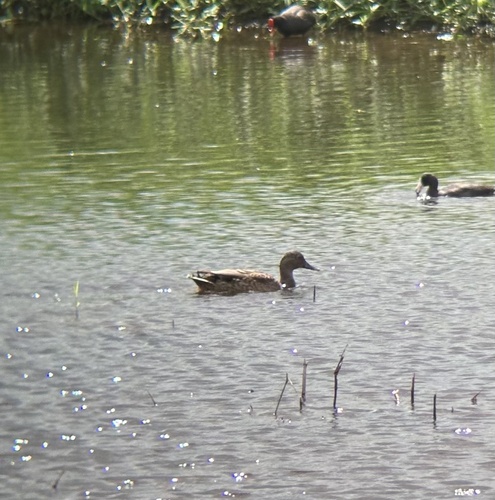
ハワイマガモ (Anas wyvilliana) ハワイマガモ
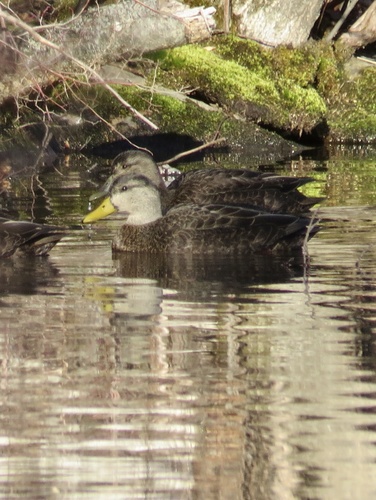
アメリカガモ (Anas rubripes) アメリカガモ

メディア

読み込み中…

要点

ハワイマガモとアメリカガモの最も信頼できるフィールドマークは、スペキュラムとその境界です:ハワイマガモは両端が白で縁取られた緑から青のスペキュラムを示し、アメリカガモは主に黒い縁を持つ虹色の紫青のスペキュラムを持ち、白い後縁は稀です。飛行中、アメリカガモは暗い体と対照的な非常に淡いアンダーウィングライニングを示し、これはハワイマガモには記載されていません。サイズは強力な二次的手がかりです:アメリカガモはハワイマガモのほぼ2倍の重さです。両種は雌のマガモに似ていますが、アメリカガモは全体的に暗くてがっしりしており、ハワイマガモはよりまだらで変動があり、性別間の違いはより微妙です。マガモとの交雑はハワイマガモの識別をさらに複雑にし、遺伝子検査なしではほとんど区別できない個体もいます。

識別のコツ

  1. スペキュラムの境界: 飛行中または静止中のスペキュラムの色と境界を探してください。ハワイマガモは両端が白で縁取られた緑から青のスペキュラムを持ち、アメリカガモは主に黒い境界を持つ紫青のスペキュラムを持ち、白い後縁は稀です。これはすべての年齢と性別に対して最も信頼できるマークです。
  2. 飛行中のアンダーウィングパターン: アメリカガモは暗い体と上部と鋭く対照的な明るい白のアンダーウィングライニングを示します。ハワイマガモはこの強い対照を示しません。
  3. 全体的な暗さ: アメリカガモは全体的に非常に暗く、特に体において、ハワイマガモよりも均等にまだらな茶色です。これは特に成鳥のオスとメスに当てはまります。
  4. 尾のパターン: ハワイマガモは均一に暗い尾を持ち、アメリカガモの尾は対照的ではないと記載されていますが、マガモ(および時々交雑種)は黒と白の尾を示し、ハワイマガモにはありません。
  5. くちばしの色: オスのアメリカガモは黄色いくちばしを持ち、メスは暗い斑点のある鈍い緑です。ハワイマガモのオスはオリーブグリーンのくちばしを持ち、メスは暗い斑点のある鈍いオレンジです。これらの違いは微妙で重なり合うため、注意して使用してください。
  6. 足の色: 両種はオレンジの足を持っていますが、アメリカガモの足は暗い水かきがあり、ハワイマガモの足はオレンジから黄色オレンジです。これは小さな変動のあるマークです。
  7. 幼鳥のマーキング: 幼いアメリカガモはより茶色で、ストライプのある腹部を持ち、ハワイマガモの幼鳥は詳細に記載されていませんが、大人のようにまだらであると予想されます。若い鳥には注意してください。
  8. サイズと構造: アメリカガモはほぼ2倍の重さで、ハワイマガモよりもがっしりしていて長いくちばしのように見えます。並んで見ると明らかですが、大きな雌のマガモや交雑種との重なりに注意してください。
  9. 性差: 両種は限られた性差を示します。ハワイマガモのオスは頭と首がやや暗く、メスは背中がより淡いです。アメリカガモの性別は非常に似ていますが、オスはより明るい黄色いくちばしを持っています。
  10. 交雑の落とし穴: ハワイマガモはマガモと広範囲に交雑し、中間的な特徴を持つ鳥を生じます。一部の交雑種は純粋なハワイマガモや雌のマガモと視覚的に区別できません。アメリカガモもマガモと交雑しますが、ハワイマガモとの交雑は範囲の分離により少なくなります。
  11. 地理的範囲: 場所を強力な手がかりとして使用してください。ハワイマガモはハワイにのみ見られ、アメリカガモは北アメリカの東部にのみ見られます。ハワイの「黒いカモ」はほぼ確実にハワイマガモまたは交雑種です。
  12. 生息地の文脈: ハワイマガモはハワイの湿地に制限され、アメリカガモはその範囲内の沿岸および淡水湿地を好みます。ハワイの外にいる場合、アメリカガモが可能性の高い種です。
  13. 声: 両種はマガモのようなクワックを出し、特有の違いは記載されていません。フィールドでの区別に声を頼らないでください。
  14. 季節的変化: 両種は限られた季節的羽毛の変化を持ち、日食のオスはメスに似ています。年間を通じて構造的および翼のパターンのマークを使用してください。
  15. マガモの混乱: 両種は雌のマガモに非常に似ています。常にスペキュラムの境界と全体的な暗さを確認し、特にハワイでは交雑種の高い可能性に注意してください。

大きさ

アメリカガモは大きくて重く、平均体重は1181.5gで、ハワイマガモは614.5gです。フィールドでは、アメリカガモはがっしりしていて長いくちばしのように見え、ハワイマガモはよりコンパクトで雌のマガモに近いサイズです。このサイズの違いは、両種が一緒に見られると特に明らかですが、1種だけが存在する場合はそれほどではありません。

羽色

行動

両種は同様の採餌と泳ぎの行動を持つダブリングダックです。フィールドで信頼できる区別を行うための特有の行動の違いは記載されていません。

生息環境

ハワイマガモはハワイ諸島に固有で、そこにある地元の湿地にのみ見られ、アメリカガモは北アメリカの東部に自生し、中央カナダから大西洋までの沿岸および淡水湿地で繁殖し、米国の東中央部で越冬します。したがって、場所は主要な手がかりです:ハワイのカモはハワイマガモ(または交雑種)である可能性がはるかに高く、アメリカガモは北アメリカでのみ期待されます。

声

両種はマガモに似たクワックを出し、メスは大きく、下降する一連のクワックを出します。フィールドでの区別に役立つ特有の声の違いは記載されていません。

より良い説明を送る

比較と同じ項目を使ってください。文章はすぐに公開されます。

The most reliable field mark between Hawaiian Duck and American Black Duck is the speculum and its borders: Hawaiian Duck shows a green to blue speculum bordered by white on both edges, while American Black Duck has an iridescent violet-blue speculum with mostly black margins and rarely a white trailing edge. In flight, American Black Duck also shows strikingly pale underwing linings contrasting with a dark body, a feature not described for Hawaiian Duck. Size is a strong secondary clue: American Black Duck is nearly twice as heavy as Hawaiian Duck. Both species resemble female Mallards, but American Black Duck is overall darker and bulkier, while Hawaiian Duck is more mottled and variable, with more subtle differences between sexes. Hybridization with Mallard complicates Hawaiian Duck ID further, making some individuals nearly inseparable without genetic testing.

  1. Speculum Borders: Look for the color and borders of the speculum in flight or at rest. Hawaiian Duck has a green to blue speculum with white borders on both edges; American Black Duck has a violet-blue speculum with mostly black borders and rarely a white trailing edge. This is the most reliable mark for all ages and sexes.
  2. Underwing Pattern in Flight: American Black Duck shows bright white underwing linings that contrast sharply with its dark body and upperparts in flight. Hawaiian Duck does not show this strong contrast.
  3. Overall Darkness: American Black Duck is generally much darker overall, especially on the body, than Hawaiian Duck, which is more evenly mottled brown. This is especially true for adult males and females.
  4. Tail Pattern: Hawaiian Duck has a uniformly dark tail, while American Black Duck's tail is not described as contrasting, but Mallard (and sometimes hybrids) show a black-and-white tail, which Hawaiian Duck lacks.
  5. Bill Color: Male American Black Duck has a yellow bill, female a dull green with dark marks. Hawaiian Duck males have olive green bills, females dull orange with dark markings. These differences are subtle and overlap, so use with caution.
  6. Leg Color: Both species have orange feet, but American Black Duck's feet have dark webbing, while Hawaiian Duck's are orange to yellow-orange. This is a minor and variable mark.
  7. Juvenile Markings: Juvenile American Black Ducks are browner with streaked underparts, while Hawaiian Duck juveniles are not well described but expected to be mottled like adults. Use caution with young birds.
  8. Size and Structure: American Black Duck is nearly twice as heavy and appears bulkier and longer-billed than Hawaiian Duck. If seen side by side, this is obvious, but beware of overlap with large female Mallards or hybrids.
  9. Sexual Dimorphism: Both species show limited sexual dimorphism. Hawaiian Duck males are slightly darker on the head and neck, females paler with plainer backs. American Black Duck sexes are very similar, but males have a brighter yellow bill.
  10. Hybrid Pitfalls: Hawaiian Duck hybridizes extensively with Mallard, leading to birds with intermediate features. Some hybrids are visually inseparable from pure Hawaiian Ducks or female Mallards. American Black Duck also hybridizes with Mallard, but less so with Hawaiian Duck due to range separation.
  11. Geographic Range: Use location as a strong clue. Hawaiian Duck is only found in Hawaii; American Black Duck is only in eastern North America. Any 'black duck' in Hawaii is almost certainly Hawaiian Duck or a hybrid.
  12. Habitat Context: Hawaiian Duck is restricted to Hawaiian wetlands; American Black Duck prefers coastal and freshwater wetlands in its range. If you are outside Hawaii, American Black Duck is the likely species.
  13. Voice: Both species have Mallard-like quacks, with no reliable differences noted. Do not rely on voice for separation.
  14. Seasonal Variation: Both species have limited seasonal plumage change; eclipse males resemble females. Use structural and wing pattern marks year-round.
  15. Mallard Confusion: Both species closely resemble female Mallards. Always check speculum borders and overall darkness, and be aware of the high likelihood of hybrids, especially in Hawaii.

American Black Duck is substantially larger and heavier, with an average body mass of 1181.5 g compared to Hawaiian Duck's 614.5 g. In the field, American Black Duck appears bulkier and longer-billed, while Hawaiian Duck is more compact and closer in size to a female Mallard. This size difference is especially apparent when both species are seen together, but less so if only one is present.

  • Juvenile and Immature Birds: American Black Duck juveniles resemble adult females but are browner overall, with broken, narrow pale edges on the underparts giving a streaked look. Juvenile males have brownish-orange feet, females have browner feet and a greyish-green bill. Hawaiian Duck juveniles are not described in detail, but both sexes resemble female Mallards, with mottled brown plumage and variable tones.

  • Speculum and Wing Pattern: Hawaiian Duck of all ages shows a green to blue speculum bordered by white both in front and behind. American Black Duck's speculum is violet-blue with mostly black borders and only rarely a white trailing edge. In flight, American Black Duck has a striking white underwing lining contrasting with a dark underbody and upperparts; this is not reported for Hawaiian Duck.

  • Adult Plumage: American Black Duck is overall darker, especially on the body, with a brown head slightly paler than the body, and a dark crown and eye-stripe. Hawaiian Duck is more evenly mottled, with males slightly darker on the head and neck, and females paler with plainer backs. Hawaiian Duck has a dark tail, while American Black Duck's tail is not specifically described as contrasting.

  • Bill and Legs: Male American Black Duck has a yellow bill, female a dull green with dark marks; feet are orange with dark webbing. Hawaiian Duck males have olive green bills, females dull orange with dark markings; feet are orange to yellow-orange. These differences are subtle and variable.

Both species are dabbling ducks with similar feeding and swimming behaviors. No distinctive behavioral differences are described in the notes that would reliably separate them in the field.

Hawaiian Duck is endemic to the Hawaiian Islands and found only in local wetlands there, while American Black Duck is native to eastern North America, breeding in coastal and freshwater wetlands from central Canada to the Atlantic and wintering in the east-central U.S. Thus, location is a major clue: any duck in Hawaii is far more likely to be Hawaiian Duck (or a hybrid), while American Black Duck is expected only in North America.

Both species produce quacks similar to Mallard, with females giving a loud, descending series of quacks. No distinctive vocal differences are described that would help separate them in the field.

変更を破棄しますか?

保存していない編集があります。今離れると失われます。

ハワイマガモ · アメリカガモ · 苦手な鳥