

Hawaiian Duck vs American Black Duck
Anas wyvilliana contro Anas rubripes
Fai un quiz con Hawaiian Duck e American Black Duck
 Hawaiian Duck
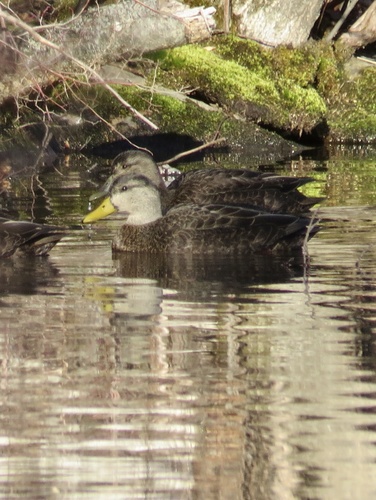 American Black Duck
In breve
Il segno di campo più affidabile tra Hawaiian Duck e American Black Duck è il speculum e i suoi bordi: Hawaiian Duck mostra un speculum verde-blu bordato di bianco su entrambi i lati, mentre American Black Duck ha un speculum violetto-blu con margini per lo più neri e raramente un bordo bianco. In volo, American Black Duck mostra anche un sorprendente rivestimento chiaro sotto le ali che contrasta con un corpo scuro, una caratteristica non descritta per Hawaiian Duck. La dimensione è un forte indizio secondario: American Black Duck è quasi due volte più pesante di Hawaiian Duck. Entrambe le specie somigliano alle femmine di Germano reale, ma American Black Duck è complessivamente più scura e massiccia, mentre Hawaiian Duck è più maculata e variabile, con differenze più sottili tra i sessi. L'ibridazione con Germano reale complica ulteriormente l'identificazione di Hawaiian Duck, rendendo alcuni individui quasi inseparabili senza test genetici.
Consigli di identificazione
- Bordi del Speculum: Cerca il colore e i bordi del speculum in volo o a riposo. Hawaiian Duck ha un speculum verde-blu con bordi bianchi su entrambi i lati; American Black Duck ha un speculum violetto-blu con bordi per lo più neri e raramente un bordo bianco. Questo è il segno più affidabile per tutte le età e i sessi.
- Schema Sotto le Ali in Volo: American Black Duck mostra rivestimenti bianchi brillanti sotto le ali che contrastano nettamente con il suo corpo scuro e le parti superiori in volo. Hawaiian Duck non mostra questo forte contrasto.
- Oscurità Complessiva: American Black Duck è generalmente molto più scura nel complesso, specialmente sul corpo, rispetto a Hawaiian Duck, che è più uniformemente maculata di marrone. Questo è particolarmente vero per i maschi e le femmine adulte.
- Schema della Coda: Hawaiian Duck ha una coda uniformemente scura, mentre la coda di American Black Duck non è descritta come contrastante, ma il Germano reale (e a volte gli ibridi) mostrano una coda bianco-nera, che Hawaiian Duck non ha.
- Colore del Becco: Il maschio di American Black Duck ha un becco giallo, la femmina un verde opaco con segni scuri. I maschi di Hawaiian Duck hanno becchi verde oliva, le femmine arancione opaco con segni scuri. Queste differenze sono sottili e si sovrappongono, quindi usale con cautela.
- Colore delle Zampe: Entrambe le specie hanno piedi arancioni, ma i piedi di American Black Duck hanno membrane scure, mentre quelli di Hawaiian Duck sono arancioni o arancioni-giallastri. Questo è un segno minore e variabile.
- Marcature Giovanili: I giovani American Black Duck sono più marroni con parti inferiori striate, mentre i giovani Hawaiian Duck non sono ben descritti ma si prevede che siano maculati come gli adulti. Usa cautela con gli uccelli giovani.
- Dimensione e Struttura: American Black Duck è quasi due volte più pesante e appare più massiccia e con un becco più lungo rispetto a Hawaiian Duck. Se visti fianco a fianco, questo è ovvio, ma fai attenzione alla sovrapposizione con grandi femmine di Germano reale o ibridi.
- Dimorfismo Sessuale: Entrambe le specie mostrano un dimorfismo sessuale limitato. I maschi di Hawaiian Duck sono leggermente più scuri sulla testa e sul collo, le femmine più chiare con schiene più semplici. I sessi di American Black Duck sono molto simili, ma i maschi hanno un becco giallo più brillante.
- Trappole per Ibridi: Hawaiian Duck ibrida ampiamente con Germano reale, portando a uccelli con caratteristiche intermedie. Alcuni ibridi sono visivamente inseparabili da veri Hawaiian Ducks o femmine di Germano reale. Anche American Black Duck ibrida con Germano reale, ma meno con Hawaiian Duck a causa della separazione dell'areale.
- Areale Geografico: Usa la posizione come un forte indizio. Hawaiian Duck si trova solo alle Hawaii; American Black Duck si trova solo nell'America del Nord orientale. Qualsiasi 'anatra nera' alle Hawaii è quasi certamente Hawaiian Duck o un ibrido.
- Contesto dell'Habitat: Hawaiian Duck è limitata alle zone umide hawaiane; American Black Duck preferisce le zone umide costiere e di acqua dolce nel suo areale. Se ti trovi al di fuori delle Hawaii, American Black Duck è la specie probabile.
- Voce: Entrambe le specie hanno quack simili a quelli del Germano reale, senza differenze affidabili notate. Non fare affidamento sulla voce per la separazione.
- Variazione Stagionale: Entrambe le specie hanno un cambiamento limitato del piumaggio stagionale; i maschi in eclipse somigliano alle femmine. Usa i segni strutturali e del piumaggio delle ali tutto l'anno.
- Confusione con il Germano Reale: Entrambe le specie somigliano molto alle femmine di Germano reale. Controlla sempre i bordi del speculum e l'oscurità complessiva, e sii consapevole dell'alta probabilità di ibridi, specialmente alle Hawaii.
Taglia
American Black Duck è sostanzialmente più grande e più pesante, con una massa corporea media di 1181,5 g rispetto ai 614,5 g di Hawaiian Duck. Sul campo, American Black Duck appare più massiccia e con un becco più lungo, mentre Hawaiian Duck è più compatta e più vicina in dimensioni a una femmina di Germano reale. Questa differenza di dimensione è particolarmente evidente quando entrambe le specie sono viste insieme, ma meno se è presente solo una.
Piumaggio
-
Uccelli Giovanili e Immaturi: I giovani American Black Duck somigliano alle femmine adulte ma sono più marroni nel complesso, con bordi chiari spezzati e stretti sulle parti inferiori che danno un aspetto striato. I maschi giovani hanno piedi arancione-marroni, le femmine hanno piedi più marroni e un becco grigio-verde. I giovani Hawaiian Duck non sono descritti in dettaglio, ma entrambi i sessi somigliano alle femmine di Germano reale, con piumaggio marrone maculato e toni variabili.
-
Speculum e Schema delle Ali: Hawaiian Duck di tutte le età mostra un speculum verde-blu bordato di bianco sia davanti che dietro. Il speculum di American Black Duck è violetto-blu con bordi per lo più neri e solo raramente un bordo bianco. In volo, American Black Duck ha un sorprendente rivestimento bianco sotto le ali che contrasta con un corpo e parti superiori scure; questo non è riportato per Hawaiian Duck.
-
Piumaggio Adulto: American Black Duck è complessivamente più scura, specialmente sul corpo, con una testa marrone leggermente più chiara del corpo, e una corona scura e una striscia oculare. Hawaiian Duck è più uniformemente maculata, con maschi leggermente più scuri sulla testa e sul collo, e femmine più chiare con schiene più semplici. Hawaiian Duck ha una coda scura, mentre la coda di American Black Duck non è specificamente descritta come contrastante.
-
Becco e Zampe: Il maschio di American Black Duck ha un becco giallo, la femmina un verde opaco con segni scuri; i piedi sono arancioni con membrane scure. I maschi di Hawaiian Duck hanno becchi verde oliva, le femmine arancione opaco con segni scuri; i piedi sono arancioni o arancioni-giallastri. Queste differenze sono sottili e variabili.
Comportamento
Entrambe le specie sono anatre di superficie con comportamenti di alimentazione e nuoto simili. Non sono descritte differenze comportamentali distintive nelle note che possano separarle affidabilmente sul campo.
Habitat
Hawaiian Duck è endemica alle Isole Hawaii e si trova solo nelle zone umide locali lì, mentre American Black Duck è nativa dell'America del Nord orientale, nidificando in zone umide costiere e di acqua dolce dal Canada centrale all'Atlantico e svernando negli Stati Uniti centro-orientali. Pertanto, la posizione è un indizio importante: qualsiasi anatra alle Hawaii è molto più probabile che sia Hawaiian Duck (o un ibrido), mentre American Black Duck è prevista solo in Nord America.
Voce
Entrambe le specie producono quack simili a quelli del Germano reale, con le femmine che emettono una serie di quack forti e discendenti. Non sono descritte differenze vocali distintive che possano aiutare a separarle sul campo.
Hawaiian Duck · American Black Duck · I miei uccelli difficili