

Motmot

カワリツバメ 対 マユジロショウドウツバメ

Pseudhirundo griseopyga 対 Neophedina cincta

カワリツバメとマユジロショウドウツバメのクイズ
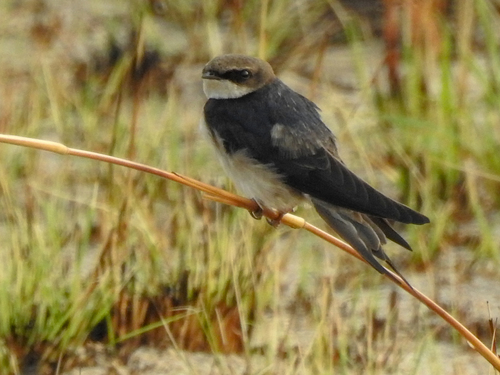
カワリツバメ (Pseudhirundo griseopyga) カワリツバメ
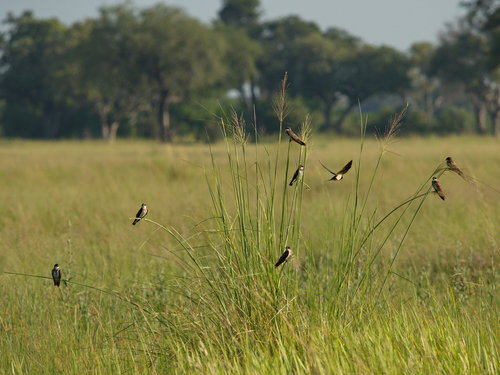
マユジロショウドウツバメ (Neophedina cincta) マユジロショウドウツバメ

メディア

読み込み中…

要点

グレイランプツバメとマユジロショウドウツバメを区別する最も信頼できる方法は、マユジロショウドウツバメの太くて暗い胸のバンドと白い翼の覆羽を探すことです。これらはグレイランプツバメにはありません。飛んでいるときや止まっているとき、マユジロショウドウツバメは四角い尾と明確な白い眉斑を示しますが、グレイランプツバメは両方の特徴を欠いています。幼鳥のマユジロショウドウツバメは胸のバンドが淡く、上部の羽毛の先端が金色ですが、胸のバンドは依然として見られます。両種はサイズが似ており、範囲や生息地が重なることが多いため、下部のパターンと尾の形に注意を払うことが、確実な識別にとって重要です。

識別のコツ

  1. 暗い胸のバンドを探す: マユジロショウドウツバメは、幼鳥でも(淡いですが)常に強い暗い胸のバンドを示し、グレイランプツバメには胸のバンドがありません。これはすべての年齢と季節で最も信頼できるフィールドマークです。
  2. 白い眉斑を確認する: マユジロショウドウツバメは目の上に明確な白いストライプがあり、グレイランプツバメにはありません。これは止まっているときや良好な飛行の視界で見ることができます。
  3. 翼の覆羽を調べる: マユジロショウドウツバメは白い翼の覆羽を持ち、飛行中に見ることができ、土褐色の上部と対比します。グレイランプツバメの翼のパターンは対比的または白いとは記述されていません。
  4. 尾の形: マユジロショウドウツバメは四角い尾を持ち、これは飛行中または尾を広げて止まっているときの良い構造的マークです。グレイランプツバメには四角い尾がありません。
  5. 上部の色と光沢: マユジロショウドウツバメは上部が土褐色で、亜種によっていくつかの変異があります。グレイランプツバメの上部は詳細に記述されていませんが、その名前は灰色のランプを示唆しており、良好な視界で見ることができるかもしれません。
  6. 幼鳥のマーク: 幼いマユジロショウドウツバメは淡い胸のバンドと上部羽毛の金色の先端を示しますが、バンドは常に存在します。グレイランプツバメの幼鳥は胸のバンドや金色の羽毛の先端を持っているとは記述されていません。
  7. 喉の色: マユジロショウドウツバメは白い喉を持ち、他の褐色のツバメと区別するのに役立ちますが、グレイランプツバメには記述されていません。
  8. 群れの行動: マユジロショウドウツバメは他のツバメよりも社交的でなく、通常はペアや小さな群れで見られます。大きくて密集した群れを見た場合はグレイランプツバメを考慮してくださいが、これはこれら二種を区別する強い要因ではありません。
  9. 生息地の文脈: 両種は水の近くの開けた生息地を利用するため、生息地は信頼できる区別要因ではありませんが、マユジロショウドウツバメは最も乾燥した地域を避けます。
  10. サイズ: 両者は中型のツバメであり、サイズによる区別には頼らないでください。
  11. 性差: 両種は性別が同形であり、識別に性別を使用しないでください。
  12. 季節的な動き: 一部のマユジロショウドウツバメの亜種は渡りを行いますが、両種は年の大部分で重なる地域に見られます。
  13. 鳴き声: ソースには診断的な呼び声や歌は記述されていません; 声を区別に使用しないでください。
  14. 他のツバメとの混同: マユジロショウドウツバメは四角い尾と白い翼で砂ツバメから簡単に区別されますが、グレイランプツバメと比較する際は胸のバンドと眉斑に焦点を当ててください。
  15. 疑わしい場合: 下部をはっきりと見ることができない場合は、眉斑や飛行中の尾の形を見るようにしてください。

大きさ

両種は全体的にサイズが似ており、マユジロショウドウツバメは長さ15〜17 cmです。グレイランプツバメの直接的な測定値は示されていませんが、両者は中型のツバメであり、フィールドでサイズだけで信頼できる区別は難しいでしょう。両種の性別は似ています。

羽色

行動

マユジロショウドウツバメは他のツバメよりも社交的でなく、通常はペアや小さな群れで見られます。グレイランプツバメに関する具体的な行動のメモは提供されていませんが、両種は空中の昆虫食者であり、開けた生息地の上を飛んでいるのが見られることがあります。マユジロショウドウツバメの社交性が低い傾向は、群れの行動が観察された場合の微妙な手がかりかもしれません。

生息環境

両種はサハラ以南のアフリカ全体に広く分布し、農地、草地、サバンナなどの類似の開けた生息地に生息し、通常は水の近くにいます。マユジロショウドウツバメは南アフリカ西部とナミビア南部の最も乾燥した部分には存在せず、その他はグレイランプツバメと広く重なります。生息地だけでは信頼できる区別要因ではありませんが、マユジロショウドウツバメの水の近くの開けた地域への好みはやや顕著かもしれません。

より良い説明を送る

比較と同じ項目を使ってください。文章はすぐに公開されます。

The most reliable way to separate Grey-rumped Swallow from Banded Martin is by looking for the Banded Martin's bold dark breast band and white underwing coverts, which are absent in Grey-rumped Swallow. In flight or perched, Banded Martin shows a square tail and a distinct white supercilium, while Grey-rumped Swallow lacks both features. Juvenile Banded Martins have a paler breast band and golden feather tips above, but still show the breast band. Both species are similar in size and often overlap in range and habitat, so careful attention to underpart pattern and tail shape is crucial for a confident ID.

  1. Look for a dark breast band: Banded Martin always shows a strong dark breast band, even in juveniles (though paler), while Grey-rumped Swallow never has a breast band. This is the single most reliable field mark at all ages and seasons.
  2. Check for a white supercilium: Banded Martin has a distinct white stripe above the eye, which is lacking in Grey-rumped Swallow. This is visible both perched and in good flight views.
  3. Examine the underwing coverts: Banded Martin has white underwing coverts, which can be seen in flight and contrast with the earth-brown upperparts. The underwing pattern of Grey-rumped Swallow is not described as contrasting or white.
  4. Tail shape: Banded Martin has a square tail, which is a good structural mark in flight or when perched with the tail spread. Grey-rumped Swallow does not have a square tail.
  5. Upperpart color and gloss: Banded Martin is earth-brown above, with some variation among subspecies. Grey-rumped Swallow's upperparts are not described in detail, but the name suggests a grey rump, which may be visible in good views.
  6. Juvenile marks: Young Banded Martins show a paler breast band and golden tips to the upperpart feathers, but the band is always present. Grey-rumped Swallow juveniles are not described as having any breast band or golden feather tips.
  7. Throat color: Banded Martin has a white throat, which can help distinguish it from other brownish swallows, but is not described for Grey-rumped Swallow.
  8. Flocking behavior: Banded Martin is less gregarious than other swallows, often seen in pairs or small groups. If you see a large, tight flock, consider Grey-rumped Swallow, but this is not a strong separator between these two species.
  9. Habitat context: Both species use open habitats near water, so habitat is not a reliable separator, but Banded Martin avoids the driest regions.
  10. Size: Both are medium-sized swallows; do not rely on size for separation.
  11. Sex differences: Both species are sexually monomorphic; do not use sex for identification.
  12. Seasonal movements: Some Banded Martin subspecies are migratory, but both species can be found in overlapping areas for much of the year.
  13. Vocalizations: No diagnostic calls or songs are described in the sources; do not use voice for separation.
  14. Confusion with other swallows: Banded Martin is easily distinguished from sand martins by its square tail and white underwings, but when comparing only with Grey-rumped Swallow, focus on the breast band and supercilium.
  15. When in doubt: If you cannot see the underparts clearly, try to get a look at the face for the supercilium or the tail shape in flight.

Both species are similar in overall size, with Banded Martin measuring 15–17 cm in length. No direct measurement is given for Grey-rumped Swallow, but both are medium-sized swallows and unlikely to be reliably separated by size alone in the field. Sexes are similar in both species.

  • Juvenile/immature birds: Young Banded Martins have a paler breast band and golden tips to their upperpart feathers, but the breast band is always present, which is never seen in Grey-rumped Swallow of any age. Juvenile plumage in Grey-rumped Swallow is not described as distinctive, so the lack of a breast band remains diagnostic at all ages.
  • Adults: Adult Banded Martins have earth-brown upperparts, a white supercilium, white underparts with a strong dark breast band, and white underwing coverts. Grey-rumped Swallow lacks the breast band and supercilium, and instead has a grey rump (as its name suggests), but details of its underwing pattern are not specified. The Banded Martin's white underwing coverts are a useful mark in flight.
  • Tail: Banded Martin has a square tail, while Grey-rumped Swallow's tail shape is not described, but it lacks the square look.
  • Throat: Banded Martin has a white throat; Grey-rumped Swallow's throat is not described as contrasting.

Banded Martin is less gregarious than other swallows and is typically seen in pairs or small flocks. No specific behavioral notes are provided for Grey-rumped Swallow, but both species are aerial insectivores and may be seen flying over open habitats. Banded Martin's tendency to be less social may be a subtle clue if flocking behavior is observed.

Both species are widespread across sub-Saharan Africa and can occur in similar open habitats such as farmland, grassland, and savannah, usually near water. Banded Martin is absent from the driest parts of western South Africa and southern Namibia, but otherwise overlaps broadly with Grey-rumped Swallow. Habitat alone is not a reliable separator, but Banded Martin's preference for open areas near water may be slightly more pronounced.

変更を破棄しますか?

保存していない編集があります。今離れると失われます。

カワリツバメ · マユジロショウドウツバメ · 苦手な鳥