

Gray-rumped Swallow vs Banded Martin
Pseudhirundo griseopyga contro Neophedina cincta
Fai un quiz con Gray-rumped Swallow e Banded Martin
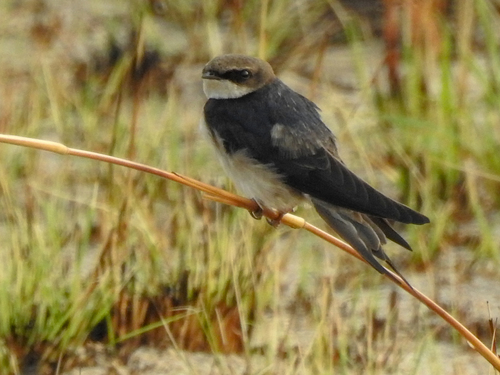 Gray-rumped Swallow
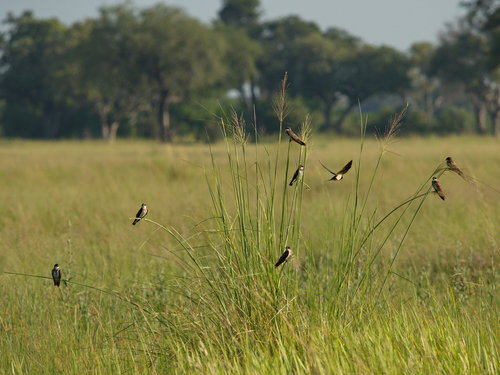 Banded Martin
In breve
Il modo più affidabile per separare il Gray-rumped Swallow dal Banded Martin è cercare il forte nastro scuro sul petto del Banded Martin e le copritrici bianche delle ali inferiori, che sono assenti nel Gray-rumped Swallow. In volo o posato, il Banded Martin mostra una coda quadrata e un distintivo sopracciglio bianco, mentre il Gray-rumped Swallow manca di entrambe le caratteristiche. I giovani Banded Martins hanno un nastro sul petto più chiaro e punte dorate sulle piume superiori, ma mostrano comunque il nastro sul petto. Entrambe le specie sono simili in dimensioni e spesso si sovrappongono in distribuzione e habitat, quindi prestare attenzione al modello delle parti inferiori e alla forma della coda è cruciale per un'identificazione sicura.
Consigli di identificazione
- Cerca un nastro scuro sul petto: Il Banded Martin mostra sempre un forte nastro scuro sul petto, anche nei giovani (sebbene più chiari), mentre il Gray-rumped Swallow non ha mai un nastro sul petto. Questo è il segno di campo più affidabile in tutte le età e stagioni.
- Controlla un sopracciglio bianco: Il Banded Martin ha una striscia bianca distintiva sopra l'occhio, che manca nel Gray-rumped Swallow. Questo è visibile sia posato che in buone viste in volo.
- Esamina le copritrici delle ali inferiori: Il Banded Martin ha copritrici bianche delle ali inferiori, che possono essere viste in volo e contrastano con le parti superiori marrone terra. Il modello delle ali inferiori del Gray-rumped Swallow non è descritto come contrastante o bianco.
- Forma della coda: Il Banded Martin ha una coda quadrata, che è un buon segno strutturale in volo o quando è posato con la coda aperta. Il Gray-rumped Swallow non ha una coda quadrata.
- Colore e lucentezza delle parti superiori: Il Banded Martin è marrone terra sopra, con alcune variazioni tra le sottospecie. Le parti superiori del Gray-rumped Swallow non sono descritte in dettaglio, ma il nome suggerisce un groppone grigio, che potrebbe essere visibile in buone viste.
- Segni giovanili: I giovani Banded Martins mostrano un nastro sul petto più chiaro e punte dorate sulle piume superiori, ma il nastro è sempre presente. I giovani Gray-rumped Swallow non sono descritti come aventi alcun nastro sul petto o punte dorate.
- Colore della gola: Il Banded Martin ha una gola bianca, che può aiutare a distinguerlo da altre rondini marroni, ma non è descritta per il Gray-rumped Swallow.
- Comportamento di stormo: Il Banded Martin è meno gregario rispetto ad altre rondini, spesso visto in coppie o piccoli gruppi. Se vedi un grande stormo compatto, considera il Gray-rumped Swallow, ma questo non è un forte separatore tra queste due specie.
- Contesto dell'habitat: Entrambe le specie utilizzano habitat aperti vicino all'acqua, quindi l'habitat non è un separatore affidabile, ma il Banded Martin evita le regioni più secche.
- Dimensioni: Entrambi sono rondini di dimensioni medie; non fare affidamento sulla dimensione per la separazione.
- Differenze sessuali: Entrambe le specie sono sessualmente monomorfiche; non usare il sesso per l'identificazione.
- Movimenti stagionali: Alcune sottospecie di Banded Martin sono migratorie, ma entrambe le specie possono essere trovate in aree sovrapposte per gran parte dell'anno.
- Vocalizzazioni: Non sono descritti richiami o canti diagnostici nelle fonti; non usare la voce per la separazione.
- Confusione con altre rondini: Il Banded Martin è facilmente distinto dai topini per la sua coda quadrata e le ali inferiori bianche, ma quando si confronta solo con il Gray-rumped Swallow, concentrati sul nastro sul petto e sul sopracciglio.
- Quando hai dubbi: Se non riesci a vedere chiaramente le parti inferiori, prova a dare un'occhiata al viso per il sopracciglio o alla forma della coda in volo.
Taglia
Entrambe le specie sono simili in dimensioni complessive, con il Banded Martin che misura 15–17 cm di lunghezza. Non è fornita alcuna misura diretta per il Gray-rumped Swallow, ma entrambe sono rondini di dimensioni medie e poco probabile che vengano separate in modo affidabile solo per dimensione sul campo. I sessi sono simili in entrambe le specie.
Piumaggio
- Uccelli giovani/immaturi: I giovani Banded Martins hanno un nastro sul petto più chiaro e punte dorate sulle piume superiori, ma il nastro è sempre presente, che non si vede mai nel Gray-rumped Swallow di alcuna età. Il piumaggio giovanile nel Gray-rumped Swallow non è descritto come distintivo, quindi la mancanza di un nastro sul petto rimane diagnostica in tutte le età.
- Adulti: I Banded Martins adulti hanno parti superiori marrone terra, un sopracciglio bianco, parti inferiori bianche con un forte nastro scuro sul petto e copritrici bianche delle ali inferiori. Il Gray-rumped Swallow manca del nastro sul petto e del sopracciglio, e ha invece un groppone grigio (come suggerisce il nome), ma i dettagli del suo modello delle ali inferiori non sono specificati. Le copritrici bianche delle ali inferiori del Banded Martin sono un segno utile in volo.
- Coda: Il Banded Martin ha una coda quadrata, mentre la forma della coda del Gray-rumped Swallow non è descritta, ma manca dell'aspetto quadrato.
- Gola: Il Banded Martin ha una gola bianca; la gola del Gray-rumped Swallow non è descritta come contrastante.
Comportamento
Il Banded Martin è meno gregario rispetto ad altre rondini e viene tipicamente visto in coppie o piccoli stormi. Non sono fornite note comportamentali specifiche per il Gray-rumped Swallow, ma entrambe le specie sono insetti aerei e possono essere viste volare su habitat aperti. La tendenza del Banded Martin a essere meno sociale può essere un indizio sottile se si osserva un comportamento di stormo.
Habitat
Entrambe le specie sono diffuse in tutta l'Africa sub-sahariana e possono verificarsi in habitat aperti simili come terreni agricoli, praterie e savane, di solito vicino all'acqua. Il Banded Martin è assente dalle parti più secche del sud-ovest del Sudafrica e del sud della Namibia, ma altrimenti si sovrappone ampiamente con il Gray-rumped Swallow. L'habitat da solo non è un separatore affidabile, ma la preferenza del Banded Martin per le aree aperte vicino all'acqua può essere leggermente più pronunciata.
Gray-rumped Swallow · Banded Martin · I miei uccelli difficili