

Motmot

ヨタカ 対 シロアゴヨタカ

Caprimulgus jotaka 対 Caprimulgus affinis

ヨタカとシロアゴヨタカのクイズ
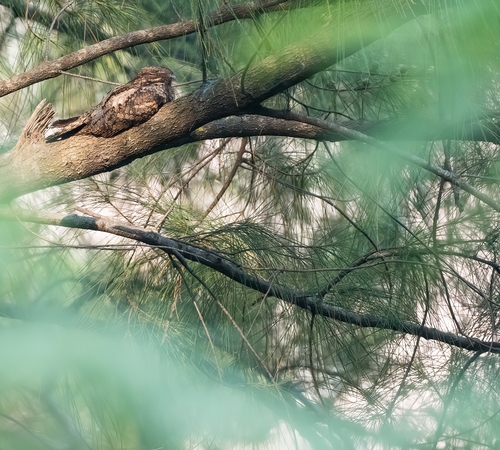
ヨタカ (Caprimulgus jotaka) ヨタカ
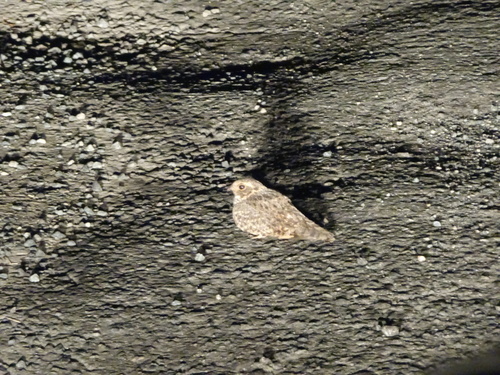
シロアゴヨタカ (Caprimulgus affinis) シロアゴヨタカ

メディア

読み込み中…

要点

ヨタカとシロアゴヨタカの最も信頼できるフィールドマークは、特に成鳥のオスにおける翼と尾の白い斑点の存在と配置です。ヨタカのオスは、第一次羽に白い斑点、第二次から第四次羽に白い帯、外尾羽に白い亜端斑点を示します—これらの特徴は、雌のヨタカや成鳥のオスを除くすべてのシロアゴヨタカにはありません。両種は暗色模様ですが、螺旋模様の配置や色合い、白または赤褐色の色合いの程度とトーンの微妙な違いは、良好な視界で役立ちます。飛行中、ヨタカは通常静かで、ゆっくりとした滑空するような羽ばたきを示しますが、シロアゴヨタカは大きな音で鳴くため、検出される可能性が高いです。年齢と性別は重要です:両種の雌と幼鳥はほとんどの白い斑点を欠いており、分離がはるかに難しく、微細な羽毛や構造的な詳細に依存します。

識別のコツ

  1. 翼の白い斑点(成鳥のオス): ヨタカのオスでは、第一一次羽に白い円形の斑点と第二次から第四次羽に白い帯を探してください。シロアゴヨタカのオスは翼に白がありますが、この正確なパターンではありません;斑点はあまり明確に定義されておらず、特定の一次羽に限定されていません。
  2. 尾の白い亜端斑点(成鳥のオス): ヨタカのオスは外尾羽の先端付近に目立つ白い斑点を示します。これは雌のヨタカや成鳥のオスを除くすべてのシロアゴヨタカにはありませんが、成鳥のオスでは白があまり広がっておらず、あまり明確に定義されていません。
  3. 喉の斑点: 両種のオスは白い喉の斑点を持っていますが、ヨタカではより目立ち、明確に定義されています。雌のヨタカは小さく、茶色がかった喉の斑点を持ち、雌のシロアゴヨタカは微妙で対照的でない斑点を持っています。
  4. 雌/幼鳥の白の欠如: 雌と幼鳥のヨタカは翼と尾に白がなく、すべての雌と幼鳥のシロアゴヨタカも同様です。これらの年齢では、全体のトーンとパターンの微妙な違いに依存してください。
  5. 赤褐色の色合い(雌/幼鳥のシロアゴヨタカ): 雌と幼鳥のシロアゴヨタカは、特にヨタカの冷たい灰褐色と比較して、羽毛に赤褐色またはルフスの色合いを示すことがよくあります。
  6. 冠と肩羽の模様: ヨタカは目立つ黒い冠のストライプと茶色がかった黄色の斑点を持つ黒い肩羽を持っていますが、シロアゴヨタカはより均一に螺旋模様で、強い冠のストライプが欠けています。
  7. 顔の模様: ヨタカはより明確な眉と耳羽を示し、黄褐色と黒のストライプがあります;シロアゴヨタカの顔はより地味です。
  8. 飛行スタイル: ヨタカは飛行中静かで、ゆっくりとした滑空するような羽ばたきと頻繁なホバリングを示します。シロアゴヨタカはより直接的で、しばしばその鳴き声で検出されます。
  9. 鳴き声: 夜に大きな音で鳴く声を聞いた場合(特に都市部で)、それはほぼ確実にシロアゴヨタカです。ヨタカは通常、飛行中静かです。
  10. 生息地の文脈: 都市部、特に平らな屋根の上では、シロアゴヨタカの方が可能性が高いです。ヨタカは草地の斜面や森林地域を好みます。
  11. 休息姿勢: ヨタカはしばしば枝に平行に休み、周囲に溶け込んでいます;シロアゴヨタカもカモフラージュに依存しますが、開けた地面や屋根の上に見られることがあります。
  12. 腹部の帯状模様: ヨタカは胸により明確な水平の帯状模様があり、より淡い、細かく帯状模様のある腹部を持っています。シロアゴヨタカはより均一にまだら模様です。
  13. 目とくちばしの構造: 両方とも大きな目と広い口を持っていますが、これらの特徴はフィールドで信頼できる分離はできません。
  14. サイズ: 信頼できる分離要因ではありません;両方とも中型のヨタカで、サイズの測定が重なっています。
  15. 季節的な移動: ヨタカはその範囲の北部で移動性があり、タイミングと場所が役立つかもしれません;シロアゴヨタカはより定住的で、都市環境に適応しています。

大きさ

両種は中型のヨタカで、サイズの範囲が重なっています。シロアゴヨタカは長さ20〜26 cm、体重54〜110 g(平均82.5 g)、翼幅は約64 cmと記録されています [wikidata, wikipedia]。提供されたメモにはヨタカの直接的な測定値はありませんが、中型でシロアゴヨタカと構造が似ていると記述されています。フィールドでは、サイズはこれら二つの間で信頼できる分離要因ではなく、両方とも大きな頭、長い尾、類似した全体の比率を持っています。

羽色

羽毛の分離は年齢と性別に大きく依存します。

行動

両種は夜行性で、夕暮れや夜に昆虫を捕食し、空中でのサリーを使用します。ヨタカは飛行中静かで、ゆっくりとした羽ばたきと頻繁な滑空やホバリングを示し、しばしば円を描いて飛びますが、獲物を追うときには鋭く不規則なターンが可能です。昼間は、枝に平行に休んだり、草地の斜面に休んだりして、周囲に溶け込んでいます。シロアゴヨタカもサリーで狩りをし、大きな目と広い口で昆虫を捕まえ、特に都市部での夜に大きな音で鳴くことで知られています。いくつかの文脈では、見られるよりも聞かれる可能性が高いです。両種は昼間に休息し、カモフラージュに依存します。

生息環境

ヨタカは東アジアで、南東ロシアから中国、韓国、日本を経て、北インドシナとヒマラヤまで繁殖します。北部では移動性があり、南はジャワで越冬しますが、温暖な南部では定住しています。シロアゴヨタカは南アジアと東南アジアに生息し、一部の個体群は都市部(例:台湾)に拡大しています。両種は巣作りのために開けたまたは半開けた生息地を好みますが、シロアゴヨタカは開けた岩の土壌、露出した地面、または平らな都市の屋根で見られる可能性が高く、ヨタカは草地の斜面や森林地域に関連しています。

声

ヨタカは飛行中静かで、メモには特定の鳴き声は詳細に記載されていません。一方、シロアゴヨタカは非常に大きな音で鳴くことで有名で(最大90デシベル)、特に繁殖期や都市環境で、耳で検出される可能性が高いです。この違いは、夜間にしばしば診断的です。

より良い説明を送る

比較と同じ項目を使ってください。文章はすぐに公開されます。

The most reliable field mark between Grey Nightjar and Savanna Nightjar is the presence and placement of white patches on the wings and tail, especially in adult males. Grey Nightjar males show a white patch on the first primary and white bars on the second to fourth primaries, as well as a white subterminal patch on the outer tail feathers—features absent in female Grey Nightjars and all Savanna Nightjars except adult males, who have white patches but with different patterning. Both species are cryptically patterned, but subtle differences in the arrangement and color of vermiculations, as well as the extent and tone of white or reddish tints, are useful with good views. In flight, the Grey Nightjar is typically silent and shows slow, gliding wingbeats, while Savanna Nightjar is more likely to be detected by its loud, booming call. Age and sex are critical: females and immatures of both species lack most white patches, making separation much more challenging and reliant on fine plumage and structural details.

  1. White patches on wings (adult males): Look for a white circular patch on the first primary and white bars on the second to fourth primaries in Grey Nightjar males. Savanna Nightjar males have white in the wings, but not in this precise pattern; the patches are less sharply defined and not confined to specific primaries.
  2. White subterminal tail patch (adult males): Grey Nightjar males show a prominent white patch near the tip of the outer tail feathers. This is absent in female Grey Nightjars and all Savanna Nightjars except adult males, where the white is less extensive and less sharply defined.
  3. Throat patch: Both species' males have a white throat patch, but in Grey Nightjar it is more conspicuous and sharply defined. Female Grey Nightjars have a smaller, brown-tinged throat patch; female Savanna Nightjars have a subtle, less contrasting patch.
  4. Absence of white in females/immatures: Female and immature Grey Nightjars lack white in the wings and tail, as do all female and juvenile Savanna Nightjars. In these ages, rely on subtle differences in overall tone and pattern.
  5. Reddish tinge (female/immature Savanna Nightjar): Female and immature Savanna Nightjars often show a reddish or rufous tinge to their plumage, especially compared to the colder grey-brown of Grey Nightjar.
  6. Crown and scapular pattern: Grey Nightjar has a prominent black crown stripe and black scapulars with brownish-yellow spots, while Savanna Nightjar is more uniformly vermiculated and lacks the strong crown stripe.
  7. Facial pattern: Grey Nightjar shows a more distinct supercilium and ear-coverts with yellowish-brown and black streaks; Savanna Nightjar's face is plainer.
  8. Flight style: Grey Nightjar is silent in flight, with slow, gliding wingbeats and frequent hovering. Savanna Nightjar may be more direct and is often detected by its call.
  9. Vocalization: If you hear a loud, booming call at night (especially in urban areas), it is almost certainly Savanna Nightjar. Grey Nightjar is typically silent in flight.
  10. Habitat context: In urban areas, especially on flat rooftops, Savanna Nightjar is more likely. Grey Nightjar prefers grassy slopes and wooded areas.
  11. Resting posture: Grey Nightjar often rests parallel to branches, blending in closely; Savanna Nightjar also relies on camouflage but may be found on open ground or roofs.
  12. Underpart barring: Grey Nightjar has more distinct horizontal barring on the chest and a paler, more finely barred belly. Savanna Nightjar is more uniformly mottled below.
  13. Eye and bill structure: Both have large eyes and wide gapes, but these features are not reliably separable in the field.
  14. Size: Not a reliable separator; both are medium-sized nightjars with overlapping measurements.
  15. Seasonal movement: Grey Nightjar is migratory in the north of its range, so timing and location may help; Savanna Nightjar is more resident and adaptable to urban settings.

Both species are medium-sized nightjars with overlapping size ranges. The Savanna Nightjar is documented at 20–26 cm in length, with a body mass of 54–110 g (mean 82.5 g) and a wingspan of about 64 cm [wikidata, wikipedia]. No direct measurements are available for Grey Nightjar in the provided notes, but it is described as medium-sized and similar in structure to Savanna Nightjar. In the field, size is not a reliable separator between these two, as both have large heads, long tails, and similar overall proportions.

Plumage separation depends heavily on age and sex.

  • Adult males: Grey Nightjar males have a prominent white patch on the first primary, white bars on the second to fourth primaries, and a white subterminal patch on the outer tail feathers. Savanna Nightjar males also have white patches on the throat, tail, and wings, but the pattern differs: the wing patches are less distinctly placed on the primaries, and the tail patch is not as sharply defined as in Grey Nightjar.
  • Females and immatures: Both species' females and juveniles lack white patches on the tail and flight feathers. Female Grey Nightjars may have a smaller, brown-tinged throat patch and no white in the wings or tail, while female Savanna Nightjars show a subtle throat patch, a reddish tinge to the plumage, and lack white tail patches. Juvenile Savanna Nightjars resemble adult females: mottled, with no white patches and a more reddish overall tone.
  • Upperparts: Grey Nightjar shows intricate grayish-white and dark brown vermiculations with a prominent black crown stripe and brownish-yellow scapular spots. Savanna Nightjar is more uniformly vermiculated grey-brown, with less contrast and a generally duller appearance.
  • Underparts: Both are barred and mottled, but Grey Nightjar tends to have more distinct horizontal barring on the chest and a paler, more finely barred belly.
  • Facial pattern: Both have large eyes and facial rictal bristles, but Grey Nightjar's supercilium and ear-coverts are more distinctly marked with yellowish-brown and black streaks.

Both species are nocturnal and forage for insects at dusk and night, using aerial sallies. Grey Nightjar is described as silent in flight, with slow wingbeats and frequent gliding or hovering, often flying in circles but capable of sharp, erratic turns when chasing prey. During the day, it rests parallel to branches or on grassy slopes, blending in with its surroundings. Savanna Nightjar also hunts by sallying, with large eyes and a wide gape for catching insects, and is noted for its booming, loud call at night, especially in urban areas. It is more likely to be heard than seen in some contexts. Both species rest during the day and rely on camouflage.

Grey Nightjar breeds in East Asia from southeastern Russia through China, Korea, and Japan, south to northern Indochina and the Himalayas. It is migratory in the north, wintering south to Java, but resident in warmer southern areas. Savanna Nightjar occupies South and Southeast Asia, with some populations expanding into urban areas (e.g., Taiwan). Both species prefer open or semi-open habitats for nesting, but Savanna Nightjar is more likely to be found in open rocky soils, exposed ground, or even flat urban rooftops, while Grey Nightjar is more associated with grassy slopes and wooded areas.

Grey Nightjar is described as silent in flight and no specific call is detailed in the notes. Savanna Nightjar, by contrast, is famous for its extremely loud, booming call (up to 90 decibels), especially during the breeding season and in urban environments, making it much more likely to be detected by ear than by sight. This difference is often diagnostic at night.

変更を破棄しますか?

保存していない編集があります。今離れると失われます。

ヨタカ · シロアゴヨタカ · 苦手な鳥