

Motmot

ハイガシラハギマシコ 対 チャボウシハギマシコ

Leucosticte tephrocotis 対 Leucosticte australis

ハイガシラハギマシコとチャボウシハギマシコのクイズ
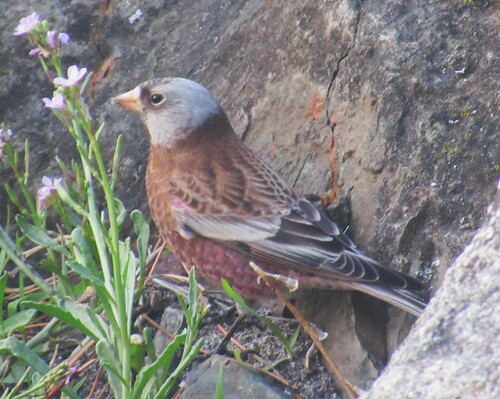
ハイガシラハギマシコ (Leucosticte tephrocotis) ハイガシラハギマシコ
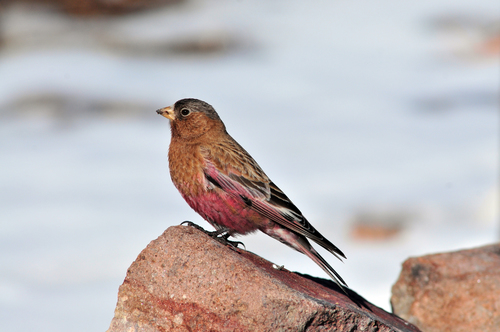
チャボウシハギマシコ (Leucosticte australis) チャボウシハギマシコ

メディア

読み込み中…

要点

ハイガシラハギマシコとチャボウシハギマシコを区別する最も信頼できるフィールドマークは頭の模様です:Grey-crownedは常に明確な灰色の後頭部と後頭を示し、黒っぽい額と喉と対照的です。一方、Brown-cappedは頭が均一に茶色で、灰色の冠の斑点がありません。両種は中型から大型の、ピンクがかったフィンチで、茶色の背中と黒っぽい脚を持っていますが、頭の色の違いは遠くからでも見えます。すべての羽色で、冠と後頭の広がりと色を確認してください。両種は腹部と翼にピンクを示すことがありますが、ピンクの分布と強度は頭の模様ほど診断的ではありません。生息地も手助けになります:Grey-crownedは北部と西部の遠隔の高山地域に生息し、Brown-cappedは中央ロッキー山脈に限定されています。

識別のコツ

  1. Head pattern is key: Grey-crownedは常に淡い灰色の後頭部と後頭を示し、黒っぽい額と喉と対照的です;Brown-cappedの頭は均一に茶色で、時々黒っぽいまたは灰色がかった茶色の額がありますが、決して対照的な灰色の冠はありません。このマークはすべての年齢と季節に有効です。
  2. Check for gray on the head: 冠または後頭に明確な灰色の斑点があればBrown-cappedを除外できます。頭が完全に茶色で灰色がない場合は、Brown-cappedを疑ってください。
  3. Forehead color: 両種は暗い(黒っぽい)額を示すことがありますが、Grey-crownedだけが灰色の後頭を持っています。Brown-cappedの額は黒っぽいまたは灰色がかった茶色である可能性がありますが、冠の残りは茶色のままです。
  4. Pink on underparts: 両種は腹部、尾、翼にピンクを持っていますが、これは変動があり重複します。オスはより明るいピンクで、メスや幼鳥は鈍いです。ピンクの強度だけに頼らないでください。
  5. Bill color (seasonal): Brown-cappedは冬に黄色いくちばしを持ち、夏には黒くなります;Grey-crownedのくちばしの色は変化するとは指定されていません。これは微妙なマークで、遠くからは見えないかもしれません。
  6. Tail and leg color: 両種は長い切れ込みのあるまたは分岐した尾と黒い脚を持っています。区別には役立ちません。
  7. Size and structure: 両種は中型から大型の、ずんぐりしたフィンチで、比例が似ています。最大のGrey-crowned亜種のみが著しく大きいですが、これらは範囲が制限されています。
  8. Juvenile/female confusion: 両性と年齢は各種内で似ているため、頭の模様が最良のマークとなります。どちらの種にも特徴的な幼鳥の翼の模様は記載されていません。
  9. Flock composition: 両種は他のハギマシコや地面を採餌する鳥と混合した群れに参加することがあります。群れの構成は信頼できる手がかりではありません。
  10. Habitat and range: 中央ロッキー山脈、特にコロラドではBrown-cappedが期待されます。アラスカ、西カナダ、または北西部の米国、特に非常に高いまたは遠隔の高山地域ではGrey-crownedが期待されます。
  11. Seasonal movement: 冬にはBrown-cappedが低い標高に降りて餌台を訪れることがあり、Grey-crownedは平原で大きな群れを形成しますが、春の早い段階で高山地域に戻ります。
  12. Approachability: 両種はおとなしく、近づくことを許します。区別には役立ちません。
  13. Voice: 両種はブザー音のような鳴き声を出します;フィールドで信頼できる区別はできません。
  14. Subspecies confusion: 一部のGrey-crowned亜種(例:L. t. wallowa)は頭により広範な灰色を持っていますが、すべてに少なくとも一部の灰色の後頭/冠があります。Brown-cappedは決して灰色の後頭を示しません。
  15. When in doubt: まず頭の模様に焦点を当て、その後範囲と生息地を補助的な手がかりとして使用してください。灰色の後頭/冠を持つハギマシコを見た場合、それはGrey-crownedです;頭がすべて茶色であれば、それはBrown-cappedです。

大きさ

両種はサイズと構造が似ており、中型から大型のハギマシコで、長い切れ込みのあるまたは分岐した尾と比較的長い翼を持っています。ハイガシラハギマシコは通常、長さ140–160 mm、翼幅約33 cm、体重22–60 gです。チャボウシハギマシコは中型と記載されていますが、正確な測定値は与えられていません;Grey-crownedよりも著しく大きいまたは小さいわけではありません。最大のGrey-crowned亜種(Pribilof/Aleutian)ははるかに大きいですが、これらはBrown-cappedの範囲外であり、フィールドで混同される可能性は低いです。両種は短い黒い脚と似た全体的な体型を持っています。

羽色

行動

両種は高山またはツンドラの生息地で地面を採餌し、しばしば群れで行動し、昆虫を捕まえるために飛ぶことがあります。両種は近づきやすく、人間に対してあまり恐れを示しません。冬には、両種は他のハギマシコや地面を採餌する鳥と混合した群れに参加することがあります。巣作りの行動は似ており、崖や隙間の保護された場所にカップ状の巣を作ります。Brown-cappedは崖のツバメの巣を再利用することがありますが、Grey-crownedは時々鉱山のシャフトや放棄された建物を使用します。両種は雛に餌を与えるための喉の袋を発達させます。行動の違いはフィールドでの区別には信頼できません。

生息環境

生息地は有用な補助的手がかりです。ハイガシラハギマシコはアラスカから西カナダ、北西部の米国にかけての遠隔の岩の多い高山地域で繁殖し、しばしば非常に高い標高で、荒れた雪原の多い地形に生息します。チャボウシハギマシコは米国の中央ロッキー山脈に限定され、山のピークや高山の雪原で繁殖します。冬にはBrown-cappedが低い標高に降りて餌台を訪れることがあり、Grey-crownedは西部の平原で大きな群れを形成します。中央ロッキー山脈、特にコロラドにいる場合、Brown-cappedの方が可能性が高いです;北部または西部、特に非常に高く、遠隔または沿岸の山脈ではGrey-crownedが期待されます。

声

両種はブザー音のような鳴き声を出します;Grey-crownedの鳴き声は「チュー」と表現されています。メモには鳴き声の詳細な比較はなく、鳴き声はフィールドで信頼できる区別とは見なされていません。

より良い説明を送る

比較と同じ項目を使ってください。文章はすぐに公開されます。

The most reliable field mark to separate Grey-crowned from Brown-capped Rosy-Finch is the head pattern: Grey-crowned always shows a distinct gray nape and hindcrown, contrasting with a blackish forehead and throat, while Brown-capped is uniformly brown on the head, lacking the gray crown patch. Both species are medium-large, pink-tinged finches with brown backs and blackish legs, but the head color difference is visible even at a distance. In all plumages, check for the extent and color of the crown and nape. Both species can show pink on the underparts and wings, but the distribution and intensity of pink is not as diagnostic as the head pattern. Habitat can help: Grey-crowned is found farther north and west in remote alpine areas, while Brown-capped is restricted to the central Rockies.

  1. Head pattern is key: Grey-crowned always shows a pale gray nape and hindcrown, contrasting with a blackish forehead and throat; Brown-capped's head is uniformly brown, sometimes with a blackish or grayish-brown forehead, but never with a contrasting gray crown. This mark works for all ages and seasons.
  2. Check for gray on the head: Any clear gray patch on the crown or nape rules out Brown-capped. If the head is entirely brown, with no gray, suspect Brown-capped.
  3. Forehead color: Both can show a dark (blackish) forehead, but only Grey-crowned has the gray nape. Brown-capped's forehead may be blackish or grayish-brown, but the rest of the crown remains brown.
  4. Pink on underparts: Both species have pink on the belly, rump, and wings, but this is variable and overlaps. Males are brighter pink; females and immatures duller. Do not rely on pink intensity alone.
  5. Bill color (seasonal): Brown-capped has a yellow bill in winter, black in summer; Grey-crowned's bill color is not specified as changing. This is a subtle mark and may not be visible at a distance.
  6. Tail and leg color: Both have long, notched or forked tails and black legs. Not useful for separation.
  7. Size and structure: Both are medium-large, chunky finches with similar proportions. Only the largest Grey-crowned subspecies are notably bigger, but these are range-restricted.
  8. Juvenile/female confusion: Both sexes and ages are similar within each species, so head pattern remains the best mark. No distinctive juvenile wing pattern is described for either.
  9. Flock composition: Both species may join mixed flocks with other rosy-finches and ground-foraging birds. Flock composition is not a reliable clue.
  10. Habitat and range: In the central Rockies, especially Colorado, Brown-capped is expected. In Alaska, western Canada, or the northwestern US, especially in very high or remote alpine areas, expect Grey-crowned.
  11. Seasonal movement: In winter, Brown-capped may descend to lower elevations and visit feeders; Grey-crowned forms large flocks on the plains but returns to alpine regions early in spring.
  12. Approachability: Both species are tame and allow close approach. Not a useful separator.
  13. Voice: Both give buzzy calls; not reliably separable in the field.
  14. Subspecies confusion: Some Grey-crowned subspecies (e.g., L. t. wallowa) have more extensive gray on the head, but all have at least some gray nape/crown. Brown-capped never shows a gray nape.
  15. When in doubt: Focus on the head pattern first, then use range and habitat as supporting clues. If you see a rosy-finch with a gray nape/crown, it's Grey-crowned; if the head is all brown, it's Brown-capped.

Both species are similar in size and structure, being medium-large rosy-finches with long, notched or forked tails and relatively long wings. Grey-crowned Rosy-Finch typically measures 140–160 mm in length with a wingspan of about 33 cm, and weighs 22–60 g. Brown-capped Rosy-Finch is described as medium-sized but no precise measurements are given; it is not notably larger or smaller than Grey-crowned. The largest Grey-crowned subspecies (Pribilof/Aleutian) are much bigger, but those are outside the range of Brown-capped and unlikely to be confused in the field. Both have short black legs and a similar overall build.

  • Juvenile/First-year/Immature: Both species' juveniles and females resemble adults in overall pattern, so the head color remains the key mark at all ages. No distinctive juvenile upperwing pattern is described for either species; focus on head and body color.
  • Adult breeding: Grey-crowned: Brown back and breast, bright pink on belly, flanks, and wings, black forehead and throat, and a clear gray nape and hindcrown. Brown-capped: Brown head, back, and breast, pink on belly and rump (and some pink on wings/tail), but head is uniformly brown without a gray crown. Forehead can be blackish or grayish-brown, but never with a contrasting gray nape. Bill color differs seasonally in Brown-capped (yellow in winter, black in summer), but this is subtle at a distance. Both sexes are similar, but female Brown-capped shows less pink.
  • Nonbreeding: Both species are duller, but the head pattern persists: Grey-crowned always shows the gray crown/nape, Brown-capped always lacks it.

Both species forage on the ground in alpine or tundra habitats, often in flocks, and may fly to catch insects. They are both approachable and show little fear of humans. In winter, both may join mixed-species flocks with other rosy-finches and ground-foraging birds. Nesting behavior is similar, with cup nests built in sheltered locations on cliffs or in crevices. Brown-capped may reuse cliff swallow nests, while Grey-crowned sometimes uses mine shafts or abandoned buildings. Both develop throat pouches for feeding chicks. Behavioral differences are not reliable for field separation.

Habitat is a useful supporting clue. Grey-crowned Rosy-Finch breeds in remote, rocky alpine zones from Alaska through western Canada to the northwestern US, often at extremely high elevations and in barren, snowfield-rich terrain. Brown-capped Rosy-Finch is restricted to the central Rocky Mountains of the US, breeding on mountain peaks and alpine snowfields. In winter, Brown-capped descends to lower elevations and may visit feeders, while Grey-crowned forms large flocks on the western plains. If you are in the central Rockies, especially Colorado, Brown-capped is more likely; farther north or west, especially in very high, remote, or coastal ranges, expect Grey-crowned.

Both species give buzzy calls; Grey-crowned's is described as a 'chew.' There is no detailed comparison of vocalizations in the notes, and calls are not considered reliably separable in the field.

変更を破棄しますか?

保存していない編集があります。今離れると失われます。

ハイガシラハギマシコ · チャボウシハギマシコ · 苦手な鳥