

Gray-crowned Rosy-Finch vs Brown-capped Rosy-Finch
Leucosticte tephrocotis contro Leucosticte australis
Fai un quiz con Gray-crowned Rosy-Finch e Brown-capped Rosy-Finch
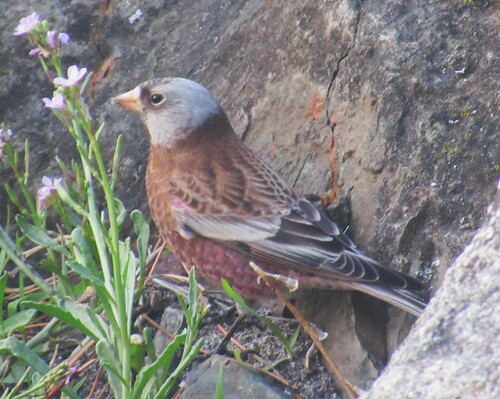 Gray-crowned Rosy-Finch
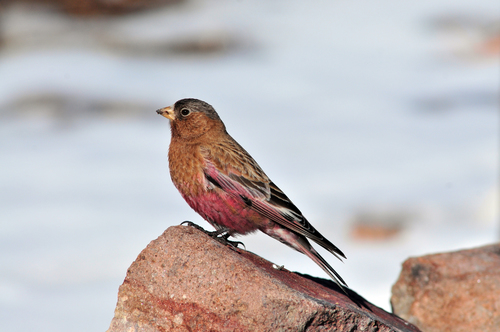 Brown-capped Rosy-Finch
In breve
Il segno distintivo più affidabile per separare il Gray-crowned Rosy-Finch dal Brown-capped Rosy-Finch è il motivo della testa: il Gray-crowned mostra sempre una nuca e un retro della testa grigi distintivi, in contrasto con una fronte e una gola nerastre, mentre il Brown-capped è uniformemente marrone sulla testa, privo della macchia grigia sulla corona. Entrambe le specie sono fringuelli di dimensioni medie-grandi, con una sfumatura rosa, schiena marrone e gambe nerastre, ma la differenza di colore della testa è visibile anche a distanza. In tutte le livree, controlla l'estensione e il colore della corona e della nuca. Entrambe le specie possono mostrare rosa sulle parti inferiori e sulle ali, ma la distribuzione e l'intensità del rosa non sono così diagnostiche come il motivo della testa. L'habitat può aiutare: il Gray-crowned si trova più a nord e a ovest in aree alpine remote, mentre il Brown-capped è limitato alle Montagne Rocciose centrali.
Consigli di identificazione
- Il motivo della testa è fondamentale: il Gray-crowned mostra sempre una nuca e un retro della testa grigi chiari, in contrasto con una fronte e una gola nerastre; la testa del Brown-capped è uniformemente marrone, a volte con una fronte nerastra o marrone-grigia, ma mai con una corona grigia in contrasto. Questo segno è valido per tutte le età e stagioni.
- Controlla se ci sono grigi sulla testa: Qualsiasi chiara macchia grigia sulla corona o sulla nuca esclude il Brown-capped. Se la testa è completamente marrone, senza grigio, sospetta il Brown-capped.
- Colore della fronte: Entrambi possono mostrare una fronte scura (nerastra), ma solo il Gray-crowned ha la nuca grigia. La fronte del Brown-capped può essere nerastra o marrone-grigia, ma il resto della corona rimane marrone.
- Rosa sulle parti inferiori: Entrambe le specie hanno rosa sulla pancia, sul dorso e sulle ali, ma questo è variabile e si sovrappone. I maschi sono di un rosa più brillante; le femmine e gli immaturi sono più opachi. Non fare affidamento solo sull'intensità del rosa.
- Colore del becco (stagionale): Il Brown-capped ha un becco giallo in inverno, nero in estate; il colore del becco del Gray-crowned non è specificato come variabile. Questo è un segno sottile e potrebbe non essere visibile a distanza.
- Colore della coda e delle gambe: Entrambi hanno code lunghe, incise o forked e gambe nere. Non utile per la separazione.
- Dimensioni e struttura: Entrambi sono fringuelli di dimensioni medie-grandi, robusti, con proporzioni simili. Solo le sottospecie più grandi del Gray-crowned sono notevolmente più grandi, ma queste sono limitate nel loro areale.
- Confusione giovanile/femminile: Entrambi i sessi e le età sono simili all'interno di ciascuna specie, quindi il motivo della testa rimane il segno migliore. Non è descritto alcun motivo distintivo delle ali giovanili per nessuna.
- Composizione del gruppo: Entrambe le specie possono unirsi a gruppi misti con altri fringuelli rosa e uccelli che foraggiano a terra. La composizione del gruppo non è un indizio affidabile.
- Habitat e areale: Nelle Montagne Rocciose centrali, specialmente in Colorado, ci si aspetta il Brown-capped. In Alaska, Canada occidentale o nel nord-ovest degli Stati Uniti, specialmente in aree alpine molto alte o remote, ci si aspetta il Gray-crowned.
- Movimento stagionale: In inverno, il Brown-capped può scendere a quote più basse e visitare i mangiatoie; il Gray-crowned forma grandi gruppi nelle pianure ma torna nelle regioni alpine all'inizio della primavera.
- Avvicinabilità: Entrambe le specie sono docili e permettono un avvicinamento ravvicinato. Non è un separatore utile.
- Voce: Entrambi emettono richiami ronzanti; non sono separabili in modo affidabile sul campo.
- Confusione delle sottospecie: Alcune sottospecie di Gray-crowned (ad es., L. t. wallowa) hanno più grigio sulla testa, ma tutte hanno almeno una parte della nuca/corona grigia. Il Brown-capped non mostra mai una nuca grigia.
- Quando hai dubbi: Concentrati prima sul motivo della testa, poi usa l'areale e l'habitat come indizi di supporto. Se vedi un fringuello rosa con una nuca/corona grigia, è un Gray-crowned; se la testa è completamente marrone, è un Brown-capped.
Taglia
Entrambe le specie sono simili in dimensioni e struttura, essendo fringuelli rosa di dimensioni medie-grandi con code lunghe, incise o forked e ali relativamente lunghe. Il Gray-crowned Rosy-Finch misura tipicamente 140–160 mm di lunghezza con un'apertura alare di circa 33 cm e pesa 22–60 g. Il Brown-capped Rosy-Finch è descritto come di dimensioni medie, ma non vengono forniti misurazioni precise; non è notevolmente più grande o più piccolo del Gray-crowned. Le sottospecie più grandi del Gray-crowned (Pribilof/Aleutian) sono molto più grandi, ma queste sono al di fuori dell'areale del Brown-capped e improbabili da confondere sul campo. Entrambi hanno gambe nere corte e una struttura complessiva simile.
Piumaggio
- Giovanile/Primo anno/Immaturi: I giovanili e le femmine di entrambe le specie assomigliano agli adulti nel motivo generale, quindi il colore della testa rimane il segno chiave a tutte le età. Non è descritto alcun motivo distintivo delle ali superiori giovanili per nessuna delle due specie; concentrati sul colore della testa e del corpo.
- Riproduzione adulta: Gray-crowned: schiena e petto marroni, rosa brillante sulla pancia, fianchi e ali, fronte e gola nere, e una chiara nuca e retro della testa grigi. Brown-capped: testa, schiena e petto marroni, rosa sulla pancia e sul dorso (e un po' di rosa sulle ali/coda), ma la testa è uniformemente marrone senza una corona grigia. La fronte può essere nerastra o marrone-grigia, ma mai con una nuca grigia in contrasto. Il colore del becco varia stagionalmente nel Brown-capped (giallo in inverno, nero in estate), ma questo è sottile a distanza. Entrambi i sessi sono simili, ma la femmina del Brown-capped mostra meno rosa.
- Non riproduzione: Entrambe le specie sono più opache, ma il motivo della testa persiste: il Gray-crowned mostra sempre la corona/nuca grigia, il Brown-capped manca sempre di essa.
Comportamento
Entrambe le specie foraggiano a terra in habitat alpini o di tundra, spesso in gruppi, e possono volare per catturare insetti. Sono entrambe avvicinabili e mostrano poca paura degli esseri umani. In inverno, entrambe possono unirsi a gruppi misti con altri fringuelli rosa e uccelli che foraggiano a terra. Il comportamento di nidificazione è simile, con nidi a coppa costruiti in luoghi riparati su scogliere o in crepe. Il Brown-capped può riutilizzare i nidi delle rondini di scogliera, mentre il Gray-crowned a volte utilizza miniere o edifici abbandonati. Entrambi sviluppano sacche nella gola per nutrire i pulcini. Le differenze comportamentali non sono affidabili per la separazione sul campo.
Habitat
L'habitat è un utile indizio di supporto. Il Gray-crowned Rosy-Finch nidifica in zone alpine remote e rocciose dall'Alaska attraverso il Canada occidentale fino al nord-ovest degli Stati Uniti, spesso a elevazioni estremamente alte e in terreni aridi e ricchi di campi di neve. Il Brown-capped Rosy-Finch è limitato alle Montagne Rocciose centrali degli Stati Uniti, nidificando sulle cime montuose e nei campi di neve alpini. In inverno, il Brown-capped scende a quote più basse e può visitare i mangiatoie, mentre il Gray-crowned forma grandi gruppi nelle pianure occidentali. Se ti trovi nelle Montagne Rocciose centrali, specialmente in Colorado, è più probabile che tu veda il Brown-capped; più a nord o a ovest, specialmente in catene molto alte, remote o costiere, aspettati il Gray-crowned.
Voce
Entrambe le specie emettono richiami ronzanti; quello del Gray-crowned è descritto come un 'chew.' Non c'è un confronto dettagliato delle vocalizzazioni nelle note, e i richiami non sono considerati separabili in modo affidabile sul campo.
Gray-crowned Rosy-Finch · Brown-capped Rosy-Finch · I miei uccelli difficili