

Motmot

ベニサンショウクイ 対 サンショウクイ

Pericrocotus solaris 対 Pericrocotus divaricatus

ベニサンショウクイとサンショウクイのクイズ
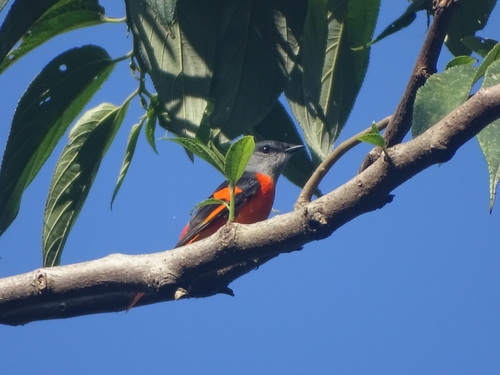
ベニサンショウクイ (Pericrocotus solaris) ベニサンショウクイ
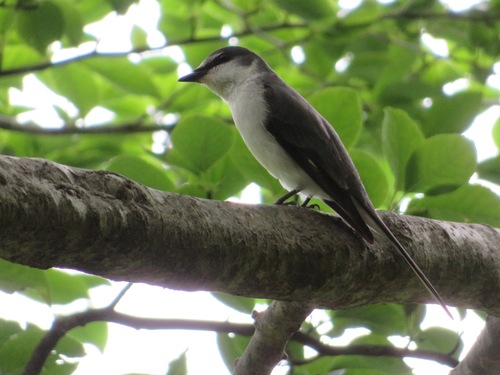
サンショウクイ (Pericrocotus divaricatus) サンショウクイ

メディア

読み込み中…

要点

グレイチンミニベットとサンショウクイの最も信頼できるフィールドマークは、羽毛に明るいオレンジまたは黄色があるかどうかです:グレイチンミニベット(成鳥オス)は腹部、下背部、翼の縁に大胆なオレンジを示しますが、サンショウクイはすべての羽毛で厳密に灰色、白、黒です。未熟なグレイチンミニベットは雌に似ていますが、背中に黄色オリーブのバーがあり、サンショウクイはこれを示しません。飛行中、サンショウクイは飛行羽に白い帯と白い外尾羽で目立ち、グレイチンミニベットにはこれらの特徴がありません。サンショウクイはまた、明らかに重く、長いです。特に止まっている鳥や飛んでいる鳥に対して、これらの色とパターンの違いを最初に使用し、年齢や性別の区別のために頭部と翼のパターンに注意を払ってください。

識別のコツ

  1. 羽毛にオレンジまたは黄色があるか確認:腹部、下背部、または翼の縁にオレンジ(オス)または明るい黄色(雌/未熟)があればグレイチンミニベットを示し、サンショウクイはどの年齢でもこれらの色を示しません。
  2. 白い翼と尾のパネルを探す:サンショウクイは飛行羽に大胆な白い帯と白い外尾羽を持ち、飛行中や止まっているときによく見えます。グレイチンミニベットはこれらの白いパネルがありません。
  3. オスの頭部パターン:サンショウクイのオスは目立つ黒いキャップ、白い額、白い顔、黒い後頭部を持っています。グレイチンミニベットのオスは暗い灰色の頭と背中、淡い灰色の顎、オレンジ黄色の喉を持っています。
  4. 雌の頭部パターン:雌のサンショウクイは灰色のキャップ、くちばしと目の間の黒い帯、そしてその上の狭い白い帯を示します。雌のグレイチンミニベットは明るい黄色の腹部と翼の縁を持つより均一な灰色の頭を持っています。
  5. 未熟な個体の背中のパターン:未熟なグレイチンミニベットは背中に黄色オリーブのバーを持っており、これらの二種の中でユニークです。サンショウクイの未熟な個体は灰色と白のままです。
  6. 腹部の色:グレイチンミニベット(オス)はオレンジ、雌は黄色;サンショウクイは常に下が白っぽいです。
  7. くちばしと脚:両種は黒いくちばしと脚を持っており、区別には役立ちません。
  8. サイズと構造:サンショウクイは重く、わずかに長いですが、サイズの重なりがあるため、これはあくまで補助的な特徴です。サンショウクイはより頑丈で尾が長く見えることがあります。
  9. 飛行の印象:サンショウクイの白い翼と尾のパネルは飛行中に目立つことがありますが、グレイチンミニベットの飛行はより均一で、色付き(オレンジ/黄色)の縁が見える場合があります。
  10. 生息地と文脈:ヒマラヤから東南アジアの山地森林ではグレイチンミニベットが期待されます。低地や開けた地域、特に移動中や大きな群れの中ではサンショウクイがより可能性が高いです—特にグレイチンミニベットの通常の範囲外では。
  11. 季節と範囲:サンショウクイは南アジアと東南アジアの渡り鳥で、南アジアでは稀で、繁殖期以外での出現が多いです。グレイチンミニベットは山地森林に常駐しています。
  12. 混合群れ:両種は混合種の群れに参加することがあるため、他のミニベットとの共存は区別にはなりません。
  13. 鳴き声:高音で金属的なトリルが聞こえた場合、サンショウクイを疑ってください。この鳴き声がないことはグレイチンミニベットの診断にはなりません。
  14. 性別の混乱:雌のサンショウクイは雌のグレイチンミニベットと混同されることがありますが、常に黄色やオレンジがなく、特徴的な顔のパターン(くちばしと目の間の黒い帯、その上の狭い白い帯)を持っています。
  15. 未熟な個体の混乱:背中に黄色オリーブのバーが見えたら、それは未熟なグレイチンミニベットです;そうでなく、鳥が厳密に灰色、白、黒であれば、サンショウクイを考慮してください。

大きさ

サンショウクイはグレイチンミニベットよりも長さ(18.5–20 cm 対 17–19 cm)とかなり重い(24 g 対 14 g)です。この違いは、並んで見たときや両種に慣れているときに最も明らかで、サンショウクイはより頑丈で尾が長く見えることがあります。しかし、長さの重なりがあるため、サイズだけでは常に診断にはなりません、特に距離がある場合や孤立した鳥の場合は。

羽色

行動

両種は樹冠で活発に餌を探し、混合種の群れに参加することがあります。サンショウクイは移動中に大きな群れを形成することで知られ、長距離の渡り鳥ですが、グレイチンミニベットは山地森林により常駐しています。餌を探す行動は似ており、両者とも敏捷で、しばしば樹木の間で昆虫を捕まえる姿が見られます。

生息環境

グレイチンミニベットは通常、ヒマラヤから東南アジアの山地森林に生息し、通常は1,000–2,000 mの高度にいます。サンショウクイは北東アジアで繁殖し、広範囲に渡り、南アジアと東南アジアで冬を越し、散在する木々のあるより開けた地域や森林にも生息します。南アジアではサンショウクイは稀で主に渡り鳥ですが、グレイチンミニベットは適切な森林生息地に常駐しています。

声

サンショウクイは高音で金属的なトリルを出します。提供されたメモにはグレイチンミニベットの特徴的な鳴き声は記述されていないため、サンショウクイの鳴き声がはっきり聞こえない限り、声は信頼できる区別にはなりません。

より良い説明を送る

比較と同じ項目を使ってください。文章はすぐに公開されます。

The most reliable field mark between Grey-chinned Minivet and Ashy Minivet is the presence or absence of bright orange or yellow in the plumage: Grey-chinned Minivet (adult male) shows bold orange on the underparts, lower back, and wing edges, while Ashy Minivet is strictly grey, white, and black in all plumages. Immature Grey-chinned Minivets resemble females but have yellow-olive bars on the back, which Ashy Minivet never shows. In flight, Ashy Minivet stands out with a white band across the flight feathers and white outer tail feathers, features lacking in Grey-chinned. Ashy Minivet is also noticeably heavier and longer. Use these color and pattern differences first, especially on perched or flying birds, and pay close attention to the head and wing patterns for age and sex distinctions.

  1. Check for orange or yellow in plumage: Any orange (male) or bright yellow (female/immature) on the underparts, lower back, or wing edges indicates Grey-chinned Minivet; Ashy Minivet never shows these colors at any age.
  2. Look for white wing and tail panels: Ashy Minivet has a bold white band across the flight feathers and white outer tail feathers, visible in flight and often when perched. Grey-chinned Minivet lacks these white panels.
  3. Head pattern in males: Ashy Minivet males have a striking black cap, white forehead, and white face, with a black nape. Grey-chinned Minivet males have a dark grey head and mantle, pale grey chin, and orange-yellow throat.
  4. Head pattern in females: Female Ashy Minivet shows a grey cap, black band between bill and eye, and a narrow white band above it. Female Grey-chinned Minivet has a more uniform grey head with bright yellow underparts and wing edges.
  5. Back pattern in immatures: Immature Grey-chinned Minivets have yellow-olive bars on the back—unique among these two. Ashy Minivet immatures remain grey and white.
  6. Underparts color: Grey-chinned Minivet (male) has orange, female has yellow; Ashy Minivet is always whitish below.
  7. Bill and legs: Both species have black bills and legs; not a useful separator.
  8. Size and structure: Ashy Minivet is heavier and slightly longer, but size overlap means this is only a supporting feature. Ashy Minivet may appear more robust and longer-tailed.
  9. Flight jizz: Ashy Minivet's white wing and tail panels can flash conspicuously in flight, while Grey-chinned Minivet's flight is more uniform, with colored (orange/yellow) edges if seen well.
  10. Habitat and context: In montane forests of the Himalayas to Southeast Asia, Grey-chinned Minivet is expected. In lowland or open areas, especially during migration or in large flocks, Ashy Minivet is more likely—especially outside the regular range of Grey-chinned.
  11. Season and range: Ashy Minivet is a migrant in South and Southeast Asia, rare in South Asia, and more likely outside the breeding season. Grey-chinned Minivet is a resident in montane forests.
  12. Mixed flocks: Both species may join mixed-species flocks, so presence with other minivets does not separate them.
  13. Vocalizations: If you hear a high-pitched, metallic trill, suspect Ashy Minivet. Lack of this call is not diagnostic for Grey-chinned.
  14. Sex confusion: Female Ashy Minivet can be confused with female Grey-chinned, but always lacks yellow or orange and has a distinctive facial pattern (black band between bill and eye, narrow white band above).
  15. Immature confusion: If you see yellow-olive bars on the back, it's an immature Grey-chinned; if not, and the bird is strictly grey, white, and black, consider Ashy Minivet.

Ashy Minivet is both longer (18.5–20 cm vs. 17–19 cm) and significantly heavier (24 g vs. 14 g) than Grey-chinned Minivet. This difference is most apparent when seen side by side or when familiar with both species, as Ashy Minivet can look more robust and longer-tailed. However, overlap in length means size alone is not always diagnostic, especially at a distance or with lone birds.

  • Immature/juvenile birds: Immature Grey-chinned Minivets resemble adult females but have distinctive yellow-olive bars on the back—a feature not present in Ashy Minivet at any age. Ashy Minivet immatures are not described as having any yellow or olive tones, remaining within grey, white, and black.

  • Adult males: Grey-chinned Minivet males have a dark grey head and mantle, a pale grey chin, orange-yellow throat, blackish wings, and extensive orange on the underparts, lower back, and wing edges. Ashy Minivet males are grey above, whitish below, with a black cap, white forehead, white face, a white band across the flight feathers, and white outer tail feathers—no orange or yellow at all.

  • Adult females: Female Grey-chinned Minivets replace the male's orange with bright yellow, but otherwise share the same pattern. Female Ashy Minivets have a grey cap (not black), a black band between bill and eye, and a narrow white band above it, but remain grey and white overall. Both sexes of Ashy Minivet lack any orange or yellow.

  • Wing pattern in flight: Ashy Minivet of all ages shows a white band across the flight feathers and white outer tail feathers, which are absent in Grey-chinned Minivet. Grey-chinned Minivet's wing edges may show orange or yellow (depending on sex), but never a white panel or tail.

Both species forage actively in the canopy and may join mixed-species flocks. Ashy Minivet is noted for forming large flocks during migration and is a long-distance migrant, whereas Grey-chinned Minivet is more resident in montane forests. Foraging behavior is similar: both are agile and often seen sallying for insects among treetops.

Grey-chinned Minivet is typically found in montane forests from the Himalayas through Southeast Asia, usually at elevations of 1,000–2,000 m. Ashy Minivet breeds in northeast Asia and migrates widely, wintering in South and Southeast Asia, including more open areas with scattered trees as well as forests. In South Asia, Ashy Minivet is rare and mainly a migrant, while Grey-chinned is a regular resident in suitable forested habitats.

Ashy Minivet gives a high-pitched, metallic trill. No distinctive vocalization is described for Grey-chinned Minivet in the provided notes, so voice is not a reliable separator unless Ashy Minivet's call is heard clearly.

変更を破棄しますか?

保存していない編集があります。今離れると失われます。

ベニサンショウクイ · サンショウクイ · 苦手な鳥