

Gray-chinned Minivet vs Ashy Minivet
Pericrocotus solaris contro Pericrocotus divaricatus
Fai un quiz con Gray-chinned Minivet e Ashy Minivet
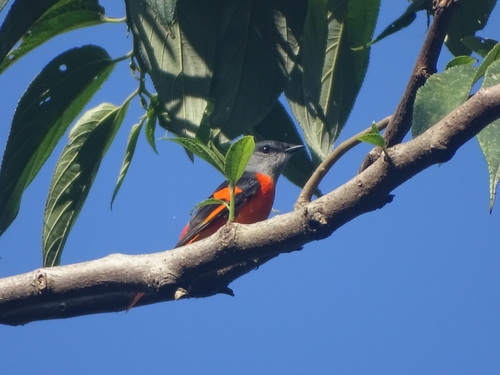 Gray-chinned Minivet
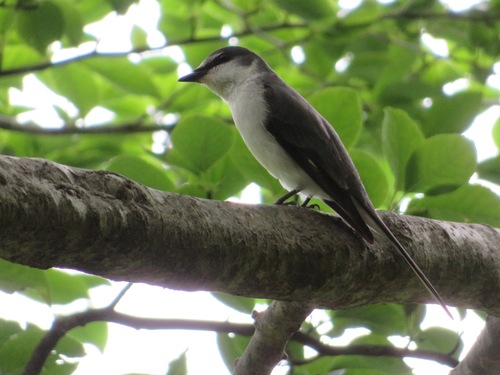 Ashy Minivet
In breve
Il segno di campo più affidabile tra il Gray-chinned Minivet e l'Ashy Minivet è la presenza o l'assenza di arancione brillante o giallo nel piumaggio: il Gray-chinned Minivet (maschio adulto) mostra un arancione audace sulle parti inferiori, sulla parte bassa della schiena e sui bordi delle ali, mentre l'Ashy Minivet è rigorosamente grigio, bianco e nero in tutti i piumaggi. I Gray-chinned Minivet immaturi assomigliano alle femmine ma hanno barre giallo-olive sulla schiena, che l'Ashy Minivet non mostra mai. In volo, l'Ashy Minivet si distingue con una banda bianca sulle penne alari e penne della coda esterne bianche, caratteristiche assenti nel Grey-chinned. L'Ashy Minivet è anche notevolmente più pesante e più lungo. Usa prima queste differenze di colore e di modello, specialmente su uccelli posati o in volo, e presta particolare attenzione ai modelli della testa e delle ali per le distinzioni di età e sesso.
Consigli di identificazione
- Controlla la presenza di arancione o giallo nel piumaggio: Qualsiasi arancione (maschio) o giallo brillante (femmina/immaturo) sulle parti inferiori, sulla parte bassa della schiena o sui bordi delle ali indica il Gray-chinned Minivet; l'Ashy Minivet non mostra mai questi colori a nessuna età.
- Cerca pannelli bianchi sulle ali e sulla coda: L'Ashy Minivet ha una banda bianca audace sulle penne alari e penne della coda esterne bianche, visibili in volo e spesso quando posato. Il Gray-chinned Minivet non ha questi pannelli bianchi.
- Modello della testa nei maschi: I maschi dell'Ashy Minivet hanno un cappello nero sorprendente, una fronte bianca e un viso bianco, con una nuca nera. I maschi del Gray-chinned Minivet hanno una testa e un mantello grigio scuro, un mento grigio chiaro e una gola arancione-gialla.
- Modello della testa nelle femmine: La femmina dell'Ashy Minivet mostra un cappello grigio, una banda nera tra il becco e l'occhio, e una stretta banda bianca sopra di essa. La femmina del Gray-chinned Minivet ha una testa grigia più uniforme con parti inferiori gialle brillanti e bordi delle ali.
- Modello della schiena negli immaturi: I Gray-chinned Minivet immaturi hanno barre giallo-olive sulla schiena—unico tra questi due. Gli immaturi dell'Ashy Minivet rimangono grigi e bianchi.
- Colore delle parti inferiori: Il Gray-chinned Minivet (maschio) ha arancione, la femmina ha giallo; l'Ashy Minivet è sempre biancastro sotto.
- Becco e zampe: Entrambe le specie hanno becchi e zampe nere; non è un separatore utile.
- Dimensioni e struttura: L'Ashy Minivet è più pesante e leggermente più lungo, ma la sovrapposizione delle dimensioni significa che questo è solo un carattere di supporto. L'Ashy Minivet può apparire più robusto e con una coda più lunga.
- Volo: I pannelli bianchi dell'Ashy Minivet possono lampeggiare in modo evidente in volo, mentre il volo del Gray-chinned Minivet è più uniforme, con bordi colorati (arancione/giallo) se visti bene.
- Habitat e contesto: Nei boschi montani dell'Himalaya fino all'Asia sudorientale, ci si aspetta di vedere il Gray-chinned Minivet. In aree di pianura o aperte, specialmente durante la migrazione o in grandi stormi, l'Ashy Minivet è più probabile—specialmente al di fuori dell'areale regolare del Grey-chinned.
- Stagione e areale: L'Ashy Minivet è un migratore nel sud e sud-est asiatico, raro nel sud asiatico, e più probabile al di fuori della stagione di riproduzione. Il Gray-chinned Minivet è un residente nei boschi montani.
- Stormi misti: Entrambe le specie possono unirsi a stormi di specie miste, quindi la presenza con altri minivets non le separa.
- Vocalizzazioni: Se senti un trill metallico ad alta frequenza, sospetta l'Ashy Minivet. La mancanza di questo richiamo non è diagnostica per il Grey-chinned.
- Confusione di sesso: La femmina dell'Ashy Minivet può essere confusa con la femmina del Grey-chinned, ma manca sempre di giallo o arancione e ha un modello facciale distintivo (banda nera tra il becco e l'occhio, stretta banda bianca sopra).
- Confusione immatura: Se vedi barre giallo-olive sulla schiena, è un immaturo Grey-chinned; se non ci sono, e l'uccello è rigorosamente grigio, bianco e nero, considera l'Ashy Minivet.
Taglia
L'Ashy Minivet è sia più lungo (18,5–20 cm contro 17–19 cm) che significativamente più pesante (24 g contro 14 g) del Gray-chinned Minivet. Questa differenza è più evidente quando visti fianco a fianco o quando si è familiari con entrambe le specie, poiché l'Ashy Minivet può apparire più robusto e con una coda più lunga. Tuttavia, la sovrapposizione nella lunghezza significa che la dimensione da sola non è sempre diagnostica, specialmente a distanza o con uccelli solitari.
Piumaggio
-
Uccelli immaturi/giovanili: I Gray-chinned Minivet immaturi assomigliano alle femmine adulte ma hanno barre giallo-olive distintive sulla schiena—una caratteristica non presente nell'Ashy Minivet a nessuna età. Gli immaturi dell'Ashy Minivet non sono descritti come aventi toni gialli o olivastri, rimanendo nel grigio, bianco e nero.
-
Maschi adulti: I maschi del Gray-chinned Minivet hanno una testa e un mantello grigio scuro, un mento grigio chiaro, una gola arancione-gialla, ali nerastre e un arancione esteso sulle parti inferiori, sulla parte bassa della schiena e sui bordi delle ali. I maschi dell'Ashy Minivet sono grigi sopra, biancastri sotto, con un cappello nero, fronte bianca, viso bianco, una banda bianca sulle penne alari e penne della coda esterne bianche—nessun arancione o giallo.
-
Femmine adulte: Le femmine dei Gray-chinned Minivet sostituiscono l'arancione del maschio con un giallo brillante, ma altrimenti condividono lo stesso modello. Le femmine dell'Ashy Minivet hanno un cappello grigio (non nero), una banda nera tra il becco e l'occhio, e una stretta banda bianca sopra, ma rimangono grigie e bianche nel complesso. Entrambi i sessi dell'Ashy Minivet mancano di qualsiasi arancione o giallo.
-
Modello delle ali in volo: L'Ashy Minivet di tutte le età mostra una banda bianca sulle penne alari e penne della coda esterne bianche, che sono assenti nel Gray-chinned Minivet. I bordi delle ali del Gray-chinned Minivet possono mostrare arancione o giallo (a seconda del sesso), ma mai un pannello bianco o una coda.
Comportamento
Entrambe le specie foraggiano attivamente nella chioma e possono unirsi a stormi di specie miste. L'Ashy Minivet è noto per formare grandi stormi durante la migrazione ed è un migratore a lungo raggio, mentre il Gray-chinned Minivet è più residente nei boschi montani. Il comportamento di foraggiamento è simile: entrambi sono agili e spesso visti mentre catturano insetti tra le cime degli alberi.
Habitat
Il Gray-chinned Minivet si trova tipicamente nei boschi montani dall'Himalaya attraverso il sud-est asiatico, di solito a elevazioni di 1.000–2.000 m. L'Ashy Minivet nidifica nel nord-est asiatico e migra ampiamente, svernando nel sud e sud-est asiatico, inclusi aree più aperte con alberi sparsi e boschi. Nel sud asiatico, l'Ashy Minivet è raro e principalmente un migratore, mentre il Grey-chinned è un residente regolare in habitat forestali adatti.
Voce
L'Ashy Minivet emette un trill metallico ad alta frequenza. Nessuna vocalizzazione distintiva è descritta per il Gray-chinned Minivet nelle note fornite, quindi la voce non è un separatore affidabile a meno che il richiamo dell'Ashy Minivet non venga udito chiaramente.
Gray-chinned Minivet · Ashy Minivet · I miei uccelli difficili