

Motmot

ウチワハチドリ 対 ハイイロフルエドリ

Eulampis holosericeus 対 Cinclocerthia gutturalis

ウチワハチドリとハイイロフルエドリのクイズ
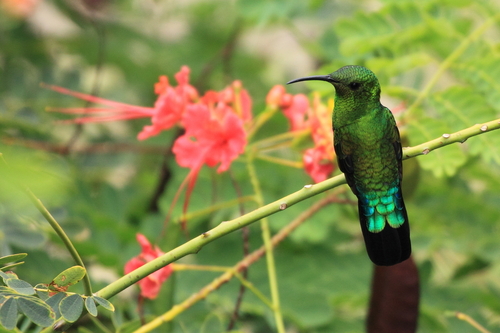
ウチワハチドリ (Eulampis holosericeus) ウチワハチドリ
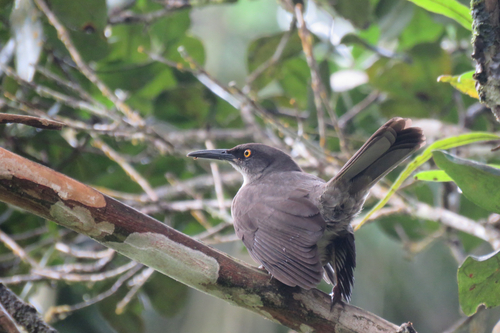
ハイイロフルエドリ (Cinclocerthia gutturalis) ハイイロフルエドリ

メディア

読み込み中…

要点

これら二種の最も信頼できるフィールドマークは、全体のサイズと構造です:ハイイロフルエドリは、長い尾とわずかに下向きのくちばしを持つ大きくて頑丈な歌鳥であり、一方ウチワハチドリは、細長い下向きのくちばしと虹色の羽毛を持つはるかに小さく、コンパクトなハチドリです。どの角度から見ても、ウチワハチドリの明るい緑色のゴルゲットと輝く背中は、ハイイロフルエドリの均一な灰褐色のトーンと淡い腹部と鋭く対比しています。幼鳥のフルエドリはまだらな胸を示すことがありますが、これらでさえウチワハチドリの金属的な色合いと混同されることはありません。くちばしの形、尾の長さ、そして採餌行動も強い手がかりであり、特に採餌中や飛行中に見られた場合は顕著です。

識別のコツ

  1. サイズは最も早いチェックです: 鳥が小さくハチドリのようであればウチワハチドリです;ロビンサイズまたはそれ以上であればハイイロフルエドリです。これはすべての年齢と性別に当てはまります。
  2. くちばしの形と長さ: ウチワハチドリは細長い下向きのくちばしを持ち(雌はより長く、より曲がっています)、蜜を吸うのに適しています;フルエドリはより長く、わずかに下向きのくちばしを持ちますが、より太く頑丈で、針のようではありません。
  3. 尾の長さと形: フルエドリは長くまっすぐな尾を持ち、しばしば低く持たれます;ウチワハチドリの尾は短く、濃い青(しばしば黒に見える)で、体より長くなることはありません。
  4. 羽毛の色: ウチワハチドリは上面と喉が明るい金属的な緑色で、腹部は黒、肛門は緑です;フルエドリは常に上面が灰褐色で、下面が淡い色で、決して虹色ではありません。
  5. 幼鳥の羽毛: 幼いフルエドリはより茶色でまだらな胸を持ちますが、緑や青はありません;ウチワハチドリの幼鳥は金属的な色合いで成鳥に似ています。
  6. 腹部: ウチワハチドリは黒い腹部と緑の肛門を持ち;フルエドリは喉と腹部に淡い白色を示し、灰褐色またはオリーブ色の側面を持ちます。
  7. 顔の模様: フルエドリの顔は上面の他の部分よりやや暗いですが、はっきりとした模様はありません;ウチワハチドリの顔は対照的ではなく、緑のゴルゲットが支配しています。
  8. 飛行スタイル: ウチワハチドリはホバリングし、急速に飛び回り、長く止まることはほとんどありません;フルエドリは短いバーストで飛び、歩いたり跳ねたりする時間が多いです。
  9. 採餌行動: ウチワハチドリは花で採餌し、しばしばホバリングします;フルエドリは絡み合ったものや着生植物を探り、決してホバリングしません。
  10. 翼の動き: フルエドリは時々翼を垂れさせ、急速に振動させます(「震える」ディスプレイ);ウチワハチドリの翼は飛行中または争いの際に音を出すために急速に動かされるだけです。
  11. 声: ウチワハチドリは鋭くシンプルな鳴き声を出します;フルエドリはミミドリとして、より複雑な音声を持つかもしれません(ここでは詳細は述べません)。
  12. 生息地の文脈: ウチワハチドリは庭や人間の居住地の近くに一般的です;フルエドリはより森林依存で、マルティニークとセントルシアに制限されています。
  13. 性差: 雌のウチワハチドリは鈍い緑色で、より長く、より曲がったくちばしを持ちます;雌のフルエドリは雄よりわずかにくちばしが長いだけで、羽毛の大きな違いはありません。
  14. 亜種の変異: ウチワハチドリの亜種E. h. chlorolaemusはより暗い腹部を持ちますが、依然として金属的な緑色を示します;フルエドリの亜種は胸と側面の色が微妙に異なり、ウチワハチドリの虹色には決して近づきません。
  15. 分布の確認: マルティニークやセントルシアにいない場合、フルエドリは非常に可能性が低いです;ウチワハチドリは小アンティル諸島とプエルトリコに広く分布しています。

大きさ

サイズは決定的な違いです:ウチワハチドリは小さなハチドリで、約6.2gの重さと10.5〜12cmの長さです。それに対して、ハイイロフルエドリははるかに大きな鳥で、65〜76gの重さと23〜26cmの長さに達します—長さは2倍以上、重さは10倍以上です。フルエドリの体格、長い尾、そして substantialなくちばしは、小さく繊細なウチワハチドリの隣にいるとすぐに明らかです。

羽色

羽毛はすべての年齢で診断的です。両性の成鳥ウチワハチドリは明るい緑色の背中とゴルゲットを持ち、黒い腹部と濃い青(黒に見える)尾を持ちます。雌はわずかに鈍く、より長く、より曲がったくちばしを持ちます。幼鳥と成鳥のハイイロフルエドリは虹色がありません:彼らは上面が温かい灰褐色で、顔と翼がより暗く、喉と腹部が淡い白色です。幼鳥のフルエドリは全体的に茶色でまだらな胸を持ちますが、金属的な色は示しません。ウチワハチドリの緑色の肛門と輝く上面は、フルエドリの控えめでアーストーンの羽毛と決して一致しません。フルエドリのどの年齢や季節もウチワハチドリの金属的な緑や青を示さず、ウチワハチドリが灰褐色やまだらに見えることはありません。

行動

行動は非常に異なります。ウチワハチドリは速く、敏捷な飛行者で、しばしば花の上でホバリングしたり、止まり木の間を急速に飛び回ったりします。彼らは特に雄が採餌領域を守ることがあります。一方、ハイイロフルエドリは、絡み合ったものの中を移動し、地面から樹冠まで着生植物を探ることで採餌し、しばしば特徴的な翼の震えのディスプレイ—翼を垂れさせて急速に振動させること—を使用します。フルエドリは密な植生の中で歩いたり跳ねたりしているのが見られる可能性が高く、ハチドリのようにホバリングすることはありません。

生息環境

両種は小アンティル諸島に生息することがありますが、彼らの地域的な範囲と生息地の好みは異なります。ウチワハチドリはプエルトリコと小アンティル諸島のほとんどで見られ、しばしば庭や二次成長、家の周りに生息し、人間によって変化した生息地に適応しています。ハイイロフルエドリはマルティニークとセントルシアに制限され、通常は森林地域に生息し、地面から樹冠まで採餌します。庭や開けた場所で見られた場合、ウチワハチドリの方がはるかに可能性が高いです;特にマルティニークやセントルシアの密な森林では、フルエドリが見られる可能性があります。

声

ウチワハチドリは鋭い「チュッ!」または「チュウプ!」という鳴き声を出し、争いの際に rattles や翼の音を出すことがあります。ハイイロフルエドリの声はここでは詳細に説明されていませんが、ミミドリとして、より複雑で多様な鳴き声や歌を持っている可能性があります。フィールドでは、シンプルで鋭い鳴き声がウチワハチドリを示し、より複雑な鳴き声がフルエドリを示唆します。

より良い説明を送る

比較と同じ項目を使ってください。文章はすぐに公開されます。

The most reliable field mark between these two is overall size and structure: the Grey Trembler is a large, robust songbird with a long tail and a slightly downcurved bill, while the Green-throated Carib is a much smaller, compact hummingbird with a slender, decurved bill and iridescent plumage. In any view, the Carib’s bright green gorget and shimmering back contrast sharply with the Trembler’s uniform gray-brown tones and buffy underparts. Juvenile Tremblers may show a mottled chest, but even these cannot be confused for the metallic hues of the Carib. Bill shape, tail length, and feeding behavior are also strong clues, especially if seen foraging or in flight.

  1. Size is the fastest check: If the bird is tiny and hummingbird-like, it is a Green-throated Carib; if it is robin-sized or larger, it is a Grey Trembler. This holds for all ages and sexes.
  2. Bill shape and length: Carib has a slender, decurved bill (longer and more curved in females), suited for nectar feeding; Trembler has a longer, slightly downcurved bill, but it is thicker and more robust, not needle-like.
  3. Tail length and shape: Trembler has a long, straight tail, often carried low; Carib’s tail is shorter and dark blue (often looks black), never as long as the body.
  4. Plumage color: Carib is bright metallic green above and on the throat, with a black belly and green vent; Trembler is always gray-brown above, buffy below, and never iridescent.
  5. Juvenile plumage: Young Tremblers are browner with a mottled chest, but still lack any green or blue; Carib juveniles are similar to adults in their metallic hues.
  6. Underparts: Carib has a black belly and green vent; Trembler shows buffy white on the throat and belly, with gray-brown or olive-tinged flanks.
  7. Face pattern: Trembler’s face is somewhat darker than the rest of the upperparts, but not sharply marked; Carib’s face is not contrasting, dominated by the green gorget.
  8. Flight style: Carib hovers and darts rapidly, rarely perching for long; Trembler flies in short bursts and spends much time walking or hopping.
  9. Feeding behavior: Carib feeds at flowers, often hovering; Trembler probes tangles and epiphytes, never hovers.
  10. Wing movement: Trembler sometimes droops and rapidly vibrates its wings (the 'trembling' display); Carib’s wings are only rapidly moved in flight or to make whirring sounds during disputes.
  11. Voice: Carib gives sharp, simple calls; Trembler, as a mimid, may have more complex vocalizations (not detailed here).
  12. Habitat context: Carib is common in gardens and near human habitation; Trembler is more forest-dependent and restricted to Martinique and Saint Lucia.
  13. Sex differences: Female Carib is duller green and has a longer, more curved bill; female Trembler is only slightly longer-billed than male, with no major plumage difference.
  14. Subspecies variation: Carib subspecies E. h. chlorolaemus has darker underparts, but still shows metallic green; Trembler subspecies differ subtly in breast and flank color, never approaching Carib’s iridescence.
  15. Range check: If not on Martinique or Saint Lucia, Trembler is highly unlikely; Carib is widespread in the Lesser Antilles and Puerto Rico.

Size is a decisive difference: the Green-throated Carib is a small hummingbird, weighing about 6.2 g and measuring 10.5–12 cm in length. In contrast, the Grey Trembler is a much larger bird, weighing 65–76 g and reaching 23–26 cm in length—over twice as long and more than ten times heavier. The Trembler’s bulk, long tail, and substantial bill are immediately apparent next to the tiny, delicate Carib.

Plumage is diagnostic at all ages. Adult Green-throated Caribs of both sexes have a bright green back and gorget, with a black belly and a dark blue (appearing black) tail. Females are slightly duller and have a longer, more curved bill. Juvenile and adult Grey Tremblers lack any iridescence: they are warm gray-brown above, with a darker face and wings, and buffy white throat and belly. Juvenile Tremblers are browner overall with a mottled chest, but still show no metallic colors. The Carib’s green vent and shimmering upperparts are never matched by the Trembler’s subdued, earth-toned plumage. No age or season of Trembler shows the Carib’s metallic green or blue, and no Carib ever appears gray-brown or mottled.

Behavior is quite distinct. Green-throated Caribs are fast, agile fliers, often hovering at flowers or darting between perches, typical of hummingbirds. They may defend feeding territories, especially males. Grey Tremblers, on the other hand, forage by moving through tangles and probing epiphytes from the ground to the canopy, often using a distinctive wing-trembling display—drooping and rapidly vibrating their wings. Tremblers are much more likely to be seen walking or hopping in dense vegetation, never hovering like a hummingbird.

Both species can occur in the Lesser Antilles, but their local ranges and habitat preferences differ. Green-throated Carib is found in Puerto Rico and most of the Lesser Antilles, often in gardens, second growth, and around homes, adapting well to human-altered habitats. Grey Trembler is restricted to Martinique and Saint Lucia, typically in forested areas, and forages from the ground to the canopy. If seen in a garden or open area, Carib is far more likely; in dense forest, especially on Martinique or Saint Lucia, Trembler is possible.

Green-throated Carib gives sharp 'chup!' or 'chuwp!' calls, and may produce rattles and wing whirs during disputes. Grey Trembler’s voice is not described in detail here, but as a mimid, it likely has more complex, varied calls and songs. In the field, a simple, sharp call points to Carib, while more elaborate vocalizations suggest Trembler.

変更を破棄しますか?

保存していない編集があります。今離れると失われます。

ウチワハチドリ · ハイイロフルエドリ · 苦手な鳥