

Green-throated Carib vs Gray Trembler
Eulampis holosericeus contro Cinclocerthia gutturalis
Fai un quiz con Green-throated Carib e Gray Trembler
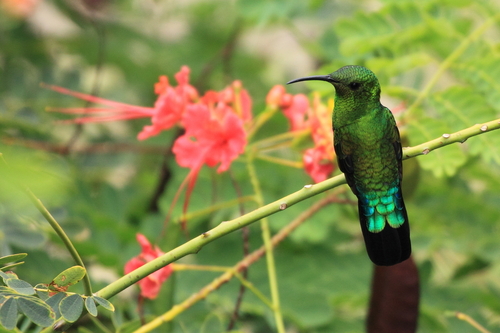 Green-throated Carib
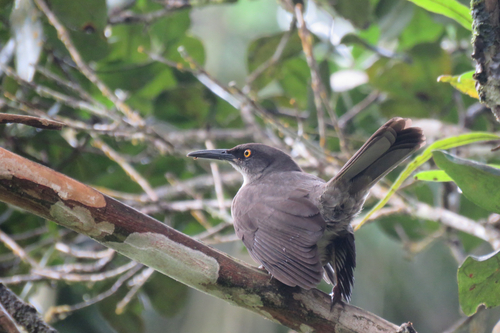 Gray Trembler
In breve
Il segno distintivo più affidabile tra questi due è la dimensione e la struttura complessiva: il Gray Trembler è un grande e robusto uccello canoro con una lunga coda e un becco leggermente ricurvo, mentre il Green-throated Carib è un colibrì molto più piccolo e compatto con un becco snodato e ricurvo e un piumaggio iridescente. In qualsiasi vista, il luminoso gorget verde del Carib e il suo dorso scintillante contrastano nettamente con le tonalità grigio-marroni uniformi e le parti inferiori color crema del Trembler. I Tremblers giovani possono mostrare un petto maculato, ma anche questi non possono essere confusi con le tonalità metalliche del Carib. La forma del becco, la lunghezza della coda e il comportamento alimentare sono anche forti indizi, specialmente se visti mentre cercano cibo o in volo.
Consigli di identificazione
- La dimensione è il controllo più veloce: Se l'uccello è piccolo e simile a un colibrì, è un Green-throated Carib; se è delle dimensioni di un pettirosso o più grande, è un Gray Trembler. Questo vale per tutte le età e i sessi.
- Forma e lunghezza del becco: Il Carib ha un becco snodato e ricurvo (più lungo e più curvo nelle femmine), adatto per l'alimentazione al nettare; il Trembler ha un becco più lungo, leggermente ricurvo, ma è più spesso e robusto, non simile a un ago.
- Lunghezza e forma della coda: Il Trembler ha una lunga coda dritta, spesso portata bassa; la coda del Carib è più corta e blu scuro (spesso appare nera), mai lunga quanto il corpo.
- Colore del piumaggio: Il Carib è di un verde metallico brillante sopra e sulla gola, con un ventre nero e un vent verde; il Trembler è sempre grigio-marrone sopra, color crema sotto, e mai iridescente.
- Piumaggio giovanile: I giovani Tremblers sono più marroni con un petto maculato, ma mancano ancora di qualsiasi verde o blu; i giovani Carib sono simili agli adulti nelle loro tonalità metalliche.
- Parti inferiori: Il Carib ha un ventre nero e un vent verde; il Trembler mostra bianco crema sulla gola e sul ventre, con fianchi grigio-marroni o con sfumature olivastre.
- Schema del viso: Il viso del Trembler è leggermente più scuro rispetto al resto delle parti superiori, ma non è marcato in modo netto; il viso del Carib non è contrastante, dominato dal gorget verde.
- Stile di volo: Il Carib fluttua e scatta rapidamente, raramente si posa a lungo; il Trembler vola in brevi scatti e trascorre molto tempo camminando o saltellando.
- Comportamento alimentare: Il Carib si nutre nei fiori, spesso fluttuando; il Trembler esplora grovigli e epifite, non fluttua mai.
- Movimento delle ali: Il Trembler a volte si abbassa e vibra rapidamente le sue ali (la 'mostra tremolante'); le ali del Carib vengono mosse rapidamente solo in volo o per fare suoni fruscianti durante le dispute.
- Voce: Il Carib emette richiami acuti e semplici; il Trembler, essendo un mimid, può avere vocalizzazioni più complesse (non dettagliate qui).
- Contesto dell'habitat: Il Carib è comune nei giardini e vicino agli insediamenti umani; il Trembler è più dipendente dalle foreste e ristretto a Martinica e Saint Lucia.
- Differenze sessuali: La femmina del Carib è di un verde più opaco e ha un becco più lungo e ricurvo; la femmina del Trembler ha solo un becco leggermente più lungo rispetto al maschio, senza differenze di piumaggio significative.
- Variazione delle sottospecie: La sottospecie del Carib E. h. chlorolaemus ha parti inferiori più scure, ma mostra comunque un verde metallico; le sottospecie del Trembler differiscono sottilmente nel colore del petto e dei fianchi, senza mai avvicinarsi all'iridescenza del Carib.
- Controllo dell'areale: Se non si trova a Martinica o Saint Lucia, è altamente improbabile vedere un Trembler; il Carib è diffuso nelle Piccole Antille e a Porto Rico.
Taglia
La dimensione è una differenza decisiva: il Green-throated Carib è un piccolo colibrì, che pesa circa 6,2 g e misura 10,5–12 cm di lunghezza. Al contrario, il Gray Trembler è un uccello molto più grande, che pesa 65–76 g e raggiunge i 23–26 cm di lunghezza—oltre il doppio della lunghezza e più di dieci volte più pesante. La massa del Trembler, la lunga coda e il becco sostanziale sono immediatamente evidenti accanto al piccolo e delicato Carib.
Piumaggio
Il piumaggio è diagnostico a tutte le età. I Green-throated Caribs adulti di entrambi i sessi hanno un dorso e un gorget verde brillante, con un ventre nero e una coda blu scuro (che appare nera). Le femmine sono leggermente più opache e hanno un becco più lungo e ricurvo. I Gray Tremblers giovani e adulti mancano di qualsiasi iridescenza: sono grigio-marrone caldo sopra, con un viso e ali più scuri, e una gola e un ventre color crema. I Tremblers giovani sono complessivamente più marroni con un petto maculato, ma non mostrano ancora colori metallici. Il vent verde del Carib e le parti superiori scintillanti non sono mai eguagliati dal piumaggio sobrio e dai toni terrosi del Trembler. Nessuna età o stagione del Trembler mostra il verde o blu metallico del Carib, e nessun Carib appare mai grigio-marrone o maculato.
Comportamento
Il comportamento è piuttosto distinto. I Green-throated Caribs sono volatori veloci e agili, spesso fluttuando nei fiori o scattando tra i posatoi, tipico dei colibrì. Possono difendere i territori alimentari, specialmente i maschi. I Gray Tremblers, d'altra parte, cercano cibo muovendosi attraverso grovigli e sondando epifite dal suolo alla chioma, spesso utilizzando una caratteristica mostra di tremolio delle ali—abbassando e vibrando rapidamente le ali. I Tremblers sono molto più propensi a essere visti camminare o saltellare in vegetazione densa, mai fluttuando come un colibrì.
Habitat
Entrambe le specie possono verificarsi nelle Piccole Antille, ma i loro areali locali e le preferenze di habitat differiscono. Il Green-throated Carib si trova a Porto Rico e nella maggior parte delle Piccole Antille, spesso in giardini, crescita secondaria e attorno alle abitazioni, adattandosi bene agli habitat alterati dagli esseri umani. Il Gray Trembler è ristretto a Martinica e Saint Lucia, tipicamente in aree boschive, e cerca cibo dal suolo alla chioma. Se visto in un giardino o in un'area aperta, il Carib è molto più probabile; in foresta densa, specialmente a Martinica o Saint Lucia, il Trembler è possibile.
Voce
Il Green-throated Carib emette richiami acuti 'chup!' o 'chuwp!', e può produrre rumori di rattling e fruscii delle ali durante le dispute. La voce del Gray Trembler non è descritta in dettaglio qui, ma essendo un mimid, probabilmente ha richiami e canti più complessi e vari. Sul campo, un richiamo semplice e acuto indica il Carib, mentre vocalizzazioni più elaborate suggeriscono il Trembler.
Green-throated Carib · Gray Trembler · I miei uccelli difficili