

Motmot

ハグロキヌバネドリ 対 キゴシツリスドリ

Trogon viridis 対 Cacicus cela

ハグロキヌバネドリとキゴシツリスドリのクイズ
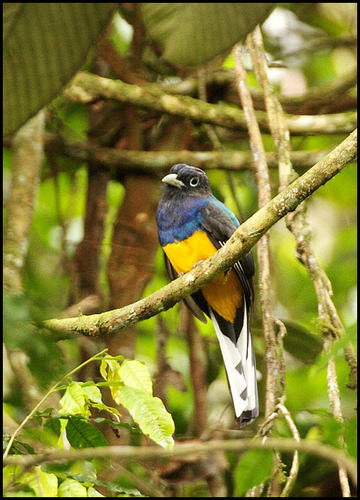
ハグロキヌバネドリ (Trogon viridis) ハグロキヌバネドリ
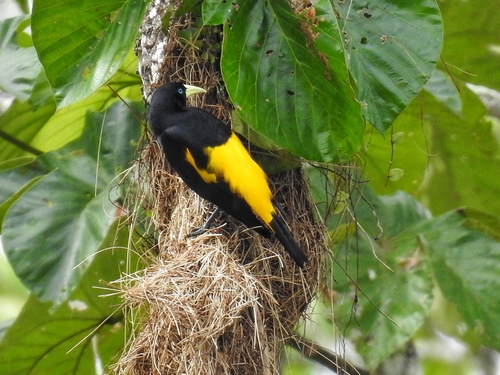
キゴシツリスドリ (Cacicus cela) キゴシツリスドリ

メディア

読み込み中…

要点

ハグロキヌバネドリとキゴシツリスドリを区別する最も信頼できる方法は、全体的な構造と主要な羽色の対比によるものです。ハグロキヌバネドリは、短い尾と目を引く黒と白の裏尾を持つ、ずんぐりとした直立して止まる鳥であり、一方キゴシツリスドリは、細身で長い尾を持つイッカク科の鳥で、明るい黄色の尾と尾の基部、さらに淡い黄色の尖ったくちばしを持っています。距離があっても飛んでいても、キゴシツリスドリの黄色い尾と翼のエポレットは目立ちますが、ハグロキヌバネドリは上面に黄色を示さず、代わりに裏尾に白を見せます。両種は長さが似ていることがありますが、体型、姿勢、飛行スタイルは全く異なります。性別や年齢の違いはキゴシツリスドリでは微妙ですが、ハグロキヌバネドリでは顕著なので、特に雌や未成熟のハグロキヌバネドリには注意が必要です。

識別のコツ

  1. Overall shape and posture: ハグロキヌバネドリはずんぐりしていて短い尾を持ち、直立して動かずに止まります。キゴシツリスドリは細身で長い尾を持ち、活発で、しばしば動いたり飛んだりしています。
  2. Bill shape and color: ハグロキヌバネドリは広くて暗いくちばしを持っています。キゴシツリスドリは長く尖った淡い黄色のくちばしを持ち(成鳥では非常に明らかですが、幼鳥ではあまり目立たず、しかし細く尖っています)。
  3. Tail pattern (perched or in flight): ハグロキヌバネドリ(すべての年齢)は黒と白の裏尾を示します:各羽の広い黒い基部と広い白い先端/縁。キゴシツリスドリは尾や裏尾に白を示すことはありません—尾は黒で、基部に黄色があります。
  4. Upperparts and rump: キゴシツリスドリは常に明るい黄色の尾と尾の基部を示し、止まっている時も飛んでいる時も見えます。ハグロキヌバネドリは背中や尾に黄色を示すことはありません—背中は緑(オス)または灰色(メス/未成熟)です。
  5. Wing pattern: ハグロキヌバネドリの翼は黒で、細かい白い縞模様があります。キゴシツリスドリの翼は単色の黒で、翼が折りたたまれている時や飛んでいる時に黄色の「エポレット」(肩の斑点)が見えます。
  6. Underparts: ハグロキヌバネドリはオレンジ黄色の腹部と下胸を持っています。キゴシツリスドリは黒い下部を持ち、黄色は下腹部と肛門のみにあります。
  7. Eye color: 成熟したハグロキヌバネドリは淡い青みがかった目の輪を持っています。キゴシツリスドリは青い目(成鳥)または暗い目(幼鳥)を持っています。距離があると見えないこともありますが、近くでは役立ちます。
  8. Sexual dimorphism: ハグロキヌバネドリは強い二形性を持ち—オスは緑色の背中に暗い青い頭、メスは灰色の背中と灰色の頭を持っています。キゴシツリスドリはわずかに二形性—メスは鈍い黒ですが、両性ともに黄色の尾とエポレットを持っています。
  9. Juvenile confusion: 幼鳥のキゴシツリスドリは鈍いメスに似ていますが、常に黄色の尾と翼のエポレットを示し、茶色のくちばしの基部と暗い目を持っています。幼鳥のハグロキヌバネドリは上面が灰色で、尾に縞模様があり、尾に黄色はありません。
  10. Flight style: ハグロキヌバネドリはめったに飛ばず、飛ぶ時は速くて直接的で、短い尾と広い翼を持っています。キゴシツリスドリは頻繁に飛び、強く直接的な羽ばたきと長い尾を持っています。
  11. Behavior: ハグロキヌバネドリは孤独またはペアで、しばしば動かずにいます。キゴシツリスドリは社交的で騒がしく、しばしばコロニーにいます。
  12. Habitat context: 両種は同じ一般的な地域に生息することがありますが、キゴシツリスドリは開けた場所やエッジの生息地、コロニーの近くにいる可能性が高く、ハグロキヌバネドリは密な森林の内部やエッジを好み、人間の干渉から離れた場所にいます。
  13. Vocalizations: ハグロキヌバネドリの歌は遅く加速する「牛」の音の連続です。キゴシツリスドリの歌はフルート音、カッカッという音、模倣の複雑な混合であり、コロニーは非常に騒がしいです。
  14. Size impression: 両種は長さが似ていることがありますが、ハグロキヌバネドリはずんぐりしていて重く、短い尾を持っています。キゴシツリスドリは細身で長い尾を持っています。
  15. Common pitfalls: 距離があると、止まっているキゴシツリスドリは黄色の肛門を持つ暗い鳥のように見えることがありますが、黄色は常に尾と尾の基部にあり、裏尾にはありません。ハグロキヌバネドリは尾の上に黄色を示すことはなく、黒と白の裏尾はこの地域ではユニークです。

大きさ

両種は約28〜30 cmの長さに達することがありますが、ハグロキヌバネドリはずんぐりしていてより頑丈で、短い尾と広いくちばしを持っています。一方、キゴシツリスドリはずっと細身で、明らかに長い尾とより尖った淡い黄色のくちばしを持っています。キゴシツリスドリは体型も軽く、成鳥のオスは平均104 g、メスは60 gで、ハグロキヌバネドリのより重くてしっかりした外観と比較されます。キゴシツリスドリの長い尾と細い体は、特に飛行中に非常に異なるシルエットを与えます。

羽色

幼鳥と雌のハグロキヌバネドリは上面が灰色で、尾には黒と白の縞模様がありますが、成鳥のオスは緑色の背中に暗い青(ほぼ黒)の頭と上胸、オレンジ黄色の下部、黒と白の模様の裏尾を持っています。裏尾の模様は診断的で、各羽の広い黒い基部と広い白い先端と縁があります。対照的に、すべての年齢のキゴシツリスドリは主に黒で、明るい黄色の尾、下腹部、尾の基部、翼のエポレットを持っています。くちばしは淡い黄色で尖っており、成鳥では目が青い(幼鳥では暗い)です。幼鳥のキゴシツリスドリは鈍い雌に似ていますが、常に黄色の尾とエポレットを示し、茶色のくちばしの基部と暗い目を持っています。キゴシツリスドリは尾や裏尾に白を示すことはなく、ハグロキヌバネドリは上面や尾に黄色を示すことはありません。飛行中、キゴシツリスドリの黄色の尾と翼のエポレットは明らかですが、ハグロキヌバネドリの白い裏尾は下にフラッシュします。

行動

ハグロキヌバネドリは直立して動かずに止まり、長時間静止していることが多く、遠くに飛ぶことをためらいます。彼らの飛行は速いですが頻繁ではなく、通常は孤独またはペアで、混合フロックに加わることはめったにありません。キゴシツリスドリははるかに活発で社交的で、騒がしいコロニーにいることが多く、樹冠や開けた場所を移動し、強く直接的な羽ばたきで飛びます。キゴシツリスドリの行動は明らかにイッカク科の特徴で、落ち着きがなく、声を出し、しばしば群れでいますが、ハグロキヌバネドリは静かで静止しています。

生息環境

両種は南アメリカ北部の湿った熱帯林に生息しており、アマゾンやトリニダードを含みます。しかし、ハグロキヌバネドリはその範囲で一般的なハグロキヌバネドリであり、密な森林の内部やエッジを好みます。一方、キゴシツリスドリは開けた森林、森林のエッジ、特にコロニーの近くで見られる可能性が高く、時にはより干渉のある開けた生息地にいます。キゴシツリスドリの存在は、その騒がしいコロニーや目立つ活動によってしばしば明らかになりますが、ハグロキヌバネドリはより見落とされやすく、中から上の樹冠で静かに座っています。

声

ハグロキヌバネドリの歌は約20の「牛」の音の連続で、遅く始まり加速します。他のハグロキヌバネドリよりも遅いテンポと高い音程を持っています。キゴシツリスドリのオスは、フルート音、カッカッという音、息切れ、模倣の素晴らしく多様な混合を生み出し、コロニーは非常に騒がしいです。キゴシツリスドリの声ははるかに多様で複雑であり、コロニーは遠くからでも聞こえますが、ハグロキヌバネドリの歌はより測定され、目立たないです。

より良い説明を送る

比較と同じ項目を使ってください。文章はすぐに公開されます。

The most reliable way to separate Green-backed Trogon and Yellow-rumped Cacique is by their overall structure and key plumage contrasts: the trogon is a chunky, upright-perching bird with a short tail and a striking black-and-white undertail, while the cacique is a slim, long-tailed icterid with a bright yellow rump and base of tail, plus a pale yellow pointed bill. Even at a distance or in flight, the cacique's yellow rump and wing epaulets stand out, while the trogon shows no yellow on the upperparts and instead flashes white on the undertail. Both species can be similar in length, but their build, posture, and flight style are entirely different. Sex and age differences are subtle in the cacique but pronounced in the trogon, so be especially careful with female and immature trogons.

  1. Overall shape and posture: Trogon is chunky, short-tailed, and perches upright and motionless; cacique is slim, long-tailed, and active, often seen moving or flying.
  2. Bill shape and color: Trogon has a broad, dark bill; cacique has a long, pointed, pale yellow bill (very obvious in adults, less so in juveniles but still slender and pointed).
  3. Tail pattern (perched or in flight): Trogon (all ages) shows black-and-white undertail: broad black bases and broad white tips/edges on each feather. Cacique never shows white in the tail or undertail—tail is black with yellow at the base.
  4. Upperparts and rump: Cacique always shows a bright yellow rump and base of tail, visible both perched and in flight. Trogon never shows yellow on the back or rump—back is green (male) or gray (female/immature).
  5. Wing pattern: Trogon wings are black with fine white vermiculations; cacique wings are plain black with yellow 'epaulets' (shoulder patches) visible when wings are folded or in flight.
  6. Underparts: Trogon has orange-yellow belly and lower breast; cacique has black underparts with yellow only on the lower belly and vent.
  7. Eye color: Adult trogon has a pale bluish eye-ring; cacique has blue eyes (adults) or dark eyes (juveniles). Not always visible at a distance, but useful up close.
  8. Sexual dimorphism: Trogon is strongly dimorphic—males green-backed with dark blue head, females gray-backed and gray-headed. Cacique is only slightly dimorphic—females are duller black, but both sexes have yellow rump and epaulets.
  9. Juvenile confusion: Juvenile caciques resemble dull females but always show yellow rump and wing epaulets, and have a brown bill base and dark eyes. Juvenile trogons are gray above with barred tails, lacking any yellow on the rump.
  10. Flight style: Trogon rarely flies, but when it does, flight is fast and direct, with a short tail and broad wings. Cacique flies often, with strong, direct wingbeats and a long tail.
  11. Behavior: Trogon is solitary or in pairs, often motionless; cacique is social, noisy, and often in colonies.
  12. Habitat context: Both can occur in the same general region, but cacique is more likely in open or edge habitats and near colonies; trogon prefers dense forest interior or edge, often away from human disturbance.
  13. Vocalizations: Trogon's song is a slow, accelerating series of 'cow' notes; cacique's song is a complex mix of fluting, cackles, and mimicry, and colonies are very noisy.
  14. Size impression: Both can be similar in length, but trogon is bulkier and heavier, with a short tail; cacique is slender and long-tailed.
  15. Common pitfalls: At a distance, a perched cacique may look like a dark bird with a yellow vent, but the yellow is always on the rump and base of tail, not the undertail. Trogon never shows yellow above the tail, and the black-and-white undertail is unique in the region.

Both species can reach about 28–30 cm in length ([wikipedia]), but the Green-backed Trogon is bulkier and more robust, with a short tail and broad bill, while the Yellow-rumped Cacique is much slimmer, with a noticeably longer tail and a more pointed, pale yellow bill. The cacique is also lighter in build: adult males average 104 g, females 60 g, compared to the trogon's heavier, more solid appearance. The cacique's longer tail and slender body give it a very different silhouette, especially in flight.

Juvenile and female Green-backed Trogons are gray above with black-and-white barring on the tail, while adult males are green-backed with a dark blue (almost black) head and upper breast, orange-yellow lower underparts, and a black-and-white patterned undertail. The undertail pattern is diagnostic: broad black bases and broad white tips and edges on each feather. In contrast, Yellow-rumped Caciques of all ages are mainly black with a bright yellow rump, lower belly, tail base, and wing epaulets; the bill is pale yellow and pointed, and the eyes are blue in adults (dark in juveniles). Juvenile caciques resemble duller females, with a brown bill base and dark eyes, but always show the yellow rump and epaulets. The cacique never shows white in the tail or undertail, and the trogon never shows yellow on the upperparts or rump. In flight, the cacique's yellow rump and wing epaulets are obvious, while the trogon's white undertail flashes below.

Green-backed Trogons perch upright and motionless, often remaining still for long periods and reluctant to fly far. Their flight is fast but infrequent, and they are usually solitary or in pairs, rarely joining mixed flocks. Yellow-rumped Caciques are much more active and social, often seen in noisy colonies, moving through the canopy or open areas, and flying with strong, direct wingbeats. The cacique's behavior is conspicuously icterid: restless, vocal, and often in groups, while the trogon is quiet and still.

Both species occur in humid tropical forests of northern South America, including the Amazon and Trinidad. However, Green-backed Trogon is typically the commonest trogon in its range, favoring dense forest interiors and edges, while Yellow-rumped Cacique is more likely to be seen in open woodland, forest edges, and especially near colonies, sometimes in more disturbed or open habitats. The cacique's presence is often revealed by its noisy colonies and conspicuous activity, while the trogon is more easily overlooked, sitting quietly in the mid- to upper canopy.

Green-backed Trogon's song is a series of about 20 'cow' notes, starting slow and accelerating, with a slower tempo and higher pitch than some other trogons. Yellow-rumped Cacique males produce a brilliant, varied mix of fluting notes, cackles, wheezes, and mimicry, and colonies are very noisy. The cacique's vocalizations are much more varied and complex, and a colony can be heard from a great distance, while the trogon's song is more measured and less conspicuous.

変更を破棄しますか?

保存していない編集があります。今離れると失われます。

ハグロキヌバネドリ · キゴシツリスドリ · 苦手な鳥