

Green-backed Trogon vs Yellow-rumped Cacique
Trogon viridis contro Cacicus cela
Fai un quiz con Green-backed Trogon e Yellow-rumped Cacique
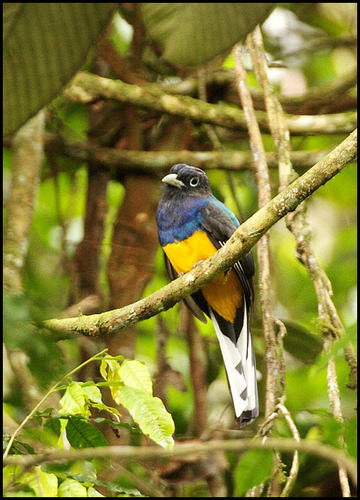 Green-backed Trogon
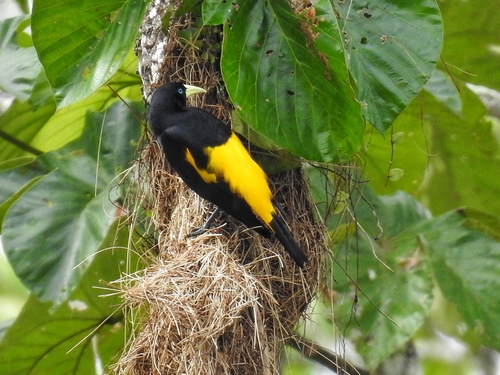 Yellow-rumped Cacique
In breve
Il modo più affidabile per separare il Green-backed Trogon e il Yellow-rumped Cacique è attraverso la loro struttura generale e i contrasti chiave del piumaggio: il trogon è un uccello massiccio, che si posiziona eretto con una coda corta e un sorprendente sottocoda nero e bianco, mentre il cacique è un icteride snello e dalla coda lunga con un luminoso sopracciglio giallo e la base della coda, oltre a un becco appuntito di un giallo pallido. Anche a distanza o in volo, il sopracciglio giallo e le spalline del cacique si distinguono, mentre il trogon non mostra giallo nelle parti superiori e invece lampeggia bianco sul sottocoda. Entrambe le specie possono essere simili in lunghezza, ma la loro struttura, postura e stile di volo sono completamente diversi. Le differenze di sesso e età sono sottili nel cacique ma pronunciate nel trogon, quindi fai particolare attenzione con i trogon femminili e immaturi.
Consigli di identificazione
- Forma e postura generale: Il trogon è massiccio, dalla coda corta, e si posiziona eretto e immobile; il cacique è snello, dalla coda lunga, e attivo, spesso visto muoversi o volare.
- Forma e colore del becco: Il trogon ha un becco largo e scuro; il cacique ha un becco lungo, appuntito e di un giallo pallido (molto evidente negli adulti, meno nei giovani ma comunque snello e appuntito).
- Schema della coda (posato o in volo): Il trogon (tutte le età) mostra un sottocoda nero e bianco: basi nere larghe e punte/bordi bianchi larghi su ogni piuma. Il cacique non mostra mai bianco nella coda o nel sottocoda: la coda è nera con giallo alla base.
- Parti superiori e sopracciglio: Il cacique mostra sempre un luminoso sopracciglio giallo e la base della coda, visibile sia posato che in volo. Il trogon non mostra mai giallo sulla schiena o sul sopracciglio: la schiena è verde (maschio) o grigia (femmina/immatura).
- Schema delle ali: Le ali del trogon sono nere con fini vermicolazioni bianche; le ali del cacique sono semplicemente nere con 'spalline' gialle (macchie sulle spalle) visibili quando le ali sono piegate o in volo.
- Parti inferiori: Il trogon ha un ventre e un petto inferiore giallo-arancio; il cacique ha parti inferiori nere con giallo solo sul ventre inferiore e sul vent.
- Colore degli occhi: Il trogon adulto ha un anello oculare bluastro pallido; il cacique ha occhi blu (adulti) o occhi scuri (giovani). Non sempre visibile a distanza, ma utile da vicino.
- Dimorfismo sessuale: Il trogon è fortemente dimorfico: i maschi hanno il dorso verde con testa blu scura, le femmine hanno il dorso grigio e la testa grigia. Il cacique è solo leggermente dimorfico: le femmine sono di un nero più opaco, ma entrambi i sessi hanno un sopracciglio giallo e spalline.
- Confusione giovanile: I cacique giovani assomigliano a femmine opache ma mostrano sempre il sopracciglio giallo e le spalline, e hanno una base del becco marrone e occhi scuri. I trogon giovani sono grigi sopra con code barrate, privi di giallo sul sopracciglio.
- Stile di volo: Il trogon raramente vola, ma quando lo fa, il volo è veloce e diretto, con una coda corta e ali larghe. Il cacique vola spesso, con battiti d'ali forti e diretti e una coda lunga.
- Comportamento: Il trogon è solitario o in coppie, spesso immobile; il cacique è sociale, rumoroso e spesso in colonie.
- Contesto dell'habitat: Entrambi possono verificarsi nella stessa regione generale, ma il cacique è più probabile in habitat aperti o ai margini e vicino a colonie; il trogon preferisce l'interno della foresta densa o il margine, spesso lontano da disturbi umani.
- Vocalizzazioni: Il canto del trogon è una lenta serie di note 'mucca'; il canto del cacique è un mix complesso di flauti, cackle e mimetismo, e le colonie sono molto rumorose.
- Impressione di dimensione: Entrambi possono essere simili in lunghezza, ma il trogon è più massiccio e pesante, con una coda corta; il cacique è snello e dalla coda lunga.
- Trappole comuni: A distanza, un cacique posato può sembrare un uccello scuro con un vent giallo, ma il giallo è sempre sul sopracciglio e sulla base della coda, non sul sottocoda. Il trogon non mostra mai giallo sopra la coda, e il sottocoda nero e bianco è unico nella regione.
Taglia
Entrambe le specie possono raggiungere circa 28–30 cm di lunghezza ([wikipedia]), ma il Green-backed Trogon è più massiccio e robusto, con una coda corta e un becco largo, mentre il Yellow-rumped Cacique è molto più snello, con una coda visibilmente più lunga e un becco appuntito di un giallo pallido. Il cacique è anche più leggero nella struttura: i maschi adulti pesano in media 104 g, le femmine 60 g, rispetto all'aspetto più pesante e solido del trogon. La coda più lunga e il corpo snello del cacique gli conferiscono una silhouette molto diversa, specialmente in volo.
Piumaggio
I trogon giovani e femminili sono grigi sopra con barrature nero e bianco sulla coda, mentre i maschi adulti sono verdi sopra con una testa blu scura (quasi nera) e un petto superiore, parti inferiori giallo-arancio, e un sottocoda a motivo nero e bianco. Il motivo del sottocoda è diagnostico: basi nere larghe e punte e bordi bianchi larghi su ogni piuma. Al contrario, i Yellow-rumped Caciques di tutte le età sono principalmente neri con un luminoso sopracciglio giallo, ventre inferiore, base della coda e spalline; il becco è giallo pallido e appuntito, e gli occhi sono blu negli adulti (scuri nei giovani). I cacique giovani assomigliano a femmine più opache, con una base del becco marrone e occhi scuri, ma mostrano sempre il sopracciglio giallo e le spalline. Il cacique non mostra mai bianco nella coda o nel sottocoda, e il trogon non mostra mai giallo nelle parti superiori o sul sopracciglio. In volo, il sopracciglio giallo e le spalline del cacique sono evidenti, mentre il sottocoda bianco del trogon lampeggia sotto.
Comportamento
I Green-backed Trogons si posano eretti e immobili, spesso rimanendo fermi per lunghi periodi e riluttanti a volare lontano. Il loro volo è veloce ma infrequente, e di solito sono solitari o in coppie, raramente si uniscono a stormi misti. I Yellow-rumped Caciques sono molto più attivi e sociali, spesso visti in colonie rumorose, muovendosi attraverso la chioma o aree aperte, e volando con battiti d'ali forti e diretti. Il comportamento del cacique è conspicuamente icteride: irrequieto, vocale e spesso in gruppi, mentre il trogon è silenzioso e immobile.
Habitat
Entrambe le specie si trovano nelle foreste tropicali umide del nord del Sud America, inclusi l'Amazzonia e Trinidad. Tuttavia, il Green-backed Trogon è tipicamente il trogon più comune nel suo areale, preferendo gli interni e i margini delle foreste dense, mentre il Yellow-rumped Cacique è più probabile da vedere in boschi aperti, margini forestali e specialmente vicino a colonie, talvolta in habitat più disturbati o aperti. La presenza del cacique è spesso rivelata dalle sue colonie rumorose e dall'attività conspicua, mentre il trogon è più facilmente trascurato, seduto silenziosamente nella chioma media o superiore.
Voce
Il canto del Green-backed Trogon è una serie di circa 20 note 'mucca', che inizia lentamente e accelera, con un tempo più lento e un tono più alto rispetto ad alcuni altri trogons. I maschi del Yellow-rumped Cacique producono un mix brillante e variegato di note flautate, cackle, fischi e mimetismo, e le colonie sono molto rumorose. Le vocalizzazioni del cacique sono molto più varie e complesse, e una colonia può essere udita da una grande distanza, mentre il canto del trogon è più misurato e meno evidente.
Green-backed Trogon · Yellow-rumped Cacique · I miei uccelli difficili