

Motmot

ハグロキヌバネドリ 対 ソライロフウキンチョウ

Trogon viridis 対 Thraupis episcopus

ハグロキヌバネドリとソライロフウキンチョウのクイズ
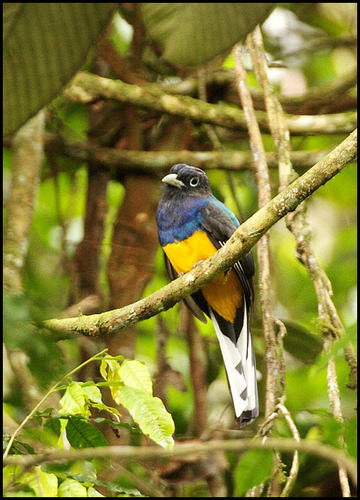
ハグロキヌバネドリ (Trogon viridis) ハグロキヌバネドリ
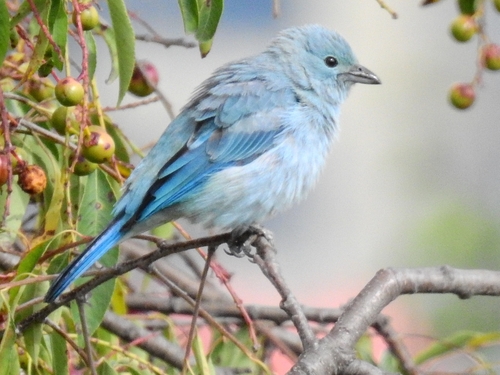
ソライロフウキンチョウ (Thraupis episcopus) ソライロフウキンチョウ

メディア

読み込み中…

要点

グリーンバックトロゴンとソライロフウキンチョウを区別する最も信頼できるフィールドマークは、尾羽のパターンです:成鳥のオスのグリーンバックトロゴンは、広い黒い基部と広い白い先端を持つ大胆な黒と白の尾羽を示しますが、ソライロフウキンチョウはそのようなパターンのない平坦な青い尾を持っています。未熟なソライロフウキンチョウは全体的に鈍いですが、トロゴンの目を引く尾羽を示すことはありません。構造的に、トロゴンは大きくてずんぐりした鳥で、広いくちばしと直立した姿勢を持ち、ソライロフウキンチョウはスリムで短い尾を持ち、より活発です。距離があっても、トロゴンの明るい黄色の腹部と青黒い頭は、フウキンチョウの柔らかく均一な青のトーンと対照的です。これらの違いは、止まっているときと飛んでいるときの両方で保持されますが、尾羽と姿勢は最も早く確認できるポイントです。

識別のコツ

  1. Undertail pattern: 成鳥のグリーンバックトロゴン(特にオス)は、広い黒い基部と広い白い先端を持つ大胆な黒と白の尾羽を示します。ソライロフウキンチョウは、黒や白のパターンのない平坦な青い尾を持っています。これはすべての年齢と性別で最も信頼できるマークです。
  2. Yellow belly: グリーンバックトロゴンだけが鮮やかなオレンジ黄色の下腹部と肛門を持っています。ソライロフウキンチョウは、下側が青または青灰色で、決して黄色ではありません。
  3. Head and back color: オスのトロゴンは、緑の背中を持つ暗い青(ほぼ黒)の頭と上胸を持っています;メスは灰色の頭と灰色の背中を持っています。ソライロフウキンチョウは、頭と下部が淡い青色で、上部が暗い青色、青い肩の斑点を持っています。どのフウキンチョウも緑の背中や黒っぽい頭を示しません。
  4. Bill shape: トロゴンは果物を食べるのに適した広くてフック状のくちばしを持っています;フウキンチョウは短くて太く、円錐形のくちばしを持っています。これは近距離または良い横顔で見ることができます。
  5. Size and structure: トロゴンはフウキンチョウよりもはるかに大きくてずんぐりしています(28–30 cm)が、フウキンチョウは(16–18 cm)です。トロゴンは直立して止まり、ずんぐりして見えます;フウキンチョウはスリムで、姿勢がより水平です。
  6. Wing pattern: トロゴンは白で模様が入った黒い翼を持っています;フウキンチョウの翼は平坦な青で、亜種によっては異なる色合いの肩の斑点を持つことがあります。どのフウキンチョウも模様や縞模様を示しません。
  7. Eye-ring: オスのグリーンバックトロゴンは完全な淡い青いアイリングを持っています;フウキンチョウは対照的なアイリングを欠いています。これは微妙ですが、近距離で役立つことがあります。
  8. Female/immature confusion: メスのトロゴンは上が灰色ですが、診断的な尾羽のパターンと黄色の腹部を示します。未熟なフウキンチョウは鈍い青ですが、これらのトロゴンの特徴を決して発達させません。
  9. Behavior: トロゴンは長時間静止して止まり、しばしば高い樹冠にいます;フウキンチョウは活発で、頻繁に移動し、オープンに採餌します。
  10. Habitat: 鳥が都市、庭、または開けた二次成長にいる場合、それはほぼ確実にフウキンチョウです。トロゴンは森林内部の専門家です。
  11. Voice: トロゴンは遅く加速する一連の「牛」の音を出します;フウキンチョウはきしむようなツイッター音を出します。遅く繰り返される歌を聞いた場合、トロゴンを疑ってください。
  12. Flight: トロゴンは飛ぶのを嫌がり、通常は短い距離しか飛びません;フウキンチョウは飛行中により敏捷で活発です。
  13. Shoulder patch: 一部のソライロフウキンチョウの亜種は対照的な肩の斑点(白、紫、または暗い青)を持っていますが、これはトロゴンの翼や尾羽ほど大胆または模様が入っていることはありません。
  14. Mixed flocks: トロゴンは混成種の群れに参加することはまれですが、フウキンチョウはしばしば参加します。他の小鳥と一緒に群れで見られた場合、それはおそらくフウキンチョウです。
  15. Pitfall: 照明が悪い場合、トロゴンの頭は青ではなく黒っぽく見えることがありますが、尾羽と黄色の腹部は見えます。常に尾羽と腹部の色を確認してください。

大きさ

グリーンバックトロゴンは、28–30 cmの長さで著しく大きく、ソライロフウキンチョウの16–18 cmと比較されます。トロゴンはまた、より頑丈な体と広いくちばしを持ち、フウキンチョウは軽くてスリムです。フィールドでは、両方が一緒に見られた場合、このサイズのギャップは明らかですが、単独または距離がある場合は過小評価されることがあります。

羽色

年齢に関係なく、ソライロフウキンチョウは決してグリーンバックトロゴンの黒と白の尾羽を示しません。成鳥のオスのトロゴンは、暗い青(ほぼ黒の色合い)の頭と上胸、緑の背中、鮮やかなオレンジ黄色の下部を持ち、白で模様が入った黒い翼を持っています。彼らの尾羽は診断的です:各羽は広い黒い基部と広い白い先端/外側の縁を持っています。メスは似ていますが、灰色の頭、背中、胸を持ち、尾羽の外側の羽毛により多くの黒と白の縞模様があります。対照的に、ソライロフウキンチョウ(両性)は、頭と下部が淡い青色で、上部が暗い青色、異なる色合いの青い肩の斑点を持っています。未熟な個体は鈍いですが、トロゴンの尾羽や黄色の腹部を決して発達させません。どのフウキンチョウの年齢や性別も、トロゴンの明るい黄色の腹部、緑の背中、または大胆な尾羽のパターンを示しません。フウキンチョウの尾は平坦な青で、くちばしは短くて太く、トロゴンの広くてフック状のくちばしとは異なります。

行動

グリーンバックトロゴンは、長時間直立して動かずに止まり、しばしば高い樹冠にいて、距離を飛ぶのを嫌がります。彼らの飛行は速いですが、頻繁ではありません。ソライロフウキンチョウははるかに活発で落ち着きがなく、頻繁に止まり木の間を移動し、オープンに採餌し、しばしばペアや小グループで見られます。トロゴンは混成種の群れに参加することはまれですが、フウキンチョウは他の鳥と一緒に見られる可能性が高いです。

生息環境

両種はアマゾンの湿った熱帯林に生息することがありますが、グリーンバックトロゴンはより厳密に森林内部の種であり、成熟した未開発の森林に生息し、その範囲で最も一般的なトロゴンです。ソライロフウキンチョウはより適応性があり、森林の端、二次成長、庭、さらには都市部でも見られます。都市公園や開けた場所で見られた場合、その鳥はほぼ確実にフウキンチョウです。

声

グリーンバックトロゴンの歌は約20の「牛」の音の連続で、遅く始まり加速し、オジロハグロキヌバネドリより遅く、クビワオグロキヌバネドリより高い音です。ソライロフウキンチョウは「つぃー」や「つぅぷ」といった呼び声を伴うきしむようなツイッターの歌を出します。トロゴンの歌はより計画的で繰り返しがあり、フウキンチョウの歌は高く、細く、あまり規則的ではありません。

より良い説明を送る

比較と同じ項目を使ってください。文章はすぐに公開されます。

The most reliable field mark to separate Green-backed Trogon from Blue-grey Tanager is the undertail pattern: adult male Green-backed Trogons show bold black-and-white undertail feathers with broad black bases and broad white tips, while Blue-grey Tanagers have plain blue tails with no such pattern. Immature Blue-grey Tanagers are overall duller but never show the trogon's striking undertail. Structurally, trogons are larger, thickset birds with a broad bill and upright posture, while tanagers are slimmer, shorter-tailed, and more active. Even at a distance, the trogon's bright yellow belly and blue-black head contrast with the tanager's softer, uniform blue tones. These differences hold in both perched and flight views, but undertail and posture are the fastest checks.

  1. Undertail pattern: Adult Green-backed Trogons (especially males) show bold black-and-white undertail feathers, each with a broad black base and broad white tip/edge. Blue-grey Tanagers have plain blue tails with no black or white pattern. This is the single most reliable mark in all ages and sexes.
  2. Yellow belly: Only Green-backed Trogon has a vivid orange-yellow lower belly and vent. Blue-grey Tanagers are blue or bluish-grey below, never yellow.
  3. Head and back color: Male trogons have a dark blue (almost black) head and upper breast with a green back; females are grey-headed and grey-backed. Blue-grey Tanagers are light bluish on the head and underparts, with darker blue upperparts and a blue shoulder patch. No tanager shows a green back or blackish head.
  4. Bill shape: Trogons have a broad, hooked bill suited for fruit-eating; tanagers have a shorter, thick, conical bill. This is visible at close range or in good profile views.
  5. Size and structure: Trogons are much larger and bulkier (28–30 cm) than tanagers (16–18 cm). Trogons perch upright and appear thickset; tanagers are slimmer and more horizontal in posture.
  6. Wing pattern: Trogons have black wings vermiculated with white; tanagers' wings are plain blue, sometimes with a differently shaded shoulder patch depending on subspecies. No tanager shows vermiculation or barring.
  7. Eye-ring: Male Green-backed Trogons have a complete pale bluish eye-ring; tanagers lack a contrasting eye-ring. This is subtle but can help at close range.
  8. Female/immature confusion: Female trogons are grey above but still show the diagnostic undertail pattern and yellow belly. Immature tanagers are duller blue but never develop these trogon features.
  9. Behavior: Trogons sit still for long periods, often high in the canopy; tanagers are active, moving frequently and foraging openly.
  10. Habitat: If the bird is in a city, garden, or open secondary growth, it's almost certainly a tanager. Trogons are forest interior specialists.
  11. Voice: Trogons give a slow, accelerating series of 'cow' notes; tanagers produce squeaky, twittering calls. If you hear a slow, repetitive song, suspect trogon.
  12. Flight: Trogons are reluctant fliers, usually flying only short distances; tanagers are more agile and active in flight.
  13. Shoulder patch: Some Blue-grey Tanager subspecies have a contrasting shoulder patch (white, violet, or darker blue), but this is never as bold or patterned as the trogon's wing or undertail.
  14. Mixed flocks: Trogons rarely join mixed-species flocks; tanagers often do. If seen in a flock with other small birds, it's likely a tanager.
  15. Pitfall: In poor light, the trogon's head may look blackish rather than blue, but the undertail and yellow belly remain visible. Always check the undertail and belly color for confirmation.

Green-backed Trogon is notably larger, at 28–30 cm in length [wikipedia], compared to the Blue-grey Tanager's 16–18 cm. The trogon is also bulkier, with a more robust body and broad bill, while the tanager is lighter and slimmer. In the field, this size gap is obvious if both are seen together, but can be underestimated if seen alone or at a distance.

No matter the age, Blue-grey Tanagers never show the black-and-white undertail of Green-backed Trogons. Adult male trogons have a dark blue (almost black in shade) head and upper breast, green back, and vivid orange-yellow lower underparts, with black wings vermiculated with white. Their undertail is diagnostic: each feather has a broad black base and broad white tip/outer edge. Females are similar but with a grey head, back, and breast, and more black-and-white barring on the outer webs of the tail feathers. In contrast, Blue-grey Tanagers (both sexes) are light bluish on the head and underparts, with darker blue upperparts and a differently shaded blue shoulder patch. Immatures are duller but never develop the trogon's undertail or yellow belly. No tanager age or sex shows the trogon's bright yellow belly, green back, or bold undertail pattern. The tanager's tail is plain blue, and the bill is short and thick, unlike the trogon's broad, hooked bill.

Green-backed Trogons perch upright and motionless for long periods, often high in the canopy, and are reluctant to fly any distance. Their flight is fast but infrequent. Blue-grey Tanagers are much more active and restless, frequently moving between perches, foraging openly, and often seen in pairs or small groups. Trogons rarely join mixed-species flocks, while tanagers are more likely to be seen with other birds.

Both species can occur in humid tropical forests of the Amazon, but Green-backed Trogon is more strictly a forest interior species, often in mature, undisturbed forest, and is typically the commonest trogon in its range. Blue-grey Tanagers are more adaptable, found in forest edges, secondary growth, gardens, and even urban areas. If seen in a city park or open area, the bird is almost certainly a tanager.

Green-backed Trogon's song is a series of about 20 'cow' notes, starting slow and accelerating, slower than White-tailed Trogon and higher pitched than Black-tailed Trogon. Blue-grey Tanager gives a squeaky twittering song with 'tseee' and 'tsuup' call notes. The trogon's song is more measured and repetitive, while the tanager's is higher, thinner, and less regular.

変更を破棄しますか?

保存していない編集があります。今離れると失われます。

ハグロキヌバネドリ · ソライロフウキンチョウ · 苦手な鳥