

Motmot

アカハラミドリヤマセミ 対 キカムリタイランチョウ

Chloroceryle inda 対 Empidonomus varius

アカハラミドリヤマセミとキカムリタイランチョウのクイズ
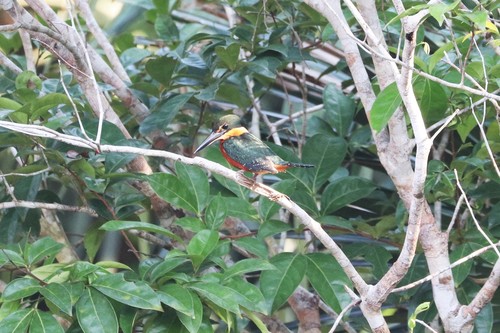
アカハラミドリヤマセミ (Chloroceryle inda) アカハラミドリヤマセミ
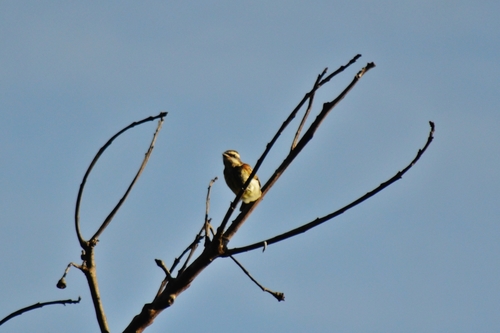
キカムリタイランチョウ (Empidonomus varius) キカムリタイランチョウ

メディア

読み込み中…

要点

最も信頼できるフィールドマークは全体の構造です:アカハラミドリヤマセミは、がっしりとした大きな頭と重いくちばしを持ち、毛羽立った冠を持つ鳥であるのに対し、キカムリタイランチョウは、細身で長い尾を持ち、小さなくちばしのパサリナで、強い白い眉斑があります。すべての羽色において、ヤマセミは豊かな赤褐色の腹部と光沢のある緑の上面を示し、タイランチョウは上面が茶色の縞模様で、下部は淡い色合いで黄色がかった洗いがかかり、固体の赤褐色の部分はありません。幼鳥のヤマセミは緑の胸帯と重い白い斑点を持ち、タイランチョウには決して現れません。飛んでいる時や止まっている時、ヤマセミの短い尾と大きなくちばしは明らかで、タイランチョウの長い尾と細いくちばしとは対照的です。両者は水辺近くで見られますが、ヤマセミは常に小川や河川の近くにいるのに対し、タイランチョウはよりオープンで高い木に止まります。

識別のコツ

  1. くちばしの形とサイズ: ヤマセミは、基部に淡い黄色が少しある巨大でダガーのようなくちばしを持っています;タイランチョウのくちばしははるかに短く、細く、先端がわずかにフック状です。これは、特に横から見たときに、彼らを分ける最も迅速な方法です。
  2. 頭部と冠: ヤマセミは大きくてブロック状の頭を持ち、毛羽立った冠があります;タイランチョウの頭は相対的に小さく滑らかで、暗い冠と隠れた黄色の斑点(めったに見えない)があります。
  3. 尾の長さと形: ヤマセミの尾は短くて四角い;タイランチョウの尾は長く、しばしば扇状または振られ、良い光の中で赤褐色の縁が見えます。
  4. 羽色(成鳥): ヤマセミは上面が光沢のある緑で、淡い襟と豊かな赤褐色の腹部(オスは固体、メスは緑/白の胸帯あり)を持っています;タイランチョウは上面が茶色がかり、淡い縞模様があり、強い白い眉斑と淡い黄色がかった腹部があり、決して固体の赤褐色ではありません。
  5. 幼鳥の羽色: 幼鳥のヤマセミは緑の胸帯と上面に重い白い斑点を持っています;幼鳥のタイランチョウは縞模様や胸帯がなく、全体的に鈍い色合いです。
  6. 飛行中の翼と尾の模様: ヤマセミは上翼の覆羽、二次羽、三次羽、尾に白い斑点を示します;タイランチョウは翼の覆羽と飛行羽に広い白い縁がありますが、斑点はありません。
  7. 眉斑: タイランチョウは、後頭部の周りに伸びる長く大胆な白い眉斑を持ち、これはヤマセミには見られない独特のマークです。
  8. 足の色: ヤマセミの足はピンクがかった暗灰色;タイランチョウの足は黒です。
  9. 止まり方: ヤマセミは水の上に低く止まり、しばしば表面近くの露出した枝に止まります;タイランチョウは高く止まり、しばしばオープンな場所で昆虫を捕まえるために飛び出します。
  10. 生息環境の文脈: 水から離れているか、樹冠の高いところで見られた場合は、タイランチョウを疑ってください;ヤマセミはほとんど水から離れることはありません。
  11. 性差: ヤマセミだけが性的二形性を示します(メスは緑/白の胸帯あり);タイランチョウの性別は同一です。
  12. 体の形: ヤマセミはがっしりとしてコンパクトで大きな頭を持っています;タイランチョウは細身で細長いです。
  13. 腹部の色: ヤマセミの腹部は深い赤褐色(オス)または緑/白の帯のある赤褐色(メス/幼鳥)です;タイランチョウの腹部は淡い黄色がかった白で、わずかな縞模様があり、決して赤褐色ではありません。
  14. 冠の模様: タイランチョウは暗い冠を持ち、隠れた黄色の斑点があります;ヤマセミの冠は緑で毛羽立っており、斑点はありません。
  15. 飛行スタイル: ヤマセミの飛行は直接的で重い;タイランチョウの飛行は軽く、よりひらひらしており、しばしば止まり木から飛び出します。

大きさ

アカハラミドリヤマセミは、キカムリタイランチョウ(18–19 cm、約25 g)よりも明らかに大きくてがっしりしています(約24 cm、オス40–60 g、メス53–62 g)。ヤマセミの体はがっしりしており、相対的に巨大な頭とくちばしを持っていますが、タイランチョウは細身で長い尾を持ち、軽量です。遠くからでも、ヤマセミのサイズと比率はタイランチョウよりも明らかに頑丈です。

羽色

幼鳥のアカハラミドリヤマセミ(両性)は、緑の胸帯と上面に重い白い斑点を示し、豊かな赤褐色の腹部を持っています—この組み合わせは、縞模様のない腹部を持ち、赤褐色や緑の色合いがないキカムリタイランチョウの幼鳥には決して見られません。成鳥のオスのヤマセミは、上面が光沢のある緑で、淡い黄色がかった襟と固体の暗い赤褐色の腹部を持っています;メスは広い緑色の白い斑点のある胸帯と、より多くの上面の斑点を加えます。すべての年齢のキカムリタイランチョウは、上面が茶色がかり、淡い縞模様があり、暗い冠と強い白い眉斑を持っています;彼らの腹部は淡い黄色がかった白で、わずかな縞模様があり、決して固体の赤褐色ではありません。タイランチョウの尾と上尾覆羽は赤褐色の縁がありますが、その効果は微妙で、ヤマセミの腹部ほど大胆ではありません。飛行中、ヤマセミは翼と尾に白い斑点を示し、タイランチョウは広い白い翼の縁がありますが、斑点はありません。

行動

アカハラミドリヤマセミは通常、水の上に低く止まっているのが見られ、しばしば小川や河川の近くの枝や流木に止まり、そこから獲物にダイブします。その動きは直接的で目的があります。短い飛行とお気に入りの止まり木への頻繁な戻りがあります。キカムリタイランチョウは通常、高く止まり、しばしばオープンな場所で中間の高さや樹冠で昆虫を捕まえるために飛び出したり、果物や昆虫を葉から摘むために一時的にホバリングしたりします。タイランチョウの飛行は軽く、よりひらひらしており、孤独なヤマセミとは異なり、混成種の群れに参加することがよくあります。

生息環境

両種は水辺近くで見られますが、アカハラミドリヤマセミは森林の小川、河川、日陰の水路に制限されており、水の端から遠くに出ることはほとんどありません。キカムリタイランチョウはより多様で、オープンな森林、森林の端、開けた場所で見られ、水から離れていることが多く、木の中で目立って高く止まります。もしその鳥が水から遠く離れているか、樹冠の高いところで見られた場合、ヤマセミは除外できます。

より良い説明を送る

比較と同じ項目を使ってください。文章はすぐに公開されます。

The most reliable field mark is overall structure: Green-and-rufous Kingfisher is a chunky, large-headed, heavy-billed bird with a shaggy crest, while Variegated Flycatcher is a slim, long-tailed, small-billed passerine with a strong white supercilium. In all plumages, the kingfisher shows rich rufous underparts and glossy green upperparts, while the flycatcher is streaked brown above and pale below with a yellowish wash and lacks any solid rufous areas. Juvenile kingfishers have a green breast band and heavy white spotting, which never appears on the flycatcher. In flight or perched, the kingfisher’s short tail and large bill are obvious, versus the flycatcher’s long tail and slender bill. Both can be found near water, but the kingfisher is always close to streams or rivers, while the flycatcher perches more openly and higher in trees.

  1. Bill shape and size: Kingfisher has a massive, dagger-like black bill with some pale yellow at the base; flycatcher’s bill is much shorter, slender, and only slightly hooked at the tip. This is often the quickest way to separate them, especially in profile.
  2. Head and crest: Kingfisher has a large, blocky head with a shaggy crest; flycatcher’s head is proportionally small and smooth, with a dark crown and a hidden yellow patch (rarely visible).
  3. Tail length and shape: Kingfisher’s tail is short and square; flycatcher’s tail is long, often fanned or wagged, with rufous edges visible in good light.
  4. Plumage color (adults): Kingfisher is glossy green above with a pale collar and rich rufous underparts (male solid, female with a green/white breast band); flycatcher is brownish above with pale streaks, a strong white supercilium, and pale yellowish underparts with faint streaks, never solid rufous.
  5. Juvenile plumage: Juvenile kingfishers have a green breast band and heavy white spotting on the upperparts; juvenile flycatchers lack streaks or breast bands and are overall duller.
  6. Wing and tail pattern in flight: Kingfisher shows white spots on the upperwing coverts, secondaries, tertials, and tail; flycatcher has broad white edges on the wing coverts and flight feathers but no spots.
  7. Supercilium: Flycatcher has a long, bold white supercilium extending around the nape, a unique mark never shown by kingfisher.
  8. Leg color: Kingfisher’s legs are pinkish to dark gray; flycatcher’s are black.
  9. Perching behavior: Kingfisher perches low over water, often on exposed branches close to the surface; flycatcher perches higher, often in the open, and sallies out for insects.
  10. Habitat context: If seen away from water or high in the canopy, suspect flycatcher; kingfisher is almost never far from water.
  11. Sex differences: Only the kingfisher shows sexual dimorphism (female with green/white breast band); flycatcher sexes are identical.
  12. Body shape: Kingfisher is stocky and compact with a huge head; flycatcher is slim and elongated.
  13. Underpart color: Kingfisher’s underparts are deep rufous (male) or rufous with a green/white band (female/juvenile); flycatcher’s are pale yellowish white with faint streaks, never rufous.
  14. Crown pattern: Flycatcher has a dark crown with a hidden yellow patch; kingfisher’s crown is green and shaggy, lacking any patch.
  15. Flight style: Kingfisher’s flight is direct and heavy; flycatcher’s is lighter, more fluttery, and often includes sallying from a perch.

Green-and-rufous Kingfisher is distinctly larger and bulkier (about 24 cm, males 40–60 g, females 53–62 g) than Variegated Flycatcher (18–19 cm, ~25 g). The kingfisher’s body is stocky with a proportionally huge head and bill, while the flycatcher is slender, long-tailed, and lightweight. Even at a distance, the kingfisher’s size and proportions are noticeably more robust than the flycatcher’s.

Juvenile Green-and-rufous Kingfishers (both sexes) show a green breast band and heavy white spotting on the upperparts, with a rich rufous belly—this combination is never matched by Variegated Flycatcher juveniles, which have unstreaked underparts and lack any rufous or green tones. Adult male kingfishers are glossy green above with a pale yellowish collar and solid dark rufous underparts; females add a broad green, white-speckled breast band and more upperpart spotting. Variegated Flycatchers of all ages are brownish above with pale streaks, a dark crown, and a strong white supercilium; their underparts are yellowish white with faint streaks, never solid rufous. The flycatcher’s tail and uppertail coverts are rufous-edged, but the effect is subtle and never as bold as the kingfisher’s underparts. In flight, kingfishers show white spots on the wings and tail, while flycatchers have broad white wing edges but no spotting.

Green-and-rufous Kingfisher is typically seen perched low over water, often on a branch or snag near a stream or river, from which it dives for prey. Its movements are direct and purposeful, with short flights and frequent returns to a favored perch. Variegated Flycatcher usually perches higher, often in the open at mid-levels or treetops, sallying out to catch insects in flight or briefly hovering to pick fruit or insects from foliage. The flycatcher’s flight is lighter and more fluttery, and it often joins mixed-species flocks, unlike the solitary kingfisher.

Both species can be found near water, but Green-and-rufous Kingfisher is restricted to forested streams, rivers, and shaded watercourses, rarely venturing far from water’s edge. Variegated Flycatcher is more versatile, found in open woodland, forest edges, and clearings, often away from water, and perches conspicuously higher in trees. If the bird is seen well away from water or high in the canopy, kingfisher can be ruled out.

変更を破棄しますか?

保存していない編集があります。今離れると失われます。

アカハラミドリヤマセミ · キカムリタイランチョウ · 苦手な鳥