

Green-and-rufous Kingfisher vs Variegated Flycatcher
Chloroceryle inda contro Empidonomus varius
Fai un quiz con Green-and-rufous Kingfisher e Variegated Flycatcher
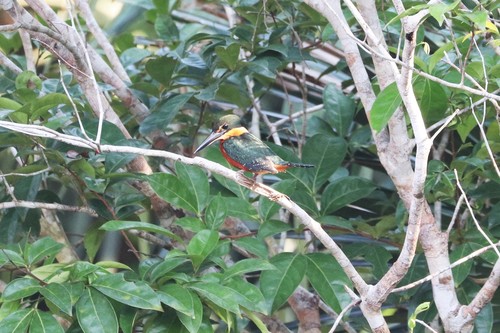 Green-and-rufous Kingfisher
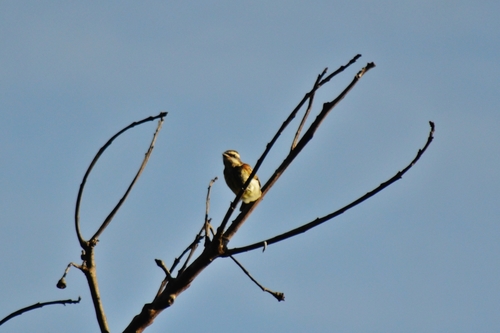 Variegated Flycatcher
In breve
Il segno distintivo più affidabile è la struttura complessiva: il Green-and-rufous Kingfisher è un uccello massiccio, con una testa grande e un becco pesante, dotato di una cresta disordinata, mentre il Variegated Flycatcher è un passeriforme snello, dalla coda lunga e dal becco piccolo, con un forte sopracciglio bianco. In tutte le livree, il martin pescatore mostra una ricca parte inferiore ruggine e una parte superiore verde lucida, mentre il pigliamosche è striato di marrone sopra e chiaro sotto con una sfumatura giallastra e manca di aree ruggine solide. I giovani martin pescatori hanno una banda petto verde e macchie bianche pesanti, che non compaiono mai sul pigliamosche. In volo o posato, la coda corta e il grande becco del martin pescatore sono evidenti, rispetto alla coda lunga e al becco snello del pigliamosche. Entrambi possono essere trovati vicino all'acqua, ma il martin pescatore è sempre vicino a corsi d'acqua o fiumi, mentre il pigliamosche si posa più apertamente e più in alto sugli alberi.
Consigli di identificazione
- Bill shape and size: Il martin pescatore ha un becco nero massiccio, simile a un pugnale, con un po' di giallo pallido alla base; il becco del pigliamosche è molto più corto, snello e solo leggermente ricurvo alla punta. Questo è spesso il modo più veloce per separarli, specialmente di profilo.
- Head and crest: Il martin pescatore ha una testa grande e squadrata con una cresta disordinata; la testa del pigliamosche è proporzionalmente piccola e liscia, con una corona scura e una macchia gialla nascosta (raramente visibile).
- Tail length and shape: La coda del martin pescatore è corta e quadrata; la coda del pigliamosche è lunga, spesso aperta o scossa, con bordi ruggine visibili in buona luce.
- Plumage color (adults): Il martin pescatore è verde lucido sopra con un collare pallido e una ricca parte inferiore ruggine (maschio solido, femmina con una banda petto verde/bianca); il pigliamosche è marrone sopra con striature chiare, un forte sopracciglio bianco e una parte inferiore giallastra con striature deboli, mai ruggine solida.
- Juvenile plumage: I giovani martin pescatori hanno una banda petto verde e macchie bianche pesanti sulla parte superiore; i giovani pigliamosche mancano di striature o bande petto e sono complessivamente più opachi.
- Wing and tail pattern in flight: Il martin pescatore mostra macchie bianche sulle copritrici delle ali superiori, secondarie, terziarie e sulla coda; il pigliamosche ha bordi bianchi ampi sulle copritrici delle ali e sulle piume di volo ma nessuna macchia.
- Supercilium: Il pigliamosche ha un lungo e audace sopracciglio bianco che si estende attorno alla nuca, un segno unico mai mostrato dal martin pescatore.
- Leg color: Le gambe del martin pescatore sono rosa scuro o grigio scuro; quelle del pigliamosche sono nere.
- Perching behavior: Il martin pescatore si posa basso sull'acqua, spesso su rami esposti vicino alla superficie; il pigliamosche si posa più in alto, spesso in aperto, e si lancia per gli insetti.
- Habitat context: Se visto lontano dall'acqua o in alto nella chioma, sospettare il pigliamosche; il martin pescatore è quasi mai lontano dall'acqua.
- Sex differences: Solo il martin pescatore mostra dimorfismo sessuale (femmina con banda petto verde/bianca); i sessi del pigliamosche sono identici.
- Body shape: Il martin pescatore è tozzo e compatto con una testa enorme; il pigliamosche è snello ed allungato.
- Underpart color: Le parti inferiori del martin pescatore sono di un ruggine profondo (maschio) o ruggine con una banda verde/bianca (femmina/giovane); quelle del pigliamosche sono di un bianco giallastro con striature deboli, mai ruggine.
- Crown pattern: Il pigliamosche ha una corona scura con una macchia gialla nascosta; la corona del martin pescatore è verde e disordinata, priva di qualsiasi macchia.
- Flight style: Il volo del martin pescatore è diretto e pesante; quello del pigliamosche è più leggero, più fluttuante e spesso include lanci da un posatoio.
Taglia
Il Green-and-rufous Kingfisher è nettamente più grande e massiccio (circa 24 cm, maschi 40–60 g, femmine 53–62 g) rispetto al Variegated Flycatcher (18–19 cm, ~25 g). Il corpo del martin pescatore è tozzo con una testa e un becco proporzionalmente enormi, mentre il pigliamosche è snello, dalla coda lunga e leggero. Anche a distanza, le dimensioni e le proporzioni del martin pescatore sono visibilmente più robuste rispetto a quelle del pigliamosche.
Piumaggio
I giovani Green-and-rufous Kingfishers (entrambi i sessi) mostrano una banda petto verde e pesanti macchie bianche sulla parte superiore, con un ricco ventre ruggine—questa combinazione non è mai eguagliata dai giovani Variegated Flycatcher, che hanno parti inferiori senza striature e mancano di toni ruggine o verdi. I martin pescatori maschi adulti sono verdi lucidi sopra con un collare giallastro pallido e parti inferiori ruggine scure solide; le femmine aggiungono una larga banda petto verde macchiata di bianco e più macchie sulla parte superiore. I Variegated Flycatchers di tutte le età sono marroni sopra con striature chiare, una corona scura e un forte sopracciglio bianco; le loro parti inferiori sono di un bianco giallastro con striature deboli, mai ruggine solida. La coda del pigliamosche e le copritrici della coda sono bordate di ruggine, ma l'effetto è sottile e mai così audace come le parti inferiori del martin pescatore. In volo, i martin pescatori mostrano macchie bianche sulle ali e sulla coda, mentre i pigliamosche hanno ampi bordi bianchi sulle ali ma nessuna macchia.
Comportamento
Il Green-and-rufous Kingfisher è tipicamente visto posato basso sull'acqua, spesso su un ramo o un tronco vicino a un ruscello o un fiume, da cui si tuffa per la preda. I suoi movimenti sono diretti e mirati, con voli brevi e frequenti ritorni a un posatoio preferito. Il Variegated Flycatcher di solito si posa più in alto, spesso in aperto a livelli medi o in cima agli alberi, lanciandosi per catturare insetti in volo o sostando brevemente per raccogliere frutta o insetti dal fogliame. Il volo del pigliamosche è più leggero e più fluttuante, e spesso si unisce a stormi di specie miste, a differenza del solitario martin pescatore.
Habitat
Entrambe le specie possono essere trovate vicino all'acqua, ma il Green-and-rufous Kingfisher è limitato a corsi d'acqua forestali, fiumi e corsi d'acqua ombreggiati, raramente avventurandosi lontano dal bordo dell'acqua. Il Variegated Flycatcher è più versatile, trovato in boschi aperti, bordi di foresta e radure, spesso lontano dall'acqua, e si posa in modo conspicuo più in alto sugli alberi. Se l'uccello è visto lontano dall'acqua o in alto nella chioma, il martin pescatore può essere escluso.
Green-and-rufous Kingfisher · Variegated Flycatcher · I miei uccelli difficili