

Motmot

オオキリハシ 対 ナッテラーハイイロアリモズ

Jacamerops aureus 対 Thamnophilus stictocephalus

オオキリハシとナッテラーハイイロアリモズのクイズ
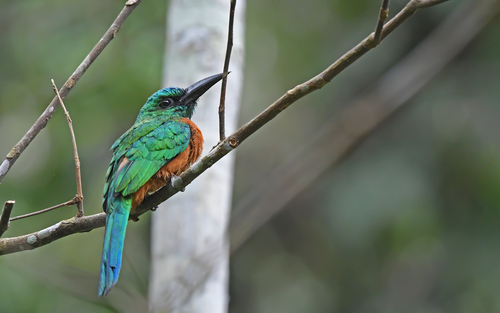
オオキリハシ (Jacamerops aureus) オオキリハシ
ナッテラーハイイロアリモズ (Thamnophilus stictocephalus) ナッテラーハイイロアリモズ

メディア

読み込み中…

要点

オオキリハシとナッテラーハイイロアリモズは、サイズ、構造、全体の色合いにおいて劇的に異なり、良好な視界では混同の可能性は低いですが、密林や光が乏しい場所では可能性があります。オオキリハシははるかに大きく、ずんぐりしており、下側は金属的な緑と赤褐色に輝いています。一方、アリモズは小さく、より頑丈な鉤状のくちばしを持ち、強い性差があります。オスは青灰色で白い翼の斑点があり、メスは赤褐色と粘土色です。もし大きく、長いくちばしを持つ、虹色の鳥が中層に静かに止まっているのを見たら、それはオオキリハシです。小さく、丸みを帯び、より活発な鳥が鉤状のくちばしと斑点のある翼を持って下層にいるのはアリモズです。両方の種は似たような低地の森林で見られる可能性があるため、サイズ、くちばしの形、羽毛に注意を払うことが重要です。

識別のコツ

  1. Size is the most immediate clue: オオキリハシはナッテラーハイイロアリモズのほぼ2倍の長さで、3倍の重さです。もし鳥が大きくて細長いように見えるなら、それはほぼ確実にオオキリハシです。
  2. Bill shape and length: オオキリハシは空中の昆虫を捕まえるのに適した長くてまっすぐな細いくちばしを持っています。アリモズはアリバトに典型的な短くて頑丈な鉤状のくちばしを持っています。くちばしの形は距離があっても診断的です。
  3. Plumage gloss and color: オオキリハシのオスは上面が金属的な緑で、金色、青、銅色のトーンがあり、白い下喉と深い赤褐色の下側を持っています。メスは白い喉の斑点がありませんが、その他は似ています。アリモズのオスはマットな青灰色から黒で、翼に白い斑点があります。メスは赤褐色と粘土色で、暗褐色の翼に白い斑点があります。オオキリハシの虹色は独特です。
  4. Sexual dimorphism: アリモズは強い性差を示します(オスは灰色から黒、メスは赤褐色/粘土色)。オオキリハシの性別は、メスの白い喉の斑点の欠如を除いて似ています。
  5. Wing and tail pattern: アリモズは両性において翼に白い斑点と縁、尾羽の先端に白い部分があります。オオキリハシの翼は単色の黒で、尾は青黒く、白い斑点や先端はありません。
  6. Underparts: オオキリハシは下側が深い赤褐色です(両性)、オスは白い下喉を持っています。アリモズのオスは下側が灰色で白っぽい腹を持ち、メスは淡い粘土色と灰色の下側を持っています。
  7. Perching posture and jizz: オオキリハシは直立して止まり、しばしば露出しており、長い尾とくちばしを持っています。アリモズはよりコンパクトで、しばしば水平で、覆いの中に留まります。
  8. Foraging behavior: オオキリハシは止まり木から飛んでいる昆虫を捕まえます。アリモズは植生の中を跳ね回り、獲物を拾い、あまり遠くに飛び出すことはありません。
  9. Habitat strata: オオキリハシは中層または森林の端にいます。アリモズは下層から中層におり、10メートル以上には滅多にいません。
  10. Tail shape: オオキリハシの尾は長くてまっすぐです。アリモズの尾は短く、良好な視界で白い先端が見えます。
  11. Leg color: オオキリハシは暗い角のような色の脚を持っています。アリモズの脚の色は区別するための特徴的なものではありません。
  12. Contextual clues: アリモズが軍隊アリを追っているのを見た場合、それはアリモズである可能性が高いです(ただし厳密なルールではありません)。開けた空気の中で飛び出している場合、それはオオキリハシです。
  13. Juvenile/immature birds: どちらの種にも年齢特有の翼のパターンは記載されていないため、若い鳥のためには構造と全体の色合いに頼ってください。
  14. Confusion risk: 光が乏しい場合、メスのアリモズの赤褐色のトーンはオオキリハシの赤褐色の腹と間違えられる可能性がありますが、サイズ、くちばし、虹色の欠如によって区別できます。
  15. Range overlap: 両方の種はボリビアとブラジルに生息しているため、これらの地域での識別には範囲だけを使用しないでください。

大きさ

オオキリハシははるかに大きな種で、長さは25〜30 cm、重さは約63 gです [wikidata]。ナッテラーハイイロアリモズははるかに小さく、長さは14〜15 cm、重さは19〜22 gです [wikipedia]。このサイズの違いはフィールドで際立っています:オオキリハシはアリモズのほぼ2倍の長さで、3倍の重さです。オオキリハシはまた、より細長く見え、アリモズはコンパクトで丸みを帯びた体形です。

羽色

行動

オオキリハシは通常静かに止まり木に座り、飛んでいる昆虫を捕まえるために飛び出します。通常は中層または森林の端にいます。その長くてまっすぐなくちばしは空中での捕食に適応しています。ナッテラーハイイロアリモズははるかに活発で、下層や中層の植生の中を跳ね回り、葉や枝から昆虫を拾い、時には短い上昇飛行を行います。アリモズの行動はより落ち着きがなく、地上性で、覆いから遠くに飛び出すことは稀で、しばしばペアで採餌します。オオキリハシは開けた場所に止まっているのが見られる可能性が高く、アリモズは密な葉の中に留まります。

生息環境

両方の種はボリビアとブラジルの低地の森林に生息していますが、垂直な採餌層において異なります。オオキリハシは中層と日陰の森林の端を好み、しばしば銀行や開けた場所の近くにいて、通常は下層の上に止まっています。ナッテラーハイイロアリモズは下層から中層(地面から1〜10メートル)に見られ、密な植生の中で採餌します。範囲は重なっていますが、オオキリハシはより高い位置や森林の端にいる可能性が高く、アリモズはより低く、森林の奥深くにいます。

より良い説明を送る

比較と同じ項目を使ってください。文章はすぐに公開されます。

Great Jacamar and Natterer's Slaty-Antshrike differ dramatically in size, structure, and overall coloration, making confusion unlikely with good views, but possible in dense forest or poor light. The Great Jacamar is much larger, bulkier, and shines with metallic greens and rufous below, while the antshrike is smaller, with a stouter hooked bill and strong sexual dimorphism—males are slaty gray with white wing spots, females are rufous and clay-colored. If you see a big, long-billed, iridescent bird perched quietly in the mid-canopy, it's the jacamar; a smaller, rounder, more active bird with a hooked bill and spotted wings in the understorey is the antshrike. Both may be seen in similar lowland forest, so careful attention to size, bill shape, and plumage is essential.

  1. Size is the most immediate clue: Great Jacamar is nearly twice as long and three times as heavy as Natterer's Slaty-Antshrike. If the bird appears large and elongated, it's almost certainly the jacamar.
  2. Bill shape and length: Jacamar has a long, straight, slender bill suited for aerial insect-catching; antshrike has a shorter, stout, hooked bill typical of antbirds. Bill shape is diagnostic even at distance.
  3. Plumage gloss and color: Jacamar males are metallic green with gold, blue, and copper tones above, white lower throat, and deep rufous below. Females lack the white throat spot but are otherwise similar. Antshrike males are matte slaty gray-black with white spots on wings; females are rufous and clay with white-spotted dark brown wings. The jacamar's iridescence is unique.
  4. Sexual dimorphism: Antshrike shows strong sexual dimorphism (males gray-black, females rufous/clay); jacamar sexes are similar except for the female's lack of white throat spot.
  5. Wing and tail pattern: Antshrike has white spots and edges on wings and white tips to tail feathers in both sexes. Jacamar's wings are plain black, tail blue-black, with no white spots or tips.
  6. Underparts: Jacamar is deep rufous below (both sexes), with a white lower throat in males. Antshrike males are gray below with a whitish belly; females are pale clay and gray below.
  7. Perching posture and jizz: Jacamar perches upright, often exposed, with a long tail and bill. Antshrike is more compact, often horizontal, and stays within cover.
  8. Foraging behavior: Jacamar sallies for flying insects from a perch; antshrike hops through vegetation, gleaning prey, and rarely sallies far.
  9. Habitat strata: Jacamar is in mid-canopy or forest edge; antshrike is in understorey to mid-storey, rarely above 10 m.
  10. Tail shape: Jacamar's tail is long and straight; antshrike's is shorter, with white tips visible in good views.
  11. Leg color: Jacamar has dark horn-colored legs; antshrike's leg color is not distinctive for separation.
  12. Contextual clues: If seen following army ants, it's more likely the antshrike (though not a strict rule). If sallying out in open air, it's the jacamar.
  13. Juvenile/immature birds: No distinctive age-specific wing patterns are described for either species, so rely on structure and overall coloration for young birds.
  14. Confusion risk: In poor light, a female antshrike's rufous tones could be mistaken for the jacamar's rufous belly, but the size, bill, and lack of iridescence will separate them.
  15. Range overlap: Both species occur in Bolivia and Brazil, so do not use range alone for ID in these areas.

Great Jacamar is by far the larger species, measuring 25–30 cm in length and weighing about 63 g [wikidata]. Natterer's Slaty-Antshrike is much smaller, at 14–15 cm and 19–22 g [wikipedia]. This size difference is striking in the field: the jacamar is almost twice as long and three times as heavy as the antshrike. The jacamar also appears more elongated and slender, while the antshrike is compact and round-bodied.

  • Juvenile/immature wing pattern: No age-specific upperwing marks are described for either species, so focus on adult plumage for separation.

  • Great Jacamar (adult): Males are bright metallic green above with gold and blue tones, a white lower throat, and deep rufous underparts. Primaries are black, tail is blue-black, and the bill is long and straight. Females are similar but lack the white throat spot.

  • Natterer's Slaty-Antshrike (adult): Strong sexual dimorphism. Males are mostly slaty gray to black above with a black crown and forehead, white spots and edges on black wings, and a gray face. Underparts are gray with a whitish belly. Females have a rufous crown, reddish-brown upperparts, dark brown wings with white spots, and clay-colored edges on the flight feathers. Both sexes have black or dark brown tails with white tips. The antshrike's plumage is matte and patterned, lacking the jacamar's iridescence.

Great Jacamar typically sits quietly, sallying out from a perch to catch insects in flight, often in the mid-canopy or at forest edge. Its long, straight bill is adapted for aerial hawking. Natterer's Slaty-Antshrike is much more active, hopping through understorey and mid-storey vegetation, gleaning insects from leaves and branches, and sometimes making short upward sallies. The antshrike's behavior is more restless and terrestrial, rarely sallying far from cover, and it often forages in pairs. The jacamar is more likely to be seen perched out in the open, while the antshrike stays within dense foliage.

Both species occur in lowland forests of Bolivia and Brazil, but they differ in vertical foraging strata. Great Jacamar prefers the mid-canopy and shaded forest edges, often near banks or clearings, and is usually seen perched above the understorey. Natterer's Slaty-Antshrike is found in the understorey to mid-storey (1–10 m above ground), foraging within dense vegetation. While their ranges overlap, the jacamar is more likely higher up and at forest edge, the antshrike lower and deeper within the forest.

変更を破棄しますか?

保存していない編集があります。今離れると失われます。

オオキリハシ · ナッテラーハイイロアリモズ · 苦手な鳥