

Great Jacamar vs Natterer's Slaty-Antshrike
Jacamerops aureus contro Thamnophilus stictocephalus
Fai un quiz con Great Jacamar e Natterer's Slaty-Antshrike
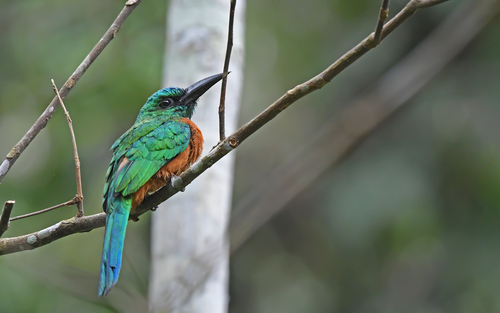 Great Jacamar
 Natterer's Slaty-Antshrike
In breve
Great Jacamar e Natterer's Slaty-Antshrike differono drammaticamente in dimensioni, struttura e colorazione generale, rendendo poco probabile la confusione con buone viste, ma possibile in foreste dense o in scarsa luce. Il Great Jacamar è molto più grande, più robusto e brilla con verdi metallici e rufous sotto, mentre l'antshrike è più piccolo, con un becco robusto e ricurvo e un forte dimorfismo sessuale: i maschi sono grigio ardesia con macchie bianche sulle ali, le femmine sono rufous e color argilla. Se vedi un grande uccello dal becco lungo e iridescente appollaiato tranquillamente a metà chioma, è il jacamar; un uccello più piccolo, più rotondo e più attivo con un becco ricurvo e ali macchiate nel sottobosco è l'antshrike. Entrambi possono essere visti in foreste di pianura simili, quindi è essenziale prestare attenzione a dimensioni, forma del becco e piumaggio.
Consigli di identificazione
- Size is the most immediate clue: Great Jacamar è quasi due volte più lungo e tre volte più pesante di Natterer's Slaty-Antshrike. Se l'uccello appare grande ed allungato, è quasi certamente il jacamar.
- Bill shape and length: Jacamar ha un becco lungo, dritto e snello adatto per catturare insetti in volo; l'antshrike ha un becco più corto, robusto e ricurvo tipico degli uccelli formichieri. La forma del becco è diagnostica anche a distanza.
- Plumage gloss and color: I maschi di Jacamar sono verdi metallici con toni dorati, blu e rame sopra, gola bianca e rufous profondo sotto. Le femmine mancano della macchia bianca sulla gola ma sono altrimenti simili. I maschi di antshrike sono grigio ardesia opaco con macchie bianche sulle ali; le femmine sono rufous e color argilla con ali marroni scure macchiate di bianco. L'iridescenza del jacamar è unica.
- Sexual dimorphism: L'antshrike mostra un forte dimorfismo sessuale (maschi grigio-neri, femmine rufous/color argilla); i sessi del jacamar sono simili tranne per l'assenza della macchia bianca sulla gola della femmina.
- Wing and tail pattern: L'antshrike ha macchie bianche e bordi sulle ali e punte bianche nelle penne della coda in entrambi i sessi. Le ali del jacamar sono nere semplici, la coda blu-nera, senza macchie o punte bianche.
- Underparts: Il jacamar è di un rufous profondo sotto (entrambi i sessi), con una gola bianca nei maschi. I maschi di antshrike sono grigi sotto con una pancia biancastra; le femmine sono di un color argilla pallido e grigio sotto.
- Perching posture and jizz: Il jacamar si appollaia dritto, spesso esposto, con una lunga coda e becco. L'antshrike è più compatto, spesso orizzontale, e rimane coperto.
- Foraging behavior: Il jacamar si lancia per catturare insetti volanti da un posatoio; l'antshrike salta attraverso la vegetazione, raccogliendo prede, e raramente si lancia lontano.
- Habitat strata: Il jacamar si trova a metà chioma o al bordo della foresta; l'antshrike si trova nel sottobosco fino alla metà chioma, raramente sopra i 10 m.
- Tail shape: La coda del jacamar è lunga e dritta; quella dell'antshrike è più corta, con punte bianche visibili in buone viste.
- Leg color: Il jacamar ha zampe di colore corno scuro; il colore delle zampe dell'antshrike non è distintivo per la separazione.
- Contextual clues: Se visto seguendo le formiche soldato, è più probabile che sia l'antshrike (anche se non è una regola ferrea). Se si lancia nell'aria aperta, è il jacamar.
- Juvenile/immature birds: Non sono descritti schemi di ali specifici per età per nessuna delle due specie, quindi fai affidamento sulla struttura e sulla colorazione generale per i giovani uccelli.
- Confusion risk: In scarsa luce, i toni rufous di una femmina di antshrike potrebbero essere scambiati per il ventre rufous del jacamar, ma le dimensioni, il becco e l'assenza di iridescenza li separeranno.
- Range overlap: Entrambe le specie si trovano in Bolivia e Brasile, quindi non utilizzare solo la distribuzione per l'identificazione in queste aree.
Taglia
Great Jacamar è di gran lunga la specie più grande, misurando 25–30 cm di lunghezza e pesando circa 63 g [wikidata]. Natterer's Slaty-Antshrike è molto più piccolo, a 14–15 cm e 19–22 g [wikipedia]. Questa differenza di dimensioni è sorprendente sul campo: il jacamar è quasi due volte più lungo e tre volte più pesante dell'antshrike. Il jacamar appare anche più allungato e snello, mentre l'antshrike è compatto e dal corpo rotondo.
Piumaggio
-
Juvenile/immature wing pattern: Non sono descritti segni specifici per età sulle ali superiori per nessuna delle due specie, quindi concentrati sul piumaggio adulto per la separazione.
-
Great Jacamar (adult): I maschi sono di un verde metallico brillante sopra con toni dorati e blu, una gola bianca e parti inferiori di un rufous profondo. Le primarie sono nere, la coda è blu-nera e il becco è lungo e dritto. Le femmine sono simili ma mancano della macchia bianca sulla gola.
-
Natterer's Slaty-Antshrike (adult): Forte dimorfismo sessuale. I maschi sono per lo più grigio ardesia a nero sopra con una corona e una fronte nere, macchie bianche e bordi sulle ali nere e un volto grigio. Le parti inferiori sono grigie con una pancia biancastra. Le femmine hanno una corona rufous, parti superiori marrone-rossiccio, ali marroni scure con macchie bianche e bordi color argilla sulle penne da volo. Entrambi i sessi hanno code nere o marroni scure con punte bianche. Il piumaggio dell'antshrike è opaco e patternato, privo dell'iridescenza del jacamar.
Comportamento
Great Jacamar tipicamente si siede tranquillamente, lanciandosi da un posatoio per catturare insetti in volo, spesso a metà chioma o al bordo della foresta. Il suo lungo becco dritto è adattato per la caccia aerea. Natterer's Slaty-Antshrike è molto più attivo, saltando attraverso la vegetazione del sottobosco e della metà chioma, raccogliendo insetti da foglie e rami, e a volte facendo brevi lanci verso l'alto. Il comportamento dell'antshrike è più irrequieto e terrestre, raramente si lancia lontano dalla copertura, e spesso cerca cibo in coppie. Il jacamar è più probabile che venga visto appollaiato all'aperto, mentre l'antshrike rimane all'interno di una fitta vegetazione.
Habitat
Entrambe le specie si trovano nelle foreste di pianura di Bolivia e Brasile, ma differiscono negli strati di foraggiamento verticale. Great Jacamar preferisce la metà chioma e i bordi della foresta ombreggiati, spesso vicino a sponde o radure, e di solito viene visto appollaiato sopra il sottobosco. Natterer's Slaty-Antshrike si trova nel sottobosco fino alla metà chioma (1–10 m sopra il suolo), foraggiando all'interno di vegetazione densa. Anche se le loro aree di distribuzione si sovrappongono, il jacamar è più probabile che si trovi più in alto e al bordo della foresta, l'antshrike più in basso e più in profondità all'interno della foresta.
Great Jacamar · Natterer's Slaty-Antshrike · I miei uccelli difficili