

Motmot

エンビモリハチドリ 対 ツバメハチドリ

Thalurania furcata 対 Eupetomena macroura

エンビモリハチドリとツバメハチドリのクイズ
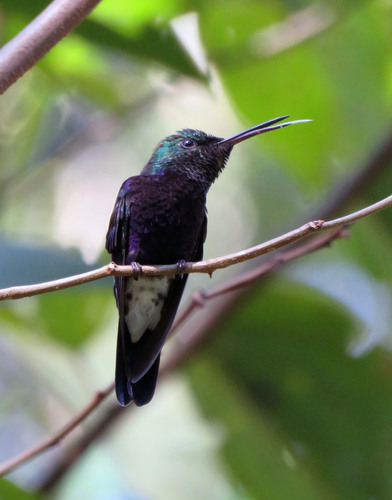
エンビモリハチドリ (Thalurania furcata) エンビモリハチドリ
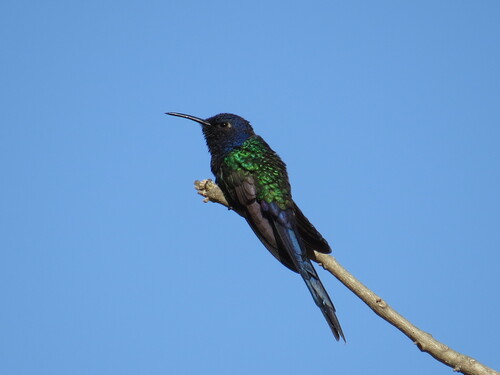
ツバメハチドリ (Eupetomena macroura) ツバメハチドリ

メディア

読み込み中…

要点

エンビモリハチドリとツバメハチドリを区別する最も信頼できるフィールドマークは、サイズと尾の構造です:Swallow-tailedははるかに大きく、全長のほぼ半分に達する劇的に長い深く分かれた尾を持っていますが、エンビモリハチドリは小さく、短く、あまり誇張されていない分かれた尾を持っています。飛んでいるときや止まっているとき、Swallow-tailedは青い頭と胸、主に青い尾を示しますが、エンビモリハチドリのオスは緑の冠と喉、紫色の腹部、青黒い尾を持っています。両種の雌と幼鳥は混乱を招くことがありますが、Swallow-tailedは常により大きく、尾が長いです。巨大でツバメのような尾と青い頭を持つハチドリを見たら、それはSwallow-tailedです;小さく、緑がかった鳥で控えめな分かれた尾を持つのがエンビモリハチドリです。

識別のコツ

  1. Size and bulk: ツバメハチドリはエンビモリハチドリよりもはるかに大きく、重いです。もしその鳥がハチドリにしては大きく、近くの種を圧倒しているように見えたら、Swallow-tailedを疑ってください。
  2. Tail length and shape: Swallow-tailedの尾は非常に長く(体長のほぼ半分)、深く分かれており、飛んでいるときや止まっているときにツバメのようなシルエットを与えます。エンビモリハチドリの尾は分かれていますが、はるかに短く、あまり劇的ではありません。
  3. Head and chest color (adult males): Swallow-tailedは青い頭と上胸を示し、緑の体と対照的です。エンビモリハチドリのオスは緑の冠と喉を持ち、紫色の腹部と上背に紫色の帯があります。
  4. Tail color (adults): Swallow-tailedの尾は青く目立ちますが、エンビモリハチドリの尾は青黒い(オス)か、基部が緑で外側の羽に白い先端がある(雌)です。
  5. Underparts (females): エンビモリハチドリの雌は淡い灰色の腹部を持っていますが、Swallow-tailedの雌は青い尾と頭を持つ緑がかった色合いで、オスよりもやや鈍いです。
  6. Bill shape: 両種は中程度の長さの黒いくちばしを持っていますが、Swallow-tailedのくちばしはわずかに下向きです;エンビモリハチドリのくちばしはまっすぐです。これは微妙で、補助的なマークとして使用するのが最適です。
  7. Juvenile/immature plumage: 幼鳥のSwallow-tailedは特に茶色がかった鈍い雌に似ています;エンビモリハチドリの幼鳥は青銅色の緑で、オスは鈍く、雌はバフィーな縁取りを示します。フィールドでは、これらの違いは微妙で、遠くからは診断的ではないかもしれません。
  8. White tail tips (females): エンビモリハチドリの雌は尾羽の外側の3対に白い先端を持っています;Swallow-tailedの雌は持っていません。
  9. Behavior: Swallow-tailedは非常に攻撃的で領土意識が強く、他の鳥を追いかけることが多いですが、エンビモリハチドリは特に雌があまり支配的ではありません。
  10. Habitat context: 開けた都市部やサバンナのような生息地ではSwallow-tailedがより一般的ですが、森林や密なエッジの生息地ではエンビモリハチドリがより典型的です。
  11. Flight style: Swallow-tailedは飛んでいるときに細長く、長い尾を持っているように見え、尾が後ろに引きずられ、開閉します;エンビモリハチドリはよりコンパクトで、短い分かれた尾を持っています。
  12. Voice: 大きく鋭い「psek」や「tik」の呼び声はSwallow-tailedを示唆します。エンビモリハチドリの呼び声はフィールドではあまり特徴的ではありません。
  13. Subspecific variation: 両種は青と緑の色合いにいくつかの変異を示しますが、尾の長さと頭の色は信頼できるままです。
  14. Perched posture: Swallow-tailedはしばしば尾を広げたり垂らしたりして止まっており、その長さを強調します;エンビモリハチドリはよりコンパクトに止まります。
  15. Confusion risk: 照明が悪い場合や遠くからでは、雌と幼鳥が混同されることがありますが、サイズ、尾の長さ、頭の色が最も良い区別要因です。

大きさ

ツバメハチドリはエンビモリハチドリ(オス3.6–6 g、雌3–5 g)よりも明らかに大きく、重い(体重約9 g)です[wikidata, wikipedia]。Swallow-tailedは15–17 cmの長さで、尾がそのほぼ半分を占めていますが、エンビモリハチドリははるかに短く(オス9.5–12.9 cm、雌8–10.7 cm)、全体的によりコンパクトです。フィールドでは、Swallow-tailedは細長く、長い尾を持っているように見え、他のハチドリを圧倒することが多いですが、エンビモリハチドリは明らかに小さく、あまり細長くありません。

羽色

幼鳥と未成熟の羽毛はどちらの種にとっても非常に特徴的ではありませんが、いくつかの対比があります。未成熟のツバメハチドリは鈍い雌に似ており、特に茶色がかった鈍い頭を持っています。エンビモリハチドリの幼鳥は上面が鈍い青銅色で、下面が鈍い青銅色(オス)またはバフィーな羽毛の縁取りを持つより青銅色の緑(雌)です。成鳥では、オスのエンビモリハチドリは暗い青銅色の上面、上背に紫色の帯、きらめく緑の喉、紫色の腹部、青黒い分かれた尾を持っています。両性の成鳥のツバメハチドリは、青い頭、上胸、尾、肛門、そして非常に長く深く分かれた青い尾を持つ輝く虹色の緑です。両種の雌は鈍いですが、Swallow-tailedの雌は青い尾と頭を示し、エンビモリハチドリの雌は緑の上面、淡い灰色の腹部、外側の羽に白い先端を持つ短い緑基盤の尾を持っています。両種の亜種変異は青と緑の色合いと範囲に影響を与えますが、全体的なパターンと尾の構造は信頼できます。

行動

ツバメハチドリは特に攻撃的で支配的であり、他のハチドリやはるかに大きな鳥から食料源を守ることが多いです。大胆で、しばしば侵入者にダイブボムを行い、特に巣作りの際にはほとんど恐れを示しません。エンビモリハチドリのオスも花のパッチを守りますが、全体的にはあまり支配的ではありません;雌は通常トラップラインで採餌します。混成種の遭遇では、Swallow-tailedが攻撃者であり、そのサイズと行動によりより目立つ可能性があります。

生息環境

エンビモリハチドリは南アメリカ本土(チリとウルグアイを除く)に広く分布し、さまざまな森林とエッジの生息地に生息しています。ツバメハチドリは南アメリカの東中央部、特にブラジルにより局所的で、開けた森林、サバンナ、庭、都市公園でよく見られます。両種は人間が改変した風景に出現することがありますが、Swallow-tailedは開けたまたは半開けた地域でより一般的であり、エンビモリハチドリは森林環境により典型的です。

声

ツバメハチドリは比較的大きな「psek」音と弱いツイッター音を持ち、興奮したり警戒したりすると鋭い「tik」呼び声を発します。エンビモリハチドリの声は詳細に記述されていないため、Swallow-tailedの大きく鋭い呼び声が聞かれない限り、声は信頼できる区別要因ではありません。

より良い説明を送る

比較と同じ項目を使ってください。文章はすぐに公開されます。

The most reliable field mark to separate Fork-tailed Woodnymph from Swallow-tailed Hummingbird is size and tail structure: Swallow-tailed is much larger and has a dramatically longer, deeply forked tail, nearly half its total length, while Fork-tailed Woodnymph is smaller with a shorter, less exaggerated forked tail. In flight or perched, Swallow-tailed shows a blue head and chest with a mostly blue tail, whereas Fork-tailed Woodnymph males have a green crown and throat with a violet belly and blue-black tail. Females and immatures of both can be confusing, but Swallow-tailed is always bulkier and longer-tailed. If you see a hummingbird with a huge, swallow-like tail and blue head, it's Swallow-tailed; a smaller, greenish bird with a modest fork is Fork-tailed Woodnymph.

  1. Size and bulk: Swallow-tailed Hummingbird is much larger and heavier than Fork-tailed Woodnymph. If the bird appears large for a hummingbird and dwarfs nearby species, suspect Swallow-tailed.
  2. Tail length and shape: Swallow-tailed's tail is extremely long (nearly half its body length) and deeply forked, giving a swallow-like silhouette in flight or when perched. Fork-tailed Woodnymph's tail is forked but much shorter and less dramatic.
  3. Head and chest color (adult males): Swallow-tailed shows a blue head and upper chest, contrasting with the green body. Fork-tailed Woodnymph males have a green crown and throat, with a violet belly and a violet band on the upper back.
  4. Tail color (adults): Swallow-tailed's tail is blue and prominent, while Fork-tailed Woodnymph's is blue-black (males) or green at the base with white tips on outer feathers (females).
  5. Underparts (females): Fork-tailed Woodnymph females have pale gray underparts, while Swallow-tailed females are greenish with blue tail and head, though slightly duller than males.
  6. Bill shape: Both species have medium-length, black bills, but Swallow-tailed's is slightly decurved; Fork-tailed Woodnymph's is straight. This is subtle and best used as a supporting mark.
  7. Juvenile/immature plumage: Immature Swallow-taileds are like dull females with especially brownish heads; Fork-tailed Woodnymph juveniles are bronzy green above, with males dull below and females showing buffy fringes. In the field, these differences are subtle and may not be diagnostic at a distance.
  8. White tail tips (females): Fork-tailed Woodnymph females have white tips on the outer three pairs of tail feathers; Swallow-tailed females do not.
  9. Behavior: Swallow-tailed is highly aggressive and territorial, often chasing other birds, while Fork-tailed Woodnymph is less dominant, especially females.
  10. Habitat context: In open, urban, or savanna-like habitats, Swallow-tailed is more likely; in forested or dense edge habitats, Fork-tailed Woodnymph is more typical.
  11. Flight style: Swallow-tailed often appears lanky and long-tailed in flight, with the tail trailing and opening/closing; Fork-tailed Woodnymph is more compact, with a shorter forked tail.
  12. Voice: Loud, sharp 'psek' or 'tik' calls suggest Swallow-tailed. Fork-tailed Woodnymph's calls are less distinctive in the field.
  13. Subspecific variation: Both species show some variation in the hue of blue and green, but tail length and head color remain reliable.
  14. Perched posture: Swallow-tailed often perches with tail spread or drooping, emphasizing its length; Fork-tailed Woodnymph perches more compactly.
  15. Confusion risk: In poor light or at a distance, females and immatures can be confused, but size, tail length, and head color are the best separators.

Swallow-tailed Hummingbird is distinctly larger and heavier (body mass ~9 g) than Fork-tailed Woodnymph (males 3.6–6 g, females 3–5 g) [wikidata, wikipedia]. Swallow-tailed measures 15–17 cm in length, with the tail making up nearly half of this, while Fork-tailed Woodnymph is much shorter (males 9.5–12.9 cm, females 8–10.7 cm) and more compact overall. In the field, Swallow-tailed appears lanky and long-tailed, often dwarfing other hummingbirds, whereas Fork-tailed Woodnymph is noticeably smaller and less elongated.

Juvenile and immature plumages are not highly distinctive for either species, but some contrasts exist. Immature Swallow-tailed Hummingbirds resemble duller females, with particularly brownish, dull heads. Fork-tailed Woodnymph juveniles are dull bronze-green above and dusky bronze-green below (males), or more bronzy green above with buffy feather fringes (females). In adults, male Fork-tailed Woodnymphs have a dark bronzy green upperparts, violet band on the upper back, glittering green throat, violet belly, and blue-black forked tail. Adult Swallow-tailed Hummingbirds of both sexes are brilliant iridescent green with a blue head, upper chest, tail, and vent, and a very long, deeply forked blue tail. Females of both species are duller, but Swallow-tailed females still show the blue tail and head, while Fork-tailed Woodnymph females have green upperparts, pale gray underparts, and a shorter, green-based tail with white tips on the outer feathers. Subspecific variation in both species affects the hue and extent of blue and green, but the overall pattern and tail structure remain reliable.

Swallow-tailed Hummingbird is notably aggressive and dominant, often defending food sources from other hummingbirds and even much larger birds. It is bold, frequently dive-bombing intruders and showing little fear, especially when nesting. Fork-tailed Woodnymph males also defend flower patches, but are less dominant overall; females usually forage by trap-lining. In mixed-species encounters, Swallow-tailed is likely to be the aggressor and more conspicuous due to its size and behavior.

Fork-tailed Woodnymph is widespread in mainland South America (except Chile and Uruguay), occurring in a variety of forested and edge habitats. Swallow-tailed Hummingbird is more localized to east-central South America, especially Brazil, and is often found in open woodlands, savannas, gardens, and urban parks. While both can occur in human-modified landscapes, Swallow-tailed is more likely in open or semi-open areas, whereas Fork-tailed Woodnymph is more typical of forested environments.

Swallow-tailed Hummingbird has relatively loud 'psek' notes and weaker twitters, with a sharp 'tik' call when excited or alarmed. Fork-tailed Woodnymph's vocalizations are not described in detail in the sources, so voice is not a reliable separator unless Swallow-tailed's loud, sharp calls are heard.

変更を破棄しますか?

保存していない編集があります。今離れると失われます。

エンビモリハチドリ · ツバメハチドリ · 苦手な鳥