

Motmot

ミソサザイ 対 ヤドリギツグミ

Troglodytes troglodytes 対 Turdus viscivorus

ミソサザイとヤドリギツグミのクイズ
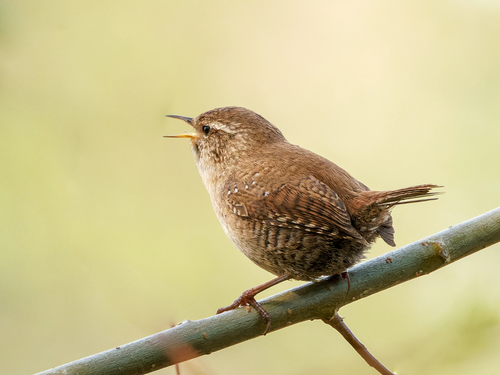
ミソサザイ (Troglodytes troglodytes) ミソサザイ
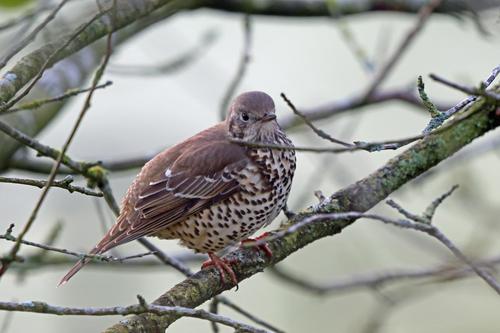
ヤドリギツグミ (Turdus viscivorus) ヤドリギツグミ

メディア

読み込み中…

要点

最も信頼できるフィールドマークはサイズと構造です:ヤドリギツグミはミソサザイよりも劇的に大きく、尾が長く、淡い色合いで大胆に斑点のある胸を持ち、ミソサザイのコンパクトで赤褐色の細かい縞模様とは対照的です。幼鳥のミソサザイは下部に強い縞模様がありませんが、それでも彼らの小さく丸い体、短く立てた尾、そしてマウスのような動きは、直立した頑丈なヤドリギツグミと鋭く対比されます。飛行中、ヤドリギツグミは長く丸い翼と白い尾の先端を示し、一方でミソサザイの翼は短く丸く、急速に回転するように羽ばたきます。声と生息地は役立つことがありますが、構造とサイズは直接比較において間違いなく明確です。

識別のコツ

  1. サイズが最も決定的な手がかりです: ヤドリギツグミはミソサザイの約3倍の長さと多くの質量を持っています。もしその鳥がスズメサイズまたはそれ以上に見えるなら、それはミソサザイではありえません。
  2. 尾の長さと姿勢: ミソサザイは非常に短い尾を持ち、通常は直立しています;ヤドリギツグミは長く真っ直ぐな尾を持ち、しばしば振られますが、決して立てません。
  3. 体の形と姿勢: ミソサザイはコンパクトで丸く、地面に低い位置にいます;ヤドリギツグミは直立していて、長い体を持ち、採餌中は高く立っています。
  4. 下部の羽毛: ミソサザイは細かい縞模様があり、下部は平坦です(幼鳥はより斑点が多い)、決して大胆な斑点はありません。ヤドリギツグミは常に淡い背景に黒い丸い斑点を示し、下胸部に最も密集しています。
  5. 上面: ミソサザイは赤褐色で均一です;ヤドリギツグミは淡い灰色がかった茶色で、顔と喉はより淡いです。
  6. 幼鳥の混乱: 若いミソサザイは強い縞模様が欠けていますが、まだ平坦で決して斑点はありません;幼鳥のツグミは小さいですが、まだ明らかな斑点とクリーミーな羽毛の中心を持っています。
  7. 翼と飛行パターン: ミソサザイの翼は短く丸く、短く直接的な飛行で急速に羽ばたきます。ヤドリギツグミは長く丸い翼を持ち、波打つように跳ねたり滑空したりします。
  8. 飛行中の尾のパターン: ヤドリギツグミは外側の尾羽に白い先端を示します;ミソサザイの尾は平坦で非常に短いです。
  9. くちばしの形: ミソサザイはそのサイズに対して細く比較的長いくちばしを持っています;ヤドリギツグミはより太く、黒っぽいくちばしを持ち、下顎の基部は黄色がかった色です。
  10. 脚の色: ミソサザイの脚は淡い茶色です;ヤドリギツグミの脚は黄色がかった茶色です。
  11. 生息地の文脈: ミソサザイはほぼ常に密なカバーや地面に近い位置にいます;ヤドリギツグミはしばしば開けた場所や高い位置に止まっています。
  12. 行動: ミソサザイは素早く、ぎこちない跳び方をし、隙間を探ります;ヤドリギツグミは頭を上げて跳び、尾と翼を振り、小さな群れで見られることがあります。
  13. 鳴き声: ミソサザイの歌は大きく、複雑でトリルのような爆発的な音です;その呼び声は急速な「ティクティクティク」です。ヤドリギツグミの歌はトリルではなく、混同される可能性は低いです。
  14. 季節と性別: どちらの種にも季節的または性別に基づく羽毛の違いはありません;ヤドリギツグミのすべての年齢は、どのミソサザイよりもはるかに大きく、斑点が多いです。
  15. 一般的な落とし穴: 悪い光の中や距離がある場合、ミソサザイは小さく平坦な鳥のように見えることがありますが、極端なサイズの違いと尾の姿勢は、よく見れば常に信頼できます。

大きさ

ミソサザイはヨーロッパの最小の鳥の一つで、長さはわずか9〜10 cm、翼幅は13〜17 cm、体重は約10 gです [wikipedia][avonet]。対照的に、ヤドリギツグミは27〜28 cmの長さ、45 cmの翼幅、93〜167 gの質量を持つ、最大の在来ヨーロッパツグミです [wikipedia][avonet]。ツグミはずんぐりした外見で、長い尾と直立した姿勢を持ち、ミソサザイは小さく、ふっくらしていて、尾が短いです。距離があったり、光が悪い場合でも、サイズのギャップは非常に極端で、混乱はシルエットや非常に悪い視界でのみ起こる可能性があります。

羽色

幼鳥と成鳥のミソサザイは上面が赤褐色で、下面は灰色がかっており、翼、尾、側面には暗い茶色と灰色の細かい縞模様があります。幼鳥は縞模様があまりはっきりしておらず、下部はより斑点が多いですが、決して大胆な斑点は示しません。尾は常に短く、しばしば立てられています。すべての年齢のヤドリギツグミは上面が淡い灰色がかった茶色で、黄色がかったクリーム色からオフホワイトの腹部と胸部には丸い不規則な黒い斑点があります。幼鳥は淡い上面を持ち、クリーミーな「涙滴」羽毛の中心と小さな斑点を下部に持っていますが、依然として特徴的なツグミの斑点を示します。尾は長く、外側の羽には白い先端があり、下羽毛は白いです。ミソサザイのどの年齢もヤドリギツグミの大胆で丸い斑点や淡い下部を示すことはなく、ツグミのどの年齢もミソサザイほど均一に茶色であったり、細かい縞模様を持っていることはありません。

行動

ミソサザイは非常に活発で、素早い動きで隙間を探り、しばしば地面に低く、またはカバーの下にいます。短く直接的な羽ばたきで跳び回り、歌っているとき以外は開けた場所に止まることはほとんどありません。ヤドリギツグミはより地上性で、開けた地面で跳びながら直立して警戒しており、興奮すると翼と尾を振ります。飛行は波打ち、滑空し、開けた野原や芝生での採餌に快適で、時には群れで見られます。ミソサザイのマウスのような隠れた行動は、大胆で直立した、時には群れを成すヤドリギツグミとは非常に異なります。

生息環境

ミソサザイは広範囲の生息地に見られますが、密な植生、下草、森林の端を好み、しばしば地面近くや絡み合った場所にいます。ヤドリギツグミは開けた森林、公園、さらには開けた野原に一般的で、しばしば開けた場所で採餌したり、高い木に止まったりしているのが見られます。両者が似た地域に生息することがあっても、ミソサザイはほぼ常にカバーの中におり、ツグミは開けた場所や高い止まり木で見られる可能性が高いです。

声

ミソサザイはそのサイズに対して非常に大きく複雑な歌を持っています:明確で高音のトリルとチリンという音の一連で、しばしば繰り返されるトリルと鋭い「ティクティクティク」という呼び声があります。その歌はダンナックのものよりも長く、より活気がありますが、後者にはトリルがありません。ヤドリギツグミの歌はここでは詳細に説明されていませんが、ミソサザイの爆発的で高音のトリルとは似ていません。呼び声と歌は、よく聞けば混同されることはなく、ミソサザイの声ははるかに高音で急速です。

より良い説明を送る

比較と同じ項目を使ってください。文章はすぐに公開されます。

The most reliable field mark is size and structure: Mistle Thrush is dramatically larger and longer-tailed than Eurasian Wren, with a pale, boldly spotted breast versus the wren’s compact, rufous-brown, finely barred look. Juvenile wrens lack strong barring below, but even then, their tiny, round body, short cocked tail, and mouse-like movement contrast sharply with the upright, robust Mistle Thrush. In flight, Mistle Thrush shows long, rounded wings and a white-tipped tail, while the wren’s wings are short and rounded, with rapid, whirring beats. Voice and habitat can help, but structure and size are unmistakable in direct comparison.

  1. Size is the most decisive clue: Mistle Thrush is nearly three times the length and many times the mass of Eurasian Wren. If the bird appears sparrow-sized or larger, it cannot be a wren.
  2. Tail length and carriage: Eurasian Wren has a very short tail, usually cocked upright; Mistle Thrush has a long, straight tail, often flicked but never cocked.
  3. Body shape and posture: Wren is compact, round, and low to the ground; Mistle Thrush is upright, long-bodied, and stands tall when foraging.
  4. Plumage below: Wren is finely barred and plain below (juveniles more mottled), never with bold spots. Mistle Thrush always shows round, black spots on a pale background, densest on the lower chest.
  5. Upperparts: Wren is rufous-brown and uniform above; Mistle Thrush is pale grey-brown with a paler face and throat.
  6. Juvenile confusion: Young wrens lack strong barring but are still plain and never spotted; juvenile thrushes have smaller, but still obvious, spots and creamy feather centers above.
  7. Wing and flight pattern: Wren’s wings are short, rounded, and whir rapidly in short, direct flights. Mistle Thrush has long, rounded wings and flies with undulating bounds and glides.
  8. Tail pattern in flight: Mistle Thrush shows white tips to the outer tail feathers; wren’s tail is plain and very short.
  9. Bill shape: Wren has a thin, relatively long bill for its size; Mistle Thrush has a stouter, blackish bill with a yellowish base to the lower mandible.
  10. Leg color: Wren’s legs are pale brown; Mistle Thrush’s are yellowish-brown.
  11. Habitat context: Wrens are almost always in dense cover or low to the ground; Mistle Thrushes are often in open areas or perched high.
  12. Behavior: Wren moves with quick, jerky hops and probes into crevices; Mistle Thrush hops with head up, flicks tail and wings, and may be seen in small flocks.
  13. Vocalization: Wren’s song is a loud, complex, trilling burst; its call is a rapid 'tic-tic-tic.' Mistle Thrush’s song is not trilling and is less likely to be confused.
  14. Season and sex: No significant seasonal or sex-based plumage differences in either species; all ages of Mistle Thrush are much larger and spottier than any wren.
  15. Common pitfalls: In poor light or at a distance, a wren may look like a small, plain bird, but the extreme size difference and tail posture are always reliable if seen well.

Eurasian Wren is one of the smallest European birds, measuring only 9–10 cm in length, with a wingspan of 13–17 cm and weighing about 10 g [wikipedia][avonet]. In stark contrast, Mistle Thrush is the largest native European thrush, at 27–28 cm long, a 45 cm wingspan, and 93–167 g in mass [wikipedia][avonet]. The thrush appears bulky, with a long tail and upright stance, while the wren is tiny, plump, and short-tailed. Even at a distance or in poor light, the size gap is so extreme that confusion is only likely in silhouette or with very poor views.

Juvenile and adult Eurasian Wrens are rufous-brown above, greyer below, and finely barred with darker brown and grey across the wings, tail, and flanks. Juveniles are less distinctly barred and more mottled underneath, but never show bold spots. The tail is always short and often cocked. Mistle Thrush of all ages is pale grey-brown above, with a yellowish-buff to off-white belly and breast marked by round, irregular black spots. Juveniles have paler upperparts with creamy 'teardrop' feather centers and smaller spots below, but still show the characteristic thrush spotting. The tail is long with white tips on the outer feathers, and the underwing coverts are white. No age of wren ever shows the bold, round spotting or pale underparts of Mistle Thrush, and no age of thrush is as uniformly brown or as finely barred as a wren.

Eurasian Wren is extremely active, moving with quick jerks, probing crevices, and often staying low to the ground or under cover. It hops and flits with short, direct, whirring flights, rarely perching in the open except when singing. Mistle Thrush is more terrestrial, often upright and alert while hopping on open ground, and when excited, flicks its wings and tail. Its flight is undulating with glides, and it is comfortable foraging in open fields or lawns, sometimes in flocks. The wren’s mouse-like, furtive behavior is very different from the bold, upright, and sometimes gregarious Mistle Thrush.

Eurasian Wren is found in a wide range of habitats but prefers dense vegetation, undergrowth, and forest edges, often near the ground or in tangles. Mistle Thrush is common in open woodlands, parks, and even open fields, often seen foraging in the open or perched high in trees. While both can occur in similar regions, the wren is almost always in cover, and the thrush is more likely to be seen in the open or high perches.

Eurasian Wren has a remarkably loud, complex song for its size: a series of clear, shrill trills and tinkling notes, often with repeated trills and a sharp 'tic-tic-tic' call. Its song is longer and more exuberant than a dunnock’s, with trills absent in the latter. Mistle Thrush’s song is not described in detail here, but it is not similar to the wren’s explosive, high-pitched trills. Calls and songs are unlikely to be confused if heard well, with the wren’s voice being much higher-pitched and more rapid.

変更を破棄しますか?

保存していない編集があります。今離れると失われます。

ミソサザイ · ヤドリギツグミ · 苦手な鳥