

Chochín Paleártico vs Zorzal Charlo
Troglodytes troglodytes frente a Turdus viscivorus
Juega un quiz con Chochín Paleártico y Zorzal Charlo
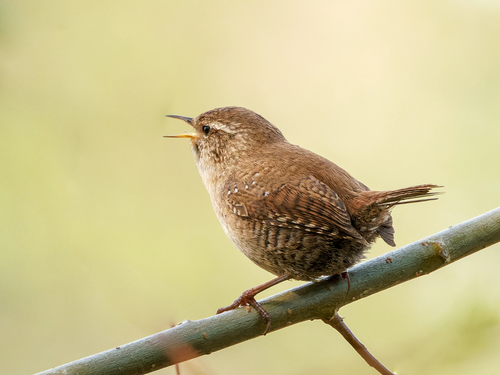 Chochín Paleártico
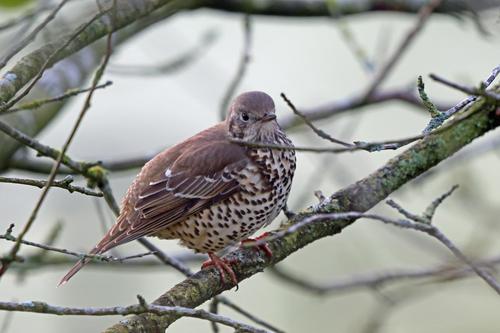 Zorzal Charlo
En breve
La marca de campo más confiable es el tamaño y la estructura: el Zorzal Charlo es dramáticamente más grande y de cola más larga que el Chochín Paleártico, con un pecho pálido y audazmente manchado frente al aspecto compacto, marrón rojizo y finamente estriado del chochín. Los chochines juveniles carecen de estriado fuerte en la parte inferior, pero aun así, su pequeño cuerpo redondo, cola corta levantada y movimiento similar al de un ratón contrastan marcadamente con el Zorzal Charlo erguido y robusto. En vuelo, el Zorzal Charlo muestra alas largas y redondeadas y una cola con puntas blancas, mientras que las alas del chochín son cortas y redondeadas, con batidos rápidos y zumbantes. La voz y el hábitat pueden ayudar, pero la estructura y el tamaño son inconfundibles en comparación directa.
Consejos de identificación
- El tamaño es la pista más decisiva: el Zorzal Charlo es casi tres veces la longitud y muchas veces la masa del Chochín Paleártico. Si el ave parece del tamaño de un gorrión o más grande, no puede ser un chochín.
- Longitud y posición de la cola: el Chochín Paleártico tiene una cola muy corta, generalmente levantada; el Zorzal Charlo tiene una cola larga y recta, a menudo movida pero nunca levantada.
- Forma del cuerpo y postura: el chochín es compacto, redondo y bajo al suelo; el Zorzal Charlo es erguido, de cuerpo largo y se mantiene erguido al forrajear.
- Plumaje en la parte inferior: el chochín está finamente estriado y es liso por debajo (los juveniles más moteados), nunca con manchas audaces. El Zorzal Charlo siempre muestra manchas redondas y negras sobre un fondo pálido, más densas en el pecho inferior.
- Partes superiores: el chochín es marrón rojizo y uniforme por encima; el Zorzal Charlo es marrón grisáceo pálido con una cara y garganta más pálidas.
- Confusión juvenil: los chochines jóvenes carecen de estriado fuerte pero aún son lisos y nunca manchados; los zorzales juveniles tienen manchas más pequeñas, pero aún obvias, y centros de plumas cremosos por encima.
- Patrón de alas y vuelo: las alas del chochín son cortas, redondeadas y zumban rápidamente en vuelos cortos y directos. El Zorzal Charlo tiene alas largas y redondeadas y vuela con saltos ondulantes y planeos.
- Patrón de la cola en vuelo: el Zorzal Charlo muestra puntas blancas en las plumas exteriores de la cola; la cola del chochín es lisa y muy corta.
- Forma del pico: el chochín tiene un pico delgado y relativamente largo para su tamaño; el Zorzal Charlo tiene un pico más robusto, negruzco, con una base amarillenta en la mandíbula inferior.
- Color de las patas: las patas del chochín son marrón pálido; las del Zorzal Charlo son marrón amarillento.
- Contexto del hábitat: los chochines están casi siempre en cobertura densa o bajos al suelo; los Zorzales Charlo a menudo están en áreas abiertas o posados en alto.
- Comportamiento: el chochín se mueve con saltos rápidos y bruscos y sondea en las grietas; el Zorzal Charlo salta con la cabeza erguida, mueve la cola y las alas, y puede verse en pequeños grupos.
- Vocalización: la canción del chochín es una explosión fuerte, compleja y trina; su llamada es un rápido 'tic-tic-tic.' La canción del Zorzal Charlo no es trina y es menos probable que se confunda.
- Temporada y sexo: no hay diferencias significativas en el plumaje estacional o basado en el sexo en ninguna de las especies; todas las edades del Zorzal Charlo son mucho más grandes y manchadas que cualquier chochín.
- Trampas comunes: en poca luz o a distancia, un chochín puede parecer un ave pequeña y lisa, pero la diferencia de tamaño extremo y la postura de la cola son siempre confiables si se ven bien.
Tamaño
El Chochín Paleártico es una de las aves europeas más pequeñas, midiendo solo 9–10 cm de longitud, con una envergadura de 13–17 cm y pesando alrededor de 10 g [wikipedia][avonet]. En contraste, el Zorzal Charlo es el zorzal nativo europeo más grande, con 27–28 cm de largo, una envergadura de 45 cm y 93–167 g de masa [wikipedia][avonet]. El zorzal parece voluminoso, con una cola larga y una postura erguida, mientras que el chochín es pequeño, regordete y de cola corta. Incluso a distancia o en poca luz, la diferencia de tamaño es tan extrema que la confusión solo es probable en silueta o con vistas muy pobres.
Plumaje
Los chochines Eurasianos juveniles y adultos son marrón rojizo por encima, más grisáceos por debajo, y finamente estriados con marrón oscuro y gris a través de las alas, la cola y los flancos. Los juveniles están menos distintivamente estriados y son más moteados por debajo, pero nunca muestran manchas audaces. La cola siempre es corta y a menudo levantada. El Zorzal Charlo de todas las edades es marrón grisáceo pálido por encima, con un vientre y pecho amarillento a blanco sucio marcados por manchas redondas e irregulares negras. Los juveniles tienen partes superiores más pálidas con centros de plumas cremosos en forma de 'gota' y manchas más pequeñas por debajo, pero aún muestran el característico moteado del zorzal. La cola es larga con puntas blancas en las plumas exteriores, y las coberturas de las alas son blancas. Ninguna edad de chochín muestra jamás el moteado audaz y redondo o las partes inferiores pálidas del Zorzal Charlo, y ninguna edad de zorzal es tan uniformemente marrón o tan finamente estriada como un chochín.
Comportamiento
El Chochín Paleártico es extremadamente activo, moviéndose con sacudidas rápidas, sondeando grietas y a menudo permaneciendo bajo al suelo o bajo cobertura. Salta y se mueve con vuelos cortos, directos y zumbantes, rara vez posándose a la vista excepto cuando canta. El Zorzal Charlo es más terrestre, a menudo erguido y alerta mientras salta en terreno abierto, y cuando se excita, mueve sus alas y cola. Su vuelo es ondulante con planeos, y se siente cómodo forrajeando en campos abiertos o céspedes, a veces en grupos. El comportamiento furtivo y similar al de un ratón del chochín es muy diferente del Zorzal Charlo, que es audaz, erguido y a veces gregario.
Hábitat
El Chochín Paleártico se encuentra en una amplia gama de hábitats, pero prefiere la vegetación densa, el sotobosque y los bordes de los bosques, a menudo cerca del suelo o en enredos. El Zorzal Charlo es común en bosques abiertos, parques e incluso campos abiertos, a menudo visto forrajeando a la vista o posado alto en los árboles. Aunque ambos pueden ocurrir en regiones similares, el chochín está casi siempre en cobertura, y el zorzal es más probable que se vea en áreas abiertas o en perchas altas.
Voz
El Chochín Paleártico tiene una canción notablemente fuerte y compleja para su tamaño: una serie de trinos claros y agudos y notas tintineantes, a menudo con trinos repetidos y una llamada aguda 'tic-tic-tic'. Su canción es más larga y exuberante que la de un acentor, con trinos ausentes en este último. La canción del Zorzal Charlo no se describe en detalle aquí, pero no es similar a los trinos explosivos y agudos del chochín. Las llamadas y canciones son poco probables de confundirse si se escuchan bien, siendo la voz del chochín mucho más aguda y rápida.