

Motmot

ヨーロッパコノハズク 対 Maghreb Owl

Otus scops 対 Strix mauritanica

ヨーロッパコノハズクとMaghreb Owlのクイズ
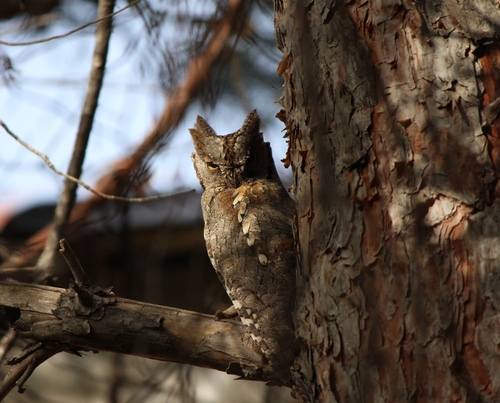
ヨーロッパコノハズク (Otus scops) ヨーロッパコノハズク
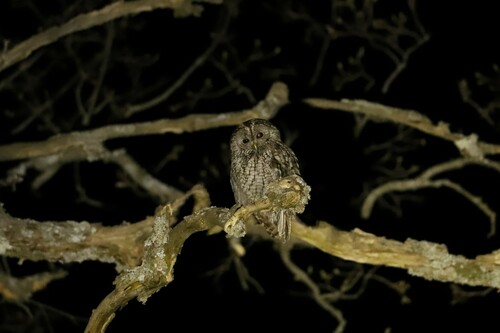
Maghreb Owl (Strix mauritanica) Maghreb Owl

メディア

読み込み中…

要点

ヨーロッパコノハズクとMaghreb Owl(ここではモリフクロウグループで表現されています)を区別する最も信頼できるフィールドマークはサイズと構造です:ヨーロッパコノハズクは非常に小さく、細身で直立した姿勢と目立つ耳羽を持っていますが、Maghreb Owlははるかに大きく、ずんぐりしており、耳羽がありません。飛行中、コノハズクは長く狭い翼と強く直接的な飛行を示し、対照的にMaghreb Owlは広く丸い翼と重く遅い飛行を持っています。羽毛の違いも重要です:コノハズクは全体的に灰褐色で、顔と肩のラインが淡いのに対し、Maghreb Owlは下部がより力強く縞模様があり、上部は赤褐色または灰色がかっており、平坦で丸い顔の円盤を持っています。耳羽と淡い肩のラインを持つ小さく直立したフクロウを見たら、それはコノハズクです;大きく丸い耳のないフクロウで、下部に縞模様があるのはMaghreb/Tawnyです。

識別のコツ

  1. サイズは最も即座の手がかりです:ヨーロッパコノハズクは小さく(ほぼ20 cm)、一方でMaghreb Owlは2倍の長さで、はるかにずんぐりしています。フクロウが大きくてずんぐりしているように見えたら、コノハズクを除外してください。
  2. 耳羽:コノハズクは小さく尖った耳羽を持ち、止まっている時や警戒している時によく見えます。Maghreb Owlは耳羽が全くなく、頭は滑らかに丸いです。
  3. 姿勢と印象:コノハズクは直立して止まり、細身でほぼ細長く見えます。Maghreb Owlはずんぐりしており、大きく丸い頭とより水平な姿勢を持っています。
  4. 顔の円盤:コノハズクは淡い顔と目立つ淡い肩のラインを持ち、Maghreb Owlの顔の円盤は平坦で丸く、淡い肩のラインがありません。
  5. 下部:コノハズクは下部が淡いですが、一般的に無地または微妙に縞模様があります。Maghreb Owlは常に白っぽい下部に強い茶色の縞模様を示し、上部の色に関係なくそうです。
  6. 上部:コノハズクは灰褐色で、コントラストが少ないです;Maghreb Owlは上部が赤褐色または灰色がかっていることがありますが、これは変動があり、常に信頼できるわけではありません。
  7. 飛行中の翼:コノハズクは長く狭い翼を持ち、直接的で目的のある飛行をします。Maghreb Owlは広く丸い翼を持ち、重く飛び、しばしば長い滑空と遅い翼の打撃を伴います。
  8. 頭のサイズと形:コノハズクの頭は耳羽のため小さく角ばっています;Maghreb Owlの頭は大きく、丸く、滑らかです。
  9. 目の色:両方とも暗い目を持っていますが、Maghreb Owlの目は特に大きく、顔の円盤で目立ちます。
  10. 声:コノハズクの鳴き声は深く反復的な口笛で、ヒキガエルのようです;Maghreb Owlの鳴き声は典型的なフクロウのホー(ここでは詳細には述べられていませんが、グループ内ではよく知られています)。ヒキガエルのような口笛を聞いたら、それはコノハズクです。
  11. 生息地:密集した成熟した森林ではMaghreb Owlが期待され、開けた森林や地中海の低木ではコノハズクがより可能性があります。
  12. 肩のライン:淡い肩のラインは、止まっている時のコノハズクにとって微妙ですが有用なマークです。
  13. 飛行スタイル:長く狭い翼で素早く直接飛んでいるフクロウを見たら、それはコノハズクです;広い翼で重く遅い滑空飛行はMaghrebです。
  14. 止まっているシルエット:コノハズクは細く直立して見え、Maghreb Owlは丸くずんぐりしています。
  15. 落とし穴:若いMaghreb Owlsはより淡く見えることがありますが、耳羽がなく、縞模様のある下部を示します。コノハズクは決してMaghrebほど大きくも、重く縞模様があることもありません。

大きさ

ヨーロッパコノハズクは非常に小さく、長さ19–21 cm、翼幅47–54 cm [wikipedia]で、Maghreb Owl(モリフクロウグループ)は長さ37–46 cm、翼幅81–105 cm [wikipedia]です。Maghreb Owlは2倍以上の重さ(385–800 g対コノハズクのはるかに軽い体型)です。フィールドでは、これは劇的な違いです:コノハズクは小柄に見え、コキンメフクロウと比較してもそうですが、Maghreb Owlは大きくずんぐりした鳥で、大きく丸い頭を持っています。

羽色

どちらの種についても、特に幼鳥や未成熟の上翼パターンに関する記述はありません。すべての年齢において、コノハズクは灰褐色で、顔、下部、そして目立つ淡い肩のラインを持っています。小さく尖った耳羽があり、しばしば見えます。Maghreb Owl(モリフクロウグループ)は上部がはるかに変動があり(赤褐色または灰色がかっている)、常に淡い、強く縞模様のある下部と耳羽がない平坦で丸い顔の円盤を持っています。上部は茶色または灰色である可能性がありますが、下部は常に白っぽく、茶色の縞模様があります。飛行中、コノハズクの長く狭い翼はMaghreb Owlの広く丸い翼と対照的です。コノハズクの淡い肩のラインは、止まっている時によく見えます。Maghreb Owlの顔の円盤は平坦で丸く、目は暗い茶色で、大きく丸い頭に配置されています。

行動

コノハズクは直立して止まり、しばしば露出した枝に見られ、細身で警戒しているように見えます。飛行は強く直接的で、長く狭い翼は移動に適しています。Maghreb Owlはずんぐりしており、より水平に止まり、広く丸い翼で重く遅い翼の打撃で飛び、しばしば長い滑空を伴います。飛行スタイルの違いは顕著です:コノハズクは素早く直接的で、Maghreb Owlは重く滑空します。

生息環境

コノハズクは南ヨーロッパから南シベリアまで繁殖し、サハラ以南のアフリカで冬を越しますが、地中海の森林に定住することもあります。Maghreb Owl(モリフクロウグループ)は森林の専門家で、ヨーロッパと西シベリアの森林や成熟した森林に見られます。密集した成熟した森林にいる場合、Maghreb Owlがより可能性があります;コノハズクはより開けた森林、地中海の低木、そしてエッジの生息地を好みます。

声

コノハズクは深く反復的な口笛を発し、助産婦のヒキガエル(Alytes)を思わせ、両性が鳴きます。Maghreb Owl(モリフクロウグループ)の鳴き声は提供されたメモには記述されていませんが、通常はグループ内で典型的な遠くまで響くホーまたは「ツイット・トゥー」という鳴き声です。コノハズクの鳴き声はよりヒキガエルのようで、フクロウの典型的なものではないため、聞いた場合は有用な手がかりとなります。

より良い説明を送る

比較と同じ項目を使ってください。文章はすぐに公開されます。

The most reliable field mark to separate Eurasian Scops Owl from Maghreb Owl (here, represented by the Tawny Owl group) is size and structure: Eurasian Scops Owl is much smaller, with a slim, upright posture and prominent ear-tufts, while Maghreb Owl is much larger, stockier, and lacks ear-tufts. In flight, Scops Owl shows long, narrow wings and a strong, direct flight, contrasting with the broad, rounded wings and heavy, slow flight of Maghreb Owl. Plumage differences are also key: Scops Owl is grey-brown overall with a pale face and shoulder line, while Maghreb Owl is more robustly streaked below and can be rufous or greyish above, with a plain, rounded facial disc. If you see a small, upright owl with ear-tufts and a pale shoulder line, it is Scops; a large, rounded, earless owl with streaked underparts is Maghreb/Tawny.

  1. Size is the most immediate clue: Eurasian Scops Owl is tiny (barely 20 cm), while Maghreb Owl is twice as long and much bulkier. If the owl looks large and chunky, rule out Scops.
  2. Ear-tufts: Scops Owl has small, pointed ear-tufts that are often visible when perched or alert. Maghreb Owl lacks ear-tufts entirely; its head is smoothly rounded.
  3. Posture and jizz: Scops Owl perches upright and appears slim, almost elongated. Maghreb Owl is squat, with a large, rounded head and a more horizontal posture.
  4. Facial disc: Scops Owl has a pale face with a noticeable pale shoulder line; Maghreb Owl's facial disc is plain, rounded, and lacks any pale shoulder line.
  5. Underparts: Scops Owl is pale below but generally unmarked or subtly streaked. Maghreb Owl always shows strong brown streaks on whitish underparts, regardless of upperpart color.
  6. Upperparts: Scops Owl is grey-brown, with little contrast; Maghreb Owl can be rufous or greyish brown above, but this is variable and not always reliable.
  7. Wings in flight: Scops Owl has long, narrow wings and a direct, purposeful flight. Maghreb Owl has broad, rounded wings and flies heavily, often with long glides and slow wingbeats.
  8. Head size and shape: Scops Owl's head is small and angular due to ear-tufts; Maghreb Owl's head is large, rounded, and smooth.
  9. Eye color: Both have dark eyes, but Maghreb Owl's are particularly large and striking in its facial disc.
  10. Voice: Scops Owl's call is a deep, repetitive whistle, like a toad; Maghreb Owl's call is a classic owl hoot (not detailed here, but well-known in the group). If you hear a toad-like whistle, it's Scops.
  11. Habitat: In dense, mature woodland, expect Maghreb Owl; in open woodland or Mediterranean scrub, Scops is more likely.
  12. Shoulder line: The pale shoulder line is a subtle but useful mark for Scops Owl when perched.
  13. Flight style: If you see an owl flying quickly and directly with long, narrow wings, it's Scops; heavy, slow, gliding flight with broad wings is Maghreb.
  14. Perched silhouette: Scops Owl looks slim and upright; Maghreb Owl is round and squat.
  15. Pitfalls: Young Maghreb Owls may appear paler, but will still lack ear-tufts and show streaked underparts. Scops Owl is never as large or as heavily streaked as Maghreb.

Eurasian Scops Owl is much smaller, at 19–21 cm length and 47–54 cm wingspan [wikipedia], compared to Maghreb Owl (Tawny Owl group) at 37–46 cm length and 81–105 cm wingspan [wikipedia]. Maghreb Owl is more than twice as heavy (385–800 g vs. Scops Owl's much lighter build). In the field, this is a dramatic difference: Scops Owl appears petite, even compared to a Little Owl, while Maghreb Owl is a large, chunky bird with a big, rounded head.

There are no distinctive juvenile or immature upperwing patterns described for either species in the sources. For all ages, Scops Owl is grey-brown with a paler face, underparts, and a noticeable pale shoulder line. It has small, pointed ear-tufts that are often visible. Maghreb Owl (Tawny Owl group) is much more variable above (rufous or greyish brown), but always has pale, heavily streaked underparts and a plain, rounded facial disc with no ear-tufts. The upperparts may be brown or grey, but the underparts are always whitish with brown streaks. In flight, Scops Owl's long, narrow wings contrast with the broad, rounded wings of Maghreb Owl. The pale shoulder line of Scops is often visible when perched. Maghreb Owl's facial disc is plain and rounded, and the eyes are dark brown, set in a large, rounded head.

Scops Owl perches upright and is often seen on exposed branches, appearing slim and alert. Its flight is strong and direct, with long, narrow wings suited to migration. Maghreb Owl is stockier, perches more horizontally, and flies with heavy, slow wingbeats on broad, rounded wings, often gliding for long stretches. The difference in flight style is notable: Scops Owl is quick and direct, Maghreb Owl is heavy and gliding.

Scops Owl breeds from southern Europe to southern Siberia and winters in sub-Saharan Africa, but can be resident in Mediterranean woodlands. Maghreb Owl (Tawny Owl group) is a woodland specialist, found in forests and mature woodlands across Europe and western Siberia. If you are in dense, mature woodland, Maghreb Owl is more likely; Scops Owl favors more open woodland, Mediterranean scrub, and edge habitats.

Scops Owl gives a deep, repetitive whistle, reminiscent of midwife toads (Alytes), and both sexes call. Maghreb Owl's (Tawny Owl group) call is not described in the provided notes, but is typically a classic, far-carrying hoot or 'twit-twoo' in the group. The Scops Owl's call is more toad-like and less owl-typical, which can be a useful clue if heard.

変更を破棄しますか?

保存していない編集があります。今離れると失われます。

ヨーロッパコノハズク · Maghreb Owl · 苦手な鳥