

Assiolo vs Maghreb Owl
Otus scops contro Strix mauritanica
Fai un quiz con Assiolo e Maghreb Owl
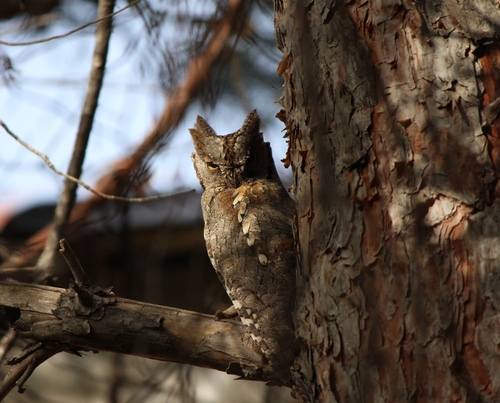 Assiolo
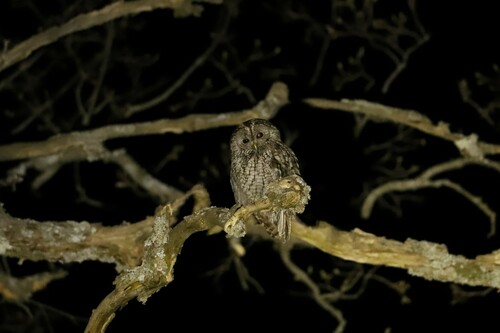 Maghreb Owl
In breve
Il segno distintivo più affidabile per separare l'Assiolo dal Maghreb Owl (qui, rappresentato dal gruppo Allocco) è la dimensione e la struttura: l'Assiolo è molto più piccolo, con una postura snella e verticale e ciuffi auricolari prominenti, mentre il Maghreb Owl è molto più grande, tozzo e privo di ciuffi auricolari. In volo, l'Assiolo mostra ali lunghe e strette e un volo forte e diretto, in contrasto con le ali larghe e arrotondate e il volo pesante e lento del Maghreb Owl. Anche le differenze nel piumaggio sono fondamentali: l'Assiolo è grigio-marrone nel complesso con un volto e una linea delle spalle chiara, mentre il Maghreb Owl è più robustamente striato sotto e può essere ruggine o grigiastro sopra, con un disco facciale semplice e arrotondato. Se vedi un piccolo gufo verticale con ciuffi auricolari e una linea delle spalle chiara, è l'Assiolo; un grande gufo arrotondato e senza orecchie con parti inferiori striate è Maghreb/Allocco.
Consigli di identificazione
- La dimensione è l'indizio più immediato: l'Assiolo è minuscolo (appena 20 cm), mentre il Maghreb Owl è lungo il doppio e molto più robusto. Se il gufo sembra grande e tozzo, escludi l'Assiolo.
- Ciuffi auricolari: l'Assiolo ha piccoli ciuffi auricolari appuntiti che sono spesso visibili quando è posato o all'erta. Il Maghreb Owl è completamente privo di ciuffi auricolari; la sua testa è liscia e arrotondata.
- Postura e jizz: l'Assiolo si posa in posizione verticale e appare snello, quasi allungato. Il Maghreb Owl è tozzo, con una testa grande e arrotondata e una postura più orizzontale.
- Disco facciale: l'Assiolo ha un volto chiaro con una linea delle spalle chiara e evidente; il disco facciale del Maghreb Owl è semplice, arrotondato e privo di qualsiasi linea delle spalle chiara.
- Parti inferiori: l'Assiolo è chiaro sotto ma generalmente non marcato o leggermente striato. Il Maghreb Owl mostra sempre forti striature marroni su parti inferiori bianche, indipendentemente dal colore delle parti superiori.
- Parti superiori: l'Assiolo è grigio-marrone, con poco contrasto; il Maghreb Owl può essere ruggine o grigiastro sopra, ma questo è variabile e non sempre affidabile.
- Ali in volo: l'Assiolo ha ali lunghe e strette e un volo diretto e deciso. Il Maghreb Owl ha ali larghe e arrotondate e vola pesantemente, spesso con lunghi planati e battiti d'ali lenti.
- Dimensione e forma della testa: la testa dell'Assiolo è piccola e angolare a causa dei ciuffi auricolari; la testa del Maghreb Owl è grande, arrotondata e liscia.
- Colore degli occhi: entrambi hanno occhi scuri, ma quelli del Maghreb Owl sono particolarmente grandi e colpiscono nel suo disco facciale.
- Voce: il richiamo dell'Assiolo è un fischio profondo e ripetitivo, simile a quello di un rospo; il richiamo del Maghreb Owl è un classico hoot di gufo (non dettagliato qui, ma ben noto nel gruppo). Se senti un fischio simile a quello di un rospo, è l'Assiolo.
- Habitat: in foreste mature e dense, aspettati il Maghreb Owl; in boschi aperti o macchia mediterranea, è più probabile incontrare l'Assiolo.
- Linea delle spalle: la linea delle spalle chiara è un segno sottile ma utile per l'Assiolo quando è posato.
- Stile di volo: se vedi un gufo volare rapidamente e direttamente con ali lunghe e strette, è l'Assiolo; un volo pesante, lento e planato con ali larghe è del Maghreb.
- Silhouette posata: l'Assiolo appare snello e verticale; il Maghreb Owl è rotondo e tozzo.
- Trappole: i giovani Maghreb Owls possono apparire più chiari, ma mancheranno comunque di ciuffi auricolari e mostreranno parti inferiori striate. L'Assiolo non è mai così grande o così pesantemente striato come il Maghreb.
Taglia
L'Assiolo è molto più piccolo, con una lunghezza di 19–21 cm e un'apertura alare di 47–54 cm [wikipedia], rispetto al Maghreb Owl (gruppo Allocco) che ha una lunghezza di 37–46 cm e un'apertura alare di 81–105 cm [wikipedia]. Il Maghreb Owl è più di due volte più pesante (385–800 g contro la costruzione molto più leggera dell'Assiolo). Sul campo, questa è una differenza drammatica: l'Assiolo appare minuto, anche rispetto a una Civetta, mentre il Maghreb Owl è un grande uccello tozzo con una testa grande e arrotondata.
Piumaggio
Non ci sono schemi distintivi di ali superiori giovanili o immaturi descritti per nessuna delle due specie nelle fonti. Per tutte le età, l'Assiolo è grigio-marrone con un volto, parti inferiori e una linea delle spalle chiara e evidente. Ha piccoli ciuffi auricolari appuntiti che sono spesso visibili. Il Maghreb Owl (gruppo Allocco) è molto più variabile sopra (ruggine o grigiastro marrone), ma ha sempre parti inferiori chiare e fortemente striate e un disco facciale semplice e arrotondato senza ciuffi auricolari. Le parti superiori possono essere marroni o grigie, ma le parti inferiori sono sempre bianche con striature marroni. In volo, le lunghe e strette ali dell'Assiolo contrastano con le ali larghe e arrotondate del Maghreb Owl. La linea delle spalle chiara dell'Assiolo è spesso visibile quando è posato. Il disco facciale del Maghreb Owl è semplice e arrotondato, e gli occhi sono marroni scuri, posti in una testa grande e arrotondata.
Comportamento
L'Assiolo si posa in posizione verticale ed è spesso visto su rami esposti, apparendo snello e all'erta. Il suo volo è forte e diretto, con ali lunghe e strette adatte alla migrazione. Il Maghreb Owl è più tozzo, si posa più orizzontalmente e vola con battiti d'ali pesanti e lenti su ali larghe e arrotondate, spesso planando per lunghe distanze. La differenza nello stile di volo è notevole: l'Assiolo è veloce e diretto, il Maghreb Owl è pesante e planante.
Habitat
L'Assiolo si riproduce dall'Europa meridionale alla Siberia meridionale e sverna nell'Africa sub-sahariana, ma può essere residente in boschi mediterranei. Il Maghreb Owl (gruppo Allocco) è uno specialista del bosco, trovato in foreste e boschi maturi in tutta Europa e nella Siberia occidentale. Se ti trovi in un bosco denso e maturo, è più probabile incontrare il Maghreb Owl; l'Assiolo preferisce boschi più aperti, macchia mediterranea e habitat di margine.
Voce
L'Assiolo emette un fischio profondo e ripetitivo, simile a quello delle rane ostetriche (Alytes), e entrambi i sessi chiamano. Il richiamo del Maghreb Owl (gruppo Allocco) non è descritto nelle note fornite, ma è tipicamente un classico hoot che si sente a distanza o 'twit-twoo' nel gruppo. Il richiamo dell'Assiolo è più simile a quello di un rospo e meno tipico di un gufo, il che può essere un indizio utile se sentito.