

Motmot

スズメフクロウ 対 コキンメフクロウ

Glaucidium passerinum 対 Athene noctua

スズメフクロウとコキンメフクロウのクイズ
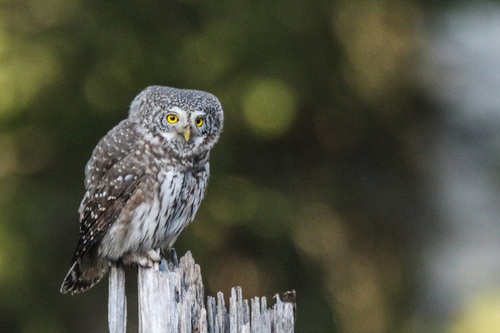
スズメフクロウ (Glaucidium passerinum) スズメフクロウ
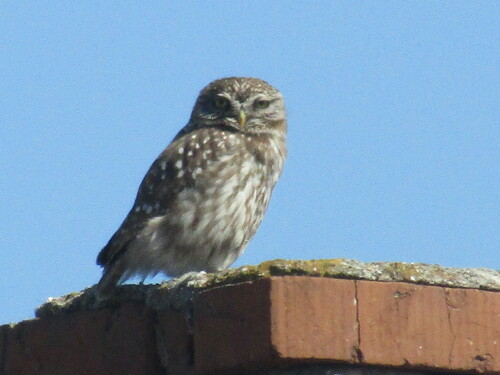
コキンメフクロウ (Athene noctua) コキンメフクロウ

メディア

読み込み中…

要点

スズメフクロウとコキンメフクロウを区別する最も信頼できるフィールドマークはサイズです:スズメフクロウははるかに小さく、繊細で、短い尾と細かい斑点の羽毛を持っていますが、コキンメフクロウは明らかにずっしりとしており、平らな頭と厳しい「しかめっ面」の表情をしています。飛行中、コキンメフクロウは木を叩くような動作と長い翼幅を示し、スズメフクロウはよりひらひらとしたコンパクトな印象を与えます。羽毛の違いには、スズメフクロウの後頭部の白いハーフカラーと細かい茶色の斑点が含まれ、対してコキンメフクロウは大胆な白い眉と縞模様の腹部を持っています。両者とも黄色い目を持っていますが、コキンメフクロウの目はより目立つ厳しい表情の顔に配置されています。声と生息地も役立つことがありますが、サイズと構造が最も迅速なフィールドの手がかりです。

識別のコツ

  1. Size is the fastest check: スズメフクロウは小さい(約65g、17cm)ですが、コキンメフクロウははるかに大きく重い(180g、22cm)です。もし鳥がずっしりとしているか、ハトのサイズに見えるなら、それはスズメフクロウではありません。
  2. Head shape and facial expression: コキンメフクロウは平らな頭と大胆な白い眉を持ち、厳しいしかめっ面の印象を与えます。スズメフクロウの頭は小さく、丸みを帯びており、「眉」の効果がありません。
  3. Tail and wing structure: スズメフクロウは5本の狭い白っぽいバーを持つ短い尾を持っています;コキンメフクロウの尾は短いですが、翼は広く長く、はるかに大きな翼幅を与えます。
  4. Plumage pattern: スズメフクロウは赤褐色から灰褐色で、細かい白い斑点と後頭部のハーフカラーを持っています。コキンメフクロウは上面が灰褐色で、白い斑点が大胆にあり、腹部は縞模様(斑点ではない)です。
  5. Facial disc and eyes: 両者とも黄色い目を持っていますが、コキンメフクロウの目は平らなディスクのあるより目立つ表情の顔に配置されています;スズメフクロウの顔はシンプルで、劇的な特徴がありません。
  6. Juvenile confusion: 幼鳥のコキンメフクロウは白い冠の斑点がありませんが、平らな頭と縞模様の腹部を示します;幼鳥のスズメフクロウは常にはるかに小さく、シンプルで丸い頭を持っています。
  7. Flight style: コキンメフクロウは木を叩くような動作で飛び、翼をバタバタさせて滑空します。スズメフクロウの飛行はよりひらひらとしており、直接的で、その小さなサイズに合っています。
  8. Perching behavior: コキンメフクロウはしばしば開けた場所に止まっており、柱や建物の上に止まっており、昼間に見られることがあります。スズメフクロウはより秘密主義で、特に針葉樹の中で静かに止まります。
  9. Habitat context: 森の内部や密な森林はスズメフクロウを示唆します;開けた農地、果樹園、または都市の端はコキンメフクロウを好みます。
  10. Vocalizations: スズメフクロウの高く単調な音のシリーズを聞いてください、対してコキンメフクロウの低くより多様な「キュー」とトリルを聞いてください。
  11. Bill and feet: スズメフクロウは小さく灰色がかった黄色のフック状のくちばしを持ち、そのサイズに対して不釣り合いに大きな足を持っています。コキンメフクロウのくちばしは体に対してそれほど明らかにオーバーサイズではありません。
  12. White nape collar: 後頭部の白いハーフカラーはスズメフクロウの良いマークで、コキンメフクロウには見られません。
  13. Underpart markings: スズメフクロウの腹部は主に白で茶色の斑点があります;コキンメフクロウの腹部は淡い色で大胆な茶色の縞模様があります。
  14. Sexual dimorphism: メスのスズメフクロウはオスより大きいですが、どちらの性もコキンメフクロウよりはるかに小さいです。
  15. Seasonal context: 両種は年間を通じて見ることができますが、スズメフクロウの食物貯蔵と森林の習性は秋と冬に最も明らかで、コキンメフクロウは春と夏に開けた生息地でより活発で目立ちます。

大きさ

スズメフクロウは劇的に小さいです:成鳥の雌は17.4〜19 cmの長さ(オスはさらに小さい)で、体重は約65.5 gです。コキンメフクロウははるかに大きく重く、長さ約22 cm、体重180 gです。フィールドでは、この違いは明らかです—コキンメフクロウはずっしりとして頑丈に見え、スズメフクロウは小さく、繊細で、比較するとほとんどおもちゃのようです。コキンメフクロウの翼幅(56 cm)もスズメフクロウのものよりはるかに大きく、飛行の印象や止まったときのボリュームが一目で信頼できるものとなります。

羽色

行動

コキンメフクロウはしばしば開けた場所に大胆に止まり、柱や建物の上で、翼をバタバタさせて滑空する木を叩くような飛行を示します。スズメフクロウはより秘密主義で、通常は針葉樹の中で静かに止まり、ひらひらとした直接的な飛行を示します。スズメフクロウは飛行中に鳥を捕まえることができ、特に秋には食物を貯蔵することで知られています。コキンメフクロウはより地上性で、しばしば地面で昆虫や小型哺乳類を狩り、昼間に見られる可能性が高いです。

生息環境

スズメフクロウは北欧および中央ヨーロッパからシベリアにかけての北方および混合森林の鳥で、密な針葉樹または混合林を好みます。コキンメフクロウは開けた温帯および暖かい風景—農地、果樹園、公園、さらには都市の端—を好み、ヨーロッパ、北アフリカ、アジア全体に分布しています。深い森林で見られる場合、スズメフクロウの可能性が高く、開けた国や人間の居住地の近くではコキンメフクロウがデフォルトです。

声

スズメフクロウは高音で単調な明瞭な音のシリーズを約2秒間隔で出し、両性とも交尾シーズンの前後に音程が上がります。コキンメフクロウの鳴き声は不平を言うような「キュー、キュー」で、時には口笛やトリルを伴い、繁殖シーズンにはペアでデュエットをすることがあります。コキンメフクロウの声は低くより多様であり、スズメフクロウの声は高くより繰り返しの多いものです。

より良い説明を送る

比較と同じ項目を使ってください。文章はすぐに公開されます。

The most reliable field mark to separate Eurasian Pygmy-Owl from Little Owl is size: the pygmy-owl is much smaller and more delicate, with a short tail and fine, spotted plumage, while the Little Owl is noticeably bulkier, with a flat-topped head and a fierce, 'frowning' expression. In flight, Little Owl shows a bounding, woodpecker-like action and a longer wingspan, while Pygmy-Owl appears more fluttery and compact. Plumage differences include the pygmy-owl's white half-collar on the nape and fine brown spotting, versus the Little Owl's bold white eyebrows and streaked underparts. Both have yellow eyes, but the Little Owl's are set in a more prominent, stern-looking face. Voice and habitat can also help, but size and structure are the quickest field clues.

  1. Size is the fastest check: Eurasian Pygmy-Owl is tiny (about 65 g, 17 cm), while Little Owl is much larger and heavier (180 g, 22 cm). If the bird looks chunky or pigeon-sized, it's not a pygmy-owl.
  2. Head shape and facial expression: Little Owl has a flat-topped head and bold white eyebrows, giving a fierce, frowning look. Pygmy-Owl's head is small, rounded, and lacks any 'eyebrow' effect.
  3. Tail and wing structure: Pygmy-Owl has a short tail with five narrow, whitish bars; Little Owl's tail is short but the wings are broad and long in proportion, giving a much larger wingspan.
  4. Plumage pattern: Pygmy-Owl is reddish to greyish-brown with fine white spots and a half-collar on the nape. Little Owl is greyish-brown above, boldly speckled with white, and has streaked (not spotted) underparts.
  5. Facial disc and eyes: Both have yellow eyes, but Little Owl's are set in a more prominent, expressive face with a flattened disc; Pygmy-Owl's face is plain and lacks any dramatic features.
  6. Juvenile confusion: Juvenile Little Owls lack white crown spots but still show the flat-topped head and streaked belly; juvenile Pygmy-Owls are always much smaller and have a plain, round head.
  7. Flight style: Little Owl flies with bounding, woodpecker-like action—bursts of wingbeats and glides. Pygmy-Owl's flight is more fluttery and direct, matching its tiny size.
  8. Perching behavior: Little Owl often perches in the open, on posts or buildings, and may be seen in daylight. Pygmy-Owl is more secretive, perching quietly in trees, especially conifers.
  9. Habitat context: Forest interior or dense woodland points to Pygmy-Owl; open farmland, orchards, or urban edges favor Little Owl.
  10. Vocalizations: Listen for a high, monotonous, fluted series from Pygmy-Owl versus the lower, more varied 'kiew' and trills of Little Owl.
  11. Bill and feet: Pygmy-Owl has a small, greyish-yellow, hooked bill and disproportionately large feet for its size. Little Owl's bill is less obviously oversized for its body.
  12. White nape collar: The half-collar of white on the nape is a good mark for Pygmy-Owl, not shown by Little Owl.
  13. Underpart markings: Pygmy-Owl's belly is mostly white with brown speckles; Little Owl's is pale with bold brown streaks.
  14. Sexual dimorphism: Female Pygmy-Owls are larger than males, but both sexes are still much smaller than any Little Owl.
  15. Seasonal context: Both species can be seen year-round, but Pygmy-Owl's food-hoarding and forest habits are most obvious in autumn and winter, while Little Owl is more active and visible in open habitats in spring and summer.

Eurasian Pygmy-Owl is dramatically smaller: adult females are 17.4–19 cm long (males even smaller), with a body mass around 65.5 g. Little Owl is much larger and heavier, at about 22 cm in length and 180 g in weight. In the field, this difference is obvious—Little Owl looks chunky and robust, while Pygmy-Owl is tiny, delicate, and almost toy-like by comparison. The Little Owl's wingspan (56 cm) is also much greater than the pygmy-owl's, making flight jizz and perched bulk reliable at a glance.

  • Juvenile/immature contrast: Juvenile Little Owls are duller than adults and lack the white crown spots, but still show the characteristic flat-topped head and streaked underparts. Eurasian Pygmy-Owl juveniles resemble adults, with spotted sides and a half-collar on the nape, but are always much smaller and lack the Little Owl's bold facial pattern.
  • Adults: Eurasian Pygmy-Owl is reddish to greyish-brown, with fine white spotting on the back, a white half-collar on the nape, and a mostly white belly with brown speckles. The tail is dark with five narrow, whitish bars. Little Owl is greyish-brown above, with bold white speckles, white 'eyebrows,' and a pale, streaked underside. The face of Little Owl is more expressive and 'frowning,' while Pygmy-Owl's is plain, round, and lacks ear tufts. Both have yellow eyes, but the Little Owl's are set in a more prominent, stern-looking face.

Little Owl often perches boldly in the open, on posts or buildings, and exhibits a bounding, woodpecker-like flight with bursts of wingbeats and glides. Eurasian Pygmy-Owl is more secretive, typically perching quietly in conifers and showing a fluttery, direct flight. Pygmy-Owl can catch birds in flight and is known for food-hoarding, especially in autumn. Little Owl is more terrestrial, often hunting insects and small mammals on the ground, and is more likely to be seen in daylight.

Eurasian Pygmy-Owl is a bird of boreal and mixed forests in Northern and Central Europe to Siberia, favoring dense coniferous or mixed woodland. Little Owl prefers open, temperate, and warmer landscapes—farmland, orchards, parkland, and even urban edges—across Europe, North Africa, and Asia. If seen in a deep forest, Pygmy-Owl is more likely; in open country or near human habitation, Little Owl is the default.

Eurasian Pygmy-Owl gives a high-pitched, monotonous series of clear, fluted notes, spaced by about two seconds, with both sexes rising in pitch before and after the mating season. Little Owl's call is a querulous 'kiew, kiew,' sometimes whistling or trilling, and pairs may duet in the breeding season. The Little Owl's voice is lower and more varied, while Pygmy-Owl's is higher and more repetitive.

変更を破棄しますか?

保存していない編集があります。今離れると失われます。

スズメフクロウ · コキンメフクロウ · 苦手な鳥