

Motmot

ワシミミズク 対 オナガフクロウ

Bubo bubo 対 Surnia ulula

ワシミミズクとオナガフクロウのクイズ
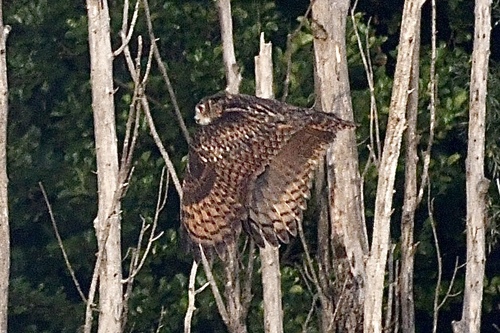
ワシミミズク (Bubo bubo) ワシミミズク
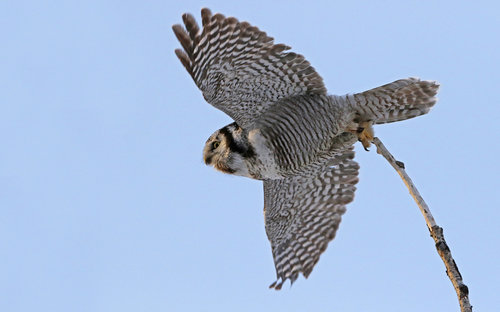
オナガフクロウ (Surnia ulula) オナガフクロウ

メディア

読み込み中…

要点

ユーラシアワシミミズクとオナガフクロウを区別する最も信頼できるフィールドマークは、全体のサイズと体格です:ワシミミズクは本当に巨大で、その範囲内の他のフクロウを圧倒しますが、オナガフクロウは中型でスリムです。飛行中または止まっているとき、オナガフクロウの長く帯状の尾と鷹のようなシルエットは、ワシミミズクの広い翼、短い尾、重くて樽型の体と鋭く対照的です。幼鳥のオナガフクロウは尖った尾の先で区別でき、成鳥は丸い尾の先を持っています。羽毛も異なります:ワシミミズクは重い暗いストライプと目立つ耳の房を持つ広く力強い顔を示し、オナガフクロウは黒で縁取られた印象的な白い顔を持ち、耳の房がありません。これら二つは、遠くからや悪い光の中で混同されることは少ないですが、構造的および羽毛の違いは双眼鏡で明確です。

識別のコツ

  1. サイズは最も信頼できるマークです:ユーラシアワシミミズクは巨大で、翼幅は最大1.7 m、体重は2.5 kgを超えます;オナガフクロウははるかに小さく、翼幅は85 cm未満、体重は約300–340 gです。距離があっても、ワシミミズクの体格は目を引きます。
  2. 耳の房:ワシミミズクは止まっているときや横から見たときに目立つ大きな耳の房を持っています;オナガフクロウは耳の房が全くなく、頭は滑らかに丸いです。
  3. 尾の形と長さ:オナガフクロウは長く、狭く、強く帯状の尾を持ち、止まっているときはまっすぐに保たれ、翼を超えてよく伸びます。ワシミミズクの尾は短くて広く、折りたたまれた翼の先からほとんど出ていません。
  4. 幼鳥の尾の先:1年目のオナガフクロウは尖った尾の先を持ち、成鳥は丸い先を持っています。ワシミミズクの尾は年齢に関係なく常に広くて丸いです。
  5. 顔の模様:オナガフクロウは鋭い黒い輪郭で縁取られた印象的な白い顔、黄色い目、小さく曲がった黄色いくちばしを持っています。ワシミミズクの顔は広く、オレンジ色の目、大きなくちばしを持ち、はっきりとした顔の境界がありません。
  6. 羽毛の模様:ワシミミズクは重くストライプ状で、茶色から赤褐色の基部と広い黒いストライプを持ち、腹部はストライプ状です。オナガフクロウは上面が暗褐色でオフホワイトの斑点があり、下は白で茶色の横縞(ストライプではなく)、後頭部には黒いVがあります。
  7. 飛行のシルエット:オナガフクロウは長く狭い翼と長い尾で飛び、鷹に似ています。ワシミミズクの飛行は重く、広く丸い翼と短い尾を持ち、巨大なタウニーまたは角のあるフクロウに似ています。
  8. 止まっている姿勢:オナガフクロウはしばしば露出した止まり木の上に直立して座り、スリムで細長い外観を持っています。ワシミミズクはずんぐりしていて、胸が深く、巨大に見え、しばしば羽毛を膨らませて丸まっています。
  9. 活動パターン:オナガフクロウはしばしば昼間に狩りをしているのが見られ、特に冬や大量発生の年に見られます。ワシミミズクは主に夜行性または薄明かりの時間帯に活動し、昼間はめったに見られません。
  10. 生息地の文脈:ワシミミズクは岩の崖、遠くの森林、野生の丘を好みます。オナガフクロウは開けたボレアル森林、湿地、クリアリングを好み、しばしば水や開けた地面の近くにいます。
  11. 目の色:ワシミミズクは深いオレンジ色の目を持ち、オナガフクロウの目は明るい黄色です。
  12. くちばしのサイズ:ワシミミズクのくちばしは大きくて強力で、非常に大きな獲物に適しています。オナガフクロウのくちばしは比較的小さくて繊細です。
  13. 鳴き声:ここでは診断的ではありませんが、ワシミミズクの鳴き声は深く、轟音のようなフクロウの声で、オナガフクロウの鳴き声は高音で、響きが少ないです。
  14. 亜種の変異:両種には異なるトーンと横縞を持つ亜種がありますが、基本的な違い—ストライプ状の腹部と横縞の腹部、耳の房、尾の形—は一貫しています。
  15. 一般的な落とし穴:遠くからや悪い光の中では、止まっているオナガフクロウが実際よりも大きく見えることがありますが、耳の房がないことと長い尾が手がかりです。幼鳥のオナガフクロウの尖った尾の先は微妙ですが、これら二つの中では独特です。

大きさ

ユーラシアワシミミズクは世界で最も大きなフクロウの一つで、平均体重は2686 g [wikidata]、翼幅はしばしば150 cmを超えます。その体は厚くて力強く、大きな頭と深い胸を持っています。それに対して、オナガフクロウははるかに軽く(オスは約300 g、メスは約340 g [wikipedia])、翼幅は69–82 cm—ワシミミズクの半分にも満たないです。オナガフクロウは長くてスリムで、体長は35–45 cmですが、その細長い体型と長い尾は、さらに小さくて敏捷に見せます。直接比較すると、ワシミミズクははるかに体格が大きく、威圧的です。

羽色

幼鳥のオナガフクロウは尖った尾の先を持ち、成鳥は丸い尾の先を持っています—よく見れば微妙ですが、役立つマークです。オナガフクロウの羽毛は上面が暗褐色でオフホワイトの斑点があり、黒で縁取られた白い顔と、茶色の横縞のある白い腹部を持っています。尾は長くて強く帯状です。対照的に、ユーラシアワシミミズクは上面が重くストライプ状で、茶色から赤褐色の基部と亜種によって異なる淡いまたは赤褐色の腹部を持ち、上面、頭、胸には広い黒いストライプがあります。ワシミミズクの顔は広くて丸く、目立つオレンジ色の目と大きく明らかな耳の房を持っています(オナガフクロウにはありません)。腹部はストライプ状で、横縞ではありません。両種の亜種の変異はトーンと横縞に影響を与えますが、全体的なパターン—ワシミミズクはストライプ状、オナガフクロウは横縞—は一貫しています。飛行中、オナガフクロウの長く狭い尾と尖った翼は、ワシミミズクの広く丸い翼と短い尾と対照的です。

行動

オナガフクロウはしばしば昼間に活動し、木や柱の上に目立って止まり、開けた場所で獲物を探します。その飛行は直接的で鷹のようで、しばしば滑空したり、速く浅い羽ばたきで羽ばたきます。ユーラシアワシミミズクは主に薄明かりまたは夜行性で、昼間は隠れた場所で休息し、深く遅い羽ばたきで飛びます。ワシミミズクはより秘密主義で、明るい昼間に見られることは少ないです。オナガフクロウの昼行性の習性と高く露出した場所に止まる傾向は、役立つ行動の手がかりです。

生息環境

ユーラシアワシミミズクはユーラシア全体に広い範囲を占め、岩の突起、崖、森林の丘を好み、人間の干渉から遠く離れた場所に生息します。これは野生で険しい地形の鳥です。オナガフクロウは北部森林のボレアル種で、特に開けた針葉樹林、湿地、森林の縁を好みます。開けた平坦な風景で見られることが多く、時にはクリアリングや湿地の近くにいます。北ユーラシアでは範囲が重なることがありますが、ワシミミズクはより険しく遠くの生息地を好みます。

より良い説明を送る

比較と同じ項目を使ってください。文章はすぐに公開されます。

The most reliable field mark to separate Eurasian Eagle Owl from Northern Hawk Owl is overall size and bulk: the eagle owl is truly massive, dwarfing any other owl in its range, while the hawk owl is medium-sized and slim. In flight or perched, the Northern Hawk Owl’s long, banded tail and hawk-like silhouette contrast sharply with the eagle owl’s broad wings, short tail, and heavy, barrel-shaped body. Juvenile hawk owls can be separated by their pointed tail tips, while adults have rounded tail tips. Plumage also differs: the eagle owl shows heavy dark streaking and a broad, powerful face with prominent ear tufts, while the hawk owl has a striking white face bordered in black and lacks ear tufts. These two are unlikely to be confused except at great distance or in poor light, but structural and plumage differences are clear with binoculars.

  1. Size is the single most reliable mark: Eurasian Eagle Owl is enormous, with a wingspan up to 1.7 m and a mass over 2.5 kg; Northern Hawk Owl is much smaller, with a wingspan under 85 cm and a mass around 300–340 g. Even at distance, the eagle owl’s bulk is striking.
  2. Ear tufts: Eagle Owl has large, obvious ear tufts that are visible when perched or in profile; Northern Hawk Owl lacks ear tufts entirely—its head is smoothly rounded.
  3. Tail shape and length: Hawk Owl has a long, narrow, strongly banded tail, often held straight and extending well beyond the wings when perched. Eagle Owl’s tail is short and broad, barely projecting beyond the folded wings.
  4. Juvenile tail tips: First-year Northern Hawk Owls have pointed tail tips; adults have rounded tips. Eagle Owl’s tail is always broad and rounded, regardless of age.
  5. Facial pattern: Hawk Owl has a striking white face bordered with a sharp black outline, yellow eyes, and a small, curved yellow bill. Eagle Owl’s face is broad, with orange eyes, a large bill, and lacks a sharply defined facial border.
  6. Plumage pattern: Eagle Owl is heavily streaked and mottled above, with a brown to rufous base and broad black streaks; underparts are streaked. Hawk Owl is dark brown above with off-white spots, white below with brown barring (not streaks), and a black V on the nape.
  7. Flight silhouette: Hawk Owl flies with long, narrow wings and a long tail, resembling a hawk. Eagle Owl’s flight is heavy, with broad, rounded wings and a short tail, more like a giant tawny or horned owl.
  8. Perched posture: Hawk Owl often sits upright on exposed perches, with a slim, elongated look. Eagle Owl appears squat, deep-chested, and massive, often hunched with feathers fluffed.
  9. Activity pattern: Hawk Owl is often seen hunting during the day, especially in winter or irruption years. Eagle Owl is mainly nocturnal or crepuscular, rarely seen in daylight.
  10. Habitat context: Eagle Owl prefers rocky cliffs, remote forests, and wild hills. Hawk Owl favors open boreal forests, bogs, and clearings, often near water or open ground.
  11. Eye color: Eagle Owl has deep orange eyes; Hawk Owl’s eyes are bright yellow.
  12. Bill size: Eagle Owl’s bill is large and powerful, suited to very large prey. Hawk Owl’s bill is small and delicate by comparison.
  13. Vocalization: Not diagnostic here, but eagle owl’s call is a deep, booming hoot; hawk owl’s call is higher-pitched, less resonant.
  14. Subspecies variation: While both species have subspecies with varying tones and barring, the basic differences—streaked vs. barred underparts, ear tufts, tail shape—are consistent.
  15. Common pitfalls: At great distance or in poor light, a perched hawk owl may appear larger than it is, but the lack of ear tufts and long tail are giveaways. Juvenile hawk owls’ pointed tail tips can be subtle but are unique among these two.

Eurasian Eagle Owl is one of the largest owls in the world, with an average mass of 2686 g [wikidata] and a wingspan often exceeding 150 cm. Its body is thickset and powerful, with a large head and deep chest. In contrast, the Northern Hawk Owl is much lighter (males about 300 g, females about 340 g [wikipedia]), with a wingspan of 69–82 cm—barely half that of the eagle owl. Hawk owls are long and slim, with a body length of 35–45 cm, but their slender build and long tail make them appear even smaller and more agile. In any direct comparison, the eagle owl is far bulkier and more imposing.

Juvenile Northern Hawk Owls have pointed tail tips, while adults have rounded tail tips—a subtle but useful mark if seen well. The hawk owl’s plumage is dark brown above with off-white spots, a white face bordered in black, and a white underbelly with brown barring. The tail is long and strongly banded. Eurasian Eagle Owl, by contrast, is heavily streaked and mottled brown to rufous above, with a paler or more rufous belly depending on subspecies, and broad black streaks on the upperparts, head, and chest. The eagle owl’s face is broad and rounded with prominent orange eyes and large, obvious ear tufts (not present in hawk owl). The underparts are streaked, not barred. Subspecies variation in both species affects tone and barring, but the overall pattern—streaked for eagle owl, barred for hawk owl—remains consistent. In flight, the hawk owl’s long, narrow tail and pointed wings contrast with the eagle owl’s broad, rounded wings and short tail.

Northern Hawk Owl is often active during the day and perches conspicuously atop trees or poles, scanning for prey in open areas. Its flight is direct and hawk-like, often gliding or flapping with quick, shallow wingbeats. Eurasian Eagle Owl is mainly crepuscular or nocturnal, roosting during the day in secluded spots and flying with deep, slow wingbeats. The eagle owl is more secretive and less likely to be seen in open daylight. Hawk owl’s diurnal habits and tendency to perch high and exposed are useful behavioral clues.

Eurasian Eagle Owl occupies a wide range across Eurasia, favoring rocky outcrops, cliffs, and forested hills, often away from human disturbance. It is a bird of wild, rugged terrain. Northern Hawk Owl is a boreal species of northern forests, especially open coniferous woods, bogs, and forest edges. It is more likely to be seen in open, flat landscapes, sometimes near clearings or wetlands. While ranges can overlap in northern Eurasia, the eagle owl prefers more rugged and remote habitats.

変更を破棄しますか?

保存していない編集があります。今離れると失われます。

ワシミミズク · オナガフクロウ · 苦手な鳥