

Motmot

ダイシャクシギ 対 オグロシギ

Numenius arquata 対 Limosa limosa

ダイシャクシギとオグロシギのクイズ

ダイシャクシギ (Numenius arquata) ダイシャクシギ
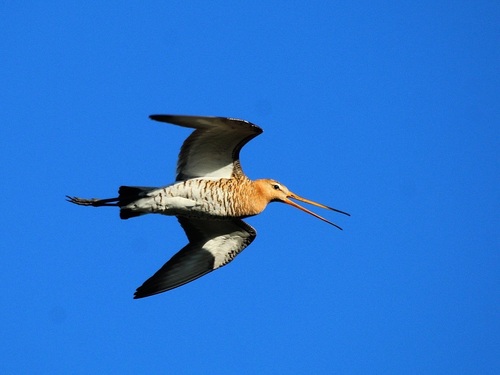
オグロシギ (Limosa limosa) オグロシギ

メディア

読み込み中…

要点

ユーラシアダイシャクシギとオグロシギを区別する最も信頼できるフィールドマークは、全体のサイズとくちばしの形状です:ダイシャクシギははるかに大きくてずんぐりしており、非常に長く、滑らかに下向きに曲がったくちばしを持っていますが、オグロシギはスリムで、より直立しており、長いがほぼまっすぐなくちばしを持ち、先端にわずかな上向きの曲がりがあります。飛行中、オグロシギは大胆な黒と白の翼帯と黒い尾帯を持つ白い尻を示しますが、ダイシャクシギにはこれがありません。ダイシャクシギは一般的に上面と下面が灰褐色で、強い翼のパターンはなく、飛行中は脚と足が尾を超えてよく突き出ています。両種は泥だらけの野原や河口で餌を取るときに似て見えることがありますが、構造と飛行パターンに注意を払うことで、すべての羽色で区別できます。

識別のコツ

  1. Flight pattern (all ages): オグロシギは飛行中に大胆な黒と白の翼帯と黒い尾帯を持つ白い尻を示します;ユーラシアダイシャクシギにはこれがなく、単純な灰褐色の翼と白い背中のみを示します。
  2. Bill shape: ダイシャクシギのくちばしははるかに長く、全体が滑らかに下向きに曲がっています;オグロシギのくちばしは長いですが、ほとんどまっすぐで、先端にわずかな上向きの曲がりがあります。これは静止時と飛行時の両方で確認できます。
  3. Size and bulk: ダイシャクシギははるかに大きくて重く、長い首とより頑丈な体を持っています。オグロシギはスリムで、より直立しており、脚が長く立っていますが、全体的にははるかに軽いです。
  4. Leg and foot projection in flight: ダイシャクシギの脚と足は尾を超えてよく突き出し、飛行中に目立つ「ポイント」を形成します;オグロシギの脚は長いですが、そこまで突き出しません。
  5. Plumage (breeding): 繁殖羽のオグロシギは明るいオレンジ色の頭、首、胸を持っています(特にオスの場合);ダイシャクシギは常に灰褐色の縞模様で、オレンジ色のトーンはありません。
  6. Plumage (non-breeding): オグロシギは上面と下面が均一な茶灰色になります;ダイシャクシギは縞模様でまだらのままです。幼鳥のオグロシギは首と胸に淡いオレンジ色の洗いを持ち、ダイシャクシギの幼鳥は成鳥に似ていますが、より小さく、頑丈さが少ないです。
  7. Bill color: オグロシギはくちばしの基部が黄味がかったりピンク色だったりします(特に繁殖時)、一方でダイシャクシギのくちばしは均一に暗いです。
  8. Leg color: オグロシギの脚は暗い灰色から黒です;ダイシャクシギの脚は灰青色です。
  9. Feeding behavior: ダイシャクシギはしばしばより深く探り、よりゆっくりと動きます;オグロシギはより活発で直立しており、小さな群れで餌を取ることがよくあります。
  10. Habitat context: ダイシャクシギは繁殖期に高地や開けた草原にいる可能性が高いですが、オグロシギは低地の湿った草原や河口を好み、特に冬に見られます。
  11. Voice: ダイシャクシギの大きく、泡立つ「カールーオー」という声は、聞こえた場合に特徴的で診断的です;オグロシギの鳴き声はあまり記憶に残りません。
  12. Sex differences: 両種は性別間で似ていますが、雌のダイシャクシギは最も長いくちばしを持ち、雄のオグロシギは繁殖羽でより明るいです。
  13. Pitfalls: 照明が悪い場合や長距離では、両者はサイズや色が似て見えることがあります;確認のために飛行パターンとくちばしの形状に頼ってください。
  14. Comparison with オオソリハシシギ: ダイシャクシギは飛行中にオオソリハシシギに似ることがありますが、オオソリハシシギは小さく、わずかに上向きのくちばしを持ち、尾を超えて脚が伸びていません;オグロシギはより直立しており、より強い翼帯を示します。
  15. Juvenile confusion: 幼いオグロシギは淡いオレンジ色の洗いを示すことがありますが、飛行中には常に翼帯と尾帯を示し、ダイシャクシギの幼鳥とは異なります。

大きさ

ユーラシアダイシャクシギはオグロシギよりもかなり大きくて重いです。ダイシャクシギは体重が約805.5gで、オグロシギは289.5gです [wikidata]。ダイシャクシギは長さ50〜60cm、翼幅89〜106cmで、オグロシギは長さ42cm、翼幅70〜82cmです [wikipedia]。ダイシャクシギはずんぐりしており、長い首と非常に長く、より深く曲がったくちばしを持っています。オグロシギはより細長く直立しており、体のサイズに対して脚が長いですが、ダイシャクシギの足は飛行中に尾を超えてさらに突き出ます。

羽色

幼鳥と成鳥のオグロシギはすべての年齢で特徴的な黒と白の翼帯と黒い尾帯を持つ白い尻を飛行中に示します。この大胆なパターンはユーラシアダイシャクシギにはなく、単純な灰褐色の上翼と白い背中を持っていますが、対照的な翼帯や尾帯はありません。地上では、繁殖羽のオグロシギはオレンジ色の頭、首、胸を持ち(オスの場合はより明るい)、ダイシャクシギは常により控えめで灰褐色の縞模様です。冬には、オグロシギは上面と下面が鈍い灰褐色になりますが、ダイシャクシギの縞模様でまだらのパターンと比較しても均一な外観を示します。幼鳥のオグロシギは首と胸に淡いオレンジ色の洗いを持ち、幼鳥のダイシャクシギは成鳥に似ていますが、より小さく、頑丈さが少ないです。くちばしの色も手がかりです:オグロシギはくちばしの基部が黄味がかったりピンク色だったりします(特に繁殖時)、一方でダイシャクシギのくちばしは均一に暗いです。脚の色も異なります:オグロシギは暗い灰色から黒の脚を持ち、ダイシャクシギは灰青色の脚を持っています。

行動

両種は無脊椎動物のために泥や湿った草を探りますが、ダイシャクシギはしばしばより深い水や湿った地面で餌を取り、長いくちばしを使ってより深い獲物に到達します。ダイシャクシギはよりゆっくりと意図的に動き、しばしばスキャンするために立ち止まりますが、オグロシギはより活発で直立しており、小さな群れで餌を取ることがあります。飛行中、オグロシギはより速く、より直接的で、急速な翼の拍動と特徴的な白い翼帯を持ち、ダイシャクシギはより重く、より労力がかかり、遅く、深い翼の拍動を持ち、強い翼のパターンはありません。

生息環境

両種は湿った草地、河口、沿岸の干潟を利用しますが、ユーラシアダイシャクシギは特に繁殖期に開けた草原、湿原、高地の牧草地で見られる可能性が高いです。オグロシギは低地の湿った草原や泥だらけの河口を好み、特に移動や冬に見られます。イギリスとアイルランドでは、ダイシャクシギはより広範囲に分布していますが減少しており、オグロシギは適した生息地で局所的に一般的で、特に冬に見られます。

声

ダイシャクシギは大きく泡立つ「カールーオー」という鳴き声を出し、しばしばディスプレイや警戒時に繰り返されます。オグロシギの鳴き声はフィールドノートではあまり特徴的ではありませんが、一般的にダイシャクシギよりも高音でメロディックではありません。ダイシャクシギの鳴き声が聞こえた場合、声は大きな渡り鳥の中でユニークであるため、手がかりとして有用です。

より良い説明を送る

比較と同じ項目を使ってください。文章はすぐに公開されます。

The most reliable field mark to separate Eurasian Curlew from Black-tailed Godwit is overall size and bill shape: the curlew is much larger and bulkier, with a very long, smoothly downcurved bill, while the godwit is slimmer, more upright, and has a long but straighter bill with only a slight upturn at the tip. In flight, Black-tailed Godwit shows a bold black-and-white wingbar and white rump with a black tail band, which the curlew lacks. Curlew is generally grey-brown above and below, with no strong wing pattern, and its legs and feet project well beyond the tail in flight. Both species can appear similar when feeding in muddy fields or estuaries, but careful attention to structure and flight pattern will separate them in all plumages.

  1. Flight pattern (all ages): Black-tailed Godwit shows a bold black-and-white wingbar and a white rump with a black tail band in flight; Eurasian Curlew lacks these, showing plain grey-brown wings and a white back only.
  2. Bill shape: Curlew's bill is much longer and smoothly downcurved throughout; godwit's bill is long but mostly straight with a slight upturn at the tip. This is visible both at rest and in flight.
  3. Size and bulk: Curlew is much larger and heavier, with a longer neck and more robust body. Godwit is slimmer, more upright, and stands taller on its legs, but is much lighter overall.
  4. Leg and foot projection in flight: Curlew's legs and feet extend well beyond the tail, forming a conspicuous 'point' in flight; godwit's legs are long but do not project as far.
  5. Plumage (breeding): Black-tailed Godwit in breeding plumage has a bright orange head, neck, and breast (especially in males); curlew is always streaked grey-brown and lacks any orange tones.
  6. Plumage (non-breeding): Godwit becomes uniform brown-grey above and below; curlew remains streaked and mottled. Juvenile godwits have a pale orange wash to the neck and breast, while curlew juveniles are duller and less robust.
  7. Bill color: Godwit shows a yellowish or pink base to the bill (especially in breeding), while curlew's bill is uniformly dark.
  8. Leg color: Godwit's legs are dark grey to black; curlew's are greyish-blue.
  9. Feeding behavior: Curlew often probes deeper and moves more slowly; godwit is more active and upright, often feeding in small groups.
  10. Habitat context: Curlew is more likely in upland or open grassland in breeding season; godwit prefers lowland wet grassland and estuaries, especially in winter.
  11. Voice: Curlew's loud, bubbling 'curloo-oo' is distinctive and diagnostic if heard; godwit's calls are less memorable.
  12. Sex differences: Both species are similar between sexes, but female curlews have the longest bills, and male godwits are brighter in breeding plumage.
  13. Pitfalls: In poor light or at long range, both can appear similar in size and color; rely on flight pattern and bill shape for confirmation.
  14. Comparison with Bar-tailed Godwit: Curlew may resemble bar-tailed godwit in flight, but bar-tailed is smaller, with a slightly upturned beak and legs not extending beyond the tail; black-tailed godwit is more upright and shows a stronger wingbar.
  15. Juvenile confusion: Young godwits can show a pale orange wash, but will always show the wingbar and tail band in flight, unlike curlew juveniles.

Eurasian Curlew is significantly larger and heavier than Black-tailed Godwit. Curlew averages about 805.5 g in body mass, compared to 289.5 g for godwit [wikidata]. Curlew measures 50–60 cm in length with a wingspan of 89–106 cm, while godwit is 42 cm long with a 70–82 cm wingspan [wikipedia]. Curlew is bulkier, with a longer neck and much longer, more deeply curved bill. Godwit is more slender and upright, with longer legs relative to body size, but the curlew's feet project further beyond the tail in flight.

Juvenile and adult Black-tailed Godwits of all ages show a distinctive black-and-white wingbar and a white rump with a black tail band in flight. This bold pattern is absent in Eurasian Curlew, which has plain greyish-brown upperwings and a white back but no contrasting wingbar or tail band. On the ground, godwit in breeding plumage has an orange head, neck, and breast (brighter in males), while curlew is always more subdued and streaked grey-brown. In winter, godwit becomes dull grey-brown above and below, but still shows a uniform look compared to the curlew's streaked and mottled pattern. Juvenile godwits have a pale orange wash to the neck and breast, while juvenile curlews are similar to adults but smaller and less robust. Bill color is also a clue: godwit has a yellowish or pink base to the bill (especially in breeding), while curlew's bill is uniformly dark. Leg color differs: godwit has dark grey to black legs, curlew has greyish-blue legs.

Both species probe mud or wet grass for invertebrates, but curlew often feeds in deeper water or wetter ground, using its longer bill to reach deeper prey. Curlew moves more slowly and deliberately, often pausing to scan, while godwit is more active and upright, sometimes feeding in small groups. In flight, godwit is faster and more direct, with rapid wingbeats and a distinctive white wingbar flashing, while curlew appears heavier and more labored, with slower, deeper wingbeats and no strong wing pattern.

Both species use wet meadows, estuaries, and coastal mudflats, but Eurasian Curlew is more likely to be found in open grasslands, moorland, and upland pastures, especially in the breeding season. Black-tailed Godwit favors lowland wet grasslands and muddy estuaries, especially in migration and winter. In the UK and Ireland, curlew is more widespread but declining, while godwit is locally common in suitable habitat, especially in winter.

Curlew gives a loud, bubbling 'curloo-oo' call, often repeated in display or alarm. Godwit's calls are less distinctive in the field notes, but generally higher-pitched and less melodious than curlew. Voice is a useful clue if the curlew's call is heard, as it is unique among large waders.

変更を破棄しますか?

保存していない編集があります。今離れると失われます。

ダイシャクシギ · オグロシギ · 苦手な鳥