

Chiurlo maggiore vs Pittima reale
Numenius arquata contro Limosa limosa
Fai un quiz con Chiurlo maggiore e Pittima reale
 Chiurlo maggiore
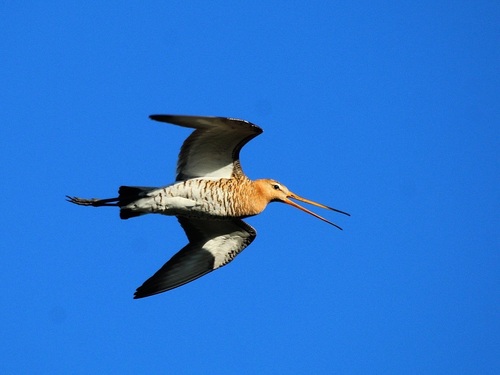 Pittima reale
In breve
Il segno di campo più affidabile per separare il Chiurlo maggiore dalla Pittima reale è la dimensione complessiva e la forma del becco: il chiurlo è molto più grande e massiccio, con un becco molto lungo e curvato verso il basso, mentre la pittima è più snella, più eretta e ha un becco lungo ma più dritto con solo una leggera curvatura all'estremità. In volo, la Pittima reale mostra una forte banda alare bianca e nera e un sopracciglio bianco con una banda nera sulla coda, che il chiurlo non ha. Il chiurlo è generalmente grigio-marrone sopra e sotto, senza un forte schema alare, e le sue gambe e piedi si proiettano bene oltre la coda in volo. Entrambe le specie possono apparire simili quando si nutrono in campi fangosi o estuari, ma un'attenta attenzione alla struttura e al modello di volo le separerà in tutte le livree.
Consigli di identificazione
- Flight pattern (all ages): La Pittima reale mostra una forte banda alare bianca e nera e un sopracciglio bianco con una banda nera sulla coda in volo; il Chiurlo maggiore non ha questi, mostrando ali grigio-marroni semplici e solo un dorso bianco.
- Bill shape: Il becco del chiurlo è molto più lungo e curvato verso il basso; il becco della pittima è lungo ma per lo più dritto con una leggera curvatura all'estremità. Questo è visibile sia a riposo che in volo.
- Size and bulk: Il chiurlo è molto più grande e pesante, con un collo più lungo e un corpo più robusto. La pittima è più snella, più eretta e sta più alta sulle sue gambe, ma è molto più leggera nel complesso.
- Leg and foot projection in flight: Le gambe e i piedi del chiurlo si estendono bene oltre la coda, formando un 'punto' evidente in volo; le gambe della pittima sono lunghe ma non si proiettano così lontano.
- Plumage (breeding): La Pittima reale in livrea nuziale ha una testa, collo e petto di un arancione brillante (soprattutto nei maschi); il chiurlo è sempre striato di grigio-marrone e non ha toni arancioni.
- Plumage (non-breeding): La pittima diventa uniformemente marrone-grigia sopra e sotto; il chiurlo rimane striato e maculato. I giovani pittimi hanno un lavaggio arancione pallido sul collo e sul petto, mentre i giovani chiurli sono più opachi e meno robusti.
- Bill color: La pittima mostra una base giallastra o rosa al becco (soprattutto in riproduzione), mentre il becco del chiurlo è uniformemente scuro.
- Leg color: Le gambe della pittima sono grigio scuro o nere; quelle del chiurlo sono grigio-bluastre.
- Feeding behavior: Il chiurlo spesso esplora più in profondità e si muove più lentamente; la pittima è più attiva e eretta, spesso nutrendosi in piccoli gruppi.
- Habitat context: Il chiurlo è più probabile in terreni montuosi o aperti durante la stagione di riproduzione; la pittima preferisce terreni umidi di pianura e estuari, soprattutto in inverno.
- Voice: Il forte, gorgogliante 'curloo-oo' del chiurlo è distintivo e diagnostico se udito; i richiami della pittima sono meno memorabili.
- Sex differences: Entrambe le specie sono simili tra i sessi, ma le femmine di chiurlo hanno i becchi più lunghi, e i maschi di pittima sono più brillanti in livrea nuziale.
- Pitfalls: In scarsa illuminazione o a lunga distanza, entrambe possono apparire simili in dimensione e colore; fare affidamento sul modello di volo e sulla forma del becco per conferma.
- Comparison with Pittima minore: Il chiurlo può assomigliare alla pittima minore in volo, ma la pittima minore è più piccola, con un becco leggermente curvato verso l'alto e gambe che non si estendono oltre la coda; la pittima reale è più eretta e mostra una banda alare più forte.
- Juvenile confusion: I giovani pittimi possono mostrare un lavaggio arancione pallido, ma mostreranno sempre la banda alare e la banda della coda in volo, a differenza dei giovani chiurli.
Taglia
Il Chiurlo maggiore è significativamente più grande e pesante della Pittima reale. Il chiurlo pesa in media circa 805,5 g, rispetto ai 289,5 g della pittima [wikidata]. Il chiurlo misura 50–60 cm di lunghezza con un'apertura alare di 89–106 cm, mentre la pittima è lunga 42 cm con un'apertura alare di 70–82 cm [wikipedia]. Il chiurlo è più massiccio, con un collo più lungo e un becco molto più lungo e curvato. La pittima è più snella e eretta, con gambe più lunghe rispetto alla dimensione del corpo, ma i piedi del chiurlo si proiettano ulteriormente oltre la coda in volo.
Piumaggio
I giovani e gli adulti Pittima reale di tutte le età mostrano una distintiva banda alare bianca e nera e un sopracciglio bianco con una banda nera sulla coda in volo. Questo schema audace è assente nel Chiurlo maggiore, che ha ali grigio-marroni semplici e un dorso bianco ma senza banda alare o banda della coda contrastanti. A terra, la pittima in livrea nuziale ha una testa, collo e petto arancioni (più brillanti nei maschi), mentre il chiurlo è sempre più sobrio e striato di grigio-marrone. In inverno, la pittima diventa grigio-marrone opaco sopra e sotto, ma mostra ancora un aspetto uniforme rispetto al modello striato e maculato del chiurlo. I giovani pittimi hanno un lavaggio arancione pallido sul collo e sul petto, mentre i giovani chiurli sono simili agli adulti ma più piccoli e meno robusti. Anche il colore del becco è un indizio: la pittima ha una base giallastra o rosa al becco (soprattutto in riproduzione), mentre il becco del chiurlo è uniformemente scuro. Il colore delle gambe differisce: la pittima ha gambe grigio scuro o nere, il chiurlo ha gambe grigio-bluastre.
Comportamento
Entrambe le specie esplorano fango o erba umida per invertebrati, ma il chiurlo spesso si nutre in acque più profonde o terreni più umidi, usando il suo becco più lungo per raggiungere prede più profonde. Il chiurlo si muove più lentamente e deliberatamente, spesso fermandosi per osservare, mentre la pittima è più attiva e eretta, a volte nutrendosi in piccoli gruppi. In volo, la pittima è più veloce e diretta, con battiti d'ali rapidi e una distintiva banda alare bianca lampeggiante, mentre il chiurlo appare più pesante e affaticato, con battiti d'ali più lenti e profondi e senza un forte schema alare.
Habitat
Entrambe le specie utilizzano prati umidi, estuari e fanghi costieri, ma il Chiurlo maggiore è più probabile che si trovi in praterie aperte, brughiere e pascoli montani, soprattutto durante la stagione di riproduzione. La Pittima reale favorisce praterie umide di pianura e estuari fangosi, soprattutto in migrazione e inverno. Nel Regno Unito e in Irlanda, il chiurlo è più diffuso ma in declino, mentre la pittima è localmente comune in habitat adatti, soprattutto in inverno.
Voce
Il chiurlo emette un forte e gorgogliante richiamo 'curloo-oo', spesso ripetuto in mostra o allerta. I richiami della pittima sono meno distintivi nelle note di campo, ma generalmente più acuti e meno melodiosi rispetto al chiurlo. La voce è un indizio utile se si sente il richiamo del chiurlo, poiché è unico tra i grandi trampolieri.