

Motmot

エジプトハゲワシ 対 ヨーロッパハチクマ

Neophron percnopterus 対 Pernis apivorus

エジプトハゲワシとヨーロッパハチクマのクイズ
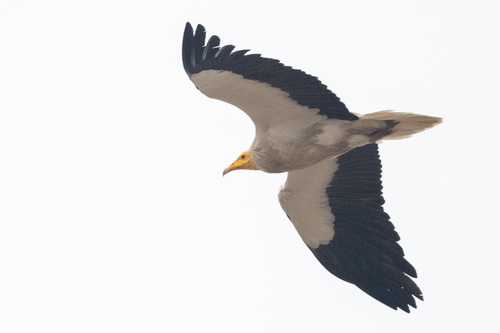
エジプトハゲワシ (Neophron percnopterus) エジプトハゲワシ
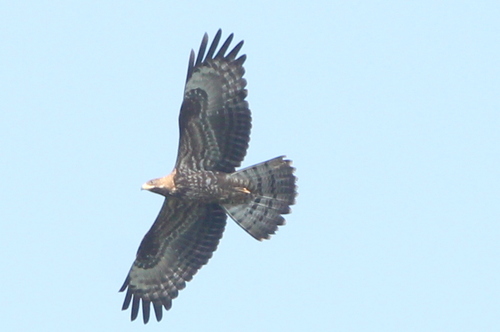
ヨーロッパハチクマ (Pernis apivorus) ヨーロッパハチクマ

メディア

読み込み中…

要点

エジプトハゲワシとヨーロッパハチクマの間で最も信頼できるフィールドマークは、ハゲワシの目を引く黒と白の翼の下のパターンとくさび形の尾で、特に飛行中に明らかです。幼鳥のエジプトハゲワシは暗褐色ですが、すべての年齢のハチクマは縞模様の尾を示し、ハゲワシの尖った翼とくさび形の尾がありません。構造的には、エジプトハゲワシは小さな頭と長く細いくちばしを持つがっしりとした体型で、ハチクマは長い首、小さな頭を持ち、平らでまっすぐな翼で滑空します。両者は遠くから見ると淡い色に見えることがありますが、しっかりと見たときの飛行プロファイルと翼のパターンは異なります。

識別のコツ

  1. Flight silhouette: エジプトハゲワシは尖った翼とくさび形の尾を持ち、ハチクマは平らに保持された長くまっすぐな翼と、先端が四角くなった長い丸い尾を持っています。
  2. Underwing pattern: 成鳥のエジプトハゲワシは白いカバーと対照的な目を引く黒い飛行羽を示します。ハチクマの翼の下はより均一で、微妙な縞模様があり、鋭い対比はありません。
  3. Tail pattern: ハチクマの尾は長く、2本の狭い暗い縞と広い亜端縞を示します(すべての年齢);エジプトハゲワシの尾はくさび形で強い縞模様がありません。
  4. Head and bill: エジプトハゲワシは小さく、裸の黄色い顔と長く細いフック状のくちばしを持っています。ハチクマの頭は羽毛で覆われており、小さく、飛行中に前方に突き出ています。
  5. Leg color: 成鳥のエジプトハゲワシはピンクの脚を持ち、幼鳥は灰色です。ハチクマの脚はそれほど目立ちません。
  6. Plumage by age: 幼鳥のエジプトハゲワシは黒と白の斑点があり、暗褐色で、決して縞模様のあるハチクマの幼鳥に似ることはありません。
  7. Facial skin: エジプトハゲワシだけが喉まで伸びる裸の黄色い顔の皮膚を持ち、ハチクマの顔は完全に羽毛で覆われています。
  8. Soaring style: エジプトハゲワシは翼を少し上げて滑空し、しばしば浅いV字で滑空します。ハチクマは平らな翼で滑空し、しばしば手首にわずかな下向きの曲がりがあります。
  9. Perched posture: エジプトハゲワシは長い首と襟羽を持ってうずくまっているように見え、ハチクマはより直立してスリムです。
  10. Habitat context: エジプトハゲワシは森林にはめったにいませんが、ハチクマは森林から遠くないことが多いです。
  11. Sex differences: ハチクマの性別は異なります(オスは青灰色の頭、メスは茶色);エジプトハゲワシの性別は繁殖期のオスの顔の皮膚がやや深いオレンジ色を除いて似ています。
  12. Bill color: エジプトハゲワシのくちばしは黒(標準)または淡い/黄色がかった(インド亜種)です。ハチクマのくちばしは常に暗く、目立ちません。
  13. Ground behavior: ハチクマは森林の床を掘っているのが見られることがありますが、エジプトハゲワシは死骸の上でしか地面で採餌しているのはめったに見られません。
  14. Vocalization: ハチクマだけが明確な「ぴーるー」という鳴き声を出しますが、両者とも通常は静かです。
  15. Size impression: エジプトハゲワシははるかに重く、がっしりしていますが、ハチクマは軽く、飛行中はより優雅です。

大きさ

エジプトハゲワシはヨーロッパハチクマよりもかなり重く(約1977 g)てがっしりしています(ヨーロッパハチクマははるかに軽く、440–1050 gです [wikipedia])。ハゲワシの体はがっしりしており、くちばしが重く、脚が長いのに対し、ハチクマはより細身で、翼幅が長く(130–150 cm)、飛行中のシルエットがより細長いです。ハゲワシのサイズは小さな鷲により近いですが、ハチクマは大きなノスリやタカに近いです。

羽色

行動

エジプトハゲワシは、最も暖かい時間帯にサーマルで高く滑空しているのがよく見られ、特徴的で浮遊感のある飛行と頻繁な滑空を行います。彼らは清掃者で、通常は開けた国、崖、または人間の居住地の近くで見られます。ハチクマはより秘密主義で、森林内やその上で多くの時間を過ごし、移動中や春のディスプレイの際に最も目立ち、平らな翼で滑空し、翼を叩くことがあります。地上では、ハチクマはスズメバチの巣を掘り、エジプトハゲワシは死骸の上でしか地面で採餌しているのはめったに見られません。

生息環境

エジプトハゲワシは開けた風景、岩場、崖を好み、しばしば集落や農地の近くに生息し、森林の奥深くではめったに見られません。ヨーロッパハチクマは広大な森林や林に生息し、木の上やその近くで見られる可能性がはるかに高いです。もし濃い森林の上を滑空する淡い猛禽類を見た場合、ハチクマの可能性が高いです;開けた、乾燥した、または岩の多い地域、特に人間の活動の近くでは、エジプトハゲワシの方が良い選択です。

声

ハチクマは特にディスプレイ中に明確な「ぴーるー」という鳴き声を出しますが、一般的には静かです。エジプトハゲワシはほとんど静かで、フィールドでの特徴的な鳴き声はありません。声は分離に役立つことはめったにありません。

より良い説明を送る

比較と同じ項目を使ってください。文章はすぐに公開されます。

The most reliable field mark between Egyptian Vulture and European Honey-buzzard is the vulture’s striking black-and-white underwing pattern and wedge-shaped tail, especially obvious in flight. Juvenile Egyptian Vultures are dark brown, while all ages of Honey-buzzard show barred tails and lack the vulture’s pointed wings and wedge tail. Structurally, Egyptian Vulture is bulkier with a small head and long, slender bill, while Honey-buzzard is long-necked, small-headed, and soars on flat, straight wings. Both can appear pale at a distance, but their flight profiles and wing patterns are distinct when seen well.

  1. Flight silhouette: Egyptian Vulture has pointed wings and a wedge-shaped tail; Honey-buzzard has long, straight wings held flat and a long, rounded tail with a squared-off tip.
  2. Underwing pattern: Adult Egyptian Vulture shows striking black flight feathers contrasting with white coverts; Honey-buzzard’s underwing is more uniform, with subtle barring and no sharp contrast.
  3. Tail pattern: Honey-buzzard’s tail is long and shows two narrow dark bars and a broad subterminal bar (all ages); Egyptian Vulture’s tail is wedge-shaped and lacks strong barring.
  4. Head and bill: Egyptian Vulture has a small, bare yellow face and a long, slender, hooked bill; Honey-buzzard’s head is feathered, small, and projects forward in flight.
  5. Leg color: Adult Egyptian Vulture has pink legs, juveniles grey; Honey-buzzard’s legs are not as conspicuous.
  6. Plumage by age: Juvenile Egyptian Vulture is dark brown with patchy black and white, never resembling the barred, buzzard-like juvenile Honey-buzzard.
  7. Facial skin: Only Egyptian Vulture has bare, yellow facial skin extending to the throat; Honey-buzzard’s face is fully feathered.
  8. Soaring style: Egyptian Vulture soars with wings slightly raised and often glides with wings in a shallow V; Honey-buzzard soars on flat wings, often with a slight downward kink at the wrist.
  9. Perched posture: Egyptian Vulture appears hunched with a long neck and hackled throat feathers; Honey-buzzard is more upright and slim.
  10. Habitat context: Egyptian Vulture is rarely in woodland; Honey-buzzard is rarely far from forest.
  11. Sex differences: Honey-buzzard sexes differ (male blue-grey head, female brown); Egyptian Vulture sexes are similar except for slightly deeper orange facial skin in breeding males.
  12. Bill color: Egyptian Vulture’s bill is black (nominate) or pale/yellowish (Indian ssp.); Honey-buzzard’s bill is always dark and less prominent.
  13. Ground behavior: Honey-buzzard may be seen digging on the forest floor; Egyptian Vulture is more likely at carcasses or perched on rocks.
  14. Vocalization: Only Honey-buzzard gives a clear 'peee-lu' call, but both are usually silent.
  15. Size impression: Egyptian Vulture is much heavier and bulkier; Honey-buzzard is lighter and more graceful in flight.

Egyptian Vulture is substantially heavier (about 1977 g) and bulkier than European Honey-buzzard (which is much lighter, at 440–1050 g [wikipedia]). The vulture’s body is stockier, with a heavier bill and longer legs, while Honey-buzzard is more slender, with a longer wingspan (130–150 cm) and a more elongated silhouette in flight. The vulture’s size is more comparable to a small eagle, while Honey-buzzard is closer to a large buzzard or kite.

  • Juvenile/immature birds: Juvenile Egyptian Vultures are blackish or chocolate brown overall, with black and white patches, lacking the adult’s white body and black flight feathers. This can cause confusion with dark raptors, but the vulture’s structure (small head, wedge tail, long legs) remains distinctive. Juvenile Honey-buzzards resemble Common Buzzard in plumage, with brown upperparts and a barred tail (usually two narrow dark bars and a broad subterminal bar), but never show the vulture’s wedge tail or pointed wings.

  • Adults: Adult Egyptian Vultures are white with black flight feathers, but often appear rusty or dirty due to soil staining. Their underwings are sharply patterned black-and-white, and the tail is wedge-shaped. Honey-buzzards are variable brownish above and below, with a longer, barred tail and no strong underwing contrast; males have a blue-grey head, females brown, and both have a more uniform appearance in flight. The vulture’s face is bare and yellow, while Honey-buzzard has a feathered head and no bare skin.

Egyptian Vulture is often seen soaring high in thermals during the warmest part of the day, with a distinctive, buoyant flight and frequent gliding. It is a scavenger, typically found in open country, cliffs, or near human habitation. Honey-buzzard is more secretive, spending much time in or over woodland, and is most conspicuous during migration or spring display, when it soars on flat wings and may perform wing-clapping. On the ground, Honey-buzzard excavates wasp nests, while Egyptian Vulture is rarely seen foraging on the ground except at carcasses.

Egyptian Vulture favors open landscapes, rocky areas, and cliffs, often near settlements or farmland, and is rarely found deep in woodland. European Honey-buzzard breeds in extensive woodlands and forests, and is much more likely to be seen over or near trees. If you see a pale raptor soaring over dense forest, Honey-buzzard is more likely; in open, arid, or rocky areas, especially near human activity, Egyptian Vulture is the better bet.

Honey-buzzard gives a clear 'peee-lu' call, especially in display, but is generally silent. Egyptian Vulture is mostly silent and does not have a distinctive call in the field. Voice is rarely useful for separation.

変更を破棄しますか?

保存していない編集があります。今離れると失われます。

エジプトハゲワシ · ヨーロッパハチクマ · 苦手な鳥