

Motmot

モリタイランチョウ 対 ミドリメジロハエトリ

Contopus virens 対 Empidonax virescens

モリタイランチョウとミドリメジロハエトリのクイズ
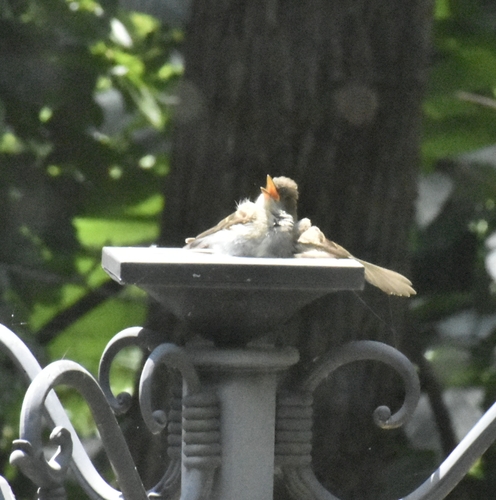
モリタイランチョウ (Contopus virens) モリタイランチョウ
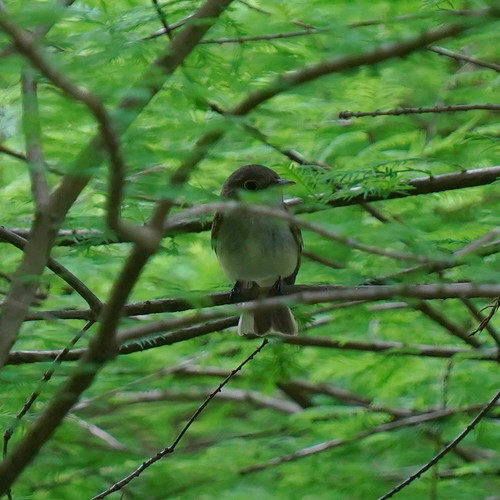
ミドリメジロハエトリ (Empidonax virescens) ミドリメジロハエトリ

メディア

読み込み中…

要点

モリタイランチョウとミドリメジロハエトリを区別する最も信頼できるフィールドマークは、Acadianに見られる太い白いアイリングの存在であり、peweeにはそれがありません。両種はオリーブグレーのハエトリで、淡い腹部と2つの翼帯を持っていますが、構造的な違いが重要です:モリタイランチョウはより長く、尖った一次投影を持ち、よりスリムで細長い外観を与えますが、ミドリメジロハエトリは翼が短く、よりコンパクトに見えます。フィールドでは、Acadianの強いアイリングと短く広いくちばしが目立ち、peweeの長い翼とアイリングの欠如が診断的です。鳴き声も異なり、聞こえた場合には識別が確実になります。

識別のコツ

  1. アイリング: ミドリメジロハエトリは常に太く完全な白いアイリングを示します; モリタイランチョウは全くアイリングがありません。これはすべての羽色と年齢で最も迅速な視覚的区別です。
  2. 一次投影: モリタイランチョウは長く尖った一次羽を持ち、止まっているときに翼先がスリムで細長い外観になります。Acadianの翼は短く、あまり尖っていないため、鳥はよりコンパクトで鈍い翼に見えます。これは良い光の中で止まっている鳥で最もよく判断されます。
  3. くちばしの形: ミドリメジロハエトリはより広く、基部で特に広いくちばしを持ち、peweeのくちばしはより狭く、繊細です。両者ともに上顎は暗く、下顎は黄味がかっているため、色は区別にはなりません。
  4. 翼帯: 両種は2つの淡い翼帯を持っているため、この特徴は区別には役立ちません。
  5. 腹部: 両者は胸にオリーブの洗いがかかった淡い腹部を示します; これは信頼できる区別にはなりません。
  6. 頭部と顔: peweeのアイリングの欠如はその顔をより素朴で開放的に見せることがあり、Acadianのアイリングはより眼鏡をかけたような外観を与えます。
  7. 姿勢と印象: Peweeはしばしば直立して座り、スリムで長い翼に見えますが、Acadianはよりコンパクトで活動的に見えることがあり、時々翼や尾を振ることがあります。
  8. 鳴き声: 歌を聞いた場合、識別は確実です:peweeは哀愁を帯びた、笛のような「pee-a-wee」を出し、Acadianは爆発的な「peet-sa」または「ka-zeep」を出します。呼び声も異なりますが、歌ほど特徴的ではありません。
  9. 生息地: Acadianは深く成熟した湿った森林、しばしば水の近くにいる可能性が高いですが、peweeはより柔軟で、森林のさまざまなタイプ、エッジや松のプランテーションを含む広範囲で見つけることができます。しかし、生息地の重複は一般的です。
  10. 季節性: 両種は同じ一般的な繁殖シーズンに存在するため、タイミングは強い区別にはなりません。
  11. 他のハエトリとの比較: 強いアイリングが見えた場合、それはpeweeではありません; 鳥が長い翼を持ち、アイリングがない場合、それはAcadianではありません。チビメジロハエトリ(こちらは小さく、太いアイリングと非常に短い一次投影を持っています)と混同しないように注意してください。
  12. 年齢と換羽: 両種に特有の幼鳥または未熟な上翼パターンは記述されていないため、すべての年齢で構造的および顔のマークに焦点を当ててください。
  13. 性別: 両種の性別は似ているため、性別を区別に使用しないでください。
  14. 落とし穴: すり減った羽毛は翼帯と腹部のコントラストを鈍くすることがありますが、アイリング(存在または欠如)と翼の構造は信頼できます。
  15. 飛行中: 飛行中に太いアイリングが見えた場合はAcadianを考え、鳥が長い翼を持ち、素朴な顔をしている場合はpeweeを考えてください。

大きさ

両種はサイズが非常に似ており、モリタイランチョウは長さ13.5〜15 cm、体重約14 g、ミドリメジロハエトリは14〜15 cm、11〜14 gです。翼幅はpewee(23〜26 cm)がAcadian(22〜23 cm)よりわずかに大きいですが、これは微妙でフィールドでは通常明らかではありません。全体的に、サイズは強い区別にはなりませんが、peweeは構造上、少し長い翼を持ち、スリムに見えるかもしれません。

羽色

すべての年齢において、ミドリメジロハエトリは太く完全な白いアイリングを示し、モリタイランチョウはアイリングがありません。両者はオリーブの上面、淡い腹部にオリーブの洗いがかかり、2つの淡い翼帯を持っています。翼帯は両者ともに同様に淡いですが、peweeの長い一次羽はその翼により尖った細長い外観を与え、特に止まっているときに目立ちます。幼鳥または未熟な特有の上翼パターンは、情報源では両種に対して特異的とは記述されていないため、アイリングと翼の構造に焦点を当ててください。くちばしの色は似ています:上顎は暗く、下顎は黄味がかっていますが、Acadianのくちばしはより広く、目立ちます。両種の性別は似ています。

行動

モリタイランチョウはしばしば露出した枝に直立して止まり、特徴的で遅いループ状の飛行で昆虫を捕まえます。ミドリメジロハエトリも止まり木から飛び出しますが、より活動的に見えることがあり、尾や翼をより頻繁に振ることがあります。peweeはより怠惰で優雅に見える傾向がありますが、Acadianはより警戒心が強く、動きが速いように見えることがあります。どちらの種も尾を上下に振ることは知られていません(ツキヒメハエトリとは異なります)。

生息環境

両種は北アメリカ東部の成熟した広葉樹または混合林で繁殖しますが、ミドリメジロハエトリは湿った成熟した森林により厳密に結びついており、しばしば小川の近くや深い森にいます。モリタイランチョウはより柔軟で、松のプランテーションや森林のエッジを含むさまざまな森林タイプを利用します。重複ゾーンでは、生息地が役立つことがありますが、決定的ではありません。

声

鳴き声は非常に特徴的です:モリタイランチョウは哀愁を帯びた、笛のような「pee-a-wee」または「pe-wee」を出し、上昇または悲しげなトーンで、しばしば連続して繰り返されます。ミドリメジロハエトリの歌は爆発的な二部構成の「peet-sa」または「ka-zeep」で、peweeよりもはるかに鋭く、音楽的ではありません。呼び声も異なります:Acadianの呼び声は柔らかい「peet」またはフリッカーのような音で、peweeはより鋭い「chip」を出します。歌を聞いた場合、識別は簡単です。

より良い説明を送る

比較と同じ項目を使ってください。文章はすぐに公開されます。

The most reliable field mark to separate Eastern Wood-Pewee from Acadian Flycatcher is the presence of a bold white eye ring on the Acadian, which the pewee lacks. Both species are olive-gray flycatchers with pale underparts and two wingbars, but structural differences are key: Eastern Wood-Pewee has a longer, more pointed primary projection, giving it a sleeker, more attenuated look, while Acadian Flycatcher appears shorter-winged and more compact. In the field, Acadian's strong eye ring and shorter, wider bill stand out, while pewee's longer wings and lack of eye ring are diagnostic. Vocalizations are also distinct and can clinch the ID if heard.

  1. Eye ring: Acadian Flycatcher always shows a bold, complete white eye ring; Eastern Wood-Pewee lacks any eye ring at all. This is the quickest visual separator in all plumages and ages.
  2. Primary projection: Eastern Wood-Pewee has long, pointed primaries, giving the wingtip a slim, attenuated look when perched. Acadian's wings are shorter and less pointed, making the bird look more compact and blunt-winged. This is best judged on perched birds in good light.
  3. Bill shape: Acadian Flycatcher has a broader, wider bill (especially at the base), while pewee's bill is narrower and more delicate. Both have dark upper mandible and yellowish lower, so color is not a separator.
  4. Wingbars: Both species have two pale wingbars, so this feature is not useful for separation.
  5. Underparts: Both show pale underparts with an olive wash on the breast; this is not a reliable separator.
  6. Head and face: The lack of an eye ring on pewee can make its face look plainer and more open, while Acadian's eye ring gives a more spectacled look.
  7. Posture and jizz: Pewee often sits upright and looks slim and long-winged, while Acadian may appear more compact and active, sometimes flicking wings or tail.
  8. Vocalizations: If you hear the song, identification is certain: pewee gives a plaintive, whistled "pee-a-wee"; Acadian gives an explosive "peet-sa" or "ka-zeep." Calls are also different, but less distinctive than songs.
  9. Habitat: Acadian is more likely in deep, mature, moist forests, often near water; pewee is more flexible and can be found in a wider range of woodland types, including edges and pine plantations. However, habitat overlap is common.
  10. Seasonality: Both species are present in the same general breeding season, so timing is not a strong separator.
  11. Comparison with other flycatchers: If you see a strong eye ring, it's not a pewee; if the bird looks long-winged and lacks an eye ring, it's not an Acadian. Be careful not to confuse either with Least Flycatcher (which is smaller, with a bold eye ring and very short primary projection).
  12. Age and molt: There are no distinctive juvenile or immature upperwing patterns described for either species, so focus on structural and face marks for all ages.
  13. Sex: Sexes are alike in both species; do not use sex as a separator.
  14. Pitfalls: Worn plumage can dull the contrast of wingbars and underparts, but the eye ring (present or absent) and wing structure remain reliable.
  15. In flight: If you glimpse a bold eye ring in flight, think Acadian; if the bird looks long-winged and plain-faced, think pewee.

Both species are very similar in size, with Eastern Wood-Pewee measuring 13.5–15 cm in length and weighing around 14 g, and Acadian Flycatcher at 14–15 cm and 11–14 g. Wingspan is slightly greater in the pewee (23–26 cm) compared to Acadian (22–23 cm), but this is subtle and not usually apparent in the field. Overall, size is not a strong separator, but pewee may look a touch longer-winged and slimmer due to structure.

For all ages, Acadian Flycatcher shows a bold, complete white eye ring, while Eastern Wood-Pewee lacks any eye ring. Both have olive upperparts, pale underparts with an olive wash on the breast, and two pale wingbars. The wingbars are similarly pale in both, but the pewee's longer primaries give its wings a more pointed, attenuated look, especially noticeable when perched. Juvenile or immature-specific upperwing patterns are not described as distinctive for either species in the sources, so focus on the eye ring and wing structure. Bill color is similar: dark upper mandible, yellowish lower, but Acadian's bill is broader and more prominent. Sexes are alike in both species.

Eastern Wood-Pewee often perches upright on exposed branches, sallying out for insects with a distinctive, slow, looping flight. Acadian Flycatcher also sallies from perches but may appear more active and can flick its tail and wings more frequently. The pewee tends to look more languid and poised, while Acadian may seem more alert and quick in its movements. Neither species is known for tail-bobbing (unlike Eastern Phoebe).

Both species breed in mature deciduous or mixed forests in eastern North America, but Acadian Flycatcher is more strictly tied to moist, mature forests, often near streams or in deep woods. Eastern Wood-Pewee is more flexible, using a variety of woodland types including pine plantations and forest edges. In overlap zones, habitat can help but is not definitive.

Vocalizations are highly distinctive: Eastern Wood-Pewee gives a plaintive, whistled "pee-a-wee" or "pe-wee" with a rising or mournful tone, often repeated in series. Acadian Flycatcher's song is an explosive, two-part "peet-sa" or "ka-zeep," much sharper and less musical than the pewee. Calls also differ: Acadian's call is a soft "peet" or a flicker-like note, while pewee gives a sharper "chip." If you hear the song, identification is straightforward.

変更を破棄しますか?

保存していない編集があります。今離れると失われます。

モリタイランチョウ · ミドリメジロハエトリ · 苦手な鳥