

Eastern Wood-Pewee vs Acadian Flycatcher
Contopus virens contro Empidonax virescens
Fai un quiz con Eastern Wood-Pewee e Acadian Flycatcher
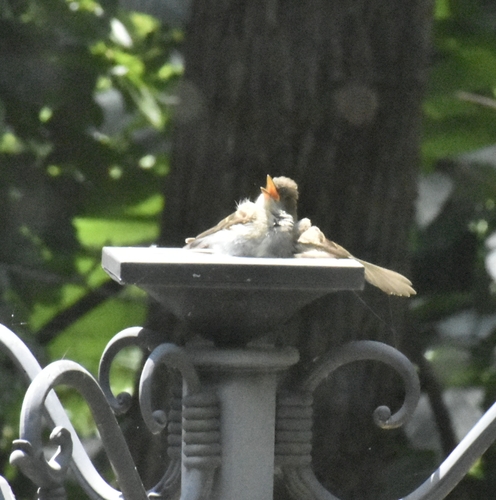 Eastern Wood-Pewee
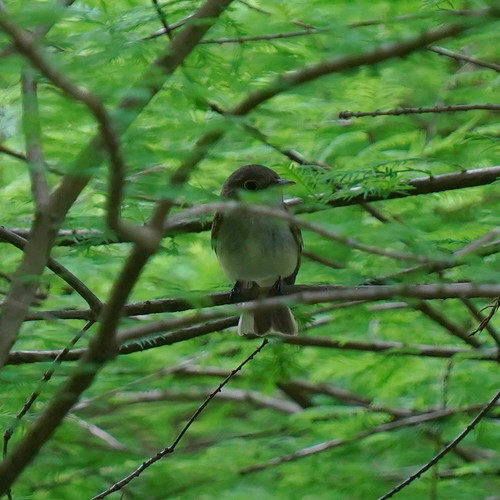 Acadian Flycatcher
In breve
Il segno di campo più affidabile per separare Eastern Wood-Pewee da Acadian Flycatcher è la presenza di un audace anello oculare bianco sull'Acadian, che il pewee non ha. Entrambe le specie sono moschettieri grigio-oliva con parti inferiori chiare e due barre alari, ma le differenze strutturali sono fondamentali: Eastern Wood-Pewee ha una proiezione primaria più lunga e appuntita, conferendole un aspetto più snello e allungato, mentre Acadian Flycatcher appare con ali più corte e più compatto. Sul campo, il forte anello oculare dell'Acadian e il becco più corto e largo si distinguono, mentre le ali più lunghe del pewee e l'assenza di anello oculare sono diagnostiche. Anche le vocalizzazioni sono distinte e possono confermare l'identificazione se ascoltate.
Consigli di identificazione
- Eye ring: Acadian Flycatcher mostra sempre un audace e completo anello oculare bianco; Eastern Wood-Pewee non ha affatto anello oculare. Questo è il separatore visivo più rapido in tutte le livree e età.
- Primary projection: Eastern Wood-Pewee ha primarie lunghe e appuntite, conferendo alla punta dell'ala un aspetto snello e allungato quando è posato. Le ali dell'Acadian sono più corte e meno appuntite, facendo sembrare l'uccello più compatto e con ali più arrotondate. Questo è meglio giudicato su uccelli posati in buona luce.
- Bill shape: Acadian Flycatcher ha un becco più largo e ampio (soprattutto alla base), mentre il becco del pewee è più stretto e delicato. Entrambi hanno la mandibola superiore scura e quella inferiore giallastra, quindi il colore non è un separatore.
- Wingbars: Entrambe le specie hanno due barre alari chiare, quindi questa caratteristica non è utile per la separazione.
- Underparts: Entrambi mostrano parti inferiori chiare con una sfumatura olivacea sul petto; questo non è un separatore affidabile.
- Head and face: L'assenza di un anello oculare sul pewee può far sembrare il suo viso più semplice e più aperto, mentre l'anello oculare dell'Acadian conferisce un aspetto più occhialuto.
- Posture and jizz: Il pewee spesso si siede eretto e appare snello e con ali lunghe, mentre l'Acadian può sembrare più compatto e attivo, a volte muovendo ali o coda.
- Vocalizations: Se senti il canto, l'identificazione è certa: il pewee emette un lamentoso, fischiato "pee-a-wee"; l'Acadian emette un esplosivo "peet-sa" o "ka-zeep." I richiami sono anche diversi, ma meno distintivi rispetto ai canti.
- Habitat: L'Acadian è più probabile che si trovi in foreste mature e umide, spesso vicino all'acqua; il pewee è più flessibile e può essere trovato in una gamma più ampia di tipi di bosco, comprese le aree di confine e le piantagioni di pino. Tuttavia, l'overlap degli habitat è comune.
- Seasonality: Entrambe le specie sono presenti nella stessa stagione di riproduzione generale, quindi il tempismo non è un forte separatore.
- Comparison with other flycatchers: Se vedi un forte anello oculare, non è un pewee; se l'uccello appare con ali lunghe e privo di anello oculare, non è un Acadian. Fai attenzione a non confondere nessuno dei due con il Least Flycatcher (che è più piccolo, con un audace anello oculare e una proiezione primaria molto corta).
- Age and molt: Non ci sono schemi distintivi di ali superiori giovanili o immaturi descritti per nessuna delle due specie, quindi concentrati sui segni strutturali e facciali per tutte le età.
- Sex: I sessi sono simili in entrambe le specie; non usare il sesso come separatore.
- Pitfalls: La livrea usurata può attenuare il contrasto delle barre alari e delle parti inferiori, ma l'anello oculare (presente o assente) e la struttura dell'ala rimangono affidabili.
- In flight: Se intravedi un audace anello oculare in volo, pensa all'Acadian; se l'uccello appare con ali lunghe e un viso semplice, pensa al pewee.
Taglia
Entrambe le specie sono molto simili in dimensioni, con Eastern Wood-Pewee che misura 13,5–15 cm di lunghezza e pesa circa 14 g, e Acadian Flycatcher a 14–15 cm e 11–14 g. L'apertura alare è leggermente maggiore nel pewee (23–26 cm) rispetto all'Acadian (22–23 cm), ma questo è sottile e di solito non apparente sul campo. In generale, la dimensione non è un forte separatore, ma il pewee può sembrare un po' più lungo e snello a causa della struttura.
Piumaggio
Per tutte le età, Acadian Flycatcher mostra un audace e completo anello oculare bianco, mentre Eastern Wood-Pewee non ha affatto anello oculare. Entrambi hanno parti superiori olivastre, parti inferiori chiare con una sfumatura olivacea sul petto e due barre alari chiare. Le barre alari sono simili in entrambe, ma le primarie più lunghe del pewee conferiscono alle sue ali un aspetto più appuntito e allungato, particolarmente evidente quando è posato. Schemi specifici di ali superiori giovanili o immaturi non sono descritti come distintivi per nessuna delle due specie nelle fonti, quindi concentrati sull'anello oculare e sulla struttura dell'ala. Il colore del becco è simile: mandibola superiore scura, inferiore giallastra, ma il becco dell'Acadian è più largo e prominente. I sessi sono simili in entrambe le specie.
Comportamento
Eastern Wood-Pewee spesso si posiziona eretto su rami esposti, lanciandosi per insetti con un volo distintivo, lento e ad anello. Acadian Flycatcher si lancia anche da posatoi ma può apparire più attivo e può muovere la coda e le ali più frequentemente. Il pewee tende a sembrare più languido e posato, mentre l'Acadian può sembrare più all'erta e rapido nei suoi movimenti. Nessuna delle due specie è nota per il movimento della coda (a differenza di Eastern Phoebe).
Habitat
Entrambe le specie nidificano in foreste decidue mature o miste nell'est del Nord America, ma Acadian Flycatcher è più strettamente legato a foreste umide e mature, spesso vicino a corsi d'acqua o in boschi profondi. Eastern Wood-Pewee è più flessibile, utilizzando una varietà di tipi di bosco, comprese le piantagioni di pino e i bordi delle foreste. Nelle zone di sovrapposizione, l'habitat può aiutare ma non è definitivo.
Voce
Le vocalizzazioni sono altamente distintive: Eastern Wood-Pewee emette un lamentoso, fischiato "pee-a-wee" o "pe-wee" con un tono crescente o luttuoso, spesso ripetuto in serie. Il canto dell'Acadian Flycatcher è un esplosivo, in due parti "peet-sa" o "ka-zeep," molto più netto e meno musicale rispetto al pewee. Anche i richiami differiscono: il richiamo dell'Acadian è un morbido "peet" o una nota simile a un lampeggio, mentre il pewee emette un "chip" più netto. Se senti il canto, l'identificazione è semplice.
Eastern Wood-Pewee · Acadian Flycatcher · I miei uccelli difficili