

Motmot

Hellbauch-Schnäppertyrann vs Buchenschnäppertyrann

Contopus virens gegen Empidonax virescens

Ein Quiz mit Hellbauch-Schnäppertyrann und Buchenschnäppertyrann spielen
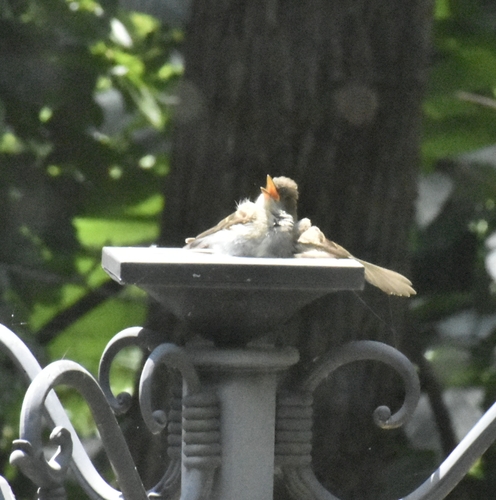
Hellbauch-Schnäppertyrann (Contopus virens) Hellbauch-Schnäppertyrann
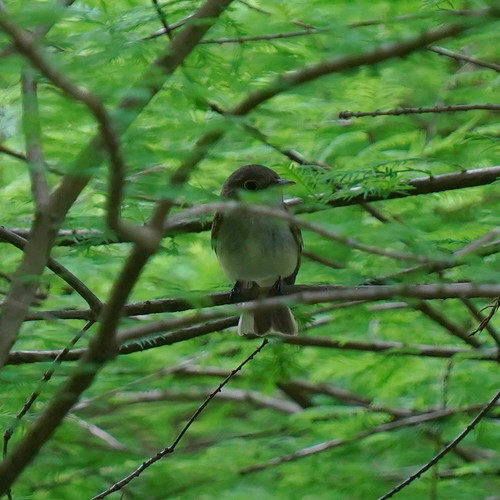
Buchenschnäppertyrann (Empidonax virescens) Buchenschnäppertyrann

Medien

Laden…

Kurz gesagt

The most reliable field mark to separate Eastern Wood-Pewee from Acadian Flycatcher is the presence of a bold white eye ring on the Acadian, which the pewee lacks. Both species are olive-gray flycatchers with pale underparts and two wingbars, but structural differences are key: Eastern Wood-Pewee has a longer, more pointed primary projection, giving it a sleeker, more attenuated look, while Acadian Flycatcher appears shorter-winged and more compact. In the field, Acadian's strong eye ring and shorter, wider bill stand out, while pewee's longer wings and lack of eye ring are diagnostic. Vocalizations are also distinct and can clinch the ID if heard.

Bestimmungstipps

  1. Eye ring: Acadian Flycatcher always shows a bold, complete white eye ring; Eastern Wood-Pewee lacks any eye ring at all. This is the quickest visual separator in all plumages and ages.
  2. Primary projection: Eastern Wood-Pewee has long, pointed primaries, giving the wingtip a slim, attenuated look when perched. Acadian's wings are shorter and less pointed, making the bird look more compact and blunt-winged. This is best judged on perched birds in good light.
  3. Bill shape: Acadian Flycatcher has a broader, wider bill (especially at the base), while pewee's bill is narrower and more delicate. Both have dark upper mandible and yellowish lower, so color is not a separator.
  4. Wingbars: Both species have two pale wingbars, so this feature is not useful for separation.
  5. Underparts: Both show pale underparts with an olive wash on the breast; this is not a reliable separator.
  6. Head and face: The lack of an eye ring on pewee can make its face look plainer and more open, while Acadian's eye ring gives a more spectacled look.
  7. Posture and jizz: Pewee often sits upright and looks slim and long-winged, while Acadian may appear more compact and active, sometimes flicking wings or tail.
  8. Vocalizations: If you hear the song, identification is certain: pewee gives a plaintive, whistled "pee-a-wee"; Acadian gives an explosive "peet-sa" or "ka-zeep." Calls are also different, but less distinctive than songs.
  9. Habitat: Acadian is more likely in deep, mature, moist forests, often near water; pewee is more flexible and can be found in a wider range of woodland types, including edges and pine plantations. However, habitat overlap is common.
  10. Seasonality: Both species are present in the same general breeding season, so timing is not a strong separator.
  11. Comparison with other flycatchers: If you see a strong eye ring, it's not a pewee; if the bird looks long-winged and lacks an eye ring, it's not an Acadian. Be careful not to confuse either with Least Flycatcher (which is smaller, with a bold eye ring and very short primary projection).
  12. Age and molt: There are no distinctive juvenile or immature upperwing patterns described for either species, so focus on structural and face marks for all ages.
  13. Sex: Sexes are alike in both species; do not use sex as a separator.
  14. Pitfalls: Worn plumage can dull the contrast of wingbars and underparts, but the eye ring (present or absent) and wing structure remain reliable.
  15. In flight: If you glimpse a bold eye ring in flight, think Acadian; if the bird looks long-winged and plain-faced, think pewee.

Größe

Both species are very similar in size, with Eastern Wood-Pewee measuring 13.5–15 cm in length and weighing around 14 g, and Acadian Flycatcher at 14–15 cm and 11–14 g. Wingspan is slightly greater in the pewee (23–26 cm) compared to Acadian (22–23 cm), but this is subtle and not usually apparent in the field. Overall, size is not a strong separator, but pewee may look a touch longer-winged and slimmer due to structure.

Gefieder

For all ages, Acadian Flycatcher shows a bold, complete white eye ring, while Eastern Wood-Pewee lacks any eye ring. Both have olive upperparts, pale underparts with an olive wash on the breast, and two pale wingbars. The wingbars are similarly pale in both, but the pewee's longer primaries give its wings a more pointed, attenuated look, especially noticeable when perched. Juvenile or immature-specific upperwing patterns are not described as distinctive for either species in the sources, so focus on the eye ring and wing structure. Bill color is similar: dark upper mandible, yellowish lower, but Acadian's bill is broader and more prominent. Sexes are alike in both species.

Verhalten

Eastern Wood-Pewee often perches upright on exposed branches, sallying out for insects with a distinctive, slow, looping flight. Acadian Flycatcher also sallies from perches but may appear more active and can flick its tail and wings more frequently. The pewee tends to look more languid and poised, while Acadian may seem more alert and quick in its movements. Neither species is known for tail-bobbing (unlike Eastern Phoebe).

Lebensraum

Both species breed in mature deciduous or mixed forests in eastern North America, but Acadian Flycatcher is more strictly tied to moist, mature forests, often near streams or in deep woods. Eastern Wood-Pewee is more flexible, using a variety of woodland types including pine plantations and forest edges. In overlap zones, habitat can help but is not definitive.

Stimme

Vocalizations are highly distinctive: Eastern Wood-Pewee gives a plaintive, whistled "pee-a-wee" or "pe-wee" with a rising or mournful tone, often repeated in series. Acadian Flycatcher's song is an explosive, two-part "peet-sa" or "ka-zeep," much sharper and less musical than the pewee. Calls also differ: Acadian's call is a soft "peet" or a flicker-like note, while pewee gives a sharper "chip." If you hear the song, identification is straightforward.

Eine bessere Beschreibung senden

Nutze dieselben Abschnitte wie der Vergleich. Dein Text ist sofort veröffentlicht.

The most reliable field mark to separate Eastern Wood-Pewee from Acadian Flycatcher is the presence of a bold white eye ring on the Acadian, which the pewee lacks. Both species are olive-gray flycatchers with pale underparts and two wingbars, but structural differences are key: Eastern Wood-Pewee has a longer, more pointed primary projection, giving it a sleeker, more attenuated look, while Acadian Flycatcher appears shorter-winged and more compact. In the field, Acadian's strong eye ring and shorter, wider bill stand out, while pewee's longer wings and lack of eye ring are diagnostic. Vocalizations are also distinct and can clinch the ID if heard.

  1. Eye ring: Acadian Flycatcher always shows a bold, complete white eye ring; Eastern Wood-Pewee lacks any eye ring at all. This is the quickest visual separator in all plumages and ages.
  2. Primary projection: Eastern Wood-Pewee has long, pointed primaries, giving the wingtip a slim, attenuated look when perched. Acadian's wings are shorter and less pointed, making the bird look more compact and blunt-winged. This is best judged on perched birds in good light.
  3. Bill shape: Acadian Flycatcher has a broader, wider bill (especially at the base), while pewee's bill is narrower and more delicate. Both have dark upper mandible and yellowish lower, so color is not a separator.
  4. Wingbars: Both species have two pale wingbars, so this feature is not useful for separation.
  5. Underparts: Both show pale underparts with an olive wash on the breast; this is not a reliable separator.
  6. Head and face: The lack of an eye ring on pewee can make its face look plainer and more open, while Acadian's eye ring gives a more spectacled look.
  7. Posture and jizz: Pewee often sits upright and looks slim and long-winged, while Acadian may appear more compact and active, sometimes flicking wings or tail.
  8. Vocalizations: If you hear the song, identification is certain: pewee gives a plaintive, whistled "pee-a-wee"; Acadian gives an explosive "peet-sa" or "ka-zeep." Calls are also different, but less distinctive than songs.
  9. Habitat: Acadian is more likely in deep, mature, moist forests, often near water; pewee is more flexible and can be found in a wider range of woodland types, including edges and pine plantations. However, habitat overlap is common.
  10. Seasonality: Both species are present in the same general breeding season, so timing is not a strong separator.
  11. Comparison with other flycatchers: If you see a strong eye ring, it's not a pewee; if the bird looks long-winged and lacks an eye ring, it's not an Acadian. Be careful not to confuse either with Least Flycatcher (which is smaller, with a bold eye ring and very short primary projection).
  12. Age and molt: There are no distinctive juvenile or immature upperwing patterns described for either species, so focus on structural and face marks for all ages.
  13. Sex: Sexes are alike in both species; do not use sex as a separator.
  14. Pitfalls: Worn plumage can dull the contrast of wingbars and underparts, but the eye ring (present or absent) and wing structure remain reliable.
  15. In flight: If you glimpse a bold eye ring in flight, think Acadian; if the bird looks long-winged and plain-faced, think pewee.

Both species are very similar in size, with Eastern Wood-Pewee measuring 13.5–15 cm in length and weighing around 14 g, and Acadian Flycatcher at 14–15 cm and 11–14 g. Wingspan is slightly greater in the pewee (23–26 cm) compared to Acadian (22–23 cm), but this is subtle and not usually apparent in the field. Overall, size is not a strong separator, but pewee may look a touch longer-winged and slimmer due to structure.

For all ages, Acadian Flycatcher shows a bold, complete white eye ring, while Eastern Wood-Pewee lacks any eye ring. Both have olive upperparts, pale underparts with an olive wash on the breast, and two pale wingbars. The wingbars are similarly pale in both, but the pewee's longer primaries give its wings a more pointed, attenuated look, especially noticeable when perched. Juvenile or immature-specific upperwing patterns are not described as distinctive for either species in the sources, so focus on the eye ring and wing structure. Bill color is similar: dark upper mandible, yellowish lower, but Acadian's bill is broader and more prominent. Sexes are alike in both species.

Eastern Wood-Pewee often perches upright on exposed branches, sallying out for insects with a distinctive, slow, looping flight. Acadian Flycatcher also sallies from perches but may appear more active and can flick its tail and wings more frequently. The pewee tends to look more languid and poised, while Acadian may seem more alert and quick in its movements. Neither species is known for tail-bobbing (unlike Eastern Phoebe).

Both species breed in mature deciduous or mixed forests in eastern North America, but Acadian Flycatcher is more strictly tied to moist, mature forests, often near streams or in deep woods. Eastern Wood-Pewee is more flexible, using a variety of woodland types including pine plantations and forest edges. In overlap zones, habitat can help but is not definitive.

Vocalizations are highly distinctive: Eastern Wood-Pewee gives a plaintive, whistled "pee-a-wee" or "pe-wee" with a rising or mournful tone, often repeated in series. Acadian Flycatcher's song is an explosive, two-part "peet-sa" or "ka-zeep," much sharper and less musical than the pewee. Calls also differ: Acadian's call is a soft "peet" or a flicker-like note, while pewee gives a sharper "chip." If you hear the song, identification is straightforward.

Änderungen verwerfen?

Du hast ungespeicherte Änderungen. Wenn du jetzt gehst, gehen sie verloren.

Hellbauch-Schnäppertyrann · Buchenschnäppertyrann · Meine schwierigen Vögel