

Motmot

カオグロサバクヒタキ 対 セジロサバクヒタキ

Oenanthe melanoleuca 対 Oenanthe finschii

カオグロサバクヒタキとセジロサバクヒタキのクイズ
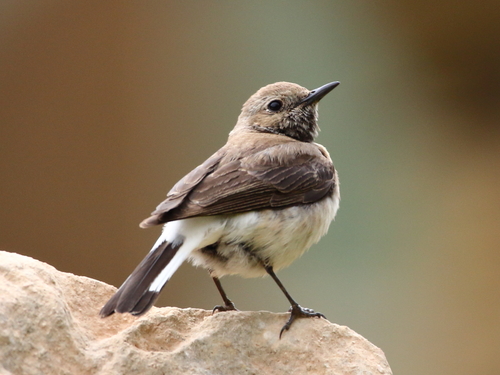
カオグロサバクヒタキ (Oenanthe melanoleuca) カオグロサバクヒタキ
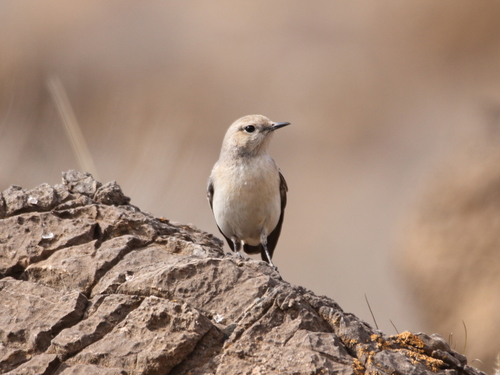
セジロサバクヒタキ (Oenanthe finschii) セジロサバクヒタキ

メディア

読み込み中…

要点

カオグロサバクヒタキとセジロサバクヒタキの最も信頼できるフィールドマークは尾のパターンです:両者とも白い尾に黒い端帯を持っていますが、セジロサバクヒタキの黒い先端は均一に広く、鮮明な逆T字を形成しています。一方、カオグロサバクヒタキの黒はそれほど広くなく、白はしばしば尾の上部まで伸びています。両種の成鳥のオスは非常に白黒がはっきりしていますが、セジロサバクヒタキはより対照的で、クリーンな白い冠と腹部を持ち、顔と喉は黒一色です。一方、カオグロサバクヒタキはわずかにバフ色がかっており、マークがあまりはっきりしていません。メスは見分けるのが難しいですが、カオグロサバクヒタキは全体的に冷たく鈍い印象を与え、セジロサバクヒタキは上面がより茶色く、下面が汚れた白です。両者は秋と冬に混同されることがありますが、上面の色と尾のパターンの微妙な違いは依然として有用です。構造とサイズは似ていますが、セジロサバクヒタキはわずかに重く、翼が長いです。

識別のコツ

  1. 尾のパターンが重要です: セジロサバクヒタキは尾に均一に広い黒い端帯があり、鮮明な逆T字を形成しています。カオグロサバクヒタキの尾も白く、先端に黒がありますが、黒はそれほど広くなく、白はしばしば尾の上部まで伸びており、T字があまり鮮明ではありません。これはすべての年齢と性別に当てはまります。
  2. オスの頭と喉: 繁殖羽毛の時期、オスのセジロサバクヒタキはクリーンな白い冠と中央の背中を持ち、顔と喉は黒一色です。カオグロサバクヒタキのオスは西部カオグロサバクヒタキよりも上面が白いですが、通常はバフ色がかっており、黒いマスクはくちばしの基部のすぐ上まで達します。カオグロサバクヒタキの黒喉型は、セジロサバクヒタキよりも喉と顔に広範囲で明確に区切られた黒を持っています。
  3. 上面の色: カオグロサバクヒタキのオスは西部カオグロサバクヒタキよりもバフ色が少なく、より白黒がはっきりしていますが、繁殖のピークを過ぎるとわずかにバフ色がかることがあります。セジロサバクヒタキは成鳥のオスでは常に上面がクリーンな白です。
  4. メスの羽毛: メスはトーンで分けるのが最も良いです:カオグロサバクヒタキは全体的に冷たく鈍い印象を与え、下背部はより白いです。セジロサバクヒタキは上面がより茶色く、下面が汚れた白ですが、両者は似たような尾のパターンを持っています。メスでは季節的な変化はあまり目立ちませんが、カオグロサバクヒタキのメスは常にセジロサバクヒタキよりも暖色が少ないです。
  5. 季節的変化: 秋と冬には両種ともバフ色がかりますが、カオグロサバクヒタキは冷たく灰色がかり、セジロサバクヒタキは茶色く汚れた印象を与えます。尾のパターンは年間を通じて信頼できる違いです。
  6. 顔のパターン: カオグロサバクヒタキのオスの黒いマスクはくちばしの基部のすぐ上まで達しますが、セジロサバクヒタキでは黒い顔が一色で、喉を通ってより均一なブロックに広がっています。
  7. 喉の色: カオグロサバクヒタキは黒または白の喉を示すことがあります(黒喉型はセジロサバクヒタキよりも広範囲で黒が見られます)。セジロサバクヒタキは成鳥のオスでは常に黒い喉を持っています。
  8. 背中と上尾羽覆い: 両種は白い背中と上尾羽覆いを持っていますが、カオグロサバクヒタキの白は繁殖期以外ではバフ色がかることがあります。
  9. 構造: セジロサバクヒタキはより優雅で、翼と脚が長いと説明されていますが、これは微妙で、フィールドでは常に明らかではありません。
  10. サイズ: セジロサバクヒタキはわずかに重く、翼が長いですが、これは鳥が並んでいない限り信頼できるフィールドマークではありません。
  11. 翼の色: 両者とも黒い翼を持っていますが、セジロサバクヒタキの黒は白い体に対してより鮮明に定義されており、カオグロサバクヒタキの黒い翼は白がバフ色がかっている場合、対照が少ないかもしれません。
  12. 声: セジロサバクヒタキは笛のような「ツィット」と、クリアな音符が混ざった歌を発します。カオグロサバクヒタキの声についてはここでは説明されていないため、声に頼って分けることはできません。
  13. 落とし穴: 秋と冬の鳥には注意してください。両種ともバフ色がかり、対照が少なくなります。尾のパターンと全体的な冷たさ(カオグロサバクヒタキ)対茶色さ(セジロサバクヒタキ)に焦点を当ててください。

大きさ

両種は中型のサバクヒタキですが、セジロサバクヒタキはわずかに重く(平均体重約27.5g [wikidata])で、翼幅もわずかに長い(25–27 cm)です。カオグロサバクヒタキの体重は指定されていませんが、両者はサイズと長さが近いです(セジロサバクヒタキは14 cmの長さ)。フィールドでは、サイズの違いは微妙で、遠くからは診断できることは稀です。

羽色

行動

両種は典型的な直立した地面を食べるサバクヒタキで、しばしば岩や低い低木に止まります。セジロサバクヒタキは優雅で、長い翼と脚を持ち、わずかに細長くまたは直立して見えることがあります。フィールドでの分離のための主要な行動の違いは、情報源には記載されていません。

声

セジロサバクヒタキは笛のような「ツィット」という鳴き声と、クリアな音符が混ざった歌を発します。カオグロサバクヒタキの声についてはここでは説明されていないため、声に頼って分けることはできません。

より良い説明を送る

比較と同じ項目を使ってください。文章はすぐに公開されます。

The most reliable field mark between Eastern Black-eared Wheatear and Finsch's Wheatear is the tail pattern: both show a white tail with a black terminal band, but Finsch’s has a uniformly broad black tip forming a crisp inverted T, while Eastern Black-eared’s black is less broad and the white often extends further up the tail. Adult males of both species are strikingly black-and-white, but Finsch’s has a more sharply contrasting, clean white crown and belly with a solid black face and throat, while Eastern Black-eared is slightly buff-tinged and less sharply marked. Females are trickier, but Eastern Black-eared is colder and duller overall, while Finsch’s is browner above and dirtier white below. Both can be confused in autumn and winter, but subtle differences in upperpart color and tail pattern remain useful. Structure and size are similar, but Finsch’s is slightly heavier and longer-winged.

  1. Tail pattern is key: Finsch’s Wheatear has a uniformly broad black terminal band on the tail forming a crisp inverted T, visible in flight and when perched. Eastern Black-eared Wheatear’s tail is also white with black at the tip, but the black is less broad and the white often extends further up the tail, making the T less crisp. This works for all ages and sexes.
  2. Male head and throat: In breeding plumage, male Finsch’s has a clean white crown and central back with a solid black face and throat. Eastern Black-eared males are whiter above than Western Black-eared, but usually show a buff tinge and the black mask reaches just above the bill base. Black-throated forms of Eastern Black-eared have more extensive and sharply demarcated black on the throat and face than Finsch’s.
  3. Upperpart color: Eastern Black-eared males are less buff-tinted and more black-and-white than Western Black-eared, but still often show a slight buff wash, especially outside peak breeding. Finsch’s is always clean white above in adult males.
  4. Female plumage: Females are best separated by tone: Eastern Black-eared is colder and duller overall, with a whiter lower back; Finsch’s is browner above and dirty white below. Both can be subtle, so rely on tail pattern as well.
  5. Seasonal change: In autumn and winter, both species become buffier, but Eastern Black-eared remains colder and greyer, while Finsch’s is browner and dirtier. Tail pattern remains reliable year-round.
  6. Face pattern: The black mask of Eastern Black-eared male reaches just above the bill base; in Finsch’s, the black face is solid and extends through the throat in a more uniform block.
  7. Throat color: Eastern Black-eared can show either black or white throats (with black-throated birds showing more extensive black than Finsch’s). Finsch’s always has a black throat in adult males.
  8. Back and upper tail coverts: Both species have white backs and upper tail coverts, but Eastern Black-eared’s white can be tinged buff, especially outside breeding.
  9. Structure: Finsch’s is described as more elegant, with longer wings and legs, but this is subtle and not always apparent in the field.
  10. Size: Finsch’s averages slightly heavier and longer-winged, but this is not a reliable field mark unless birds are side by side.
  11. Wing color: Both have black wings, but Finsch’s black is more sharply defined against the white body, while Eastern Black-eared’s black wings may contrast less if the white is buff-tinged.
  12. Voice: Finsch’s gives a whistled 'tsit' and a song of clear notes with crackling; Eastern Black-eared’s voice is not described here, so do not rely on vocalization for separation.
  13. Pitfalls: Beware autumn and winter birds, when both species become buffier and less contrasting. Focus on tail pattern and overall coldness (Eastern Black-eared) versus brownness (Finsch’s).

Both species are medium-sized wheatears, but Finsch’s Wheatear is marginally heavier (average body mass around 27.5g [wikidata]) and has a slightly longer wingspan (25–27 cm). Eastern Black-eared Wheatear’s mass is not specified, but both are close in size and length (Finsch’s at 14 cm long). In the field, size differences are subtle and rarely diagnostic at a distance.

  • Juvenile/immature plumages: No explicit age-specific upperwing or flight marks are described for either species in the sources, so tail pattern and overall color remain the best clues for all ages.

  • Adult males (breeding): Finsch’s Wheatear shows a strikingly clean white crown, central back, and belly, with a solid black face, throat, and wings. The tail is white with a broad, even black terminal band forming a crisp inverted T. Eastern Black-eared Wheatear males are also black-and-white but usually have a buff tinge to the white areas, especially on the upperparts and underparts, and the black mask reaches just above the bill base. Black-throated forms have more extensive and abruptly demarcated black on the throat and face than Finsch’s.

  • Females: Eastern Black-eared is colder and duller overall, with less contrast and a whiter lower back; Finsch’s is browner above and dirty white below, but both share a similar tail pattern. Seasonal changes are less marked in females, but Eastern Black-eared females are always less warm-toned than Finsch’s.

  • Non-breeding/Autumn: Both species become buffier, but Eastern Black-eared retains a colder, greyer look, while Finsch’s remains browner and dirtier below. The tail pattern remains a key difference year-round.

Both species are typical upright, ground-feeding wheatears, often perching on rocks or low shrubs. Finsch’s is described as elegant, with long wings and legs, and may appear slightly more elongated or upright. No major behavioral differences are noted in the sources for field separation.

Finsch’s Wheatear gives a whistled 'tsit' call and a song of clear notes mixed with whistles and crackling. No vocal details are provided for Eastern Black-eared Wheatear in the sources, so voice is not a reliable separator here.

変更を破棄しますか?

保存していない編集があります。今離れると失われます。

カオグロサバクヒタキ · セジロサバクヒタキ · 苦手な鳥