

Monachella orientale vs Finsch's Wheatear
Oenanthe melanoleuca contro Oenanthe finschii
Fai un quiz con Monachella orientale e Finsch's Wheatear
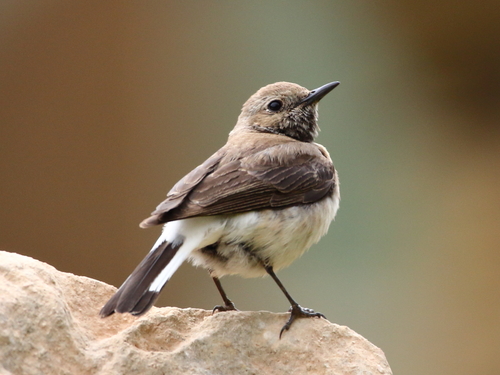 Monachella orientale
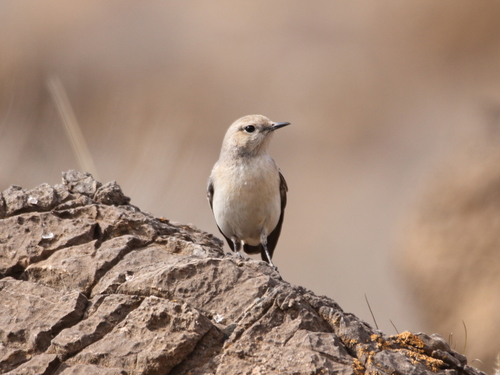 Finsch's Wheatear
In breve
Il segno distintivo più affidabile tra Monachella orientale e Finsch's Wheatear è il motivo della coda: entrambi mostrano una coda bianca con una banda terminale nera, ma quella di Finsch ha una punta nera uniformemente larga che forma una T invertita netta, mentre il nero della Monachella orientale è meno largo e il bianco spesso si estende più in alto sulla coda. I maschi adulti di entrambe le specie sono notevolmente bianco e nero, ma quello di Finsch ha una corona e un ventre bianco pulito e a contrasto più netto con un viso e una gola neri solidi, mentre la Monachella orientale è leggermente color crema e meno marcata. Le femmine sono più difficili da distinguere, ma la Monachella orientale è complessivamente più fredda e opaca, mentre quella di Finsch è più marrone sopra e bianca sporca sotto. Entrambe possono essere confuse in autunno e inverno, ma le differenze sottili nel colore della parte superiore e nel motivo della coda rimangono utili. La struttura e la dimensione sono simili, ma quella di Finsch è leggermente più pesante e con ali più lunghe.
Consigli di identificazione
- Il motivo della coda è fondamentale: Finsch's Wheatear ha una banda terminale nera uniformemente larga sulla coda che forma una T invertita netta, visibile in volo e quando è posato. La coda della Monachella orientale è anch'essa bianca con il nero alla punta, ma il nero è meno largo e il bianco spesso si estende più in alto sulla coda, rendendo la T meno netta. Questo vale per tutte le età e i sessi.
- Testa e gola del maschio: In abito nuziale, il maschio di Finsch ha una corona bianca pulita e una schiena centrale con un viso e una gola neri solidi. I maschi di Monachella orientale sono più bianchi sopra rispetto ai maschi di Monachella occidentale, ma mostrano solitamente una sfumatura color crema e la maschera nera raggiunge appena sopra la base del becco. Le forme a gola nera della Monachella orientale hanno un nero più esteso e nettamente demarcato sulla gola e sul viso rispetto a Finsch.
- Colore della parte superiore: I maschi di Monachella orientale sono meno color crema e più bianco e nero rispetto ai maschi di Monachella occidentale, ma mostrano comunque spesso una leggera sfumatura color crema, specialmente al di fuori del picco riproduttivo. Finsch è sempre bianco pulito sopra nei maschi adulti.
- Abito delle femmine: Le femmine sono meglio separate per tono: la Monachella orientale è più fredda e opaca nel complesso, con una parte bassa più bianca; quella di Finsch è più marrone sopra e bianca sporca sotto. Entrambe possono essere sottili, quindi fai affidamento anche sul motivo della coda.
- Cambiamento stagionale: In autunno e inverno, entrambe le specie diventano più color crema, ma la Monachella orientale rimane più fredda e grigia, mentre quella di Finsch è più marrone e sporca. Il motivo della coda rimane affidabile tutto l'anno.
- Motivo del viso: La maschera nera del maschio di Monachella orientale raggiunge appena sopra la base del becco; in Finsch, il viso nero è solido e si estende attraverso la gola in un blocco più uniforme.
- Colore della gola: La Monachella orientale può mostrare sia gole nere che bianche (con gli uccelli a gola nera che mostrano un nero più esteso rispetto a Finsch). Finsch ha sempre una gola nera nei maschi adulti.
- Schiena e copritrici superiori della coda: Entrambe le specie hanno schiene e copritrici superiori della coda bianche, ma il bianco della Monachella orientale può essere color crema, specialmente al di fuori della riproduzione.
- Struttura: Finsch è descritto come più elegante, con ali e gambe più lunghe, ma questo è sottile e non sempre evidente sul campo.
- Dimensione: Finsch è mediamente leggermente più pesante e con ali più lunghe, ma questo non è un segno distintivo affidabile a meno che gli uccelli non siano affiancati.
- Colore delle ali: Entrambi hanno ali nere, ma il nero di Finsch è più nettamente definito rispetto al corpo bianco, mentre le ali nere della Monachella orientale possono contrastare meno se il bianco è color crema.
- Voce: Finsch emette un richiamo fischiato 'tsit' e una canzone di note chiare con crepitii; la voce della Monachella orientale non è descritta qui, quindi non fare affidamento sulla vocalizzazione per la separazione.
- Trappole: Fai attenzione agli uccelli di autunno e inverno, quando entrambe le specie diventano più color crema e meno contrastanti. Concentrati sul motivo della coda e sul freddo complessivo (Monachella orientale) rispetto al marrone (Finsch).
Taglia
Entrambe le specie sono monachelle di dimensioni medie, ma Finsch's Wheatear è marginalmente più pesante (massa corporea media di circa 27,5 g [wikidata]) e ha un'apertura alare leggermente più lunga (25–27 cm). La massa della Monachella orientale non è specificata, ma entrambe sono simili in dimensione e lunghezza (Finsch misura 14 cm di lunghezza). Sul campo, le differenze di dimensione sono sottili e raramente diagnostiche a distanza.
Piumaggio
-
Piumaggi giovanili/immaturi: Non sono descritti segni specifici per età per la parte superiore delle ali o per il volo per nessuna delle due specie nelle fonti, quindi il motivo della coda e il colore complessivo rimangono i migliori indizi per tutte le età.
-
Maschi adulti (riproduzione): Finsch's Wheatear mostra una corona bianca pulita, una schiena centrale e un ventre, con un viso, una gola e ali neri solidi. La coda è bianca con una banda terminale nera larga e uniforme che forma una T invertita netta. I maschi di Monachella orientale sono anch'essi bianco e nero, ma di solito hanno una sfumatura color crema nelle aree bianche, specialmente sulle parti superiori e inferiori, e la maschera nera raggiunge appena sopra la base del becco. Le forme a gola nera hanno un nero più esteso e nettamente demarcato sulla gola e sul viso rispetto a Finsch.
-
Femmine: La Monachella orientale è più fredda e opaca nel complesso, con meno contrasto e una parte bassa più bianca; Finsch è più marrone sopra e bianca sporca sotto, ma entrambe condividono un motivo di coda simile. I cambiamenti stagionali sono meno marcati nelle femmine, ma le femmine di Monachella orientale sono sempre meno calde rispetto a quelle di Finsch.
-
Non riproduttivo/Autunno: Entrambe le specie diventano più color crema, ma la Monachella orientale mantiene un aspetto più freddo e grigio, mentre Finsch rimane più marrone e sporco sotto. Il motivo della coda rimane una differenza chiave tutto l'anno.
Comportamento
Entrambe le specie sono tipiche monachelle erette, che si nutrono a terra, spesso posandosi su rocce o arbusti bassi. Finsch è descritto come elegante, con ali e gambe lunghe, e può apparire leggermente più allungato o eretto. Non sono state notate differenze comportamentali significative nelle fonti per la separazione sul campo.
Voce
Finsch's Wheatear emette un richiamo fischiato 'tsit' e una canzone di note chiare mescolate a fischi e crepitii. Non sono forniti dettagli vocali per la Monachella orientale nelle fonti, quindi la voce non è un separatore affidabile qui.
Monachella orientale · Finsch's Wheatear · I miei uccelli difficili