

Motmot

ミミグロコビトタイランチョウ 対 コビトドリモドキ

Myiornis auricularis 対 Hemitriccus diops

ミミグロコビトタイランチョウとコビトドリモドキのクイズ
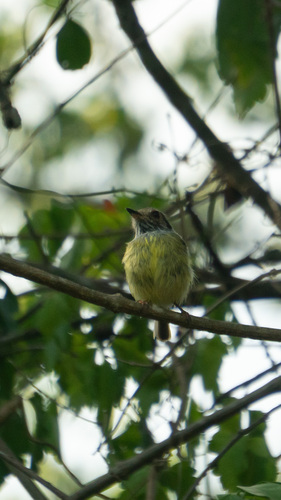
ミミグロコビトタイランチョウ (Myiornis auricularis) ミミグロコビトタイランチョウ
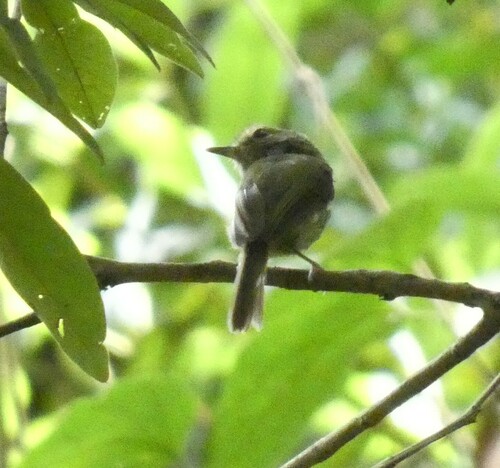
コビトドリモドキ (Hemitriccus diops) コビトドリモドキ

メディア

読み込み中…

要点

ミミグロコビトタイランチョウとコビトドリモドキを区別する最も信頼できるフィールドマークは、前者の劇的な顔の模様です:目の周りの大胆なバフ色の領域、白っぽい耳羽の後ろの黒い三日月、目の下の黒い斑点を探してください。それに対して、コビトドリモドキはずっと地味なオリーブグリーンの顔を持ち、ロアの上に微妙な白い斑点と白いアイリングしかありません。ミミグロコビトタイランチョウは明らかに小さく、よりコンパクトであり、コビトドリモドキは大きくて重いです。両種は似たような範囲と生息地を共有しているため、顔の模様と全体のサイズに注意を払うことが重要です。翼の模様はどちらの種にとっても年齢に関係なく強く診断的ではないため、頭部と下部の色合いに焦点を当ててください。

識別のコツ

  1. Facial pattern is the best field mark: ミミグロコビトタイランチョウは常に目の周りに大胆なバフシナモンの領域、白っぽい耳羽の後ろに明確な黒い三日月、目の下に黒い斑点を示します。コビトドリモドキはロアの上に微かな白い斑点と白いアイリングしか持たない地味なオリーブグリーンの顔をしています。このコントラストはすべての年齢と性別で見ることができます。
  2. Crown and nape color: ミミグロコビトタイランチョウは茶色がかった明るいオリーブの冠と灰色のうなじ/首を持ち、コビトドリモドキは上部が均一な暗いオリーブグリーンです。
  3. Underparts: ミミグロコビトタイランチョウは薄い黒い筋が入った白い喉と上胸、オリーブの筋が入った明るい黄色の下部を示します。コビトドリモドキは鈍い灰色の喉と胸(時にはピンクがかったり紫がかったりすることもあります)、胸と腹の間に微かな白い三日月、黄色がかった白い腹/クリッサムを持っています。
  4. Wing pattern: ミミグロコビトタイランチョウは明るいオリーブイエローの縁を持つ暗い翼と二つの不明瞭な翼帯(しばしば微妙)を持ち、コビトドリモドキの翼は地味なオリーブで、時には内側の二次羽の縁が淡いことがありますが、明確な翼帯はありません。これは小さなマークで、常に見えるわけではありません。
  5. Size and structure: ミミグロコビトタイランチョウは非常に小さく(7–9 cm、~5 g)非常にコンパクトで大きな頭に見えます。コビトドリモドキは大きく(11 cm、9.5–13.5 g)より均整が取れています。本当に小さくて大きな頭の鳥を見たら、ミミグロを疑ってください。
  6. Iris color: ミミグロコビトタイランチョウはオレンジ色の虹彩を持ち、コビトドリモドキは赤褐色です。これはフィールドで見るのが難しいことがありますが、一貫しています。
  7. Bill and legs: ミミグロコビトタイランチョウは黒っぽいくちばしとピンクがかった足/足を持ち、コビトドリモドキは灰色の上顎、ピンクがかった下顎、明るい灰色の足/足を持っています。近距離でない限り、強く診断的ではありません。
  8. Facial contrast at a distance: 細かい詳細が見えなくても、ミミグロコビトタイランチョウの顔ははるかに模様があり、コントラストが強く見え、コビトドリモドキの顔は地味です。
  9. No age-specific wing or tail marks: どちらの種も、区別を助ける特異な幼鳥や未熟な上翼または尾の模様はありません。
  10. No strong habitat separation: 両種は密な下層植生を持つ類似の森林や林地に生息することができ、竹を含むことがあります。生息地だけに頼らないでください。
  11. Behavior: ミミグロコビトタイランチョウはより活発で落ち着きがないように見えることがありますが、これは微妙で信頼できる区別ではありません。
  12. Voice: 利用可能なメモには音声の違いが記載されていないため、歌や鳴き声に頼って区別しないでください。
  13. Sexes similar: 両種は羽毛において性別が似ているため、すべてのフィールドマークはオスとメスの両方に適用されます。
  14. Subspecies variation: ミミグロコビトタイランチョウの亜種は耳羽がより淡いことがありますが、全体の顔の模様はコビトドリモドキと比較して独特です。
  15. Pitfall: コビトドリモドキの微かな翼の縁や淡いロアをミミグロコビトタイランチョウの大胆な顔の模様と混同しないでください。後者は常にはるかに目立ち、コントラストが強いです。

大きさ

ミミグロコビトタイランチョウは最も小さなスズメ目の一つで、長さはわずか7–9 cm、重さは約5 gです。コビトドリモドキはかなり大きく、長さ約11 cm、質量は9.5–13.5 gです [wikipedia][wikidata]。このサイズの違いはフィールドでしばしば見られます:ミミグロコビトタイランチョウは小さくて大きな頭に見え、コビトドリモドキは小さなタイランチョウとしてより典型的に見えます。一緒に見たり、既知の参照種と一緒に見たりすると、違いは際立っています。

羽色

どちらの種についても年齢特有の上翼や飛行パターンは記載されていないため、成鳥と一般的な羽毛に焦点を当ててください。すべての年齢と性別のミミグロコビトタイランチョウは目を引く顔の模様を示します:目の周りのバフシナモン、黒い三日月で縁取られた白っぽい耳羽、目の下の黒い斑点です。冠は明るいオリーブ色で茶色がかった色合い、うなじと首は灰色、背中/臀部は明るいオリーブです。翼は暗くオリーブイエローの縁を持ち、二つの不明瞭な翼帯があります。下部は喉/上胸が白く薄い黒い筋が入り、下部は明るい黄色でオリーブの筋が入っています。コビトドリモドキはずっと地味です:顔はオリーブグリーンでロアの上に微かな白い斑点と白いアイリングがあり、冠/背中/臀部は地味な暗いオリーブグリーンで、翼/尾も同様に地味です。喉と胸は鈍い灰色で、時にはピンクがかったり紫がかったりし、白っぽい腹と微かな白い三日月で区切られています。クリッサムは白っぽく黄色がかった色合いです。虹彩の色は異なり、ミミグロはオレンジ色、コビトドリモドキは赤褐色です。くちばしと足の色は強く診断的ではありませんが、近距離で役立つことがあります。

行動

両種は低から中レベルの植生で餌を探し、止まり木から短い飛び出しをして葉から昆虫をつかみます。ミミグロコビトタイランチョウはしばしばより活発で落ち着きがないと説明され、密な葉の中を素早く移動しますが、コビトドリモドキはやや落ち着きがない傾向があります。しかし、行動の違いは微妙で、フィールドでの区別には信頼できません。

生息環境

両種はアルゼンチン、ブラジル、パラグアイに生息し、しばしば類似の低から中レベルの森林や林地に生息します。メモには強い生息地の区別はないため、文脈は信頼できる区別にはなりません。両種は竹や密な下層植生に見られることがありますが、これは診断的ではありません。

より良い説明を送る

比較と同じ項目を使ってください。文章はすぐに公開されます。

The most reliable field mark to separate Eared Pygmy-Tyrant from Drab-breasted Pygmy-Tyrant is the dramatic facial pattern of the former: look for a bold buffy area around the eye, a black crescent behind whitish ear coverts, and a black patch below the eye. In contrast, Drab-breasted Pygmy-Tyrant has a much plainer olive-green face, with only a subtle white spot above the lores and a white eye-ring. Eared Pygmy-Tyrant is also noticeably smaller and more compact, while Drab-breasted is larger and heavier. Both species share similar ranges and habitats, so careful attention to facial pattern and overall size is crucial. Wing pattern is not strongly diagnostic for either species in any age, so focus on head and underpart coloration.

  1. Facial pattern is the best field mark: Eared Pygmy-Tyrant always shows a bold buff-cinnamon area around the eye, a distinct black crescent behind whitish ear coverts, and a black patch below the eye. Drab-breasted Pygmy-Tyrant has a plain olive-green face with only a faint white spot above the lores and a white eye-ring. This contrast is visible in all ages and sexes.
  2. Crown and nape color: Eared Pygmy-Tyrant has a bright olive crown with a brown tinge and gray nape/neck, while Drab-breasted is uniform dark olive-green above.
  3. Underparts: Eared Pygmy-Tyrant shows white throat and upper breast with thin black streaks, and bright yellow lower underparts with olive streaks. Drab-breasted has a dull gray throat and breast (sometimes with a pinkish or purplish tint), a faint white crescent between breast and belly, and a whitish belly/crissum with a yellow tinge.
  4. Wing pattern: Eared Pygmy-Tyrant has dusky wings with bright olive-yellow edges and two indistinct wingbars (often subtle), while Drab-breasted's wings are plain olive, sometimes with paler edges on innermost secondaries but no clear wingbars. This is a minor mark and not always visible.
  5. Size and structure: Eared Pygmy-Tyrant is much smaller (7–9 cm, ~5 g) and appears very compact and large-headed. Drab-breasted is larger (11 cm, 9.5–13.5 g) and more proportionate. If you see a truly tiny, big-headed bird, suspect Eared.
  6. Iris color: Eared Pygmy-Tyrant has an orange iris; Drab-breasted's is reddish-brown. This can be hard to see in the field but is consistent.
  7. Bill and legs: Eared Pygmy-Tyrant has a blackish bill and pinkish legs/feet; Drab-breasted has a gray maxilla, pinkish mandible, and light gray legs/feet. Not strongly diagnostic except at close range.
  8. Facial contrast at a distance: Even if you cannot see fine details, Eared Pygmy-Tyrant's face looks much more patterned and contrasting, while Drab-breasted's is plain.
  9. No age-specific wing or tail marks: Neither species has distinctive juvenile or immature upperwing or tail patterns that aid separation.
  10. No strong habitat separation: Both can occur in similar forest or woodland with dense understory, including bamboo. Do not rely on habitat alone.
  11. Behavior: Eared Pygmy-Tyrant may appear more active and restless, but this is subtle and not a reliable separator.
  12. Voice: No vocal differences are described in the available notes; do not rely on song or call for separation.
  13. Sexes similar: Both species have sexes alike in plumage, so all field marks apply to both males and females.
  14. Subspecies variation: Eared Pygmy-Tyrant subspecies may show paler ear coverts, but the overall facial pattern remains distinctive compared to Drab-breasted.
  15. Pitfall: Do not confuse faint wing edges or pale lores in Drab-breasted for the bold facial pattern of Eared; the latter is always much more striking and contrasting.

Eared Pygmy-Tyrant is one of the smallest passerines, measuring just 7–9 cm in length and weighing about 5 g. Drab-breasted Pygmy-Tyrant is significantly larger, at about 11 cm long and 9.5–13.5 g in mass [wikipedia][wikidata]. This size difference is often visible in the field: Eared Pygmy-Tyrant appears tiny and large-headed, while Drab-breasted looks more typical for a small tyrant flycatcher. If seen together or with known reference species, the difference is striking.

No age-specific upperwing or flight pattern is described for either species, so focus on adult and general plumage. Eared Pygmy-Tyrant of all ages and sexes shows a striking facial pattern: buff-cinnamon around the eye, whitish ear coverts edged with a black crescent, and a black patch below the eye. Its crown is bright olive with a brownish tinge, nape and neck gray, and back/rump bright olive. Wings are dusky with olive-yellow edges and two indistinct wingbars. Underparts are white on throat/upper breast with thin black streaks, and bright yellow with olive streaks below. Drab-breasted Pygmy-Tyrant is much plainer: the face is olive-green with a faint white spot above the lores and a white eye-ring, crown/back/rump are plain dark olive-green, and wings/tail are similarly plain. The throat and breast are dull gray with a pinkish or purplish tinge, separated from the whitish belly by a faint white crescent. The crissum is whitish with a yellow tinge. Iris color differs: orange in Eared, reddish-brown in Drab-breasted. Bill and leg color are not strongly diagnostic but may help at close range.

Both species forage in low to mid-level vegetation, making short sallies from perches to pick insects from leaves. Eared Pygmy-Tyrant is often described as more active and restless, moving quickly through dense foliage, while Drab-breasted Pygmy-Tyrant tends to be slightly less frenetic. However, behavioral differences are subtle and not reliable for separation in the field.

Both species occur in Argentina, Brazil, and Paraguay, often in similar low to mid-level forest or woodland habitats. There is no strong habitat separation in the notes, so context is not a reliable separator. Both may be found in bamboo or dense understory, but this is not diagnostic.

変更を破棄しますか?

保存していない編集があります。今離れると失われます。

ミミグロコビトタイランチョウ · コビトドリモドキ · 苦手な鳥