

Eared Pygmy-Tyrant vs Drab-breasted Pygmy-Tyrant
Myiornis auricularis contro Hemitriccus diops
Fai un quiz con Eared Pygmy-Tyrant e Drab-breasted Pygmy-Tyrant
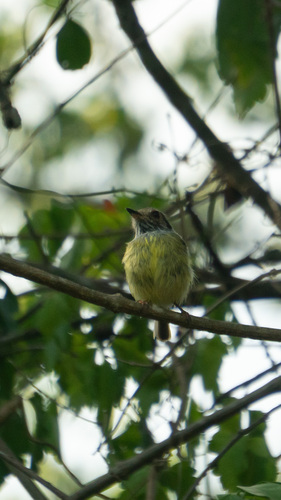 Eared Pygmy-Tyrant
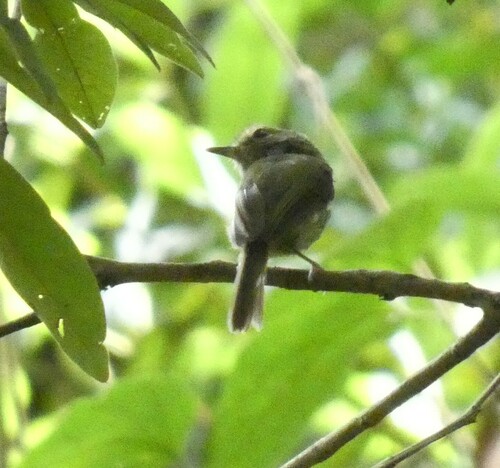 Drab-breasted Pygmy-Tyrant
In breve
Il segno di campo più affidabile per separare l'Eared Pygmy-Tyrant dal Drab-breasted Pygmy-Tyrant è il drammatico schema facciale del primo: cerca un'area buffa attorno all'occhio, una mezzaluna nera dietro le copritrici auricolari bianche e una macchia nera sotto l'occhio. Al contrario, il Drab-breasted Pygmy-Tyrant ha un volto verde oliva molto più semplice, con solo una sottile macchia bianca sopra le lore e un anello oculare bianco. L'Eared Pygmy-Tyrant è anche notevolmente più piccolo e più compatto, mentre il Drab-breasted è più grande e pesante. Entrambe le specie condividono aree e habitat simili, quindi prestare attenzione al modello facciale e alla dimensione complessiva è cruciale. Il modello delle ali non è fortemente diagnostico per nessuna delle due specie in nessuna età, quindi concentrati sulla colorazione della testa e delle parti inferiori.
Consigli di identificazione
- Il modello facciale è il miglior segno di campo: L'Eared Pygmy-Tyrant mostra sempre un'area buff-cannella attorno all'occhio, una distintiva mezzaluna nera dietro le copritrici auricolari bianche e una macchia nera sotto l'occhio. Il Drab-breasted Pygmy-Tyrant ha un volto verde oliva semplice con solo una debole macchia bianca sopra le lore e un anello oculare bianco. Questo contrasto è visibile in tutte le età e sessi.
- Colore della corona e della nuca: L'Eared Pygmy-Tyrant ha una corona verde oliva brillante con una sfumatura marrone e nuca/collo grigi, mentre il Drab-breasted è uniformemente verde oliva scuro sopra.
- Parti inferiori: L'Eared Pygmy-Tyrant mostra una gola e un petto superiori bianchi con sottili strisce nere, e parti inferiori brillanti gialle con strisce olive. Il Drab-breasted ha una gola e un petto grigi opachi (a volte con una sfumatura rosata o purpurea), una debole mezzaluna bianca tra il petto e la pancia, e una pancia/crissum bianca con una sfumatura gialla.
- Schema delle ali: L'Eared Pygmy-Tyrant ha ali scure con bordi giallo-olive brillanti e due barre alari indistinte (spesso sottili), mentre le ali del Drab-breasted sono semplici olive, a volte con bordi più chiari sulle secondarie più interne ma senza barre alari chiare. Questo è un segno minore e non sempre visibile.
- Dimensione e struttura: L'Eared Pygmy-Tyrant è molto più piccolo (7–9 cm, ~5 g) e appare molto compatto e con una testa grande. Il Drab-breasted è più grande (11 cm, 9.5–13.5 g) e più proporzionato. Se vedi un uccello veramente piccolo e con una testa grande, sospetta l'Eared.
- Colore dell'iride: L'Eared Pygmy-Tyrant ha un'iride arancione; quella del Drab-breasted è marrone-rossiccia. Questo può essere difficile da vedere sul campo ma è coerente.
- Becco e zampe: L'Eared Pygmy-Tyrant ha un becco nerastro e zampe/piedi rosati; il Drab-breasted ha una mascella grigia, una mandibola rosata e zampe/piedi grigio chiaro. Non è fortemente diagnostico tranne a distanza ravvicinata.
- Contrasto facciale a distanza: Anche se non puoi vedere i dettagli fini, il volto dell'Eared Pygmy-Tyrant appare molto più decorato e contrastante, mentre quello del Drab-breasted è semplice.
- Nessun segno specifico per età sulle ali o sulla coda: Nessuna delle due specie ha schemi distintivi di ali superiori o coda per giovani o immaturi che aiutino a separarle.
- Nessuna forte separazione degli habitat: Entrambi possono verificarsi in foreste o boschi simili con un sottobosco denso, incluso il bambù. Non fare affidamento solo sull'habitat.
- Comportamento: L'Eared Pygmy-Tyrant può apparire più attivo e irrequieto, ma questo è sottile e non è un separatore affidabile.
- Voce: Non sono descritte differenze vocali nelle note disponibili; non fare affidamento sul canto o sul richiamo per la separazione.
- Sessi simili: Entrambe le specie hanno sessi simili nel piumaggio, quindi tutti i segni di campo si applicano sia ai maschi che alle femmine.
- Variazione delle sottospecie: Le sottospecie dell'Eared Pygmy-Tyrant possono mostrare copritrici auricolari più chiare, ma il modello facciale complessivo rimane distintivo rispetto al Drab-breasted.
- Trappola: Non confondere i bordi delle ali deboli o le lore pallide nel Drab-breasted con il drammatico schema facciale dell'Eared; quest'ultimo è sempre molto più sorprendente e contrastante.
Taglia
L'Eared Pygmy-Tyrant è uno dei passeriformi più piccoli, misurando solo 7–9 cm di lunghezza e pesando circa 5 g. Il Drab-breasted Pygmy-Tyrant è significativamente più grande, con circa 11 cm di lunghezza e 9.5–13.5 g di massa [wikipedia][wikidata]. Questa differenza di dimensione è spesso visibile sul campo: l'Eared Pygmy-Tyrant appare piccolo e con una testa grande, mentre il Drab-breasted sembra più tipico per un piccolo tiranno. Se visti insieme o con specie di riferimento conosciute, la differenza è sorprendente.
Piumaggio
Nessun schema specifico per età delle ali superiori o di volo è descritto per nessuna delle due specie, quindi concentrati sul piumaggio adulto e generale. L'Eared Pygmy-Tyrant di tutte le età e sessi mostra un sorprendente schema facciale: buff-cannella attorno all'occhio, copritrici auricolari bianche bordate di una mezzaluna nera, e una macchia nera sotto l'occhio. La sua corona è verde oliva brillante con una sfumatura marrone, nuca e collo grigi, e dorso/coda verde oliva brillante. Le ali sono scure con bordi giallo-olive e due barre alari indistinte. Le parti inferiori sono bianche sulla gola/petto superiore con sottili strisce nere, e gialle brillanti con strisce olive sotto. Il Drab-breasted Pygmy-Tyrant è molto più semplice: il volto è verde oliva con una debole macchia bianca sopra le lore e un anello oculare bianco, corona/dorso/coda sono semplicemente verde oliva scuro, e ali/coda sono similmente semplici. La gola e il petto sono grigi opachi con una sfumatura rosata o purpurea, separati dalla pancia bianca da una debole mezzaluna bianca. Il crissum è bianco con una sfumatura gialla. Il colore dell'iride differisce: arancione nell'Eared, marrone-rossiccio nel Drab-breasted. Il colore del becco e delle zampe non è fortemente diagnostico ma può aiutare a distanza ravvicinata.
Comportamento
Entrambe le specie si nutrono nella vegetazione bassa a media, facendo brevi salti da posatoi per raccogliere insetti dalle foglie. L'Eared Pygmy-Tyrant è spesso descritto come più attivo e irrequieto, muovendosi rapidamente attraverso la fitta vegetazione, mentre il Drab-breasted Pygmy-Tyrant tende ad essere leggermente meno frenetico. Tuttavia, le differenze comportamentali sono sottili e non affidabili per la separazione sul campo.
Habitat
Entrambe le specie si trovano in Argentina, Brasile e Paraguay, spesso in habitat forestali o boschivi simili a bassa o media altezza. Non c'è una forte separazione degli habitat nelle note, quindi il contesto non è un separatore affidabile. Entrambi possono essere trovati nel bambù o in un sottobosco denso, ma questo non è diagnostico.
Eared Pygmy-Tyrant · Drab-breasted Pygmy-Tyrant · I miei uccelli difficili