
Motmot

オナガカッコウ 対 セリンヒヨドリ

Cercococcyx mechowi 対 Calyptocichla serinus

オナガカッコウとセリンヒヨドリのクイズ

オナガカッコウ (Cercococcyx mechowi) オナガカッコウ
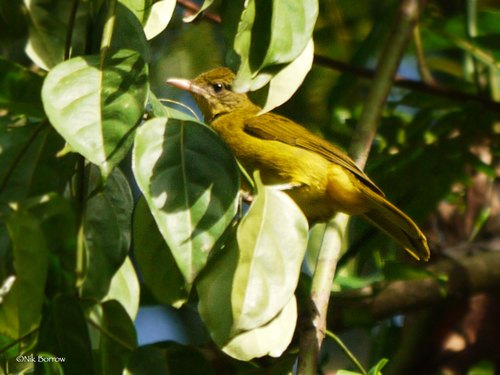
セリンヒヨドリ (Calyptocichla serinus) セリンヒヨドリ

メディア

読み込み中…

要点

オナガカッコウとセリンヒヨドリを区別する最も信頼できるフィールドマークは、カッコウの長く段階的な尾と重い横縞のある白い腹部であり、対してヒヨドリは短い尾を持ち、無地のオリーブ色と黄色の外観をしています。幼鳥のカッコウは上面に赤褐色の横縞と黒っぽい喉を示しますが、ヒヨドリはどの年齢でもこれを示しません。構造的には、カッコウはより長く、スリムで、暗くやや下向きのくちばしを持ち、ヒヨドリはよりコンパクトで、長く細いピンクがかった茶色のくちばしを持っています。飛んでいる時や止まっている時、カッコウの尾と横縞は目立ちますが、ヒヨドリの明るい黄色の腹部と白い喉はヒヨドリの中ではユニークですが、決して横縞はありません。両種は中央アフリカの森林で見られますが、カッコウは密な下草を好み、しばしば中層にいますが、ヒヨドリは一般的な熱帯雨林の生息地に典型的です。

識別のコツ

  1. Tail shape and length: オナガカッコウは常に長く段階的な尾を持ち、止まっている時も飛んでいる時も簡単に見えます。セリンヒヨドリの尾ははるかに短く、段階的ではありません。これはどの年齢でも最も信頼できるフィールドマークです。
  2. Underpart pattern: 成鳥と幼鳥のカッコウは白い腹部に強い黒っぽい横縞を示しますが、ヒヨドリは常に下がきれいな黄色で、白い喉を持ち、横縞は決してありません。
  3. Juvenile plumage: 幼いカッコウは上面に赤褐色の横縞と黒っぽい喉を持っています。幼鳥のヒヨドリは成鳥のように見えます:上面は無地のオリーブ色、下面は黄色、喉は白です。
  4. Bill color and shape: カッコウのくちばしは緑がかった黒で、やや下向きで頑丈です;ヒヨドリのくちばしは長く、細く、ピンクがかった茶色で、明らかに淡く、より繊細です。
  5. Upperpart color: カッコウは暗い茶色で、すす灰色の洗いと紫青色の虹色を持っています;ヒヨドリは上面が無地のオリーブ色で、虹色や横縞はありません。
  6. Wing pattern: カッコウの翼は暗い茶色で、バフと白の斑点があります(近くで見るか良い光の下で最もよく見えます)。ヒヨドリの翼は無地のオリーブ色で、斑点やパネルはありません。
  7. Ventral color: カッコウはバフ色の腹部を持ち;ヒヨドリの腹部は他の腹部と明確に色が異なりません。
  8. Eye and leg color: カッコウは暗い茶色の目と黄色の足を持っています;これらは微妙で、フィールドでは診断的であることは稀ですが、近くで役立つかもしれません。ヒヨドリの軟部の色は特に目立ちません。
  9. Posture and jizz: カッコウは長く、スリムで、しばしば尾を垂らして直立して止まります。ヒヨドリはよりコンパクトで、典型的な小さな歌鳥の姿勢を持っています。
  10. Flight style: カッコウの飛行はより直接的で滑空し、長い尾が後ろに引きずられます。ヒヨドリの飛行はよりひらひらとした短いバーストで、小さな雀類に典型的です。
  11. Habitat context: 密で絡み合った下草やつる植物が豊富な森林で見られた場合、カッコウの可能性が高いです。ヒヨドリは森林利用においてより一般的です。
  12. Vocalization: 'hu hee wheeu'や加速/下降する音の系列を聞いた場合、それはカッコウです。ヒヨドリの鳴き声はここでは説明されていませんが、このパターンには合致しません。
  13. Brood parasitism: より小さな宿主に餌を与えられている鳥を観察した場合、それはカッコウの可能性が高いです。
  14. Sex and season: 両種は年間を通じておよび性別間で似ており、混乱を招くような季節的または性的二形はありません。
  15. Pitfalls: 光が悪い場合、ヒヨドリの黄色の腹部と白い喉はより淡く見えるかもしれませんが、横縞がないことと短い尾は依然としてカッコウと区別するべきです。

大きさ

オナガカッコウはより大きく、長い(約33 cmの長さ、50–61 g)[wikipedia]で、明らかに長く段階的な尾を持っています。セリンヒヨドリはより小さく、よりコンパクトで、典型的なヒヨドリの形を持ち、尾の延長はありません。ヒヨドリのくちばしは長く細いですが、他の比率は小さな雀類により典型的で、カッコウのような細長い姿勢は欠けています。

羽色

幼鳥のオナガカッコウは上面に赤褐色の横縞と黒っぽい喉を持ち、両性の成鳥は暗い茶色の上面にすす灰色の洗いと紫青色の虹色を持ち、暗い茶色の翼にバフと白の斑点を持ち、黒っぽい茶色で横縞のある際立った白い腹部を持ち、バフ色の腹部があります。尾は長く、段階的で、暗いです。対照的に、すべての年齢のセリンヒヨドリは無地のオリーブ色の上面、尾、翼を持ち、明るい黄色の腹部と白い喉を持ち、決して横縞や赤褐色のトーンはありません。ヒヨドリのくちばしはピンクがかった茶色で細く、カッコウのくちばしは緑がかった黒でより頑丈です。カッコウの目は暗い茶色で、足は黄色です;ヒヨドリの軟部の色はフィールドではあまり目立ちません。

行動

オナガカッコウはしばしば下草や中層で見られ、時には混成種の群れに加わり、樹上から呼ぶことがあります。これは抱卵寄生者であり、密な植生の中を移動する傾向があります。セリンヒヨドリはヒヨドリの行動により典型的で、熱帯雨林の下層から中層で採餌し、しばしばペアや小さな群れで行動し、抱卵寄生者ではありません。カッコウの長い尾と止まっている時のより直立した姿勢は行動の手がかりになることがあります。

生息環境

両種は中央アフリカの森林に生息していますが、オナガカッコウは密な下草、つる植物が豊富な地域、高い二次森林、河川森林を好み、しばしばより絡み合ったり日陰の場所にいます。セリンヒヨドリはアフリカの熱帯雨林内で一般的で、密な下草に特に結びついておらず、より広範囲の森林タイプで遭遇する可能性が高いです。

声

オナガカッコウは特徴的な音の系列を出します:'hu hee wheeu'と加速し、その後遅くなり下降する系列。セリンヒヨドリの声はこのメモの中では説明されていませんが、カッコウの特徴的な呼び方のパターンを共有していません。加速し下降する系列を聞いた場合、それはカッコウの診断的な特徴です。

より良い説明を送る

比較と同じ項目を使ってください。文章はすぐに公開されます。

The most reliable field mark to separate Dusky Long-tailed Cuckoo from Golden Greenbul is the cuckoo’s long, graduated tail and heavily barred white underparts, versus the greenbul’s short-tailed, unmarked olive-and-yellow look. Juvenile cuckoos show rufous barring on the upperparts and a blackish throat, which the greenbul never shows at any age. Structurally, the cuckoo is longer, slimmer, and has a dark, slightly decurved bill, while the greenbul is more compact with a long, slender, pinkish-brown bill. In flight or perched, the cuckoo’s tail and barring stand out, while the greenbul’s bright yellow belly and white throat are unique among greenbuls but never barred. Both species can be found in Central African forests, but the cuckoo prefers dense undergrowth and is often in mid-canopy, while the greenbul is more typical of general rainforest habitats.

  1. Tail shape and length: Dusky Long-tailed Cuckoo always has a long, graduated tail, easily visible both perched and in flight. Golden Greenbul’s tail is much shorter and not graduated. This is the single most reliable field mark at any age.
  2. Underpart pattern: Adult and juvenile cuckoos show strong blackish barring on white underparts, while greenbul is always clean yellow below with a white throat and never any barring.
  3. Juvenile plumage: Young cuckoos have rufous bars on the upperparts and a blackish throat. Juvenile greenbuls look like adults: plain olive above, yellow below, white throat.
  4. Bill color and shape: Cuckoo’s bill is greenish-black, slightly decurved and robust; greenbul’s is long, slender, and pinkish-brown—noticeably paler and more delicate.
  5. Upperpart color: Cuckoo is dark brown with a sooty-grey wash and purple-blue iridescence; greenbul is plain olive above with no iridescence or barring.
  6. Wing pattern: Cuckoo’s wings are dark brown with buff and white spots (best seen at close range or in good light). Greenbul’s wings are plain olive, no spots or panels.
  7. Ventral color: Cuckoo has a buff vent; greenbul’s vent is not distinctly colored from the rest of the underparts.
  8. Eye and leg color: Cuckoo has dark brown eyes and yellow feet; these are subtle and rarely diagnostic in the field, but may help at close range. Greenbul’s soft part colors are not distinctive.
  9. Posture and jizz: Cuckoo is longer, slimmer, and often perches upright with tail drooping. Greenbul is more compact, with a typical small songbird stance.
  10. Flight style: Cuckoo’s flight is more direct and gliding, with the long tail trailing. Greenbul’s flight is more fluttery and short-burst, typical of small passerines.
  11. Habitat context: If seen in dense, tangled undergrowth or liana-rich forest, cuckoo is more likely. Greenbul is more generalist in forest use.
  12. Vocalization: If you hear a 'hu hee wheeu' or an accelerating/descending series of notes, it is the cuckoo. Greenbul’s calls are not described here but do not match this pattern.
  13. Brood parasitism: If you observe a bird being fed by a smaller host, it is likely the cuckoo.
  14. Sex and season: Both species are similar year-round and between sexes; no seasonal or sexual dimorphism to confuse matters.
  15. Pitfalls: In poor light, the greenbul’s yellow belly and white throat may seem paler, but the absence of barring and the short tail should still separate it from the cuckoo.

Dusky Long-tailed Cuckoo is larger and longer (about 33 cm in length, 50–61 g) [wikipedia], with a noticeably long, graduated tail. Golden Greenbul is smaller and more compact, with a typical greenbul shape and no tail extension. The greenbul’s bill is long and slender, but the rest of its proportions are more typical of a small passerine, lacking the elongated jizz of the cuckoo.

Juvenile Dusky Long-tailed Cuckoo is distinct with rufous bars on the upperparts and a blackish throat; adults of both sexes have dark brown upperparts with a sooty-grey wash and purple-blue iridescence, dark brown wings with buff and white spots, and strikingly white underparts barred with blackish-brown, plus a buff vent. The tail is long, graduated, and dark. In contrast, Golden Greenbul of all ages has unmarked olive upperparts, tail, and wings, a bright yellow belly, and a white throat—never any barring or rufous tones. The greenbul’s bill is pinkish-brown and slender, while the cuckoo’s is greenish-black and more robust. The cuckoo’s eyes are dark brown, and its feet are yellow; the greenbul’s soft part colors are less distinctive in the field.

Dusky Long-tailed Cuckoo is often seen in the undergrowth or mid-canopy, sometimes joining mixed-species flocks, and may call from treetops. It is a brood parasite and tends to be secretive, moving through dense vegetation. Golden Greenbul is more typical of greenbul behavior, foraging in the lower to mid-levels of rainforest, often in pairs or small groups, and is not a brood parasite. The cuckoo’s longer tail and more upright posture when perched can be a behavioral clue.

Both species occur in Central African forests, but Dusky Long-tailed Cuckoo prefers dense undergrowth, liana-rich areas, tall secondary forests, and riverine forests, often in more tangled or shaded spots. Golden Greenbul is a generalist within African tropical rainforest, not specifically tied to dense undergrowth, and is more likely encountered in a wider range of forest types.

Dusky Long-tailed Cuckoo gives a distinctive series of notes: a 'hu hee wheeu' and a sequence that accelerates, then slows and descends. Golden Greenbul’s voice is not described in the notes, but it does not share the cuckoo’s distinctive call pattern. If you hear the accelerating and descending series, it is diagnostic for the cuckoo.

変更を破棄しますか?

保存していない編集があります。今離れると失われます。

オナガカッコウ · セリンヒヨドリ · 苦手な鳥