
Dusky Long-tailed Cuckoo vs Golden Greenbul
Cercococcyx mechowi contro Calyptocichla serinus
Fai un quiz con Dusky Long-tailed Cuckoo e Golden Greenbul
 Dusky Long-tailed Cuckoo
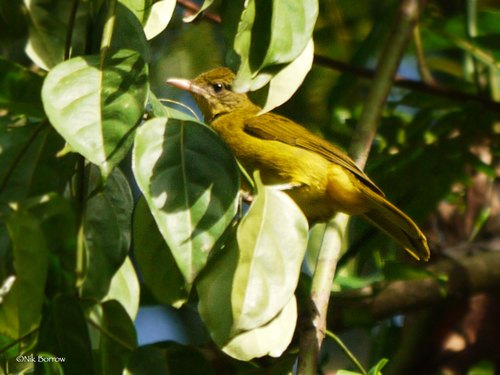 Golden Greenbul
In breve
Il segno di campo più affidabile per separare il Dusky Long-tailed Cuckoo dal Golden Greenbul è la lunga coda graduata del cuculo e le parti inferiori bianche fortemente barrate, rispetto all'aspetto corto e non marcato del greenbul, di colore oliva e giallo. I cuculi juvenili mostrano barre rugginose sulle parti superiori e una gola nerastra, che il greenbul non mostra mai a nessuna età. Strutturalmente, il cuculo è più lungo, più snello e ha un becco scuro, leggermente ricurvo, mentre il greenbul è più compatto con un becco lungo, snello e di colore marrone-rosato. In volo o posato, la coda e le barre del cuculo si distinguono, mentre il ventre giallo brillante e la gola bianca del greenbul sono unici tra i greenbul ma mai barrati. Entrambe le specie possono essere trovate nelle foreste dell'Africa centrale, ma il cuculo preferisce la vegetazione densa ed è spesso a metà chioma, mentre il greenbul è più tipico degli habitat generali delle foreste pluviali.
Consigli di identificazione
- Tail shape and length: Il Dusky Long-tailed Cuckoo ha sempre una lunga coda graduata, facilmente visibile sia posato che in volo. La coda del Golden Greenbul è molto più corta e non graduata. Questo è il segno di campo più affidabile a qualsiasi età.
- Underpart pattern: I cuculi adulti e juvenili mostrano forti barre nerastre sulle parti inferiori bianche, mentre il greenbul è sempre giallo pulito sotto con una gola bianca e mai alcuna barra.
- Juvenile plumage: I giovani cuculi hanno barre rugginose sulle parti superiori e una gola nerastra. I greenbul juvenili assomigliano agli adulti: oliva uniforme sopra, giallo sotto, gola bianca.
- Bill color and shape: Il becco del cuculo è verde-nerastro, leggermente ricurvo e robusto; quello del greenbul è lungo, snello e marrone-rosato—notevolmente più chiaro e più delicato.
- Upperpart color: Il cuculo è marrone scuro con una lavatura grigio-nerastra e iridescenza blu-viola; il greenbul è oliva uniforme sopra senza iridescenza o barre.
- Wing pattern: Le ali del cuculo sono marrone scuro con macchie color crema e bianche (meglio visibili a distanza ravvicinata o in buona luce). Le ali del greenbul sono oliva uniforme, senza macchie o pannelli.
- Ventral color: Il cuculo ha un ventre color crema; il ventre del greenbul non è distintamente colorato rispetto al resto delle parti inferiori.
- Eye and leg color: Il cuculo ha occhi marrone scuro e piedi gialli; questi sono sottili e raramente diagnostici sul campo, ma possono aiutare a distanza ravvicinata. I colori delle parti molli del greenbul non sono distintivi.
- Posture and jizz: Il cuculo è più lungo, più snello e spesso si posiziona eretto con la coda che pende. Il greenbul è più compatto, con una postura tipica di un piccolo uccello canoro.
- Flight style: Il volo del cuculo è più diretto e planante, con la lunga coda che segue. Il volo del greenbul è più fluttuante e a brevi scatti, tipico dei piccoli passeriformi.
- Habitat context: Se visto in vegetazione densa e intricata o in foreste ricche di liane, è più probabile che si tratti di un cuculo. Il greenbul è più generalista nell'uso della foresta.
- Vocalization: Se senti un 'hu hee wheeu' o una serie di note che accelerano/discendono, è il cuculo. I richiami del greenbul non sono descritti qui ma non corrispondono a questo schema.
- Brood parasitism: Se osservi un uccello nutrito da un ospite più piccolo, è probabile che sia il cuculo.
- Sex and season: Entrambe le specie sono simili tutto l'anno e tra i sessi; non ci sono dimorfismi stagionali o sessuali che possano confondere le cose.
- Pitfalls: In scarsa luce, il ventre giallo del greenbul e la gola bianca possono sembrare più chiari, ma l'assenza di barre e la coda corta dovrebbero comunque separarlo dal cuculo.
Taglia
Il Dusky Long-tailed Cuckoo è più grande e lungo (circa 33 cm di lunghezza, 50–61 g) [wikipedia], con una coda graduata notevolmente lunga. Il Golden Greenbul è più piccolo e compatto, con una forma tipica di greenbul e senza estensione della coda. Il becco del greenbul è lungo e snello, ma le altre proporzioni sono più tipiche di un piccolo passeriforme, mancando della forma allungata del cuculo.
Piumaggio
Il giovane Dusky Long-tailed Cuckoo è distinto con barre rugginose sulle parti superiori e una gola nerastra; gli adulti di entrambi i sessi hanno parti superiori marrone scuro con una lavatura grigio-nerastra e iridescenza blu-viola, ali marrone scuro con macchie color crema e bianche, e parti inferiori bianche straordinariamente barrate di marrone-nerastro, oltre a un ventre color crema. La coda è lunga, graduata e scura. Al contrario, il Golden Greenbul di tutte le età ha parti superiori, coda e ali di colore oliva non marcato, un ventre giallo brillante e una gola bianca—mai alcuna barra o toni rugginosi. Il becco del greenbul è marrone-rosato e snello, mentre quello del cuculo è verde-nerastro e più robusto. Gli occhi del cuculo sono marrone scuro e i suoi piedi sono gialli; i colori delle parti molli del greenbul sono meno distintivi sul campo.
Comportamento
Il Dusky Long-tailed Cuckoo è spesso visto nella vegetazione bassa o a metà chioma, a volte unendosi a stormi di specie miste, e può chiamare dalle cime degli alberi. È un parassita della covata e tende a essere segreto, muovendosi attraverso la vegetazione densa. Il Golden Greenbul è più tipico del comportamento del greenbul, foraggiando nei livelli inferiori a medi della foresta pluviale, spesso in coppie o piccoli gruppi, e non è un parassita della covata. La coda più lunga del cuculo e la postura più eretta quando è posato possono essere un indizio comportamentale.
Habitat
Entrambe le specie si trovano nelle foreste dell'Africa centrale, ma il Dusky Long-tailed Cuckoo preferisce la vegetazione densa, le aree ricche di liane, le alte foreste secondarie e le foreste fluviali, spesso in luoghi più intricati o ombreggiati. Il Golden Greenbul è un generalista all'interno della foresta pluviale tropicale africana, non specificamente legato alla vegetazione densa, ed è più probabile incontrarlo in una gamma più ampia di tipi di foresta.
Voce
Il Dusky Long-tailed Cuckoo emette una serie distintiva di note: un 'hu hee wheeu' e una sequenza che accelera, poi rallenta e discende. La voce del Golden Greenbul non è descritta nelle note, ma non condivide il caratteristico schema di richiamo del cuculo. Se senti la serie che accelera e discende, è diagnostica per il cuculo.
Dusky Long-tailed Cuckoo · Golden Greenbul · I miei uccelli difficili