

Motmot

ウロコスナヒバリ 対 アラビアヒバリ

Eremalauda dunni 対 Eremalauda eremodites

ウロコスナヒバリとアラビアヒバリのクイズ
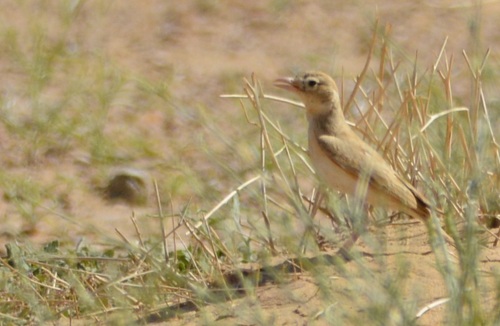
ウロコスナヒバリ (Eremalauda dunni) ウロコスナヒバリ
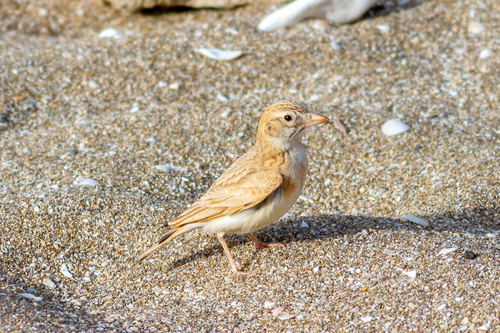
アラビアヒバリ (Eremalauda eremodites) アラビアヒバリ

メディア

読み込み中…

要点

ダンのヒバリとアラビアヒバリの最も信頼できるフィールドマークは、上面のストリーキングです。ダンのヒバリは、砂褐色の上面と胸に明確な暗いストリークを示しますが、アラビアヒバリは上面がずっと地味で、下部にはわずかに淡い模様しかありません。両種は、構造が似たずんぐりした大きなくちばしの砂漠ヒバリですが、ダンのヒバリはより対照的な顔の模様と、さび茶色の中央羽を持つ尾を持っています。一方、アラビアヒバリの外側の尾羽は黒っぽく、飛行中に目立ちます。くちばしの色と形は似ていますが、アラビアヒバリのくちばしは特に膨らんでいて均一にピンク色です。両者は、上面のストリーキング、飛行中の尾の模様、顔のマーキングの微妙な違いの組み合わせによって最も区別されます。

識別のコツ

  1. Upperpart streaking: ダンのヒバリは、砂褐色の上面と胸に目立つ暗いストリークを示しますが、アラビアヒバリは上面がずっと地味で、下部にはわずかに淡い模様しかありません。これはすべての羽衣で最も信頼できる視覚的手がかりです。
  2. Facial pattern: ダンのヒバリは淡いスーパシリウム、淡いアイリング、暗い口ひげとマラーストライプ、さらに目の下に暗いマークを持つ大胆な顔をしています。アラビアヒバリは暗い口ひげのようなストライプを持っていますが、その他は地味な顔で、強いスーパシリウムとマラーストライプのコントラストが欠けています。
  3. Tail pattern in flight: ダンのヒバリは、さび茶色の中央羽と淡い外羽を持つ短く広い尾を持ち、下面は黒です。アラビアヒバリの最外尾羽は黒っぽく、このコントラストは飛行中に最も明らかですが、ダンのヒバリのさび茶色の中央羽はありません。
  4. Bill shape and color: 両者は大きく重いピンクがかったくちばしを持っていますが、アラビアヒバリのくちばしは特に膨らんでいて均一にピンク色で、ダンのヒバリはより黄色がかったり淡いピンクがかった色合いを示すことがあります。
  5. Underpart streaking: ダンのヒバリは胸に暗いストリークを持っていますが、アラビアヒバリの下部は淡い模様しかありません。
  6. Jizz and movement: アラビアヒバリはしばしば短いバーストで動き、急に走ったり止まったりします。ダンのヒバリは繁殖シーズン外で群れで餌を食べているのが見られることが多いです。
  7. Song: ダンのヒバリは短い口笛を伴うざらざらしたさえずりの歌を歌います。アラビアヒバリの歌はより穏やかで、柔らかい二音の口笛を伴う低いガラガラ音を含む、よりバブルのようなものです。両者に慣れていない限り、注意して使用してください。
  8. Tail length and shape: 両者は短く広い尾を持っていますが、色のパターンは形よりも区別に役立ちます。
  9. Plumage wear: ダンのヒバリの暗いマーキングは、脱皮後に薄くなり、羽衣は鈍くなりますが、アラビアヒバリは常に地味です。
  10. Habitat and range: 通常の範囲内で観察された場合、範囲は強力な手がかりとなることがありますが、重複する地域での迷子や誤同定に注意してください。
  11. Group size: ダンのヒバリは繁殖シーズン外で群れで見られることが多いですが、アラビアヒバリは繁殖時に通常は単独またはペアで見られ、それ以外は小さなグループを形成します。
  12. Feeding behavior: 両者は種子や昆虫を掘りますが、アラビアヒバリの急な走りと止まり方が目立つかもしれません。
  13. Tail pattern pitfall: 飛行中、両者は尾に黒っぽい部分を示すことがありますが、ダンのヒバリだけがさび茶色の中央羽を持っています。アラビアヒバリの尾は、端だけが黒っぽいです。
  14. Facial pattern pitfall: 暗い口ひげは両者に存在しますが、ダンのヒバリだけが強いスーパシリウムとマラーストライプを組み合わせています。
  15. Bill color pitfall: 両者のくちばしはピンクがかっていますが、アラビアヒバリのくちばしはより膨らんでいて均一な色をしています。他のマークと組み合わせて使用してください。

大きさ

両種はサイズと構造が似ており、ずんぐりしたヒバリで大きな頭と広い翼を持っています。ダンのヒバリは14〜15 cmの長さで、翼幅は25〜30 cmです [wikipedia]。アラビアヒバリには特に明確なサイズの違いはなく、両者とも小型のスズメ目の鳥として記述されています。くちばしのサイズは両者とも大きく重いですが、アラビアヒバリのくちばしは特に膨らんでいるとされています。

羽色

行動

両種は地面で餌を食べ、しばしばくちばしで掘ります。ダンのヒバリは通常、繁殖シーズン外で群れで餌を食べますが、アラビアヒバリは繁殖時には通常単独またはペアで見られ、それ以外では小さなグループを形成します。アラビアヒバリは短いバーストで動き、急に走ったり止まったりするため、より群れ志向のダンのヒバリと区別するのに役立つかもしれません。両種は地面または飛行中に歌い、両者にディスプレイフライトが記述されています。

生息環境

両者は砂漠のヒバリですが、範囲は重複しません。ダンのヒバリはモーリタニアから中央スーダンまでのサハラ全域に分布し、アラビアヒバリはシリアとヨルダンからサウジアラビアを経てオマーンにかけて分布します。両者は乾燥した開けた砂漠環境に生息しています。生息地だけではそれぞれの範囲内で区別することはできませんが、迷子を排除するのに役立ちます。

声

ダンのヒバリは短い口笛のフレーズを伴うざらざらしたさえずりの歌を歌いますが、アラビアヒバリの歌は穏やかなバブルのようなフレーズの連続で、低いガラガラ音と柔らかい二音の口笛を含む呼び声があります。両者は地面または飛行中に歌います。歌の質の違い(ざらざらしたもの対穏やかなバブル)は役立つかもしれませんが、微妙で経験がないと常に診断的ではありません。

より良い説明を送る

比較と同じ項目を使ってください。文章はすぐに公開されます。

The most reliable field mark between Dunn's Lark and Arabian Lark is the upperpart streaking: Dunn's Lark shows clear dark streaks on its sandy-brown upperparts and breast, while Arabian Lark is much plainer above with only faint pale patterning below. Both species are stocky, large-billed desert larks with similar structure, but Dunn's Lark has a more contrasting facial pattern and a tail with rusty-brown central feathers, while Arabian Lark's outer tail feathers are blackish and stand out in flight. Bill color and shape are similar but Arabian Lark's is especially bulbous and uniformly pink. Both are best separated by a combination of upperpart streaking, tail pattern in flight, and subtle differences in facial markings.

  1. Upperpart streaking: Dunn's Lark shows prominent dark streaks on its sandy-brown upperparts and breast, while Arabian Lark is much plainer above with only faint pale patterning below. This is the most reliable visual cue in all plumages.
  2. Facial pattern: Dunn's Lark has a pale supercilium, a pale eye-ring, and a bold face with both dark moustachial and malar stripes plus a dark mark under the eye. Arabian Lark has a dark moustache-like stripe but otherwise a plainer face, lacking the strong supercilium and malar contrast.
  3. Tail pattern in flight: Dunn's Lark has a short, broad tail with rusty-brown central feathers and pale outer feathers above; the underside is black. Arabian Lark's outermost tail feathers are blackish and this contrast is most obvious in flight, but it lacks the rusty-brown central feathers of Dunn's.
  4. Bill shape and color: Both have large, heavy, pinkish bills, but Arabian Lark's is especially bulbous and uniformly pink, while Dunn's may show a more yellowish or pale pinkish tone.
  5. Underpart streaking: Dunn's Lark has dark streaks on the breast; Arabian Lark's underparts are paler with only faint pale patterning.
  6. Jizz and movement: Arabian Lark often moves in short bursts, running and stopping abruptly; Dunn's Lark is more likely to be seen feeding in flocks outside the breeding season.
  7. Song: Dunn's Lark gives a scratchy warbling song with short whistles; Arabian Lark's song is gentler and more burbling, with a low rattle and soft two-note whistle as calls. Use with caution unless familiar with both.
  8. Tail length and shape: Both have short, broad tails, but the color pattern is more useful than shape for separation.
  9. Plumage wear: Dunn's Lark's dark markings become fainter and the plumage duller as it wears after molt; Arabian Lark remains plain throughout.
  10. Habitat and range: If observed within their normal ranges, range can be a strong clue, but beware of vagrancy or misidentification in overlapping regions.
  11. Group size: Dunn's Lark is more likely to be seen in flocks outside breeding season; Arabian Lark is usually solitary or in pairs when breeding.
  12. Feeding behavior: Both dig for seeds and insects, but Arabian Lark's abrupt running and stopping may stand out.
  13. Tail pattern pitfall: In flight, both can show blackish in the tail, but only Dunn's Lark has rusty-brown central feathers; Arabian Lark's tail is blackish only at the edges.
  14. Facial pattern pitfall: The dark moustache is present in both, but only Dunn's Lark combines it with a strong supercilium and malar stripe.
  15. Bill color pitfall: Both bills are pinkish, but Arabian Lark's is more swollen and uniformly colored; use in combination with other marks.

Both species are similar in size and structure, being stocky larks with large heads and broad wings. Dunn's Lark is 14–15 cm long with a wingspan of 25–30 cm [wikipedia]; no distinct size difference is noted for Arabian Lark, and both are described as small passerines. Bill size is large and heavy in both, but Arabian Lark's is described as especially bulbous and swollen.

  • Juvenile/immature plumage: No age-specific upperwing or flight pattern differences are described for either species, so focus is on overall body and tail pattern.
  • Adult plumage: Dunn's Lark has pale sandy-brown upperparts with prominent dark streaks, a pale supercilium, and a bold facial pattern with dark moustachial and malar stripes, plus a dark mark under the eye. Its tail is short and broad, black below, with rusty-brown central feathers and pale outer feathers above. Arabian Lark is much plainer above, with sandy-brown upperparts lacking strong streaks, a paler underside with faint pale patterning, and a dark moustache-like stripe on the face. Its outermost tail feathers are blackish, especially obvious in flight, but lacks the rusty-brown central tail feathers of Dunn's. Bill is pinkish and swollen in both, but Arabian Lark's is especially uniform in color.

Both species feed on the ground, often digging with their bills. Dunn's Lark typically feeds in flocks outside the breeding season, while Arabian Lark is usually seen alone or in pairs when breeding, forming only small groups otherwise. Arabian Lark moves in short bursts, running and stopping abruptly, which may help distinguish it from the more flock-oriented Dunn's Lark. Both species sing from the ground or in flight, with display flights described for both.

Both are desert larks, but their ranges do not overlap: Dunn's Lark is found across the Sahara from Mauritania to central Sudan, while Arabian Lark ranges from Syria and Jordan through Saudi Arabia to Oman. Both inhabit arid, open desert environments. Habitat alone will not separate them within their respective ranges, but is useful for ruling out vagrancy.

Dunn's Lark has a scratchy warbling song with short whistling phrases, while Arabian Lark's song is a series of gentle burbling phrases, with calls including a low rattle and a soft two-note whistle. Both sing from the ground or in flight. The difference in song quality (scratchy vs. gentle burbling) may help, but is subtle and not always diagnostic without experience.

変更を破棄しますか?

保存していない編集があります。今離れると失われます。

ウロコスナヒバリ · アラビアヒバリ · 苦手な鳥