

Dunn's Lark vs Arabian Lark
Eremalauda dunni contro Eremalauda eremodites
Fai un quiz con Dunn's Lark e Arabian Lark
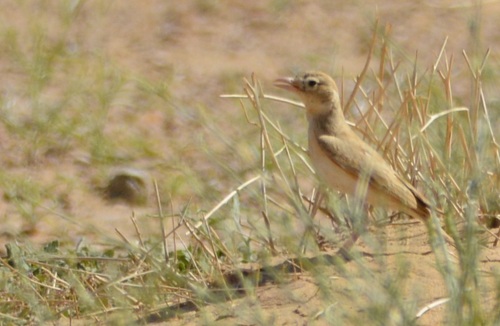 Dunn's Lark
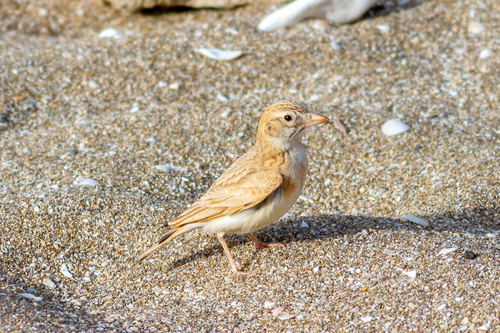 Arabian Lark
In breve
Il segno di campo più affidabile tra Dunn's Lark e Arabian Lark è la striatura delle parti superiori: Dunn's Lark mostra chiare striature scure sulle sue parti superiori e sul petto di colore sabbia-marrone, mentre Arabian Lark è molto più semplice sopra con solo un leggero motivo pallido sotto. Entrambe le specie sono larks desertici tozzi, con becco grande e struttura simile, ma Dunn's Lark ha un motivo facciale più contrastante e una coda con piume centrali di colore ruggine-marrone, mentre le piume esterne della coda di Arabian Lark sono nerastre e si distinguono in volo. Il colore e la forma del becco sono simili, ma quello di Arabian Lark è particolarmente bulboso e uniformemente rosa. Entrambi sono meglio separati da una combinazione di striatura delle parti superiori, motivo della coda in volo e sottili differenze nei segni facciali.
Consigli di identificazione
- Upperpart streaking: Dunn's Lark mostra prominenti striature scure sulle sue parti superiori di colore sabbia-marrone e sul petto, mentre Arabian Lark è molto più semplice sopra con solo un leggero motivo pallido sotto. Questo è il segnale visivo più affidabile in tutte le livree.
- Facial pattern: Dunn's Lark ha un supercilium pallido, un anello oculare pallido e un volto audace con sia strisce moustachiali scure che strisce malari, oltre a un segno scuro sotto l'occhio. Arabian Lark ha una striscia scura simile a un baffo, ma altrimenti un volto più semplice, privo del forte supercilium e del contrasto malare.
- Tail pattern in flight: Dunn's Lark ha una coda corta e larga con piume centrali di colore ruggine-marrone e piume esterne pallide sopra; il lato inferiore è nero. Arabian Lark ha le piume esterne della coda nerastre e questo contrasto è più evidente in volo, ma manca delle piume centrali ruggine-marrone di Dunn's.
- Bill shape and color: Entrambi hanno becchi grandi, pesanti e di colore rosa, ma quello di Arabian Lark è particolarmente bulboso e uniformemente rosa, mentre quello di Dunn's può mostrare una tonalità più giallastra o rosa pallido.
- Underpart streaking: Dunn's Lark ha striature scure sul petto; le parti inferiori di Arabian Lark sono più chiare con solo un leggero motivo pallido.
- Jizz and movement: Arabian Lark si muove spesso in brevi scatti, correndo e fermandosi bruscamente; Dunn's Lark è più probabile che venga visto nutrirsi in gruppi al di fuori della stagione riproduttiva.
- Song: Dunn's Lark emette un canto stridulo e gorgheggiante con brevi fischi; il canto di Arabian Lark è più gentile e gorgheggiante, con un basso rumore e un fischio dolce a due note come richiami. Usare con cautela a meno che non si sia familiari con entrambi.
- Tail length and shape: Entrambi hanno code corte e larghe, ma il motivo di colore è più utile della forma per la separazione.
- Plumage wear: I segni scuri di Dunn's Lark diventano più deboli e la livrea più opaca man mano che si consuma dopo la muta; Arabian Lark rimane semplice in tutto.
- Habitat and range: Se osservati all'interno dei loro intervalli normali, l'intervallo può essere un forte indizio, ma fare attenzione alla vaganza o all'errata identificazione nelle regioni sovrapposte.
- Group size: Dunn's Lark è più probabile che venga visto in gruppi al di fuori della stagione riproduttiva; Arabian Lark è solitamente solitario o in coppie durante la riproduzione.
- Feeding behavior: Entrambi scavano per semi e insetti, ma la corsa e la fermata brusca di Arabian Lark possono risaltare.
- Tail pattern pitfall: In volo, entrambi possono mostrare un colore nerastro nella coda, ma solo Dunn's Lark ha piume centrali ruggine-marrone; la coda di Arabian Lark è nerastra solo ai bordi.
- Facial pattern pitfall: Il baffo scuro è presente in entrambi, ma solo Dunn's Lark lo combina con un forte supercilium e una striscia malare.
- Bill color pitfall: Entrambi i becchi sono rosa, ma quello di Arabian Lark è più gonfio e uniformemente colorato; usare in combinazione con altri segni.
Taglia
Entrambe le specie sono simili in dimensioni e struttura, essendo larks tozzi con teste grandi e ali larghe. Dunn's Lark è lunga 14–15 cm con un'apertura alare di 25–30 cm [wikipedia]; non si nota una differenza di dimensioni distintiva per Arabian Lark, e entrambe sono descritte come piccoli passeriformi. La dimensione del becco è grande e pesante in entrambe, ma quello di Arabian Lark è descritto come particolarmente bulboso e gonfio.
Piumaggio
- Juvenile/immature plumage: Non sono descritte differenze specifiche di età nel modello delle ali superiori o nel volo per nessuna delle due specie, quindi ci si concentra sul modello generale del corpo e della coda.
- Adult plumage: Dunn's Lark ha parti superiori di colore sabbia-marrone pallido con striature scure prominenti, un supercilium pallido e un motivo facciale audace con strisce moustachiali e malari scure, oltre a un segno scuro sotto l'occhio. La sua coda è corta e larga, nera sotto, con piume centrali di colore ruggine-marrone e piume esterne pallide sopra. Arabian Lark è molto più semplice sopra, con parti superiori di colore sabbia-marrone prive di forti striature, un lato inferiore più chiaro con un leggero motivo pallido e una striscia scura simile a un baffo sul volto. Le sue piume esterne della coda sono nerastre, particolarmente evidenti in volo, ma manca delle piume centrali ruggine-marrone di Dunn's. Il becco è rosa e gonfio in entrambe, ma quello di Arabian Lark è particolarmente uniforme nel colore.
Comportamento
Entrambe le specie si nutrono a terra, spesso scavando con i loro becchi. Dunn's Lark si nutre tipicamente in gruppi al di fuori della stagione riproduttiva, mentre Arabian Lark è solitamente visto da solo o in coppie durante la riproduzione, formando solo piccoli gruppi altrimenti. Arabian Lark si muove in brevi scatti, correndo e fermandosi bruscamente, il che può aiutare a distinguerlo dal più orientato ai gruppi Dunn's Lark. Entrambe le specie cantano da terra o in volo, con voli di esibizione descritti per entrambe.
Habitat
Entrambi sono larks desertici, ma i loro intervalli non si sovrappongono: Dunn's Lark si trova attraverso il Sahara dalla Mauritania al Sudan centrale, mentre Arabian Lark si estende dalla Siria e Giordania attraverso l'Arabia Saudita fino all'Oman. Entrambi abitano ambienti desertici aridi e aperti. L'habitat da solo non li separerà all'interno dei loro rispettivi intervalli, ma è utile per escludere la vaganza.
Voce
Dunn's Lark ha un canto stridulo e gorgheggiante con brevi frasi fischianti, mentre il canto di Arabian Lark è una serie di frasi gorgheggianti gentili, con richiami che includono un basso rumore e un fischio dolce a due note. Entrambi cantano da terra o in volo. La differenza nella qualità del canto (stridulo vs. gorgheggiante gentile) può aiutare, ma è sottile e non sempre diagnostica senza esperienza.