

Motmot

フタオビスナバシリ 対 アフリカスナバシリ

Smutsornis africanus 対 Cursorius temminckii

フタオビスナバシリとアフリカスナバシリのクイズ
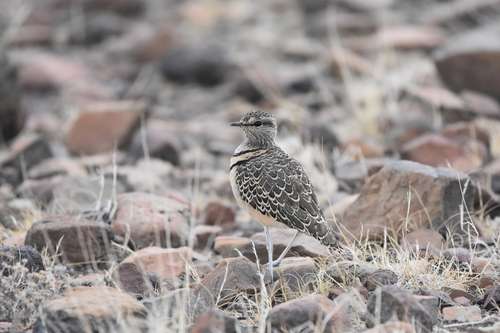
フタオビスナバシリ (Smutsornis africanus) フタオビスナバシリ
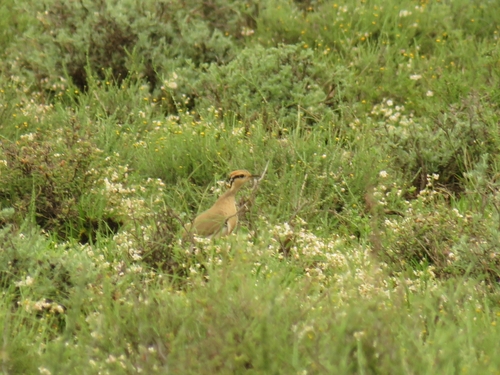
アフリカスナバシリ (Cursorius temminckii) アフリカスナバシリ

メディア

読み込み中…

要点

フタオビスナバシリとアフリカスナバシリを区別する最も信頼できるフィールドマークは、フタオビスナバシリに見られる2本の太い黒い胸のバンドであり、アフリカスナバシリにはこれがありません。フタオビスナバシリはまた、淡い縞模様のある冠と、目を通る黒いストライプを持つ特徴的な顔のパターンを示しますが、アフリカスナバシリはこれらの特徴が欠けており、一般的に地味です。両種は開けた乾燥した生息地を好みますが、フタオビスナバシリは石や砂利のある地面により関連し、アフリカスナバシリは最近焼かれた草地にしばしば見られます。サイズは似ていますが、アフリカスナバシリは平均してやや重いです。未熟な個体や飛行マークについては情報が詳細に記載されていないため、成鳥の羽毛と構造に焦点を当てます。

識別のコツ

  1. ダブル胸バンド(フタオビスナバシリのみ): 淡い胸に横たわる2本の狭い黒いバンドを探してください。アフリカスナバシリには胸のバンドがありません。これは成鳥にとって最も信頼できるフィールドマークです。
  2. 頭のパターン: フタオビスナバシリは、茶色と黒の縞模様のある淡い冠と、くちばしから目を通ってうなじまで走る太い黒いラインを持っています。アフリカスナバシリはこれらの強い頭のマークが欠けており、一般的に地味です。
  3. 顔のストライプ: フタオビスナバシリの黒い顔のストライプは特徴的です。アフリカスナバシリはコントラストの少ない顔を持っています。
  4. 上面: フタオビスナバシリは砂色の上面を示し、暗い中心と広い淡いエッジを持ち、鱗状の効果を生み出します。アフリカスナバシリの上面はより均一で、模様が少ないです。
  5. 下面: フタオビスナバシリの下面は淡い/白で、暗い斑点とダブルバンドがあります。アフリカスナバシリは下側がより地味です。
  6. くちばしの色: 両者とも短い暗いくちばしを持ち、強い区別要因ではありません。
  7. 足の色: 両者とも淡い足と足を持ち、信頼できるフィールドマークではありません。
  8. 生息地: もし石や砂利のある半砂漠で、房状の草やトゲのある低木が見られた場合、フタオビスナバシリの可能性が高いです。最近焼かれた草地やサバンナ、特に焦げた地面の近くにいる場合は、アフリカスナバシリを疑ってください。
  9. 行動: フタオビスナバシリは、特に繁殖期にペアで走っているのが見られることがあります。アフリカスナバシリは、特に焼けた地域では孤独または小さな群れで見られることが多いです。
  10. 繁殖の文脈: 焼けた草の中に、単独でよくカモフラージュされた卵の近くに鳥を見た場合、それはアフリカスナバシリの可能性が高いです。この繁殖戦略に特化しています。
  11. 強いサイズ差はない: 両者はサイズが似ており、アフリカスナバシリは平均71gですが、これは実用的なフィールドマークではありません。
  12. 年齢特有の飛行マークは知られていない: 両種の幼鳥や未熟な翼のパターンに関する情報はなく、若い鳥の飛行ビューに頼って区別しないでください。
  13. 羽毛の落とし穴: 照明が悪い場合や距離がある場合、フタオビスナバシリの胸のバンドは薄く見えるか、姿勢によって隠されることがあります。常に明確な側面または前面のビューを試みてください。
  14. 性別は似ている: 両種は性的二形性がほとんどないため、すべてのフィールドマークは両性に適用されます。
  15. 地理的重複: 両種は同じ一般的な地域に出現する可能性があるため、常に羽毛と生息地を組み合わせて識別してください。

大きさ

アフリカスナバシリは体重が約71グラムの平均であり[wikidata]、フタオビスナバシリの直接的な測定値は示されていませんが、両者は中型のスナバシリであり、フィールドではサイズが似ているように見えます。双眼鏡での区別に役立つ強いサイズ差はありません。

羽色

成鳥の場合、フタオビスナバシリは、淡い胸に横たわる2本の狭い黒い胸のバンド、茶色と黒の縞模様のある淡い冠、くちばしから目を通ってうなじまで走る太い黒いラインによってすぐに区別されます。背中と翼の覆羽は砂色で、暗い中心と広い淡いエッジを持ち、鱗状の外観を与えています。アフリカスナバシリはダブル胸バンドが欠けており、より均一で地味な外観を持ち、強い頭や胸のマークについての言及はありません。情報源は、両種の幼鳥や未熟な翼のパターンに関する詳細を提供していないため、これらを区別に使用することはできません。要約すると、フタオビスナバシリの胸のバンドと頭のパターンに焦点を当ててください。アフリカスナバシリはより地味で、これらの特徴が欠けています。

行動

両種は地面から昆虫を走って捕まえて食べますが、フタオビスナバシリは走って突き刺すことで獲物を追いかけると説明されています。アフリカスナバシリは焼けた地域で巣を作ることで知られ、焦げた草の中に暗い灰色の卵を産むことがあり、これが出会う場所や時間に影響を与える可能性があります。両者は地面に生息し、警戒心が強いですが、フタオビスナバシリは繁殖期にペアで見られる可能性が高いです。

生息環境

フタオビスナバシリは、まばらな房状の草やトゲのある低木がある平坦な石や砂利の半砂漠に典型的に見られ、しっかりとした砂質の土壌を好みます。アフリカスナバシリは、開けた国の鳥でありながら、特に最近焼かれたサバンナや草地に関連しており、火が植生を取り除いた場所でしばしば見られます。両者はサハラ以南のアフリカに生息していますが、フタオビスナバシリの生息地はより乾燥して石が多く、アフリカスナバシリは焼けた草地により結びついています。

より良い説明を送る

比較と同じ項目を使ってください。文章はすぐに公開されます。

The most reliable field mark to separate Double-banded Courser from Temminck's Courser is the presence of two bold black breast bands on the Double-banded, which are absent in Temminck's. Double-banded Courser also shows a pale, streaked crown and a distinctive facial pattern with a black stripe through the eye, while Temminck's Courser lacks these features and is generally plainer. Both species favor open, dry habitats, but Double-banded Courser is more associated with stony or gravelly ground, while Temminck's is often found in recently burnt grassland. Size is similar, but Temminck's Courser is slightly heavier on average. Immature and flight marks are not detailed in the sources, so focus on adult plumage and structure.

  1. Double breast bands (Double-banded Courser only): Look for two narrow, black bands across the buffy chest; Temminck's Courser does not show any breast bands. This is the most reliable field mark for adults.
  2. Head pattern: Double-banded Courser has a pale crown streaked with brown and black, and a bold black line running from the bill through the eye to the nape. Temminck's Courser lacks these strong head markings and is generally plainer.
  3. Facial stripe: The black facial stripe of Double-banded Courser is distinctive; Temminck's Courser has a less contrasting face.
  4. Upperparts: Double-banded Courser shows sandy brown upperparts with dark-centered feathers and broad pale edges, creating a scaly effect. Temminck's Courser's upperparts are more uniform and less patterned.
  5. Underparts: Double-banded Courser's underparts are buff/white with dark flecks and the double band; Temminck's Courser is plainer below.
  6. Bill color: Both have short, dark bills, not a strong separator.
  7. Leg color: Both have pale legs and feet; not a reliable field mark.
  8. Habitat: If seen in stony, gravelly semi-desert with tufty grass or thorn scrub, Double-banded Courser is more likely. If in recently burnt grassland or savannah, especially near charred ground, suspect Temminck's Courser.
  9. Behavior: Double-banded Courser may be seen running in pairs, especially during breeding. Temminck's Courser is often solitary or in small groups, especially in post-burn areas.
  10. Breeding context: If you see a bird near a single, well-camouflaged egg in burnt grass, it's likely Temminck's Courser, which specializes in this nesting strategy.
  11. No strong size difference: Both are similar in size; Temminck's Courser averages 71g, but this is not a practical field mark.
  12. No known age-specific flight marks: There is no information on juvenile or immature wing patterns for either species, so do not rely on flight views of young birds for separation.
  13. Plumage pitfalls: In poor light or at distance, the breast bands of Double-banded Courser may appear faint or be obscured by posture; always try for a clear side or front view.
  14. Sexes similar: Both species have little or no sexual dimorphism, so all field marks apply to both sexes.
  15. Geographic overlap: Both species can occur in the same general region, so always use plumage and habitat together for identification.

Temminck's Courser averages about 71 grams in body mass [wikidata], while no direct measurement is given for Double-banded Courser, but both are medium-sized coursers and appear similar in size in the field. There is no strong size difference likely to be useful for separation with binoculars.

For adults, Double-banded Courser is immediately distinguished by its two narrow, black breast bands across a buffy chest, a pale crown streaked with brown and black, and a bold black line running from the bill through the eye to the nape. The back and wing coverts are sandy brown with dark centers and broad pale edges, giving a scaly look. Temminck's Courser lacks the double breast bands and instead has a more uniform, plain appearance with no mention of bold head or breast markings. The sources do not provide details on juvenile or immature wing patterns for either species, so these cannot be used for separation. In summary, focus on the breast bands and head pattern for Double-banded Courser; Temminck's is plainer and lacks these features.

Both species feed by running and picking insects from the ground, but Double-banded Courser is described as chasing prey by running and jabbing, often in pairs. Temminck's Courser is notable for nesting in burnt areas, laying dark ash-black eggs among charred grass, which may influence where and when you encounter them. Both are ground-dwelling and wary, but Double-banded Courser may be more likely to be seen in pairs during the breeding season.

Double-banded Courser is typically found in flat, stony or gravelly semi-desert with sparse tufty grass or thorn scrub, favoring firm sandy soils. Temminck's Courser, while also a bird of open country, is especially associated with recently burnt savannah and grassland, often seen where fire has cleared vegetation. Both occur in sub-Saharan Africa, but Double-banded Courser's habitat is more arid and stony, while Temminck's is more tied to post-burn grassland.

変更を破棄しますか?

保存していない編集があります。今離れると失われます。

フタオビスナバシリ · アフリカスナバシリ · 苦手な鳥