

Double-banded Courser vs Temminck's Courser
Smutsornis africanus contro Cursorius temminckii
Fai un quiz con Double-banded Courser e Temminck's Courser
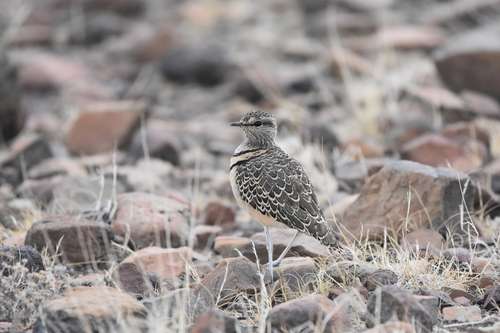 Double-banded Courser
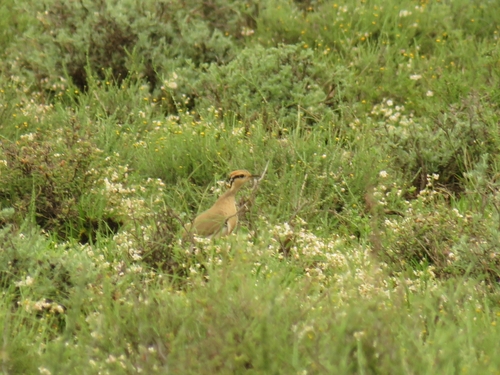 Temminck's Courser
In breve
Il segno distintivo più affidabile per separare il Double-banded Courser dal Temminck's Courser è la presenza di due bande nere bold sul petto del Double-banded, assenti nel Temminck's. Il Double-banded Courser mostra anche una corona chiara striata e un modello facciale distintivo con una striscia nera attraverso l'occhio, mentre il Temminck's Courser manca di queste caratteristiche ed è generalmente più semplice. Entrambe le specie preferiscono habitat aperti e asciutti, ma il Double-banded Courser è più associato a terreni rocciosi o ghiaiosi, mentre il Temminck's si trova spesso in praterie recentemente bruciate. La dimensione è simile, ma il Temminck's Courser è leggermente più pesante in media. I segni immaturi e di volo non sono dettagliati nelle fonti, quindi concentrati sul piumaggio e sulla struttura degli adulti.
Consigli di identificazione
- Double breast bands (Double-banded Courser only): Cerca due bande nere strette sul petto color buff; il Temminck's Courser non mostra bande sul petto. Questo è il segno distintivo più affidabile per gli adulti.
- Head pattern: Il Double-banded Courser ha una corona chiara striata di marrone e nero, e una forte linea nera che va dal becco attraverso l'occhio fino alla nuca. Il Temminck's Courser manca di queste forti marcature sulla testa ed è generalmente più semplice.
- Facial stripe: La striscia facciale nera del Double-banded Courser è distintiva; il Temminck's Courser ha un volto meno contrastante.
- Upperparts: Il Double-banded Courser mostra parti superiori color marrone sabbia con piume a centro scuro e ampi bordi chiari, creando un effetto squamoso. Le parti superiori del Temminck's Courser sono più uniformi e meno decorate.
- Underparts: Le parti inferiori del Double-banded Courser sono color buff/bianco con macchie scure e la doppia banda; il Temminck's Courser è più semplice sotto.
- Bill color: Entrambi hanno becchi corti e scuri, non un forte separatore.
- Leg color: Entrambi hanno gambe e piedi chiari; non è un segno distintivo affidabile.
- Habitat: Se visti in un semi-deserto roccioso e ghiaioso con erba a ciuffo o cespugli spinosi, è più probabile che sia il Double-banded Courser. Se in praterie recentemente bruciate o savane, specialmente vicino a terreni bruciati, sospetta il Temminck's Courser.
- Behavior: Il Double-banded Courser può essere visto correre in coppie, specialmente durante la riproduzione. Il Temminck's Courser è spesso solitario o in piccoli gruppi, specialmente in aree post-incendio.
- Breeding context: Se vedi un uccello vicino a un singolo uovo ben camuffato nell'erba bruciata, è probabile che sia il Temminck's Courser, che si specializza in questa strategia di nidificazione.
- No strong size difference: Entrambi sono simili in dimensione; il Temminck's Courser pesa in media 71g, ma questo non è un segno distintivo pratico.
- No known age-specific flight marks: Non ci sono informazioni sui modelli di volo giovanili o immaturi per nessuna delle due specie, quindi non fare affidamento sulle viste di volo di giovani uccelli per la separazione.
- Plumage pitfalls: In scarsa illuminazione o a distanza, le bande sul petto del Double-banded Courser possono apparire deboli o essere oscurate dalla postura; cerca sempre di ottenere una vista chiara di lato o frontale.
- Sexes similar: Entrambe le specie hanno poco o nessun dimorfismo sessuale, quindi tutti i segni distintivi si applicano a entrambi i sessi.
- Geographic overlap: Entrambe le specie possono verificarsi nella stessa regione generale, quindi usa sempre il piumaggio e l'habitat insieme per l'identificazione.
Taglia
Il Temminck's Courser pesa in media circa 71 grammi [wikidata], mentre non è fornita alcuna misura diretta per il Double-banded Courser, ma entrambi sono corsi di dimensioni medie e appaiono simili in dimensione sul campo. Non c'è una forte differenza di dimensione che possa essere utile per la separazione con i binocoli.
Piumaggio
Per gli adulti, il Double-banded Courser è immediatamente distinto dalle sue due bande nere strette sul petto color buff, una corona chiara striata di marrone e nero, e una forte linea nera che va dal becco attraverso l'occhio fino alla nuca. La schiena e le copritrici delle ali sono di colore marrone sabbia con centri scuri e ampi bordi chiari, dando un aspetto squamoso. Il Temminck's Courser manca delle bande sul petto e ha invece un aspetto più uniforme e semplice, senza menzione di forti marcature sulla testa o sul petto. Le fonti non forniscono dettagli sui modelli di ali giovanili o immaturi per nessuna delle due specie, quindi questi non possono essere utilizzati per la separazione. In sintesi, concentrati sulle bande sul petto e sul modello della testa per il Double-banded Courser; il Temminck's è più semplice e manca di queste caratteristiche.
Comportamento
Entrambe le specie si nutrono correndo e raccogliendo insetti dal terreno, ma il Double-banded Courser è descritto come che insegue le prede correndo e colpendo, spesso in coppie. Il Temminck's Courser è noto per nidificare in aree bruciate, deporre uova di colore nero cenere tra l'erba bruciata, il che può influenzare dove e quando li incontri. Entrambi sono terricoli e diffidenti, ma il Double-banded Courser potrebbe essere più probabile da vedere in coppie durante la stagione della riproduzione.
Habitat
Il Double-banded Courser si trova tipicamente in semi-deserti rocciosi o ghiaiosi con erba a ciuffo sparsa o cespugli spinosi, preferendo terreni sabbiosi solidi. Il Temminck's Courser, pur essendo anche un uccello di campagna aperta, è particolarmente associato a savane e praterie recentemente bruciate, spesso visto dove il fuoco ha ripulito la vegetazione. Entrambi si trovano nell'Africa sub-sahariana, ma l'habitat del Double-banded Courser è più arido e roccioso, mentre quello del Temminck's è più legato a praterie post-incendio.
Double-banded Courser · Temminck's Courser · I miei uccelli difficili