

Motmot

フタオビスナバシリ 対 ホオジロスズメヒバリ

Smutsornis africanus 対 Eremopterix leucotis

フタオビスナバシリとホオジロスズメヒバリのクイズ
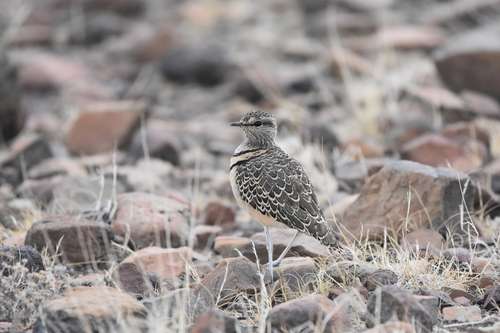
フタオビスナバシリ (Smutsornis africanus) フタオビスナバシリ
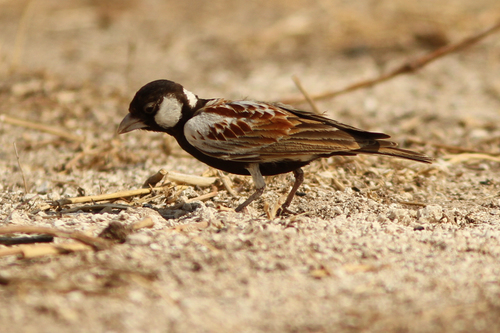
ホオジロスズメヒバリ (Eremopterix leucotis) ホオジロスズメヒバリ

メディア

読み込み中…

要点

フタオビスナバシリとホオジロスズメヒバリの最も信頼できるフィールドマークは、全体の構造と羽毛のコントラストです:フタオビスナバシリは、砂色で縞模様の上面を持つ背が高く、直立した長脚の鳥で、特徴的な二重の胸帯があります。一方、ホオジロスズメヒバリは、小さく、ずんぐりした、太いくちばしを持ち、目立つ黒と白(オス)または縞模様のバフと栗色(メス/幼鳥)の羽毛を示します。両種の未熟な鳥は縞模様があり、混乱を招くことがありますが、フタオビスナバシリは常に長脚で直立して見え、淡い縞模様の冠と大胆な顔のストライプを持っています。飛行中または地上では、フタオビスナバシリの砂色のトーンと白い縁取りの翼覆羽に対して、ホオジロスズメヒバリの栗色の上面と、オスの場合は大胆な黒い下部に注意してください。生息地の重複は可能ですが、フタオビスナバシリは石の多い開けた半砂漠を好み、ホオジロスズメヒバリは草地や最近焼かれた地域により多く見られます。

識別のコツ

  1. 脚の長さと姿勢: フタオビスナバシリは常に長く淡い脚の上に高く直立して立ち、ホオジロスズメヒバリはずんぐりしていて地面に低く、短い脚を持っています。これは年齢や性別に関係なく信頼できます。
  2. くちばしの形: フタオビスナバシリは短く細い黒っぽいくちばしを持ち、ホオジロスズメヒバリは種子を食べるホオジロに典型的な太く円錐形の灰色のくちばしを持っています。
  3. 冠と顔の模様(すべての年齢): フタオビスナバシリは淡い縞模様の冠と、くちばしから目を通って首までの狭い黒いストライプを示します。ホオジロスズメヒバリにはこれがありません;オスは白い斑点のある黒い頭を持ち、メス/幼鳥は縞模様がありますが、フタオビスナバシリの顔のストライプはありません。
  4. 上面の色: フタオビスナバシリは砂色の茶色で、中央が暗い羽毛と広い淡い縁を持ち、ホオジロスズメヒバリは上面が栗色で、オスは豊かな赤褐色を示し、メス/幼鳥はよりまだらな栗色です。
  5. 下部(成鳥のオス): フタオビスナバシリは淡いバフ/白で、暗い斑点と二重の胸帯があります;オスのホオジロスズメヒバリは下部が完全に黒です。これは成鳥のオスを迅速に区別するためのポイントです。
  6. 下部(メス/幼鳥): フタオビスナバシリは淡い色でいくつかの斑点があり、ホオジロスズメヒバリは重く縞模様のバフ白です。
  7. 胸帯: フタオビスナバシリは二重の黒い胸帯を持っています(時々遠くから見ると見えにくいことがあります);ホオジロスズメヒバリは胸帯を示しません。
  8. 後頭部の斑点: オスのホオジロスズメヒバリは鮮やかな白い後頭部と眼後斑点を持っています;フタオビスナバシリにはありません。
  9. 翼覆羽: フタオビスナバシリの翼覆羽は砂色の茶色で、広い白/バフの縁があります;ホオジロスズメヒバリの翼覆羽は栗色で、いくつかの暗い縞模様があります。
  10. 飛行の特徴: フタオビスナバシリは飛行中に長い翼を持ち、浮遊感があります;ホオジロスズメヒバリはよりひらひらしていてコンパクトで、栗色の上翼と(オスの場合)黒い下部が見えます。
  11. 群れのサイズ: フタオビスナバシリは通常孤独またはペアで見られ、ホオジロスズメヒバリはしばしば小さな群れや混合フロックで見られます。
  12. 生息地の文脈: 砂利の多い半砂漠でまばらな草がある場合はフタオビスナバシリを期待し、開けた草地、焼かれた畑、または乱された開けた地面ではホオジロスズメヒバリがより可能性があります。
  13. 採餌行動: フタオビスナバシリは走って止まり、次に昆虫を追いかけます;ホオジロスズメヒバリはシャッフルまたはホップし、しばしば種子や昆虫をついばんでいます。
  14. 幼鳥の混乱: 両者は縞模様がありバフ色ですが、フタオビスナバシリの直立した姿勢、淡い冠、顔のストライプと、ホオジロスズメヒバリの栗色の上面と強い顔の模様がないことを確認してください。
  15. 声: 利用可能な情報源からは診断的ではありません;構造と羽毛に依存してください。

大きさ

フタオビスナバシリはホオジロスズメヒバリよりもかなり大きく、脚が長いです。ホオジロスズメヒバリは小さな鳥で(体重約13.2g [wikidata])、長さは約11 cmで、コンパクトでずんぐりした外見を持ち、太いくちばしと短い脚があります。フタオビスナバシリははるかに背が高く、長く淡い脚を持ち、より直立した細長い姿勢をしています。遠くからでも、フタオビスナバシリの長脚のシルエットは、ホオジロスズメヒバリの低く地面にぴったりとしたプロファイルに対して際立っています。

羽色

行動

フタオビスナバシリは速い直立した走りで移動し、しばしば高く立って周囲を見渡し、次に昆虫を追いかけます。その長い脚と直立した姿勢は特徴的です。ホオジロスズメヒバリは地面をシャッフルまたはホップし、しばしば小さな群れで見られ、よりコンパクトで地面に低い外見を持っています。ホオジロスズメヒバリはしばしば混合フロックで見られ、最近焼かれたまたは乱された地域でより活発である可能性がありますが、フタオビスナバシリは孤独またはペアで見られ、混合種のフロックに参加する可能性は低いです。

生息環境

両種は開けた乾燥した生息地を好みますが、微妙な違いがあります。フタオビスナバシリは、まばらな草または棘のある低木がある平坦な石の多いまたは砂利の半砂漠を好みます。これは、しっかりとした砂地に典型的で、豊かな草地を避けます。ホオジロスズメヒバリは、開けた草地、乾燥したサバンナ、特に最近焼かれた地域や開けた畑、時には砂利の平原で見られることが多いです。重複は発生する可能性がありますが、フタオビスナバシリは石の多い半砂漠により結びついており、ホオジロスズメヒバリはより広範囲の開けた乱された生息地を利用します。

より良い説明を送る

比較と同じ項目を使ってください。文章はすぐに公開されます。

The most reliable field mark between Double-banded Courser and Chestnut-backed Sparrow-Lark is overall structure and plumage contrast: coursers are tall, upright, long-legged birds with sandy, streaked upperparts and a distinctive double breast band, while sparrow-larks are small, squat, thick-billed, and show either a striking black-and-white (male) or streaky buff-and-chestnut (female/juvenile) plumage. Immature birds of both species are streaked and can be confusing, but the courser always appears longer-legged and more upright, with a pale, streaked crown and a bold facial stripe. In flight or on the ground, note the courser’s sandy tones and white-edged wing coverts versus the lark’s chestnut upperparts and, in males, bold black underparts. Habitat overlap is possible, but coursers prefer stony, open semi-desert, while sparrow-larks are more often in grassy or recently burned areas.

  1. Leg length and stance: Courser always stands tall and upright on long, pale legs; sparrow-lark is squat and low to the ground with short legs. This is reliable at any age or sex.
  2. Bill shape: Courser has a short, slender, blackish bill; sparrow-lark has a thick, conical, grey bill typical of seed-eating larks.
  3. Crown and facial pattern (all ages): Courser shows a pale, streaked crown and a narrow black stripe from bill through eye to nape. Sparrow-lark lacks this; males have a black head with white patches, females/juveniles are streaked but lack the courser’s facial stripe.
  4. Upperparts color: Courser is sandy brown with dark-centred feathers and broad pale edges; sparrow-lark is chestnut above, with males showing rich rufous and females/juveniles more mottled chestnut.
  5. Underparts (adult males): Courser is pale buff/white with dark flecking and double breast band; male sparrow-lark is solid black below. This is a quick separator for adult males.
  6. Underparts (females/juveniles): Courser is pale with some flecking, sparrow-lark is heavily streaked buff-white.
  7. Breast band: Courser has a double black breast band (sometimes hard to see at distance or in poor light); sparrow-lark never shows any breast band.
  8. Nape patch: Male sparrow-lark has a brilliant white nape and post-ocular patch; courser does not.
  9. Wing coverts: Courser’s wing coverts are sandy brown with broad white/buff edges; sparrow-lark’s are chestnut with some dark streaking.
  10. Flight jizz: Courser appears long-winged and buoyant in flight, with sandy tones; sparrow-lark is more fluttery and compact, with chestnut upperwings and (in males) black underparts visible.
  11. Group size: Courser is usually solitary or in pairs; sparrow-lark often in small groups or mixed flocks.
  12. Habitat context: In stony, gravelly semi-desert with sparse grass, expect courser; in open grassland, burned fields, or disturbed open ground, sparrow-lark is more likely.
  13. Feeding behavior: Courser runs and pauses, then darts after insects; sparrow-lark shuffles or hops, often picking at seeds as well as insects.
  14. Juvenile confusion: Both can be streaky and buff, but check for courser’s upright stance, pale crown, and facial stripe versus sparrow-lark’s chestnut upperparts and lack of strong facial markings.
  15. Voice: Not diagnostic from available sources; rely on structure and plumage.

Double-banded Courser is significantly larger and leggier than Chestnut-backed Sparrow-Lark. The sparrow-lark is a small bird (body mass ~13.2g [wikidata]), about 11 cm in length, and appears compact and squat, with a thick bill and short legs. The courser is much taller, with long, pale legs and a more upright, elongated stance. Even at a distance, the courser’s long-legged silhouette stands out against the lark’s low, ground-hugging profile.

  • Juvenile/immature birds: Both species can be streaky and buff, but the courser juvenile shows a pale, streaked crown, a narrow black stripe through the eye, and sandy brown upperparts with white or buff edging to the wing coverts. The sparrow-lark juvenile is more uniformly chestnut above with heavy streaking, and lacks the courser’s facial pattern and pale crown.
  • Adult males: Courser males (and females) have sandy upperparts, a pale streaked crown, and a distinctive double black breast band (not always visible at distance), with buff or white underparts flecked with brown. Male sparrow-larks are unmistakable with solid black underparts and head, brilliant white nape and post-ocular patches, and rich chestnut upperparts.
  • Adult females: Female coursers resemble males but are less contrasting; they retain the pale crown and facial stripe. Female sparrow-larks are drab, with heavily streaked buff-white underparts and head, a white nape collar, and chestnut, mottled upperparts. They lack the courser’s upright stance and facial markings.
  • In flight: Courser shows sandy tones and white/buff-edged coverts; sparrow-lark shows chestnut upperwings and, in males, black underparts visible even in flight.

Double-banded Courser moves with a quick, upright run, often pausing to stand tall and scan, then darting after insects. Its long legs and upright posture are distinctive. Chestnut-backed Sparrow-Lark shuffles or hops along the ground, often in small groups, and appears much more compact and low to the ground. Sparrow-larks are often seen in mixed flocks and may be more active in recently burned or disturbed areas, while coursers are solitary or in pairs, and less likely to join mixed-species flocks.

Both species favor open, dry habitats, but with subtle differences. Double-banded Courser prefers flat, stony or gravelly semi-desert with sparse tufty grass or thorn scrub. It is typical of firm, sandy soils and avoids lush grassland. Chestnut-backed Sparrow-Lark is more often found in open grassland, arid savanna, and especially in recently burned areas or open fields, sometimes on gravel plains. Overlap can occur, but coursers are more tied to stony semi-desert, while sparrow-larks exploit a wider range of open, disturbed habitats.

変更を破棄しますか?

保存していない編集があります。今離れると失われます。

フタオビスナバシリ · ホオジロスズメヒバリ · 苦手な鳥