

Double-banded Courser vs Chestnut-backed Sparrow-Lark
Smutsornis africanus contro Eremopterix leucotis
Fai un quiz con Double-banded Courser e Chestnut-backed Sparrow-Lark
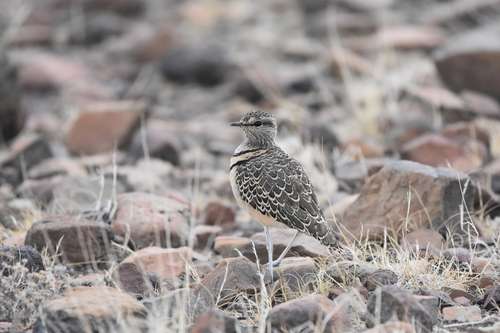 Double-banded Courser
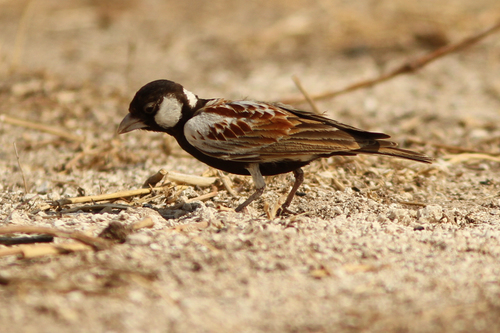 Chestnut-backed Sparrow-Lark
In breve
Il segno distintivo più affidabile tra il Double-banded Courser e il Chestnut-backed Sparrow-Lark è la struttura generale e il contrasto del piumaggio: i coursers sono uccelli alti, eretti e longilinei con parti superiori sabbiose e striate e una distintiva doppia banda sul petto, mentre i sparrow-larks sono piccoli, tozzi, con becco spesso e mostrano un piumaggio che può essere o nero e bianco (maschio) o striato di buff e castano (femmina/giovanile). Gli uccelli immaturi di entrambe le specie sono striati e possono essere confusi, ma il courser appare sempre con gambe più lunghe e più eretto, con una corona chiara e striata e una striscia facciale audace. In volo o a terra, nota le tonalità sabbiose del courser e le copritrici alari con bordi bianchi rispetto alle parti superiori castane del lark e, nei maschi, le audaci parti inferiori nere. È possibile una sovrapposizione degli habitat, ma i coursers preferiscono semi-deserti aperti e sassosi, mentre i sparrow-larks si trovano più spesso in aree erbose o recentemente bruciate.
Consigli di identificazione
- Lunghezza delle gambe e postura: Il Courser sta sempre alto e eretto su lunghe gambe chiare; il sparrow-lark è tozzo e basso a terra con gambe corte. Questo è affidabile a qualsiasi età o sesso.
- Forma del becco: Il Courser ha un becco corto, snello e nerastro; il sparrow-lark ha un becco spesso, conico e grigio tipico degli uccelli che mangiano semi.
- Corona e modello facciale (tutte le età): Il Courser mostra una corona chiara e striata e una stretta striscia nera dal becco attraverso l'occhio fino alla nuca. Il sparrow-lark non ha questo; i maschi hanno una testa nera con macchie bianche, le femmine/giovanili sono striate ma mancano della striscia facciale del courser.
- Colore delle parti superiori: Il Courser è marrone sabbioso con piume scure al centro e ampi bordi chiari; il sparrow-lark è castano sopra, con i maschi che mostrano un ricco rufous e le femmine/giovanili più macchiate di castano.
- Parti inferiori (maschi adulti): Il Courser è di un buff/bianco chiaro con macchie scure e una doppia banda sul petto; il maschio sparrow-lark è completamente nero sotto. Questo è un separatore rapido per i maschi adulti.
- Parti inferiori (femmine/giovanili): Il Courser è chiaro con alcune macchie, il sparrow-lark è pesantemente striato di buff-bianco.
- Banda sul petto: Il Courser ha una doppia banda nera sul petto (a volte difficile da vedere a distanza o in scarsa luce); il sparrow-lark non mostra mai alcuna banda sul petto.
- Macchia sulla nuca: Il maschio sparrow-lark ha una brillante nuca bianca e una macchia post-oculare; il courser non ce l'ha.
- Copritrici alari: Le copritrici alari del Courser sono marrone sabbioso con ampi bordi bianchi/buff; quelle del sparrow-lark sono castane con alcune striature scure.
- Volo: Il Courser appare con ali lunghe e galleggianti in volo, con tonalità sabbiose; il sparrow-lark è più frenetico e compatto, con le parti superiori castane e (nei maschi) le parti inferiori nere visibili.
- Dimensione del gruppo: Il Courser è solitamente solitario o in coppie; il sparrow-lark spesso in piccoli gruppi o stormi misti.
- Contesto dell'habitat: In semi-deserti sassosi e ghiaiosi con erba rada, aspettati il courser; in praterie aperte, campi bruciati o terreni aperti disturbati, il sparrow-lark è più probabile.
- Comportamento alimentare: Il Courser corre e si ferma, poi si lancia dopo gli insetti; il sparrow-lark si muove o salta, spesso beccando semi oltre che insetti.
- Confusione giovanile: Entrambi possono essere striati e buff, ma controlla la postura eretta del courser, la corona chiara e la striscia facciale rispetto alle parti superiori castane del sparrow-lark e alla mancanza di forti segni facciali.
- Voce: Non diagnostica dalle fonti disponibili; fai affidamento sulla struttura e sul piumaggio.
Taglia
Il Double-banded Courser è significativamente più grande e con gambe più lunghe rispetto al Chestnut-backed Sparrow-Lark. Il sparrow-lark è un piccolo uccello (massa corporea ~13.2g [wikidata]), lungo circa 11 cm, e appare compatto e tozzo, con un becco spesso e gambe corte. Il courser è molto più alto, con lunghe gambe chiare e una postura più eretta ed allungata. Anche a distanza, il profilo lungo e slanciato del courser si distingue rispetto al profilo basso e aderente al suolo del lark.
Piumaggio
- Uccelli giovanili/immaturi: Entrambe le specie possono essere striate e buff, ma il giovanile del courser mostra una corona chiara e striata, una stretta striscia nera attraverso l'occhio e parti superiori marrone sabbioso con bordi bianchi o buff alle copritrici alari. Il giovanile del sparrow-lark è più uniformemente castano sopra con pesanti striature e manca del modello facciale e della corona chiara del courser.
- Maschi adulti: I maschi del Courser (e le femmine) hanno parti superiori sabbiose, una corona chiara e striata e una distintiva doppia banda nera sul petto (non sempre visibile a distanza), con parti inferiori buff o bianche macchiate di marrone. I maschi del sparrow-lark sono inconfondibili con parti inferiori e testa completamente nere, una brillante nuca bianca e macchie post-oculari, e parti superiori castane ricche.
- Femmine adulte: Le femmine del courser assomigliano ai maschi ma sono meno contrastanti; mantengono la corona chiara e la striscia facciale. Le femmine del sparrow-lark sono opache, con parti inferiori e testa pesantemente striate di buff-bianco, un collare bianco sulla nuca e parti superiori castane macchiate. Mancano della postura eretta e dei segni facciali del courser.
- In volo: Il Courser mostra tonalità sabbiose e copritrici alari con bordi bianchi/buff; il sparrow-lark mostra le parti superiori castane e, nei maschi, le parti inferiori nere visibili anche in volo.
Comportamento
Il Double-banded Courser si muove con una corsa rapida e eretta, spesso fermandosi per stare alto e osservare, poi lanciandosi dopo gli insetti. Le sue lunghe gambe e la postura eretta sono distintive. Il Chestnut-backed Sparrow-Lark si muove o salta lungo il terreno, spesso in piccoli gruppi, e appare molto più compatto e basso a terra. I sparrow-larks sono spesso visti in stormi misti e possono essere più attivi in aree recentemente bruciate o disturbate, mentre i coursers sono solitari o in coppie, e meno propensi a unirsi a stormi di specie miste.
Habitat
Entrambe le specie preferiscono habitat aperti e asciutti, ma con differenze sottili. Il Double-banded Courser preferisce semi-deserti piatti, sassosi o ghiaiosi con erba rada a ciuffi o cespugli spinosi. È tipico di suoli sabbiosi e solidi e evita le praterie lussureggianti. Il Chestnut-backed Sparrow-Lark si trova più spesso in praterie aperte, savane aride e soprattutto in aree recentemente bruciate o campi aperti, a volte su pianure ghiaiose. Può verificarsi sovrapposizione, ma i coursers sono più legati ai semi-deserti sassosi, mentre i sparrow-larks sfruttano una gamma più ampia di habitat aperti e disturbati.
Double-banded Courser · Chestnut-backed Sparrow-Lark · I miei uccelli difficili