

Motmot

ブロンズミドリカッコウ 対 ヤシアマツバメ

Chrysococcyx caprius 対 Cypsiurus parvus

ブロンズミドリカッコウとヤシアマツバメのクイズ
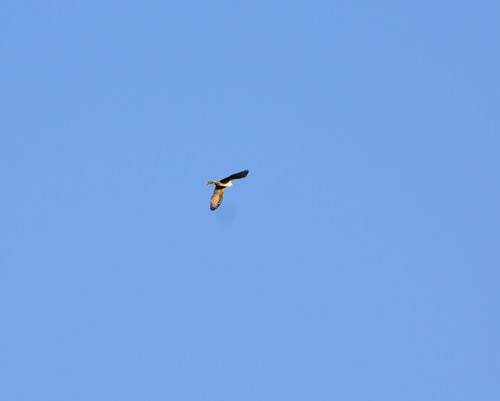
ブロンズミドリカッコウ (Chrysococcyx caprius) ブロンズミドリカッコウ
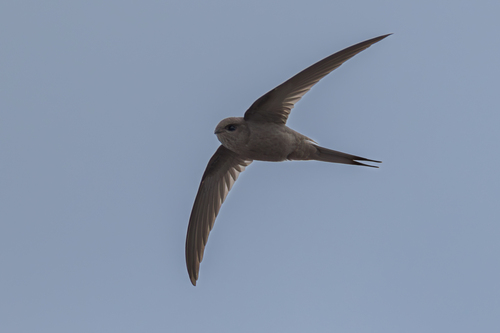
ヤシアマツバメ (Cypsiurus parvus) ヤシアマツバメ

メディア

読み込み中…

要点

アフリカヤシアマツバメとブロンズミドリカッコウを区別する最も信頼できる方法は、構造と飛行スタイルによるものです:カッコウはコンパクトで短い翼と短い尾を持ち、強く直接的な飛行をしますが、アマツバメは細長く、長い鎌形の翼と深く分かれた尾を持ち、ほとんど止まることなく、急速で敏捷な飛行で見られます。幼鳥のブロンズミドリカッコウは白い翼帯と上面の銅色のトーンを示し、ヤシアマツバメとは異なります。成鳥のカッコウは光沢のある緑色で、白い腹部と壊れた白い目のストライプを持ち、ヤシアマツバメは均一に淡い茶色で、強いマーキングがありません。カッコウはしばしば孤独で声を出しますが、アマツバメは通常、ヤシの木の周りで速く飛ぶ群れで見られます。サイズ、構造、飛行行動は最も迅速なフィールドチェックです。

識別のコツ

  1. 幼鳥のブロンズミドリカッコウは白い翼帯、銅色の上面、茶色の斑点のある側面を示します—これらはどの年齢のヤシアマツバメにも存在しません。
  2. 成鳥のブロンズミドリカッコウは銅色の部分を持つ光沢のある緑色の上面と壊れた白い目のストライプを持ちますが、ヤシアマツバメは均一に淡い茶色で、強い顔や体のパターンがありません。
  3. ブロンズミドリカッコウの翼は、羽毛の内側の羽に3〜4の白い斑点を示します(成鳥)、尾には白い先端と斑点があります。ヤシアマツバメの翼と尾は無地の茶色で、白や銅色のマーキングはありません。
  4. アフリカヤシアマツバメは非常に長い後ろに傾いた翼(弦月形)と長く深く分かれた尾を持ちます(通常は閉じて保持され)、飛行中にブーメランのようなシルエットを作ります。ブロンズミドリカッコウは短く、より丸みを帯びた翼と短く、あまり分かれていない尾を持ちます。
  5. 飛行スタイルは重要な区別点です:アマツバメはほぼ常に急速で敏捷な連続飛行をしており、垂直面以外ではめったに止まりません。カッコウは頻繁に止まり、短く直接的なバーストで飛びます。
  6. くちばしの形が異なります:ブロンズミドリカッコウは短く、わずかに下向きのくちばしを持ち、ヤシアマツバメのくちばしは小さく、ほとんど目立たず、空中の昆虫を食べるために適応しています。
  7. 行動の文脈が重要です:ヤシの葉にしがみついているか、ヤシの周りを継続的に飛んでいる鳥はおそらくアマツバメであり、特に鳴いている場合は、茂みや木に止まっている孤独な鳥はおそらくカッコウです。
  8. 鳴き声は診断的です:カッコウの繰り返しの響く鳴き声は、アマツバメの鋭い悲鳴とは異なります。
  9. カッコウの性差:雌は上面がより銅色で、銅色の側面の縞模様を持つ茶色の腹部がありますが、依然としてどのヤシアマツバメよりもパターンが多く見られます。
  10. 幼鳥のヤシアマツバメは主に尾の長さで成鳥と異なりますが、色やパターンではありません;彼らは無地の茶色のままで、翼帯や銅色のトーンはありません。
  11. サイズと質量:ブロンズミドリカッコウはより重く、より頑丈です(33g対14g)が、長さはわずかに大きいだけです;フィールドでは、カッコウのより大きく、コンパクトな外観によってその違いが最も明らかです。
  12. ヤシアマツバメはしばしば群れで見られます、特にヤシの近くで、カッコウは通常孤独です。
  13. もしあなたが特にヤシの近くで、ヤシの葉以外では決して止まらずに飛んでいる鳥を見たら、それはほぼ確実にアマツバメです。
  14. もしあなたが白い翼帯、銅色または緑色の光沢、または壊れた白い目のストライプを持つ鳥を見たら、それはブロンズミドリカッコウです。
  15. 生息地の重複は可能ですが、ヤシアマツバメはヤシの近くで最も豊富であり、カッコウは開けた森林やサバンナでより一般的です。

大きさ

ブロンズミドリカッコウは明らかに重く(33g対14g)、わずかに長い(18〜20 cm対16 cm)ですが、体型の違いは長さだけよりも際立っています:カッコウはコンパクトで頑丈ですが、ヤシアマツバメは非常に細長く、非常に長い翼と長く深く分かれた尾を持ちます(通常は閉じて保持されます)。フィールドでは、アマツバメはカッコウの半分未満の体重で、はるかに軽く、より繊細に見えます。

羽色

幼鳥のブロンズミドリカッコウは赤いくちばし、縞模様の喉、白い翼帯、銅色の上面、茶色の斑点のある側面で特徴的です。これらのマークはすべてのヤシアマツバメには存在しません。成鳥のオスのカッコウは上面が光沢のある緑色で、銅色の斑点、壊れた白い目のストライプ、白い腹部を持ち、メスはより銅色で、銅色の側面の縞模様を持つ茶色の腹部があります。カッコウの翼は羽毛の内側の羽に3〜4の白い斑点を示し、尾には白い先端と斑点があります。対照的に、アフリカヤシアマツバメは均一に淡い茶色で、成鳥と幼鳥の両方に強いパターンがありません(後者は主に短い尾を持っています)。アマツバメは翼帯、銅色のトーン、白い尾の先端を欠いています。カッコウの羽毛ははるかにコントラストがあり、パターンがあり、アマツバメは無地で無地です。

行動

ブロンズミドリカッコウはしばしば開けた森林、サバンナ、または川岸の茂みで止まっているのが見られ、通常は孤独です。止まり木の間を短く直接的な飛行で移動し、しばしば騒がしいです。アフリカヤシアマツバメはほぼ常に連続飛行で見られ、ヤシの葉に垂直にしがみつく以外ではめったに止まりません。アマツバメは飛行中に餌を食べ、水を飲み、さらには羽を浴びることもあり、通常は群れで見られ、高速で不規則に飛び、しばしばヤシの上または周りで見られます。

生息環境

ブロンズミドリカッコウは開けた森林、サバンナ、川岸の茂みを好み、一般的に孤独です。短距離の渡り鳥で、雨とともに移動し、特定の植物に密接に結びついていません。アフリカヤシアマツバメは油ヤシや栽培されたヤシに強く関連していますが、森林のサバンナ、トゲの茂み、農地にも生息しています。アマツバメはヤシの近くの開けた土地で最もよく見られ、ヤシが植えられる場所ではその豊富さが増すことがあります。

声

ブロンズミドリカッコウは非常に声が大きく、持続的で大きな「デード・デード・デード・デード・エリック」という鳴き声を出し、通常は4つの明確な音符の後にツイッターが続きます。アフリカヤシアマツバメは、カッコウの鳴き声とはトーンや構造が大きく異なる大きく鋭い悲鳴を出します。もしあなたが特徴的なカッコウの鳴き声を聞いたら、それは診断的です。

より良い説明を送る

比較と同じ項目を使ってください。文章はすぐに公開されます。

The most reliable way to separate Dideric Cuckoo from African Palm Swift is by structure and flight style: the cuckoo has a compact, short-winged, and short-tailed look with a strong, direct flight, while the swift is slender with long, sickle-shaped wings and a deeply forked tail, rarely perching and almost always seen in rapid, agile flight. Juvenile Dideric Cuckoos show a white wing-bar and coppery tones above, unlike any palm swift. Adult cuckoos are glossy green with white underparts and a broken white eye-stripe, while palm swifts are uniformly pale brown and lack any strong markings. The cuckoo is often solitary and vocal, whereas the swift is usually seen in fast-flying groups around palms. Size, structure, and flight behavior are the quickest field checks.

  1. Juvenile Dideric Cuckoo shows a white wing-bar, coppery upperparts, and brown-blotched flanks—none of these are present in palm swifts of any age.
  2. Adult Dideric Cuckoo has glossy green upperparts with coppery areas and a broken white eye-stripe, while palm swift is uniformly pale brown and lacks any strong facial or body pattern.
  3. Dideric Cuckoo’s wings show three to four white spots on the inner vanes of the remiges (adults), and the tail has white tips and spots. Palm swift’s wings and tail are plain brown with no white or coppery markings.
  4. African Palm Swift has extremely long, swept-back wings (crescent-shaped) and a long, deeply forked tail (usually held closed), giving a boomerang-like silhouette in flight. Dideric Cuckoo has shorter, more rounded wings and a shorter, less forked tail.
  5. Flight style is a key separator: swifts are almost always in rapid, agile, continuous flight, rarely perching except on vertical surfaces. Cuckoos perch frequently and fly in short, direct bursts.
  6. Bill shape differs: Dideric Cuckoo has a short, slightly decurved bill, while palm swift’s bill is tiny and barely noticeable, adapted for aerial insect feeding.
  7. Behavioral context matters: a bird seen clinging to a palm frond or flying continuously around palms is likely a swift; a solitary bird perched in a bush or tree, especially if calling, is likely a cuckoo.
  8. Vocalizations are diagnostic: the cuckoo’s repetitive, ringing call is unlike the swift’s shrill scream.
  9. Sex differences in cuckoo: females are more coppery above and have brownish underparts with coppery flank barring, but still show more pattern than any palm swift.
  10. Juvenile palm swifts differ from adults mainly in tail length, not in color or pattern; they remain plain brown and lack any wing-bar or coppery tones.
  11. Size and mass: Dideric Cuckoo is heavier and more robust (33g vs 14g), but length is only slightly greater; the difference is most obvious in the field by the cuckoo’s bulkier, more compact look.
  12. Palm swifts are often in groups, especially near palms, while cuckoos are usually solitary.
  13. If you see a bird foraging on the wing, especially near palms, and never perching except on palm fronds, it is almost certainly a swift.
  14. If you see a bird with a white wing-bar, coppery or green gloss, or a broken white eye-stripe, it is a Dideric Cuckoo.
  15. Habitat overlap is possible, but palm swifts are most abundant near palms, while cuckoos are more generalist in open woodland and savanna.

Dideric Cuckoo is notably heavier (33g vs 14g) and slightly longer (18–20 cm vs 16 cm), but the difference in build is more striking than length alone: the cuckoo is compact and robust, while the palm swift is very slender with extremely long wings and a long, deeply forked tail (usually held closed). In the field, the swift appears much lighter and more delicate, with a body mass less than half that of the cuckoo.

Juvenile Dideric Cuckoos are distinctive with a red bill, streaky throat, white wing-bar, coppery upperparts, and brown-blotched flanks. These marks are absent in all palm swifts. Adult male cuckoos are glossy green above with coppery patches, a broken white eye-stripe, and white underparts; females are more coppery and have brownish underparts with coppery flank barring. The cuckoo’s wings show three to four white spots on the inner vanes of the remiges, and the tail has white tips and spots. In contrast, African Palm Swift is uniformly pale brown with no strong pattern, both in adults and juveniles (the latter mainly have shorter tails). Swifts lack any wing-bars, coppery tones, or white tail tips. The cuckoo’s plumage is much more contrasting and patterned, while the swift is plain and unmarked.

Dideric Cuckoo is often seen perched in open woodland, savanna, or riverside bushes, and is usually solitary. It moves with short, direct flights between perches and is often noisy. African Palm Swift is almost always seen in continuous flight, rarely perching except to cling vertically to palm fronds. Swifts feed, drink, and even bathe on the wing, and are typically found in groups, flying rapidly and erratically, often high above or around palms.

Dideric Cuckoo favors open woodland, savanna, and riverside thickets, and is generally solitary. It is a short-distance migrant, moving with the rains, and is not closely tied to any particular plant. African Palm Swift is strongly associated with oil palms and cultivated palms, but also occurs in wooded savannah, thornbush, and farmland. Swifts are most often seen in open country near palms, and their abundance may increase where palms are planted.

Dideric Cuckoo is very vocal, giving a persistent, loud 'deed-deed-deed-deed-er-ick' call, usually four clear notes followed by a twitter. African Palm Swift gives a loud, shrill scream, quite different in tone and structure from the cuckoo’s call. If you hear the distinctive cuckoo call, it is diagnostic.

変更を破棄しますか?

保存していない編集があります。今離れると失われます。

ブロンズミドリカッコウ · ヤシアマツバメ · 苦手な鳥