

Motmot

ハイイロヒタキモドキ 対 ニシモリタイランチョウ

Contopus lugubris 対 Contopus sordidulus

ハイイロヒタキモドキとニシモリタイランチョウのクイズ
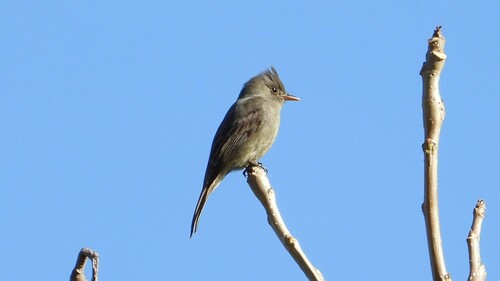
ハイイロヒタキモドキ (Contopus lugubris) ハイイロヒタキモドキ
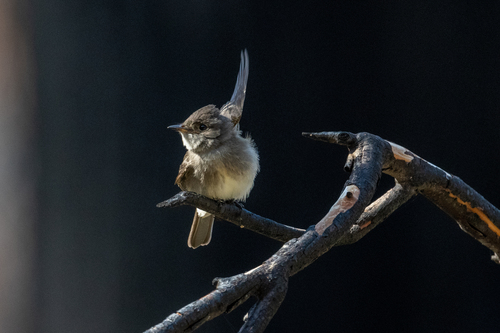
ニシモリタイランチョウ (Contopus sordidulus) ニシモリタイランチョウ

メディア

読み込み中…

要点

ハイイロヒタキモドキとニシモリタイランチョウの最も信頼できるフィールドマークは、全体の暗さとコントラストです。ハイイロヒタキモドキは特にすすけた暗色で、翼帯は弱いかほとんど存在しません。一方、ニシモリタイランチョウは上面が淡い灰オリーブ色で、2つの明確な翼帯と明るい腹部を持っています。幼鳥のハイイロヒタキモドキは翼の羽毛に赤褐色の縁取りを示しますが、これはニシモリタイランチョウには見られません。構造的には、ハイイロヒタキモドキはより大きくて頑丈で、より目立つ冠を持っています。生息地と分布も重要です。ハイイロヒタキモドキはコスタリカと西パナマの高地森林に限定されているのに対し、ニシモリタイランチョウは広範囲にわたる北アメリカの渡り鳥です。声は異なりますが、両者ともに大きくて繰り返しのある声を出すことができます。

識別のコツ

  1. Juvenile wing pattern: 若いハイイロヒタキモドキの翼の羽毛に赤褐色の縁取りを探してください。ニシモリタイランチョウの幼鳥はこの特徴を示しません。
  2. Overall darkness: ハイイロヒタキモドキは全体的にすすけて暗く、特に頭頂部と上面がそうです。一方、ニシモリタイランチョウは淡い灰オリーブ色で、より洗練された外観を持っています。
  3. Wing bars: ニシモリタイランチョウはすべての年齢で2つの明確な翼帯を示しますが、ハイイロヒタキモドキの翼帯は弱いかほとんど存在しません、特に成鳥では。
  4. Bill color: ニシモリタイランチョウは下顎の基部に黄色がある暗いくちばしを持っています。ハイイロヒタキモドキのくちばしの色は対照的ではなく、診断的な特徴としては記載されていません。
  5. Crest: ハイイロヒタキモドキはより目立つ冠を持ち、ニシモリタイランチョウの滑らかな冠と比較して、頭が大きく見えます。
  6. Underpart color: ハイイロヒタキモドキの腹部は背中よりも淡いオリーブ灰色で、下腹部は黄色がかっています。ニシモリタイランチョウの腹部は明るく、胸にオリーブ色の洗いがかかっています。
  7. Tail and wings: ハイイロヒタキモドキの翼と尾は黒っぽく、すすけた体とコントラストを成しています。ニシモリタイランチョウの翼はそれほど暗くなく、淡い翼帯によって際立っています。
  8. Size and structure: ハイイロヒタキモドキはより大きくて重い(21.5 g対11–14 g)、より頑丈な体型と長い体を持ち、並べて見たり経験を積むことで目立ちます。
  9. Habitat and range: ハイイロヒタキモドキはコスタリカと西パナマの高地森林でのみ期待されます。ニシモリタイランチョウはそこには存在せず、北アメリカの種です。
  10. Behavior: ハイイロヒタキモドキは孤独で、同じ止まり木に戻り、しばしばその領域を攻撃的に守ります。ニシモリタイランチョウはそれほど領土意識が強くなく、渡り中に見られる可能性が高いです。
  11. Voice: ハイイロヒタキモドキの大きな鞭のような呼び声と「fred-reek-fear」の歌と、ニシモリタイランチョウのブザー音の「peeer」と降下する「tsees」を聞いてください。声はよく聞こえれば役立ちます。
  12. Context: 中央アメリカの高地、特にタラマンカ山脈にいる場合、ハイイロヒタキモドキが期待されます。それ以外の場所、特に北アメリカでは、ニシモリタイランチョウが可能性の高い候補です。
  13. Sex differences: 両種は性別において単形であり、識別のために性別に依存しないでください。
  14. Seasonal variation: どちらの種にも強い季節的な羽毛の違いは見られませんが、幼鳥のハイイロヒタキモドキの赤褐色の翼の縁取りは若い鳥にのみ存在します。
  15. Pitfalls: 照明に注意してください。ニシモリタイランチョウは日陰で暗く見えることがありますが、常に2つの翼帯を示し、ハイイロヒタキモドキのすすけた均一性は欠けています。幼鳥のニシモリタイランチョウは赤褐色の翼の縁取りを示しません。

大きさ

ハイイロヒタキモドキはかなり重く、わずかに長く、体重は約21.5 gで、ニシモリタイランチョウの11–14 gと比較されます。ハイイロヒタキモドキは約16.5 cmの長さに達し、ニシモリタイランチョウは14–16 cmです。フィールドでは、ハイイロヒタキモドキはより頑丈で、しばしばより目立つ冠を持ち、ニシモリタイランチョウはよりスリムで繊細な体型に見えます。

羽色

行動

両種は目立つ場所に止まり、昆虫を捕まえますが、ハイイロヒタキモドキは繁殖期以外は特に孤独で、同じ露出した止まり木に繰り返し戻ることで知られています。また、より大きな鳥に対して巣を攻撃的に守ります。ニシモリタイランチョウはそれほど領土意識が強くなく、渡り中や混成種の文脈で見られる可能性が高いです。両種は高い止まり木を使用しますが、ハイイロヒタキモドキの行動はより静止していて注意深いです。

生息環境

生息地は強い区別要因です。ハイイロヒタキモドキはコスタリカと西パナマのタラマンカ山地の森林に特有で、標高1250–2150 mの間に見られ、特に森林の端、開けた場所、高い木のある半開放的な地域に生息しています。ニシモリタイランチョウは北アメリカで広範囲にわたる渡り鳥で、開けた森林、森林の端、河川域で繁殖し、ハイイロヒタキモドキの生息範囲には存在しません。中央アメリカの高地の外にいる場合、ハイイロヒタキモドキを見ている可能性はほぼありません。

声

ハイイロヒタキモドキは絶え間ない大きな鞭のような呼び声と繰り返しの「fred-reek-fear」の歌を出します。ニシモリタイランチョウの呼び声は大きくてブザー音の「peeer」で、その歌は3つの急速に降下する「tsees」の連続で、最後に降下する「peeer」で終わります。両者ともに声が大きくて繰り返しのあるものですが、呼び声の質とパターンは異なり、ハイイロヒタキモドキのものはより鋭く、鞭のようです。

より良い説明を送る

比較と同じ項目を使ってください。文章はすぐに公開されます。

The most reliable field mark between Dark Pewee and Western Wood-Pewee is overall darkness and contrast: Dark Pewee is notably sooty and dark overall, with a weak or nearly absent wing bar, while Western Wood-Pewee is paler gray-olive above with two distinct wing bars and a lighter underpart. Juvenile Dark Pewees show rufous fringes on the wing feathers, a feature not present in Western Wood-Pewee. Structurally, Dark Pewee is larger and bulkier, with a more prominent crest. Habitat and range are also key: Dark Pewee is restricted to high-elevation forests of Costa Rica and western Panama, while Western Wood-Pewee is a widespread North American migrant. Voice differs, but both can be loud and repetitive.

  1. Juvenile wing pattern: Look for rufous fringes on the wing feathers of young Dark Pewees; Western Wood-Pewee juveniles never show this feature.
  2. Overall darkness: Dark Pewee is sooty and dark overall, especially on the crown and upperparts, while Western Wood-Pewee is paler gray-olive with a more washed-out look.
  3. Wing bars: Western Wood-Pewee shows two distinct wing bars at all ages, while Dark Pewee's wing bar is weak or nearly absent, especially in adults.
  4. Bill color: Western Wood-Pewee has a dark bill with yellow at the base of the lower mandible; Dark Pewee's bill color is less contrasting and not noted as diagnostic.
  5. Crest: Dark Pewee has a more prominent, crested crown, giving it a bulkier-headed appearance compared to the smoother crown of Western Wood-Pewee.
  6. Underpart color: Dark Pewee's underparts are paler olive-grey than the back, turning yellowish on the lower belly; Western Wood-Pewee's underparts are light with an olive wash on the breast.
  7. Tail and wings: Dark Pewee's wings and tail are blackish and contrast with the sooty body; Western Wood-Pewee's wings are not as dark and are set off by the pale wing bars.
  8. Size and structure: Dark Pewee is larger and heavier (21.5 g vs 11–14 g), with a more robust build and longer body, noticeable when seen side-by-side or with experience.
  9. Habitat and range: Only expect Dark Pewee in high-elevation forests of Costa Rica and western Panama; Western Wood-Pewee is not found there and is a North American species.
  10. Behavior: Dark Pewee is solitary and returns to the same perch, often defending its territory aggressively; Western Wood-Pewee is less territorial and more likely to be seen in migration.
  11. Voice: Listen for the loud whip call and 'fred-reek-fear' song of Dark Pewee versus the buzzy 'peeer' and descending 'tsees' of Western Wood-Pewee. Vocalizations are helpful if heard well.
  12. Context: If you are in Central America at high elevation, especially in the Talamancan range, Dark Pewee is expected; elsewhere, especially in North America, Western Wood-Pewee is the likely candidate.
  13. Sex differences: Both species are sexually monomorphic; do not rely on sex for identification.
  14. Seasonal variation: No strong seasonal plumage differences are noted for either species, but juvenile Dark Pewee's rufous wing fringes are only present in young birds.
  15. Pitfalls: Beware of lighting: Western Wood-Pewee can look darker in shade, but will always show two wing bars and lack the sooty uniformity of Dark Pewee. Juvenile Western Wood-Pewee never shows rufous wing fringes.

Dark Pewee is significantly heavier and slightly longer, with a body mass around 21.5 g compared to Western Wood-Pewee's 11–14 g. Dark Pewee reaches about 16.5 cm in length, while Western Wood-Pewee is 14–16 cm. In the field, Dark Pewee appears bulkier and more robust, often with a more prominent crest, whereas Western Wood-Pewee is slimmer and more delicate in build.

  • Juvenile/immature birds: Juvenile Dark Pewees are browner above than adults and have distinctive rufous fringes to their wing feathers, which is not seen in Western Wood-Pewee at any age. This rufous edging is a strong separator in young birds.
  • Adults: Adult Dark Pewee is sooty-grey overall, darkest on the crown, with blackish wings and tail. The wing bar is weak or nearly absent, and the underparts are a paler olive-grey than the back, becoming yellowish on the lower belly. Western Wood-Pewee adults are gray-olive above, with two clear wing bars and light underparts washed with olive on the breast. The bill of Western Wood-Pewee is dark with yellow at the base of the lower mandible, a subtle but sometimes useful point. In flight, Western Wood-Pewee's wing bars and lighter overall coloration are more apparent, while Dark Pewee maintains a uniform, dark appearance.

Both species perch conspicuously and sally for insects, but Dark Pewee is especially solitary outside the breeding season and is known for returning to the same exposed perch repeatedly. It also aggressively defends its nest against larger birds. Western Wood-Pewee is less territorial and more likely to be seen in migration or in mixed-species contexts. Both species use high perches, but Dark Pewee's behavior is more stationary and watchful.

Habitat is a strong separator: Dark Pewee is endemic to the Talamancan montane forests of Costa Rica and western Panama, found at elevations between 1250–2150 m, especially at forest edges, clearings, and semi-open areas with tall trees. Western Wood-Pewee is a widespread migrant in North America, breeding in open woodlands, forest edges, and riparian areas, and does not occur in the range of Dark Pewee. If you are outside Central American highlands, you are almost certainly not seeing Dark Pewee.

Dark Pewee gives an incessant, loud whip call and a repetitive 'fred-reek-fear' song. Western Wood-Pewee's call is a loud, buzzy 'peeer', and its song is a series of three rapid descending 'tsees' ending with a descending 'peeer'. While both are vocal and repetitive, the quality and pattern of their calls differ, with Dark Pewee's being sharper and more whip-like.

変更を破棄しますか?

保存していない編集があります。今離れると失われます。

ハイイロヒタキモドキ · ニシモリタイランチョウ · 苦手な鳥