

Motmot

クロジュウイチ 対 アカハラシキチョウ

Hierococcyx bocki 対 Copsychus malabaricus

クロジュウイチとアカハラシキチョウのクイズ
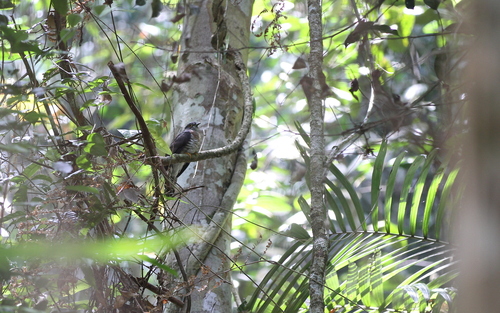
クロジュウイチ (Hierococcyx bocki) クロジュウイチ
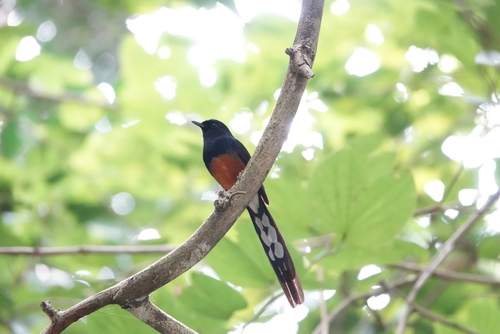
アカハラシキチョウ (Copsychus malabaricus) アカハラシキチョウ

メディア

読み込み中…

要点

クロジュウイチとアカハラシキチョウを区別する最も信頼できるフィールドマークは、アカハラシキチョウの存在する大胆な白い尾羽と外尾羽であり、これはすべての年齢のとまっている鳥や飛んでいる鳥に見られますが、クロジュウイチは尾や尾羽に白色を持ちません。幼鳥のアカハラシキチョウは茶色がかっており、斑点のある胸を持ち、成鳥の雌に似ていますが、常に白い尾羽と外尾羽を示します。構造的には、クロジュウイチははるかにタカに似ており、尾が長く、より強力で捕食的な印象を与えますが、アカハラシキチョウはコンパクトで直立した歌鳥です。飛行中、アカハラシキチョウの白い尾のフラッシュは特徴的ですが、クロジュウイチは均一な尾を示します。生息地も役立ちます:アカハラシキチョウは密な低木を好み、クロジュウイチはより頻繁に樹冠や中層にいます。

識別のコツ

  1. 白い尾羽と外尾羽(すべての年齢、すべての性別): アカハラシキチョウだけが大胆な白い尾羽と白い外尾羽を示し、これはとまっている時と飛んでいる時の両方で見えます。クロジュウイチはこれらの部分に白色を示しません。
  2. 幼鳥/雌の混同: 幼鳥と雌のアカハラシキチョウは茶色がかっており、斑点やブロッチのある胸を持っていますが、白い尾羽/尾を示します。クロジュウイチの幼鳥はより暗く、斑点や白色を欠いています。
  3. 尾の形と長さ: クロジュウイチはより長く、まっすぐで、タカに似た尾を持ち、アカハラシキチョウの尾は長いですが、しばしば扇状に広がったり、振られたりし、常に白い側面を示します。
  4. 飛行スタイル: アカハラシキチョウは頻繁に尾を振り、白いフラッシュを伴うバウンディングでうねるような飛行をします。クロジュウイチはより直接的に飛び、滑空し、小さなタカを思わせます。
  5. とまっている姿勢: アカハラシキチョウは直立してとまり、しばしば尾を傾けます。クロジュウイチはより水平にとまり、長くスリムなプロファイルを持ちます。
  6. くちばしの形: アカハラシキチョウはフライキャッチャーに典型的な短くてまっすぐな黒いくちばしを持っています。クロジュウイチはより長く、わずかに下向きに曲がったくちばしを持ち、捕食的な食事に適しています。
  7. 羽毛の光沢: 成鳥の雄のアカハラシキチョウは上面が光沢のある黒で、豊かな栗色の腹部を持っています。クロジュウイチはより均一に暗く、強い光沢や栗色のトーンが欠けています。
  8. 生息地: アカハラシキチョウはほぼ常に密な低木や竹にいて、開けた場所にはめったに出ません。クロジュウイチはより頻繁に樹冠や中層に見られ、時には開けた森林にいます。
  9. 行動: アカハラシキチョウは内気で、隠れていて、テリトリーを持ち、しばしば見られる前に聞こえます。クロジュウイチはあまり秘密主義ではなく、開けた場所にとまることがあります。
  10. 求愛行動: アカハラシキチョウの雄は尾を広げたり振ったりして歌うことでアピールします。この行動はクロジュウイチでは見られません。
  11. サイズの印象: アカハラシキチョウはコンパクトで小さく、クロジュウイチはより長く、スリムで、タカに似て見えます。
  12. 脚の色: アカハラシキチョウはピンクの脚と足を持っています。クロジュウイチの脚の色は記載されていませんが、ピンクである可能性は低いです。
  13. くちばしの色: 両者ともに暗いくちばしを持っていますが、アカハラシキチョウのくちばしは短くて太いです。
  14. 声: ここでは記載されていませんが、アカハラシキチョウは有名な歌い手です。クロジュウイチは異なる、あまり音楽的でない鳴き声を持っています。
  15. 文脈: 鳥がケージの中にいるか、人間の居住地の近くにいる場合、アカハラシキチョウの可能性が高いです。なぜなら、アカハラシキチョウはケージ鳥として人気があるからです。

大きさ

アカハラシキチョウは小さなスズメ目の鳥で、長さは約23〜28 cm、体重は28〜34 gです。クロジュウイチはここでは詳細に記載されていませんが、一般的にアカハラシキチョウよりも大きく、尾が長く、スリムです。アカハラシキチョウはコンパクトで直立してとまりますが、クロジュウイチはより細長く、水平な姿勢を持ちます。直接比較すると、クロジュウイチはより長くスリムに見え、尾と翼が相対的に長いです。

羽色

幼鳥と雌のアカハラシキチョウは茶色がかっており、斑点やブロッチのある胸を持っていますが、常に白い尾羽と外尾羽を示し、これはすべての年齢とすべての羽色で診断的です。成鳥の雄は上面が光沢のある黒で、腹部は栗色であり、白い尾羽は常に明らかです。飛行中、アカハラシキチョウは尾と尾羽に白をフラッシュします。対照的に、クロジュウイチは年齢に関係なく尾や尾羽に白色を欠いています。その羽毛は全体的により暗く、均一であり、幼鳥の斑点やブロッチのある下部についての言及はありません。クロジュウイチの尾はより長く、タカに似ており、白い斑点はありません。白い尾羽や尾の側面を持つ鳥を見たら、それはアカハラシキチョウです。そうでなければ、鳥がタカに似ている場合、それはクロジュウイチです。

行動

アカハラシキチョウは内気で、薄明かりの時間に活動し、非常にテリトリー意識が強く、しばしば密な低木の中で隠れて歌います。雄は尾を広げたり振ったりしてアピールすることがあります。飛行中、アカハラシキチョウはバウンディングで上昇し下降するパターンを持ち、しばしば白い尾をフラッシュします。クロジュウイチはよりオープンにとまっているか、中層や樹冠を飛んでいるのが見られる可能性が高く、より直接的で滑空する飛行を持ち、小さな猛禽類を思わせます。クロジュウイチはアカハラシキチョウに典型的な尾を振ったり広げたりする行動を示しません。

生息環境

アカハラシキチョウは密な低木、竹の茂み、低地の森林を好み、しばしば地面近くで厚い植生のある場所にいます。開けた場所ではめったに見られません。クロジュウイチは中層や樹冠に見られることが多く、時にはより開けた森林や森林の端にいて、通常は密な低木の中で隠れることはありません。特に地面の上や近くの厚い茂みの中に鳥を見た場合、アカハラシキチョウの可能性が高いです。高い場所やより開けた場所にいる場合は、クロジュウイチを考慮してください。

より良い説明を送る

比較と同じ項目を使ってください。文章はすぐに公開されます。

The most reliable field mark to separate Dark Hawk-Cuckoo from White-rumped Shama is the presence of a bold white rump and outer tail on the shama, which is visible on perched and flying birds of all ages, while the hawk-cuckoo lacks any white in the tail or rump. Juvenile shamas are brownish with a spotted chest, resembling the adult female, but always show the white rump and outer tail. Structurally, the hawk-cuckoo is much more hawk-like, with a longer tail and a more powerful, predatory jizz, while the shama is a compact, upright songbird. In flight, the shama's white tail flashes are distinctive, while the hawk-cuckoo shows a uniform tail. Habitat also helps: shamas prefer dense undergrowth, while hawk-cuckoos are more often in the canopy or mid-story.

  1. White rump and outer tail (all ages, all sexes): Only the White-rumped Shama shows a bold white rump and white outer tail feathers, visible both when perched and in flight. Dark Hawk-Cuckoo never shows white in these areas.
  2. Juvenile/female confusion: Juvenile and female shamas are brownish with spotted or blotchy chests, but still show the white rump/tail. Hawk-cuckoo juveniles are darker and lack spotting or white.
  3. Tail shape and length: Hawk-cuckoo has a longer, straighter, and more hawk-like tail, while shama's tail is long but often fanned or flicked and always shows white sides.
  4. Flight style: Shama has a bounding, undulating flight with frequent tail flicks and flashes of white. Hawk-cuckoo flies more directly and glides, reminiscent of a small hawk.
  5. Perched posture: Shama perches upright, often cocking its tail. Hawk-cuckoo perches more horizontally, with a longer, sleeker profile.
  6. Bill shape: Shama has a short, straight, black bill typical of flycatchers. Hawk-cuckoo has a longer, slightly downcurved bill, more suited to predatory feeding.
  7. Plumage gloss: Adult male shama is glossy black above with a rich chestnut belly. Hawk-cuckoo is more uniformly dark, lacking strong gloss or chestnut tones.
  8. Habitat: Shama is almost always in dense undergrowth or bamboo, rarely venturing into the open. Hawk-cuckoo is more often seen in the canopy or mid-story, sometimes in open forest.
  9. Behavior: Shama is shy, skulking, and territorial, often heard before seen. Hawk-cuckoo is less secretive and may perch in the open.
  10. Courtship display: Shama males display by fanning and flicking their tails and singing; this behavior is not seen in hawk-cuckoo.
  11. Size impression: Shama is compact and small, while hawk-cuckoo appears longer, slimmer, and more hawk-like.
  12. Leg color: Shama has pink legs and feet; leg color is not described for hawk-cuckoo but is unlikely to be pink.
  13. Bill color: Both have dark bills, but shama's is shorter and stubbier.
  14. Voice: Not described here, but shama is a renowned songster; hawk-cuckoo has a different, less musical call.
  15. Context: If the bird is in a cage or near human habitation, shama is more likely due to its popularity as a cage bird.

White-rumped Shama is a small passerine, about 23–28 cm in length and weighing 28–34 g. Dark Hawk-Cuckoo is not described in detail here, but as a hawk-cuckoo, it is generally larger, longer-tailed, and more slender than the shama. The shama is compact and perches upright, while the hawk-cuckoo is rangier and more horizontal in posture. In direct comparison, the hawk-cuckoo appears longer and slimmer, with a proportionally longer tail and wings.

Juvenile and female White-rumped Shamas are brownish with a spotted or blotchy chest, but always show a white rump and outer tail feathers, which are diagnostic at all ages and in all plumages. Adult males are glossy black above with a chestnut belly, and the white rump is always obvious. In flight, the shama flashes white in the tail and rump. Dark Hawk-Cuckoo, by contrast, lacks any white in the rump or tail at any age. Its plumage is overall darker and more uniform, with no mention of spotted or blotchy underparts in juveniles. The hawk-cuckoo's tail is longer and more hawk-like, with no white patches. If you see a bird with a white rump or tail sides, it is a shama; if not, and the bird is hawk-like, it is the hawk-cuckoo.

White-rumped Shama is shy, crepuscular, and highly territorial, often skulking in dense undergrowth and singing from hidden perches. Males may display by fanning and flicking their tails. In flight, shamas have a bounding, rising and falling pattern, often flashing their white tail. Dark Hawk-Cuckoo is more likely to be seen perched openly or flying through the mid-story or canopy, with a more direct, gliding flight reminiscent of a small raptor. Hawk-cuckoos do not show the tail-flicking or fanning behavior typical of shamas.

White-rumped Shama favors dense undergrowth, bamboo thickets, and lowland forests, often close to the ground and in areas with thick vegetation. It is rarely seen in the open. Dark Hawk-Cuckoo is more likely to be found in the mid-story or canopy, sometimes in more open forest or at forest edges, and does not typically skulk in dense undergrowth. If you see a bird in thick brush, especially on or near the ground, shama is more likely; if higher up or in more open areas, consider hawk-cuckoo.

変更を破棄しますか?

保存していない編集があります。今離れると失われます。

クロジュウイチ · アカハラシキチョウ · 苦手な鳥