

Dark Hawk-Cuckoo vs White-rumped Shama
Hierococcyx bocki contro Copsychus malabaricus
Fai un quiz con Dark Hawk-Cuckoo e White-rumped Shama
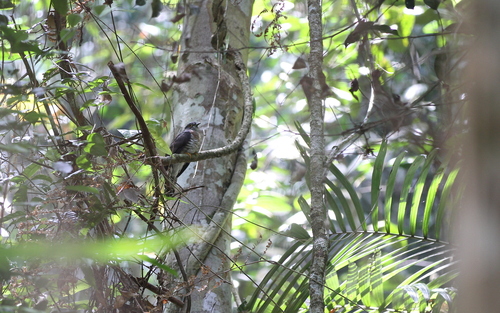 Dark Hawk-Cuckoo
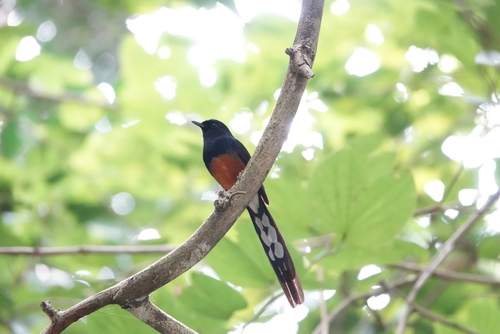 White-rumped Shama
In breve
Il segno distintivo più affidabile per separare il Dark Hawk-Cuckoo dal White-rumped Shama è la presenza di un vivace sottocoda bianco e di una coda esterna bianca nello shama, visibile su uccelli posati e in volo di tutte le età, mentre il hawk-cuckoo non presenta alcun bianco nella coda o nel sottocoda. Gli shama juvenili sono di colore bruno con un petto maculato, somigliando alla femmina adulta, ma mostrano sempre il sottocoda bianco e la coda esterna. Strutturalmente, il hawk-cuckoo è molto più simile a un falco, con una coda più lunga e un aspetto predatorio più potente, mentre lo shama è un uccello canoro compatto e verticale. In volo, i lampi bianchi della coda dello shama sono distintivi, mentre il hawk-cuckoo mostra una coda uniforme. L'habitat aiuta anche: gli shama preferiscono la vegetazione densa, mentre i hawk-cuckoo si trovano più spesso nella chioma o nel piano medio.
Consigli di identificazione
- Sottocoda e coda esterna bianchi (tutte le età, tutti i sessi): Solo il White-rumped Shama mostra un vivace sottocoda bianco e piume esterne bianche, visibili sia quando è posato che in volo. Il Dark Hawk-Cuckoo non mostra mai bianco in queste aree.
- Confusione tra giovanili/femmine: Gli shama giovanili e femminili sono di colore bruno con petti maculati o macchiettati, ma mostrano comunque il sottocoda/coda bianca. I giovanili del hawk-cuckoo sono più scuri e privi di macchie o bianco.
- Forma e lunghezza della coda: Il hawk-cuckoo ha una coda più lunga, più dritta e più simile a un falco, mentre la coda dello shama è lunga ma spesso aperta o scossa e mostra sempre lati bianchi.
- Stile di volo: Lo shama ha un volo saltellante e ondulato con frequenti scosse della coda e lampi di bianco. Il hawk-cuckoo vola in modo più diretto e plana, ricordando un piccolo falco.
- Postura posata: Lo shama si posiziona in modo verticale, spesso alzando la coda. Il hawk-cuckoo si posiziona più orizzontalmente, con un profilo più lungo e snello.
- Forma del becco: Lo shama ha un becco corto, dritto e nero tipico dei catturatori di insetti. Il hawk-cuckoo ha un becco più lungo, leggermente ricurvo, più adatto all'alimentazione predatoria.
- Lucentezza del piumaggio: Il maschio adulto dello shama è nero lucido sopra con un ventre castano ricco. Il hawk-cuckoo è più uniformemente scuro, privo di forte lucentezza o toni castani.
- Habitat: Lo shama si trova quasi sempre in vegetazione densa o in bambù, raramente avventurandosi in spazi aperti. Il hawk-cuckoo è più spesso visto nella chioma o nel piano medio, a volte in foreste aperte.
- Comportamento: Lo shama è timido, furtivo e territoriale, spesso udito prima di essere visto. Il hawk-cuckoo è meno segreto e può posarsi in spazi aperti.
- Display di corteggiamento: I maschi dello shama si esibiscono aprendo e scotendo le loro code e cantando; questo comportamento non è osservato nel hawk-cuckoo.
- Impressione di dimensione: Lo shama è compatto e piccolo, mentre il hawk-cuckoo appare più lungo, più snello e più simile a un falco.
- Colore delle gambe: Lo shama ha gambe e piedi rosa; il colore delle gambe non è descritto per il hawk-cuckoo ma è improbabile che sia rosa.
- Colore del becco: Entrambi hanno becchi scuri, ma quello dello shama è più corto e tozzo.
- Voce: Non descritta qui, ma lo shama è un rinomato cantore; il hawk-cuckoo ha un richiamo diverso, meno musicale.
- Contesto: Se l'uccello è in una gabbia o vicino a un'abitazione umana, è più probabile che sia uno shama a causa della sua popolarità come uccello da gabbia.
Taglia
Il White-rumped Shama è un piccolo passeriforme, lungo circa 23–28 cm e pesante 28–34 g. Il Dark Hawk-Cuckoo non è descritto in dettaglio qui, ma come hawk-cuckoo è generalmente più grande, con una coda più lunga e più snella rispetto allo shama. Lo shama è compatto e si posiziona in modo verticale, mentre il hawk-cuckoo è più slanciato e orizzontale nella postura. In un confronto diretto, il hawk-cuckoo appare più lungo e snello, con una coda e ali proporzionalmente più lunghe.
Piumaggio
Gli shama giovanili e femminili sono di colore bruno con un petto maculato o macchiettato, ma mostrano sempre un sottocoda bianco e piume esterne bianche, che sono diagnostiche a tutte le età e in tutti i piumaggi. I maschi adulti sono neri lucidi sopra con un ventre castano, e il sottocoda bianco è sempre evidente. In volo, lo shama lampeggia bianco nella coda e nel sottocoda. Il Dark Hawk-Cuckoo, al contrario, non presenta alcun bianco nel sottocoda o nella coda a qualsiasi età. Il suo piumaggio è complessivamente più scuro e uniforme, senza menzione di parti inferiori maculate o macchiettate nei giovanili. La coda del hawk-cuckoo è più lunga e più simile a un falco, senza macchie bianche. Se vedi un uccello con un sottocoda o lati della coda bianchi, è uno shama; se no, e l'uccello è simile a un falco, è il hawk-cuckoo.
Comportamento
Il White-rumped Shama è timido, crepuscolare e altamente territoriale, spesso si nasconde nella vegetazione densa e canta da posatoi nascosti. I maschi possono esibirsi aprendo e scotendo le loro code. In volo, gli shama hanno un modello di salto, salendo e scendendo, spesso lampeggiando la loro coda bianca. Il Dark Hawk-Cuckoo è più probabile che venga visto posato apertamente o volando attraverso il piano medio o la chioma, con un volo più diretto e planante che ricorda un piccolo rapace. I hawk-cuckoo non mostrano il comportamento di scossa della coda o di apertura tipico degli shama.
Habitat
Il White-rumped Shama predilige la vegetazione densa, i cespugli di bambù e le foreste di pianura, spesso vicino al suolo e in aree con vegetazione folta. È raramente visto in spazi aperti. Il Dark Hawk-Cuckoo è più probabile che si trovi nel piano medio o nella chioma, a volte in foreste più aperte o ai margini delle foreste, e non si nasconde tipicamente nella vegetazione densa. Se vedi un uccello in una fitta boscaglia, specialmente a terra o vicino al suolo, è più probabile che sia uno shama; se più in alto o in aree più aperte, considera il hawk-cuckoo.
Dark Hawk-Cuckoo · White-rumped Shama · I miei uccelli difficili