

Motmot

マダラアジサシ 対 ヒメアジサシ

Sternula balaenarum 対 Sternula nereis

マダラアジサシとヒメアジサシのクイズ
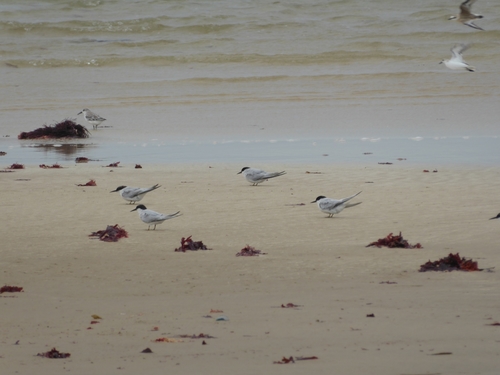
マダラアジサシ (Sternula balaenarum) マダラアジサシ
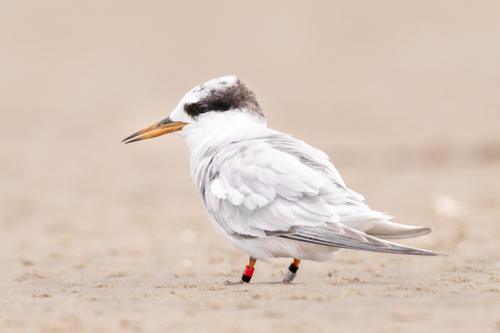
ヒメアジサシ (Sternula nereis) ヒメアジサシ

メディア

読み込み中…

要点

ダマラアジサシとヒメアジサシの最も信頼できるフィールドマークは、繁殖期の成鳥の頭部の黒色のパターンと範囲です:ダマラアジサシは額からうなじまでの完全な黒い帽子を示しますが、ヒメアジサシの黒は目にしか達せず、くちばしまでは届きません。飛行中、ダマラアジサシの成鳥は特徴的な黒い三角形の翼先を示し、一方ヒメアジサシの翼はより均一な淡い青灰色です。未熟なダマラアジサシは背中にバフのバーを示し、これはヒメアジサシの未熟個体には見られません。どちらも小さく淡いアジサシですが、くちばしや脚の色、頭部のパターンの微妙な違いが分離の鍵となります。特に繁殖期には、頭部のパターンやくちばしの色の季節的変化に注意してください。これは繁殖期間外で混乱を引き起こす可能性があります。

識別のコツ

  1. 繁殖期の成鳥の頭部パターン: ダマラアジサシは額からうなじまでの完全な黒い帽子を示します;ヒメアジサシの黒い斑点は目で止まり、くちばしには届きません。これは繁殖期における最も信頼できるマークです。
  2. 非繁殖期の頭部パターン: 両種は非繁殖羽毛で完全な帽子を失いますが、ダマラアジサシは目の周りからうなじまでの黒いマスクを保持し、ヒメアジサシの頭部は主に白く、暗い斑点は減少します。
  3. 未熟な上面: ダマラアジサシの未熟個体は背中にバフのバーを持ち、これはヒメアジサシの未熟個体には見られません。幼鳥の群れや繁殖後の分散でこれを探してください。
  4. 飛行中の翼のパターン: ダマラアジサシの成鳥は手首から先までの黒い三角形の翼先を示します;ヒメアジサシの翼は均一に淡い青灰色で、強い黒い三角形はありません。
  5. 繁殖期のくちばしの色: 両種は繁殖期に黄橙色のくちばしを持ちますが、ヒメアジサシのくちばしはしばしばより明るく、特に求愛時にオレンジ色が強くなります。非繁殖期には、ヒメアジサシのくちばしは黒い先端と基部を持ち、ダマラアジサシのくちばしの色はあまり記述されていませんが、鈍いかもしれません。
  6. 脚の色: 両種は繁殖期に黄橙色の脚を持ちますが、これは強い分離要因ではありません。
  7. サイズ: ダマラアジサシはヒメアジサシよりもやや小さい(23cm、46g)ですが、これは鳥が並んでいない限り、あまり役に立ちません。
  8. 背中の色: ダマラアジサシの背中は非常に淡い灰色です;ヒメアジサシの翼はやや青みがかった灰色ですが、これは微妙で光によって変わります。
  9. 採餌行動: ダマラアジサシはしばしば一人で低い高さから採餌します;ヒメアジサシは高くホバリングし、他のアジサシや捕食魚の活動近くで見られることがあります。
  10. 生息地/範囲: 南アフリカにいる場合はダマラアジサシを期待してください;オーストラリア/ニュージーランド/ニューカレドニアではヒメアジサシを期待してください。彼らの範囲は重なりません。
  11. 季節的文脈: ダマラアジサシは南半球の夏(11月〜2月)に繁殖し、ヒメアジサシは春から初夏(9月〜2月)に繁殖します。タイミングは地元の繁殖サイクルを知っていれば役立ちます。
  12. 性別: 両種の性別は似ています;同定に性別を頼らないでください。
  13. 尾と構造: 強い違いは記述されていません;両方ともコンパクトで短い尾を持つアジサシで、似たような外観です。
  14. 声: 提供された情報源には診断的な違いは記述されていません。
  15. 一般的な落とし穴: 非繁殖期や未熟な鳥は、頭部のパターンが減少し、サイズが似ているため、最も混同されやすいです—最良の分離のためには、バフの背中のバーの有無と頭部の黒色の範囲を探してください。

大きさ

両種は非常に小さなアジサシで、全体的なサイズは似ていますが、ダマラアジサシはヒメアジサシよりもやや小さい(体重46g、長さ23cm)です。フィールドでは、このサイズの違いは微妙で、並んで見ない限り診断的ではありません。

羽色

行動

両種は主に小魚を急降下して捕食しますが、ダマラアジサシは通常低い高さ(3〜8m)から潜水し、ヒメアジサシはより高く(5〜15m)ホバリングし、より浅い水面を滑るように潜水します。ダマラアジサシはしばしば孤独に採餌し、特に冬の群れでは他のアジサシから距離を置きますが、ヒメアジサシは採餌地近くのコロニーや緩い群れで見られることが多いです。両種はコロニーで繁殖しますが、ダマラアジサシの繁殖は南アフリカの夏により密接に関連しており、ヒメアジサシは南西太平洋の春から初夏に繁殖します。

生息環境

ダマラアジサシは南アフリカの沿岸で繁殖し、冬には熱帯西アフリカの沿岸に移動します;これは厳密に沿岸性です。ヒメアジサシはオーストラリア、ニュージーランド、ニューカレドニアの沿岸や河口に見られ、しばしば浅い潮溜まりや河口の近くにいます。彼らの範囲は重なりませんが、両方とも繁殖のために開放的で砂や貝殻の散らばったビーチを好み、採餌のために浅い水を好みます。南西太平洋や南アフリカの外にいる場合、存在する種はほぼ確実に地元の種です。

より良い説明を送る

比較と同じ項目を使ってください。文章はすぐに公開されます。

The most reliable field mark between Damara Tern and Australian Fairy Tern is the pattern and extent of black on the head in breeding adults: Damara Tern shows a full black cap extending from forehead to nape, while Australian Fairy Tern's black only reaches the eye, never as far as the bill. In flight, Damara Tern adults display a distinctive black triangular wingtip, whereas Australian Fairy Tern's wings are a more uniform pale bluish-grey. Immature Damara Terns show buff bars across the mantle, a feature not present in Australian Fairy Tern immatures. Both are small, pale terns, but subtle differences in bill and leg color, as well as head pattern, are key for separation, especially in breeding season. Be aware of seasonal changes in head pattern and bill color, which can cause confusion outside the breeding period.

  1. Head Pattern in Breeding Adults: Damara Tern shows a full black cap from forehead to nape; Australian Fairy Tern's black patch stops at the eye and never reaches the bill. This is the single most reliable mark in breeding season.
  2. Non-breeding Head Pattern: Both species lose the full cap in non-breeding plumage, but Damara Tern retains a black mask around the eyes to nape, while Australian Fairy Tern's head is mostly white with only a reduced dark patch.
  3. Immature Upperparts: Damara Tern immatures have buff bars across the mantle, which are absent in Australian Fairy Tern immatures. Look for this in juvenile flocks or post-breeding dispersal.
  4. Wing Pattern in Flight: Damara Tern adults show a black triangular wingtip from carpal to tip; Australian Fairy Tern's wings are evenly pale bluish-grey with no strong black triangle.
  5. Bill Color in Breeding: Both have yellowish-orange bills in breeding, but Australian Fairy Tern's is often brighter and more orange, especially in courtship. In non-breeding, Australian Fairy Tern's bill becomes black-tipped and at the base, while Damara Tern's bill color is less described but may be duller.
  6. Leg Color: Both species have yellowish-orange legs in breeding, but this is not a strong separator.
  7. Size: Damara Tern is slightly smaller (23cm, 46g) than Australian Fairy Tern (25cm), but this is rarely useful unless birds are side-by-side.
  8. Back Color: Damara Tern's back is very pale grey; Australian Fairy Tern's wings are a slightly bluer grey, but this is subtle and variable with light.
  9. Feeding Behavior: Damara Tern often feeds alone and from lower heights; Australian Fairy Tern hovers higher and may be seen with other terns or near predatory fish activity.
  10. Habitat/Range: If you are in southern Africa, expect Damara Tern; in Australia/New Zealand/New Caledonia, expect Australian Fairy Tern. Their ranges do not overlap.
  11. Seasonal Context: Damara Tern breeds in southern summer (Nov–Feb), Australian Fairy Tern breeds in spring to early summer (Sep–Feb). Timing can help if you know local breeding cycles.
  12. Sexes: Sexes are similar in both species; do not rely on sex for ID.
  13. Tail and Structure: No strong differences described; both are compact, short-tailed terns with similar jizz.
  14. Voice: No diagnostic differences described in the sources provided.
  15. Common Pitfall: Non-breeding and immature birds are most often confused due to reduced head pattern and similar size—look for the presence or absence of buff mantle bars and the extent of black on the head for the best separation.

Both species are very small terns and similar in overall size, but Damara Tern is slightly smaller (body mass 46g, length 23cm) compared to Australian Fairy Tern (length about 25cm; mass not specified but similar). In the field, this size difference is subtle and rarely diagnostic unless seen side-by-side.

  • Juvenile/Immature: Damara Tern immatures show distinctive buff bars across the mantle, which is not seen in Australian Fairy Tern. Australian Fairy Tern immatures resemble non-breeding adults, lacking strong mantle barring.

  • Adult Breeding: Damara Tern adults have a full black cap from forehead to nape and a very pale grey back, with a black triangular wingtip in flight. Australian Fairy Tern adults have a black patch that extends no further than the eye (never to the bill), with a white body and pale bluish-grey wings. Bill and legs are yellowish-orange in both, but Damara's black cap is more extensive.

  • Adult Non-breeding: Both species lose the full black cap in non-breeding plumage, replaced by more white on the forehead and crown. Damara Tern shows a black mask around the eyes extending to the nape, while Australian Fairy Tern's black is reduced and the bill becomes black-tipped and at the base. Sexes are similar in both species.

Both species feed mainly on small fish by plunge-diving, but Damara Tern typically dives from a lower height (3–8m), while Australian Fairy Tern hovers higher (5–15m) and uses a shallower, surface-skimming plunge. Damara Tern often feeds solitarily, spacing out from other terns, especially in wintering flocks, while Australian Fairy Tern is more likely to be seen in colonies or loose groups near feeding sites. Both species breed in colonies, but Damara Tern's breeding is more tightly linked to southern Africa's summer, while Australian Fairy Tern breeds in spring to early summer in the southwestern Pacific.

Damara Tern breeds on southern African coasts and migrates to tropical West African coasts in winter; it is strictly coastal. Australian Fairy Tern is found along coastlines and estuaries of Australia, New Zealand, and New Caledonia, often near shallow tidal pools and estuaries. Their ranges do not overlap, but both prefer open, sandy or shell-strewn beaches for breeding and shallow waters for feeding. If you are outside the southwestern Pacific or southern Africa, the species present is almost certainly the local one.

変更を破棄しますか?

保存していない編集があります。今離れると失われます。

マダラアジサシ · ヒメアジサシ · 苦手な鳥